
Timbuktu — City at the Edge of the Sahara
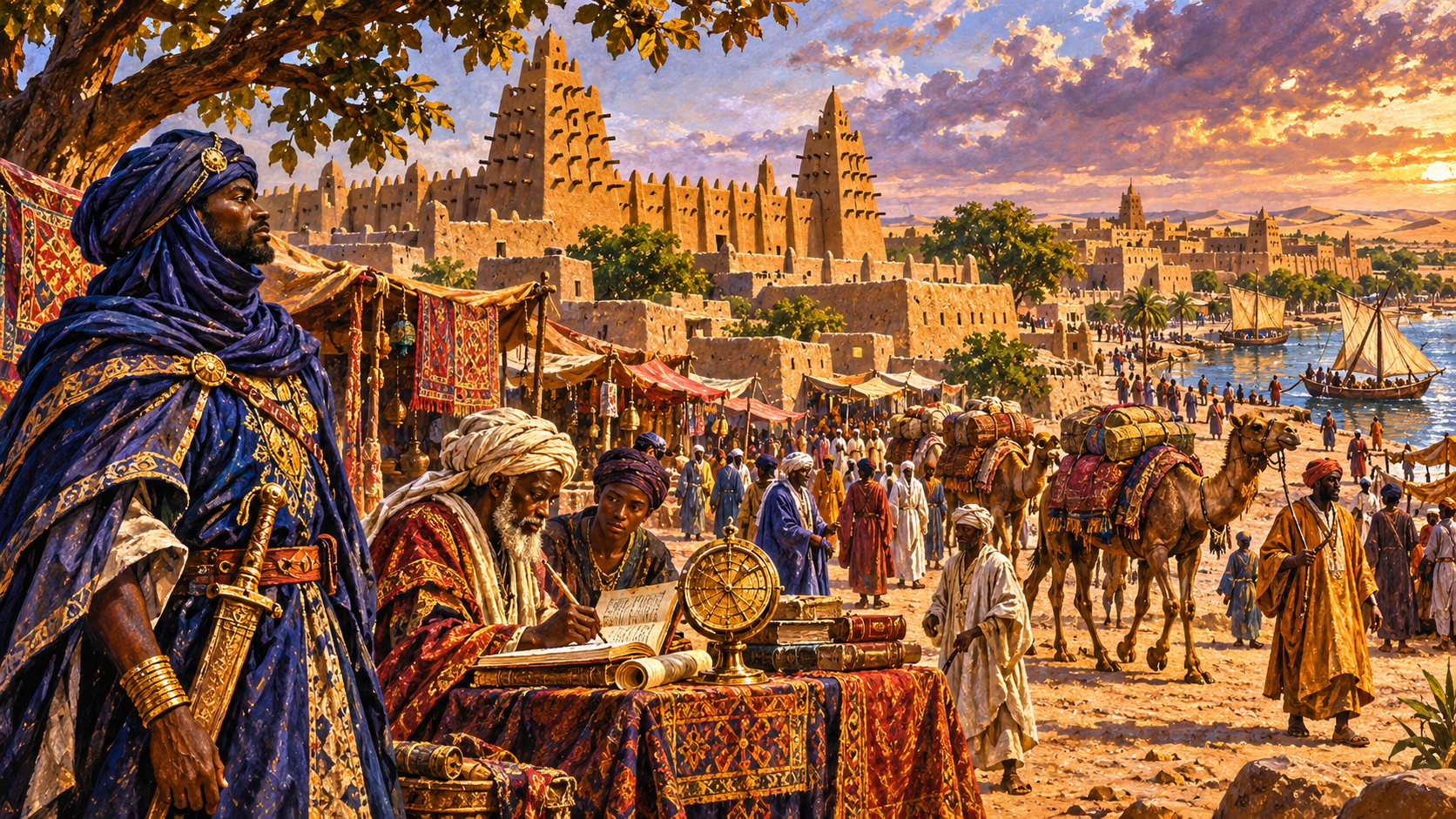
Niger Bend · Tuareg-controlled trade city · West Africa · 1454 CE
At a Glance
| Status | Major Niger-Bend trading and learning centre |
|---|---|
| Present authority | Tuareg overlordship with local administrators, powerful merchant families and established town interests |
| Approaches | Saharan caravan roads, the Niger’s nearby river ports and the market routes of the Sahel |
| Local powers | Caravan leaders, traders, craftsmen, book-copyists, learned households and river pilots |
| Trade | Salt, grain, cloth, metalwork, books, livestock and long-distance cargoes |
| Threats | Failed wells, rival escorts, shortages, political pressure and disputes over cargo |
Before sunrise the caravan yards fill with dust and the smell of beasts. A salt merchant curses a missing ledger; porters haul bundles of cloth toward the market; a river pilot from Kabara refuses to load a sealed chest until its owner names the dead man whose mark appears on the lock. Timbuktu is no lost desert ruin. It is a crowded, functioning city whose fortunes depend on the road through the Sahara and the waterways leading toward the Niger.
What Is Happening Right Now?
The weakening influence of Mali has left Timbuktu under Tuareg control, maintained through powerful leaders and local representatives. No one mistakes an armed escort for the only source of power here: caravan companies supply the city, skilled families maintain its trade and residents know which bargains will survive the next dry season. Gao, farther east, is a rising rival whose merchants increasingly contest the Niger trade.
A cargo convoy from a salt-producing desert settlement has arrived two days late with several pack animals missing. Its leader blames raiders, while a clerk in the market insists the manifests were altered before the caravanners set out. A local official wants to question the servants who unloaded the caravan, but two families have taken them in and refuse to surrender them without evidence.
Meanwhile a river landing upriver has been damaged by a sudden change in water level. Grain prices are beginning to climb, and the wealthiest dealers are accused of withholding their stores. A town that can endure political uncertainty may be less patient with empty bread stalls.
Streets, Markets and Places to Explore
The Caravan Yard
Enclosed grounds, storehouses and animal lines hold goods arriving from the Sahara. Camel handlers and well guides can find work here. A traveller who has lost his route or exhausted his water needs an experienced leader more urgently than a weapon.
The Great Market Streets
Cloth sellers, leatherworkers, smiths, grain dealers and traders in books crowd the city’s working streets. Wealthy merchants arrange business in household courtyards, but the bargain that matters most may be struck beside a water seller’s jars.
The House of Copyists
Families preserve histories, sky observations, accounts of distant lands and technical texts. Copyists work for patrons who value knowledge as an advantage in trade and rulership. A damaged manuscript can set rivals searching for the same missing pages, each convinced they reveal the route to a hidden desert well.
Kabara and the Niger Landing
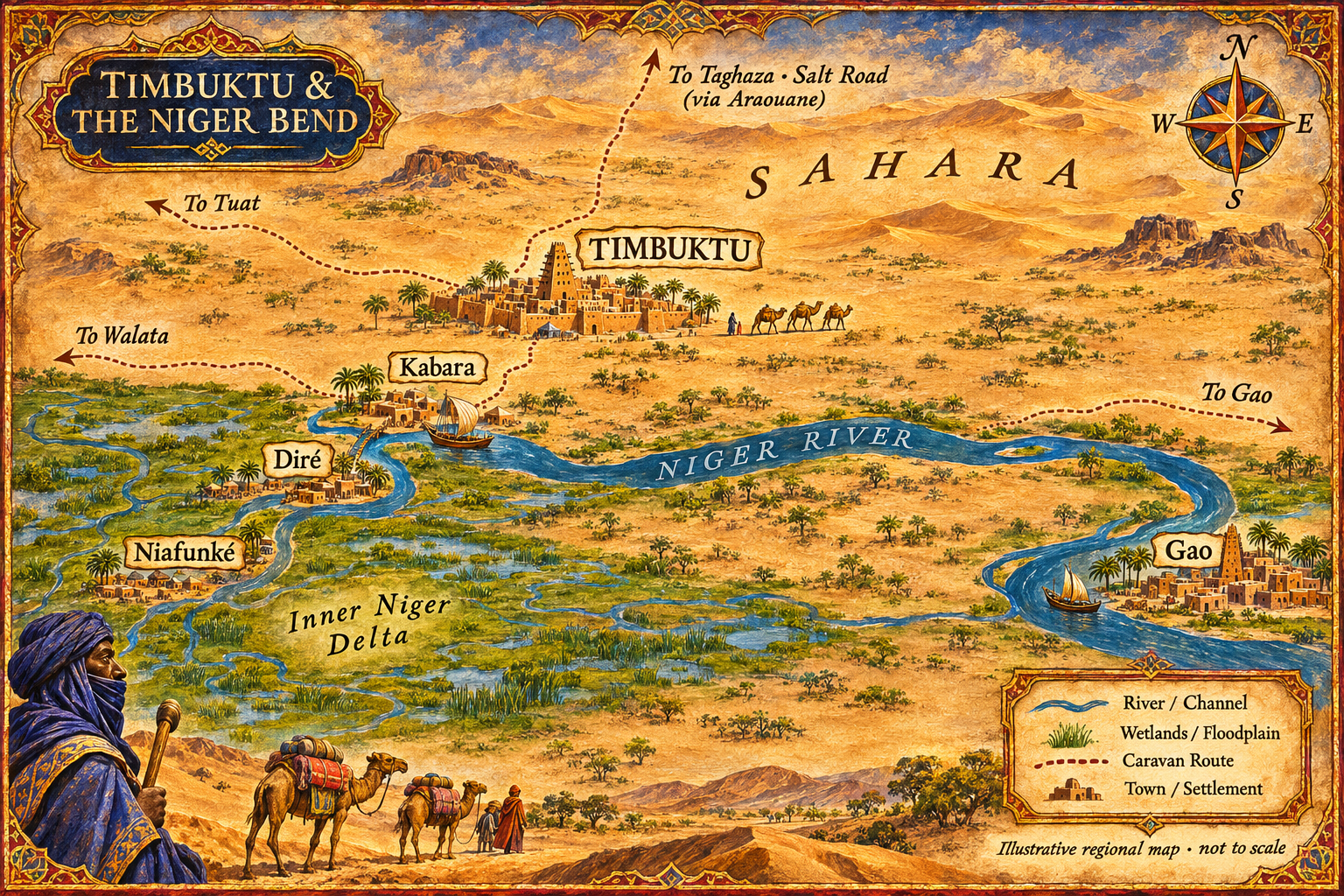
The city stands away from the river, making Kabara and other landing places essential. Boat crews, porters and caravan masters coordinate cargo transfers, while floods and shifting banks regularly alter the safest approach. Controlling the porterage need not mean controlling the river.
People and Powers
Tuareg commanders want secure caravan access, revenue and reliable allies, but raiding by an undisciplined band can destroy their legitimacy among traders. Town administrators keep peace between established households and armed visitors. Merchants seek safe contracts and orderly markets, although a few prefer a shortage that raises prices. Learned families defend their books, patrons and community standing.
Devotion to local gods, ancestors and distinct household sacred obligations shapes agreements and daily choices. Caravan leaders honour the places and rites familiar to their own people; resident families need not share their customs. A ruler who protects merchants but starves the market poor will soon discover that a city depends on workers and households as much as soldiers.
Where Travellers Find Food, Shelter and Help
Caravan compounds provide lodging with room for beasts and goods. Market cooks offer grain-based meals, dates and other foods supplied from river and oasis country. Porters, translators, repairers, book-copyists, boat captains and guides serve different needs. To leave the city safely, secure a trustworthy caravan or river crew before buying more supplies than can be carried.
Healing, divination and protective rituals come from local practitioners with their own customs and obligations. A stranger should not expect access to every shrine or expert merely because they can pay.
Magic and Sacred Services
Caravan families seek protective inscriptions, careful divination and healing when the desert roads take their toll. A copyist may prepare a ward against a journey’s misfortune, but no reputable house will guarantee an unsafe well is full or conceal a stolen caravan seal. The keepers of an old watering place refuse a merchant’s generous offer to bless his convoy until he returns the beasts he took from another company. The dispute gives travellers a reason to investigate rather than simply purchase a charm.
Dangers and Adventure Hooks
- The two ledgers. A merchant’s sealed manifests disagree about the same missing salt. A copyist can prove which is false, but only if a stolen seal is recovered before the caravan leaves.
- Water below the sand. A well guide vanishes after naming an old abandoned route. His family fears an armed caravan has forced him to lead them into unsafe country.
- The grain boats. A crew refuses to land as famine rumours spread. Someone has threatened its pilots, and the town’s poorer households may suffer before the traders settle their feud.
- The stolen manuscript. A scholar’s chart of unusual stars goes missing. The thief has copied only the portions showing the road to a sanctuary that ought not be disturbed.
Roads, River and Desert
West and south lie Mali’s changing territories and Niger markets. Eastward, traders travel toward Gao and the emerging Songhai sphere. Northward, the Saharan tracks pass through wells and oases known to experienced caravan parties. To cross a desert without a guide is to gamble the lives of the whole company, not simply to risk running late.
Continue to West Africa, the Sahara, or the Sudanian Savanna.
Deeper History and Historical Sources
Timbuktu’s situation between the Niger and the Sahara made it a vital market and centre for skilled, educated families. The city’s fifteenth-century political situation is unstable: Tuareg power displaced Mali’s former control, while Songhai will exert greater influence later. The people and particular incidents above are inventions for play, while the geography, trade routes and broad political sequence draw on historical research.
University of Cape Town: Timbuktu’s history · Metropolitan Museum: Western and Central Sudan, 1400–1600.
Keep this reference growing
If this page helped with your reading or game, you can support its upkeep or explore the curated books.
Explore the Bookshop — epics, classics and stories behind imagined worlds.