
Wooden Armor
Wooden armor is a leather suit reinforced with fire-treated wooden plates over vulnerable parts of the body. It protects a traveller on land while its buoyant plates make river crossings easier.
Wooden Armor at a Glance
- Type: plated light armour; flexible leather beneath shaped timber.
- Pathfinder 1e: 20 gp, +3 armour bonus, 25 lb., maximum Dexterity +3.
- Best feature: the wooden plates help the wearer swim, with rules for each edition below.
- Trade-off: heavier and more restrictive than ordinary leather, with seams and wooden plates that need maintenance.
- In play: useful to a waterside scout, watchman or traveller whose route crosses fords, reed beds and riverbanks.
Wooden Armor Rules by Edition
Wooden armour is a practical suit for guards, scouts and travellers who may need to swim without stripping off their protection.
D&D 2024 — Wooden Armor
Wooden Armor (campaign equipment)
| Armor | Armor Class (AC) | Strength | Stealth | Weight | Cost |
|---|---|---|---|---|---|
| Wooden Armor | 12 + Dex modifier (max 3) | — | — | 25 lb. | 20 GP |
Light Armor Training. The fire-treated wooden plates are sewn over leather. Buoyant plates: you have Advantage on Strength (Athletics) checks made to swim while wearing this armour. The armour grants no Swim Speed; currents and difficult water still matter. Donning or doffing takes 1 minute.
D&D 2014 — Wooden Armor
Wooden Armor (campaign equipment)
| Armor Name | Cost | Armor Class (AC) | Strength | Stealth | Weight |
|---|---|---|---|---|---|
| Wooden armor | 20 gp | 12 + Dex modifier (max 3) | — | — | 25 lb. |
Light armour proficiency. Its slightly buoyant timber plates grant Advantage on Strength (Athletics) checks made to swim. They do not grant a swimming speed. The usual rules for swimming, rough water, breathing and encumbrance still apply. Donning or doffing takes 1 minute.
Pathfinder 1e — Wooden Armor
Wooden armor statistics
| Armor | Cost | Armor/Shield Bonus | Maximum Dex Bonus | Armor Check Penalty | Arcane Spell Failure Chance | Speed (30 ft.) | Speed (20 ft.) | Weight |
|---|---|---|---|---|---|---|---|---|
| Wooden | 20 gp | +3 | +3 | −1 | 15% | 30 ft. | 20 ft. | 25 lb. |
Special benefit: The normal armour check penalty is −1, but the armour check penalty for Swim checks while wearing this suit is 0. This does not make swimming automatically successful, provide a general buoyancy bonus, or cancel encumbrance and other penalties that apply separately.
Using it: Wooden armor is light armour. Its +3 is an armour bonus added to Armor Class, not a fixed AC. Maximum Dexterity bonus +3 applies to AC; arcane spell failure is 15% where applicable. Normal donning takes 1 minute; hurried donning uses the edition’s hasty-armour rules.
Printed source: Pathfinder Roleplaying Game Advanced Player’s Guide — Advanced Gear, wooden armour.
D&D 3.5e — Wooden Armor
Wooden Armor (campaign equipment)
| Armor | Cost | Armor/Shield Bonus | Maximum Dex Bonus | Armor Check Penalty | Arcane Spell Failure Chance | Speed (30 ft.) | Speed (20 ft.) | Weight |
|---|---|---|---|---|---|---|---|---|
| Wooden armor | 20 gp | +3 | +3 | −1 | 15% | 30 ft. | 20 ft. | 25 lb. |
Special: the suit’s armor check penalty for Swim checks is 0; the −1 penalty applies to other affected skills. It is light, nonmetal armour and follows the normal 3.5e armour proficiency, spell failure, speed and donning rules.
Wearing Wooden Armor in Play
Crossing the millstream. A messenger wades into a river carrying a sealed satchel while pursuers gather on the opposite bank. A Pathfinder character in wooden armour takes no armour check penalty on the Swim check from the suit itself. Strong current, exhaustion, carried equipment and ordinary Swim rules remain real dangers. In fifth edition, the armour’s buoyant plates help a swimmer contend with the current.
After the crossing. Check the cords and stitching before the next fight. Wet leather stiffens as it dries, the wood can split along its grain, and a damaged plate must be replaced rather than hammered back into shape like metal. Smoke-blackened or painted timber is also visually distinctive: the wearer is easily recognised by anyone who has seen the suit before.
Wood, Hide and Armour-Making
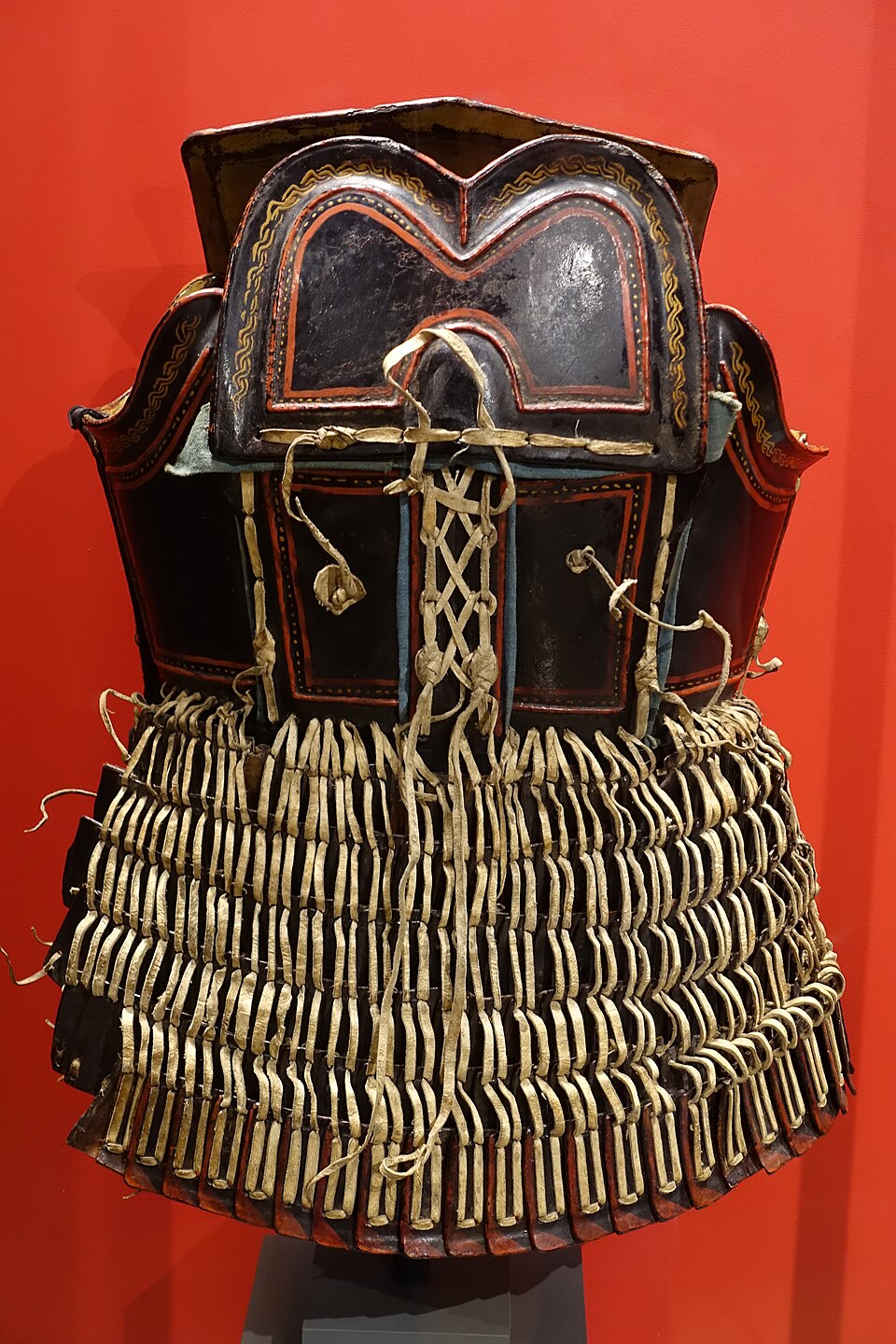
Wooden body protection is not solely an imaginary game concept. Historical armourers in different cultures joined rigid wooden components with fibre cords, hide and other flexible materials. The illustrated Yi armour above shows one tradition combining wood and painted hide. Other surviving examples include wooden slat armour from the North Pacific coast, with quite different forms and cultural histories. Neither is presented as a literal reconstruction of this tabletop equipment entry.
For a believable suit, decide how the wooden plates are attached and how the arms and ribs still bend. Laces can be replaced on the road; a broken cuirass plate requires a suitably shaped piece of timber and skilled fitting. It is a practical choice where leatherworking and woodcraft are readily available, rather than a universal replacement for mail or steel.
Related Equipment and Rules Sources
Compare Leather Armor for simpler light protection, Studded Leather for the closest printed comparison, Chain Shirt for metal rings, or browse the Armour & Shields catalogue.
Rules references: D&D 2024 Equipment; D&D 2014 Equipment; Pathfinder Advanced Player’s Guide; D&D 3.5e SRD Armor.
Pathfinder Roleplaying Game Advanced Player’s Guide, Paizo Publishing; original wooden-armour equipment statistics and description. SRD material from Wizards of the Coast, with licensing governed by the respective published rule sources. Museum image source and CC0 photographic licence are credited beside the illustration.
Keep this reference growing
If this page helped with your reading or game, you can support its upkeep or explore the curated books.
Explore the Bookshop — epics, classics and stories behind imagined worlds.