
Barkskin Spell: Living Armor of Bark, Thorn, and Hardened Hide
A protective transmutation that toughens living flesh into bark-like armour without turning the target into wood.
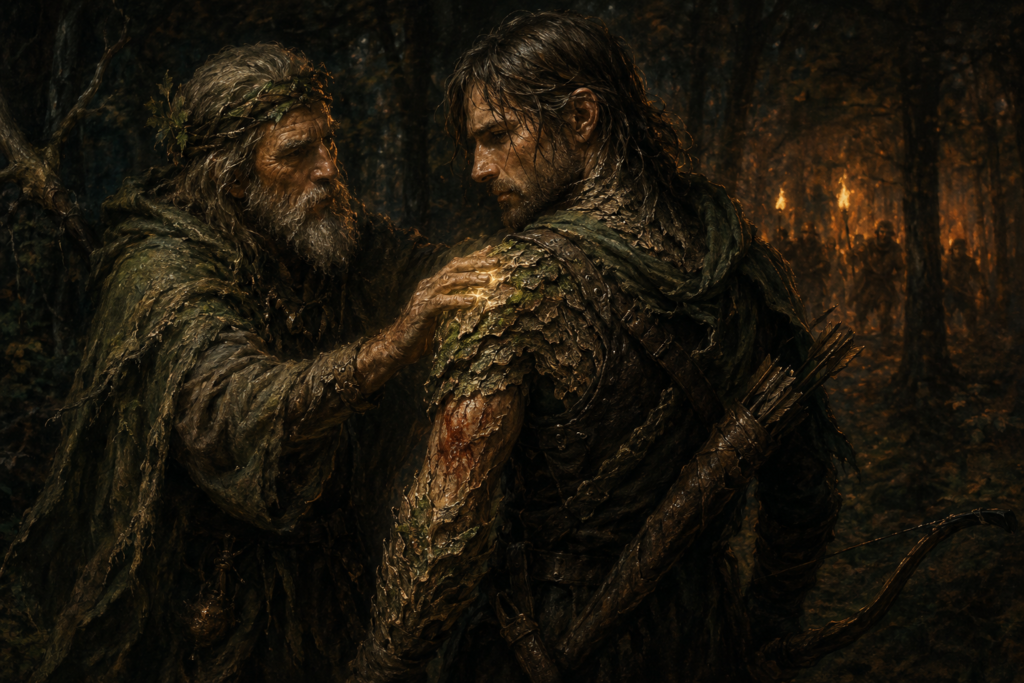
Barkskin is one of the oldest and most practical forms of druidic protection: a spell that does not surround the body with force, steel, or shining ward-light, but teaches the flesh to remember the strength of trees. Skin roughens. Scars darken. Hair and hide take on the grain of bark. For a short time, the target becomes harder to wound, not because they are removed from nature, but because nature closes around them like living armour.
The spell is especially valuable for beasts, scouts, rangers, druids, shapeshifters, lightly armoured warriors, and companions that must survive in the teeth of melee. It is not a glamorous spell. It does not stop blades with spectacle or burn enemies with divine wrath. It makes the target harder to kill, and in a dangerous world that is often worth more than brilliance.
Quick Rules Reference
- Spell school: Transmutation.
- Core purpose: Improves the target’s defensive toughness.
- Best target: A creature expected to take repeated physical attacks; exact target restrictions depend on edition.
- Does not create armour: The target’s skin, hide, or scales harden; equipment is not transformed.
- Edition matters: Modern D&D sets a minimum Armor Class, while Pathfinder 1e and D&D 3.5e grant an enhancement bonus to natural armour. Do not mix those mechanics.
- Best timing: Cast before entering a fight, lair, ambush site, or monster trail where the target is likely to be attacked repeatedly.
Effect
You touch an eligible creature and alter its skin, hide, scales, or outer flesh into a bark-like protective layer. The change is visible but not usually grotesque: the target may develop darkened skin, ridged grain, roughened scars, thornlike calluses, leaf-vein patterns, or a dry wooden sheen. The exact defensive mechanic depends on edition: modern D&D sets an Armor Class floor, while Pathfinder 1e and D&D 3.5e reinforce natural armour.
Barkskin improves physical resilience. It is most useful on creatures with poor armour, beasts that cannot wear armour, shapeshifted druids, familiars or companions in danger, and lightly armoured characters who expect to be struck. It does not make the target immune to cutting, piercing, fire, poison, disease, restraints, falling damage, or precision attacks. It is protection, not invulnerability.
Rules by Edition
Choose the rules for your campaign edition below. Keep each edition’s Armour Class, duration, stacking and spell-list rules separate rather than mixing mechanics between systems.
Barkskin — 5.5e / 2024
| Level | 2nd-level Transmutation |
|---|---|
| Classes | Druid, Ranger |
| Casting Time | 1 Bonus Action |
| Range | Touch |
| Components | V, S, M (a handful of bark) |
| Duration | 1 hour |
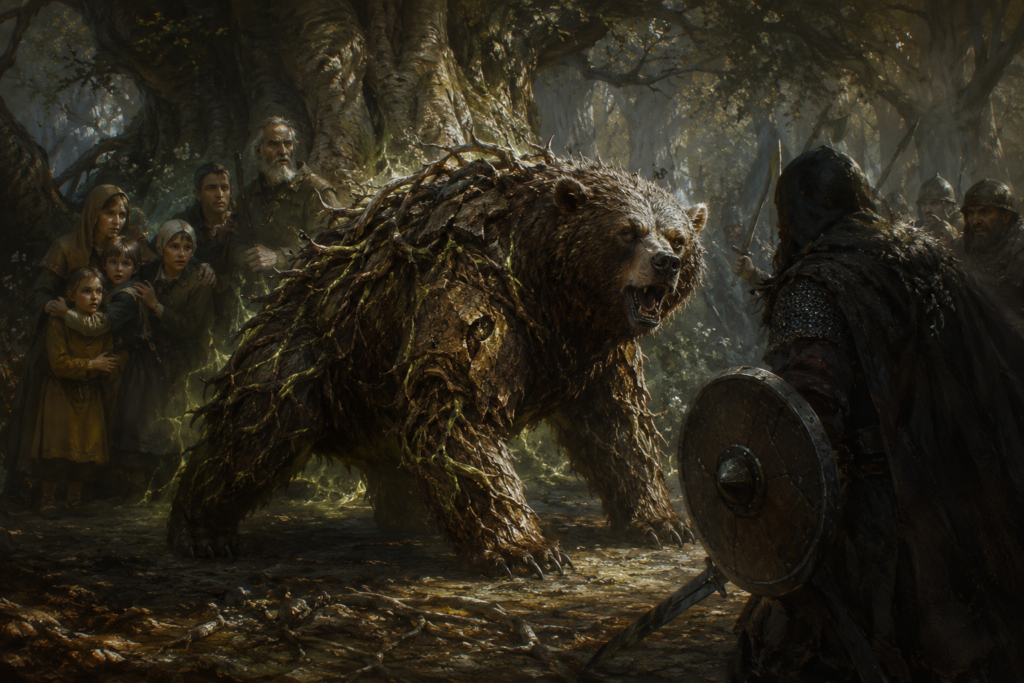
You touch one willing creature. Until the spell ends, the target takes on a bark-like appearance and has Armor Class 17 if its normal AC is lower than 17.
Rules note: this version does not require Concentration, does not impose a medium- or heavy-armour restriction, and has no higher-slot scaling in the core spell.
Barkskin — 5e / 2014
| Level | 2nd-level Transmutation |
|---|---|
| Classes | Druid, Ranger |
| Casting Time | 1 action |
| Range | Touch |
| Components | V, S, M (a handful of oak bark) |
| Duration | Concentration, up to 1 hour |
You touch a willing creature. Until the spell ends, the target’s skin becomes rough and bark-like, and its Armor Class cannot be lower than 16. If its normal AC is already 16 or higher, the spell does not increase it.
Rules note: treat 16 as a floor, not a bonus. Work out the creature’s AC normally; Barkskin matters only when that result would be below 16.
Barkskin — Pathfinder 1e
| School | Transmutation |
|---|---|
| Level | Druid 2, Ranger 2 |
| Casting Time | 1 standard action |
| Components | V, S, DF |
| Range | Touch |
| Target | Living creature touched |
| Duration | 10 minutes/level |
| Saving Throw | None |
| Spell Resistance | Yes (harmless) |
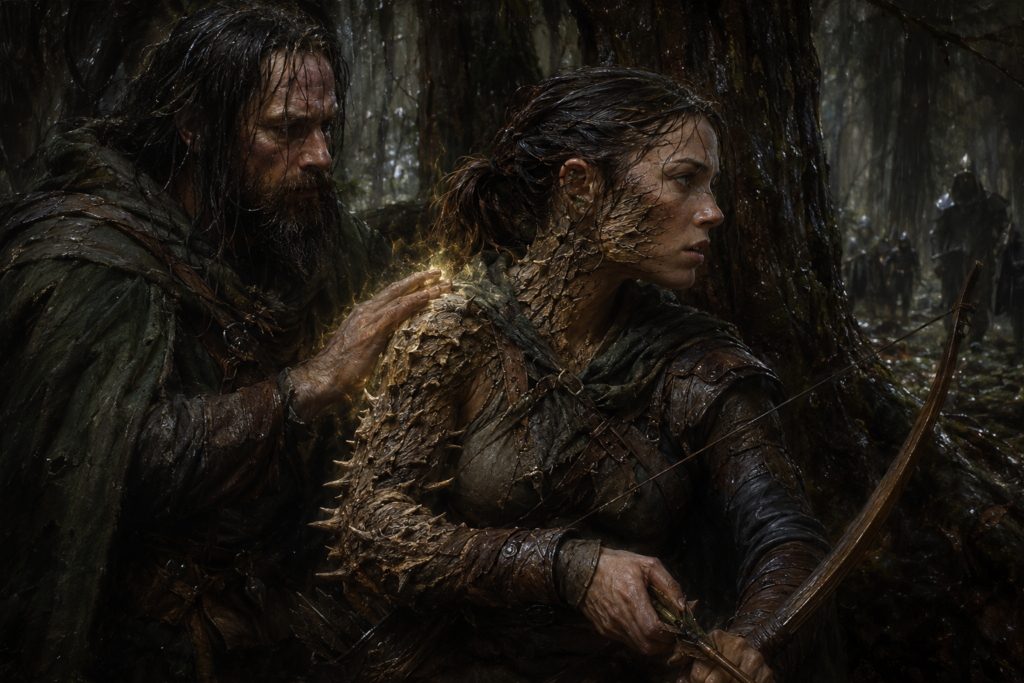
The spell grants a +2 enhancement bonus to the target’s existing natural armour bonus. The enhancement increases by +1 for every three caster levels above 3rd, to a maximum of +5 at caster level 12th.
It stacks with the creature’s underlying natural armour, but not with another enhancement bonus to natural armour. A creature with no natural armour is treated as having a +0 natural armour bonus before Barkskin is applied.
Barkskin — D&D 3.5e
| School | Transmutation |
|---|---|
| Level | Druid 2, Ranger 2, Plant 2 |
| Casting Time | 1 standard action |
| Components | V, S, DF |
| Range | Touch |
| Target | Living creature touched |
| Duration | 10 minutes/level |
| Saving Throw | None |
| Spell Resistance | Yes (harmless) |
The spell grants a +2 enhancement bonus to the target’s existing natural armour bonus. This increases by +1 for every three caster levels above 3rd, to a maximum of +5 at caster level 12th.
The enhancement stacks with the target’s existing natural armour but not with another enhancement bonus to natural armour. A creature without natural armour has an effective natural armour bonus of +0 for this purpose.
What Changed?
- 2024 is much faster to cast: Barkskin is a Bonus Action rather than an action.
- 2024 removes Concentration: the spell lasts for 1 hour and sets a minimum AC of 17.
- 2014 uses Concentration and a lower floor: it takes an action and prevents AC from falling below 16.
- Pathfinder 1e and D&D 3.5e use natural-armour enhancement instead of a fixed AC: the bonus begins at +2 and scales to +5 with caster level.
Legacy 3.0e Barkskin
This older rules text is retained for campaigns still using the 3.0e rules.
Transmutation
Level: Druid 2, Ranger 2, Plant 2
Components: V, S, DF
Casting Time: 1 standard action
Range: Touch
Target: Living creature touched
Duration: 10 minutes/level
Saving Throw: None
Spell Resistance: Yes (harmless)
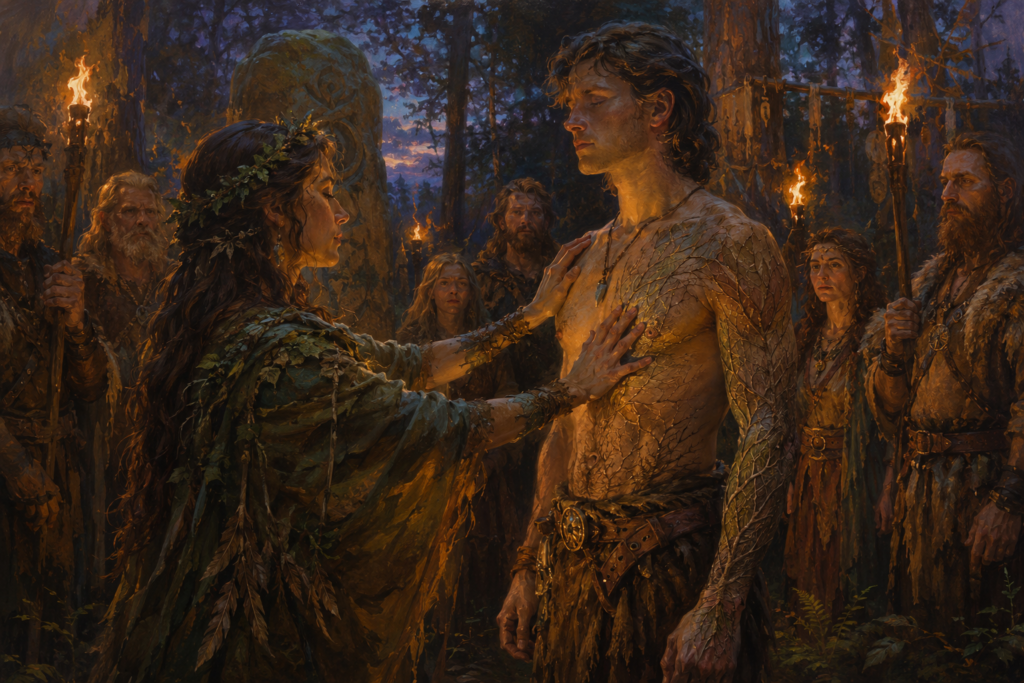
Barkskin toughens a creature’s skin, granting a +2 enhancement bonus to its existing natural armour. The bonus increases by +1 for every three caster levels above 3rd, to a maximum of +5 at caster level 12th. It stacks with the creature’s natural armour but not with another enhancement bonus to natural armour.
Why This Spell Is Dangerous in the World
Barkskin is dangerous because it lets forest defenders survive the first volley, the first spear thrust, or the first bite that should have ended them. A druid with time to prepare can send hunters, scouts, wolves, sworn warriors, or shapeshifted allies into danger with bodies already hardened against ordinary violence. A ranger who knows this spell can keep a wounded companion alive through one more charge. A sacred grove defended by bark-skinned guardians becomes much harder to clear by force.
In frontier wars, forest disputes, monster hunts, and conflicts between settled lords and old sacred places, Barkskin changes the cost of violence. Men expecting soft flesh find hardened hide. Hounds that should fall to arrows keep running. A wounded druid rises with skin like oak and makes the attackers understand that the wood itself has taken sides.
Rules Clarifications and Edge Cases
- Does Barkskin turn the target into a plant? No. The target remains its normal creature type unless another rule changes it.
- Can Barkskin be cast on animals? Yes when the creature is a legal target for that edition. Modern D&D requires a willing creature; Pathfinder 1e and D&D 3.5e specify a living creature.
- Can it be cast on undead? In modern D&D the spell targets a willing creature, so creature type alone does not exclude an undead target. Pathfinder 1e and D&D 3.5e specify a living creature and therefore exclude undead.
- Does it protect clothing and armour? No. The spell changes the creature’s body, not its gear.
- Does it stack with Mage Armor? In editions where one effect sets AC and another calculates AC differently, use the better legal AC calculation. Do not add them together unless the specific edition’s rules allow it.
- Does it make stealth harder? Not by default. The bark-like surface may reveal that the target is enchanted, but it does not impose a Stealth penalty.
Good Combinations
- Longstrider: Helps the protected creature stay mobile while surviving melee pressure.
- Absorb Elements: Covers the elemental damage Barkskin does not stop, especially fire, acid, cold, lightning, and thunder.
- Protection from Poison: Creates a strong wilderness-survival pairing against beasts, plants, vermin, assassins, and toxic lairs.
- Spike Growth: Lets a hardened front-line ally hold enemies near dangerous ground while the terrain punishes movement.
- Protection from Energy: Covers the major elemental threats that can bypass simple physical toughness during a serious hunt, siege, or monster fight.
Adventure Hooks
- The Oak-Signed Outlaws: A band of forest rebels survives repeated executions and ambushes because their druid marks them with bark-like protection before every raid.
- The Stag That Would Not Die: A sacred white stag, protected by old magic, survives noble hunts that should have killed it. Killing it may break a local pact with the forest.
- The Siege of the Living Gate: A fortress gate grown from ancient trees cannot be breached while bark-skinned defenders fight from its roots and branches.
Historical and Mythic Context
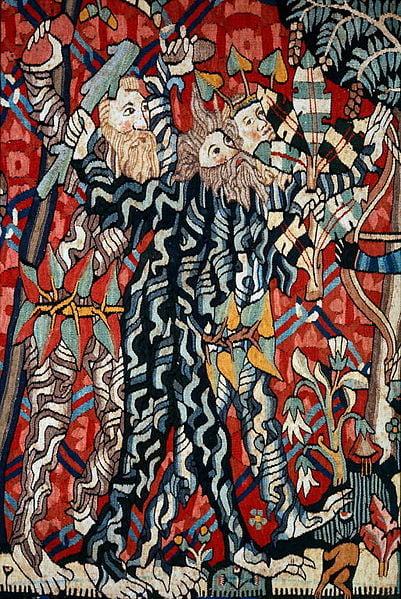
wool; tapestry weave, 100 x 490 cm, Date about 1400
The idea behind Barkskin belongs to a deep mythic association between trees, endurance, sacred bodies, and transformation. In many traditions, trees are not merely background scenery; they are witnesses, boundaries, ancestors, shelters, and living powers. The oak, in particular, has long been associated with strength, age, kingship, storm, and sacred endurance.
The spell also echoes transformation stories in which human and natural forms blur. The Greek myth of Daphne, who becomes a laurel tree, is not the same as Barkskin, but it shows the older imaginative root: flesh can answer danger by becoming vegetal, sacred, and difficult to possess. In a fantasy campaign, Barkskin turns that mythic transformation into a battlefield blessing rather than a permanent fate.
In druidic and ranger magic, the spell should feel less like conjured armour and more like borrowed resilience. The caster does not place metal between the target and the world. They call up the patience of bark, the toughness of root, and the old refusal of living wood to break easily.
Keep this reference growing
If this page helped with your reading or game, you can support its upkeep or explore the curated books.
Explore the Bookshop — epics, classics and stories behind imagined worlds.