
Crazy Horse — Tȟašúŋke Witkó

Crazy Horse (Tȟašúŋke Witkó) studies a party of riders arriving at his winter camp. The people under his protection have too few horses to move their supplies; the next ford is now patrolled. His skill on the battlefield cannot solve either problem without good intelligence and the cooperation of families who will bear the risk.
The Oglala Lakota war leader is willing to fight, but a retreat that preserves the camp may be more important than defeating one detachment. A scout offers a route through difficult country. An officer promises food if the riders surrender. Crazy Horse asks who has seen the crossing, where the promised rations are stored and how the wounded will travel if the agreement fails.
At a Glance
- Identity: Oglala Lakota military leader and scout, known for reserve, courage and skilled command of riders.
- Homeland: The northern Plains, Powder River country and Black Hills.
- Present concern: Recover the camp’s horses and secure a route to food, shelter and water without breaking up families.
- Companions: Lakota relatives and scouts; allies from other bands and Cheyenne groups have their own leadership.
- Connections: Red Cloud and Sitting Bull, who took different approaches to treaties and resistance.
- Strengths: Reconnaissance, mounted movement, choice of terrain and the confidence of followers who know his record.
- Limits: Failing supplies, horses and ammunition, conflicting advice and the obligations owed to children, elders and injured travellers.
- Use in play: Horse recovery, safe conduct, a disputed arrest warrant or an escort through a watched pass.
Game Statistics
Crazy Horse is a human scout and military leader. In battle, his advantage is preparation, mounted movement and companions with a clear escape route. The rules below offer separate edition-native conversions; his Lakota beliefs are not converted into spell-like combat powers. See the Fighter class for weapon training by edition.
Crazy Horse — 2024
Medium Humanoid (Human), Neutral
AC 16 (reinforced riding clothes); Initiative +4 (14); HP 112 (15d8 + 45); Speed 30 ft.
Saves Dex +7, Wis +6; Skills Athletics +6, Perception +9, Stealth +7, Survival +9; Senses Passive Perception 19; Languages Lakota, some trade Common; CR 5 (1,800 XP, PB +3; campaign estimate).
Traits
Patient Scout. Expertise in Perception and Survival (included above). Tracks and routes must still be examined: this trait does not reveal unseen enemies automatically.
Horseman’s Judgment. Crazy Horse can direct his trained mount to use up to 10 ft. of its remaining movement after he makes a weapon attack on his turn. It cannot exceed its Speed or move through occupied spaces.
Actions
Multiattack. Two Spear or Longbow attacks.
Longbow. Ranged Weapon Attack: +7 to hit, range 150/600 ft.; Hit 8 (1d8 + 4) Piercing.
Spear. Melee Weapon Attack: +6 to hit, reach 5 ft.; Hit 7 (1d8 + 3) Piercing if used with two hands, or 6 (1d6 + 3) with one.
Bonus Actions
Break Contact (Recharge 5–6). One willing ally who hears him within 30 ft. may use its Reaction to move up to half its Speed without provoking Opportunity Attacks.
Reactions
Deflect the Charge (2/Day). Before a visible melee attack roll against him, Crazy Horse adds +2 to his AC against that attack.
Combat estimate: This original CR is provisional; his allies, horse and cover strongly affect encounter difficulty.
Crazy Horse — retained 5e / 2014
Medium humanoid (human), Neutral; AC 17 (war shirt and agility); HP 150 (20d8 + 60); Speed 30 ft.; STR 20 (+5), DEX 18 (+4), CON 16 (+3), INT 14 (+2), WIS 16 (+3), CHA 16 (+3); CR 8 (3,900 XP, PB +3; legacy estimate).
Saves Str +8, Dex +7, Wis +6; Skills Athletics +8, Perception +6, Survival +6; Languages Lakota, trade Common.
Brave. Advantage on saves against being Frightened. Field Awareness. Advantage on checks to notice mounted movement across ground already scouted, not automatic detection.
Multiattack. Two Spear or Handaxe attacks. Spear. Melee Weapon Attack +8, reach 5 ft., Hit 9 (1d8 + 5) Piercing when wielded two-handed. Handaxe. Melee or Ranged Weapon Attack +8, reach 5 ft. or range 20/60 ft.; Hit 8 (1d6 + 5) Slashing.
Coordinated Withdrawal (Bonus Action, 1/Short Rest). One ally who hears him within 30 ft. may use its Reaction to move half its Speed without provoking Opportunity Attacks. Defiant Stand (Reaction, 2/Day). When hit in melee, Crazy Horse can make one Handaxe attack against the attacker if in reach.
The earlier draft’s blanket resistance to weapon damage, psychic protection and extra legendary turns have not been retained. The story does not require those powers to show his courage.
Crazy Horse — Pathfinder 1e
CR 7 (3,200 XP); human fighter 8, N Medium humanoid (human); Init +8; Senses Perception +11.
Defense
AC 16, touch 14, flat-footed 12 (+4 Dex, +2 leather); hp 68 (8d10 + 24); Fort +9, Ref +6, Will +5; Bravery +2 on Will saves against fear.
Offense
Speed 30 ft.; Ranged composite longbow +14/+9 (1d8 + 4, ×3, 110-ft. increment), Rapid Shot +12/+12/+7; Melee spear +11/+6 (1d8 + 4, ×3, two hands). Bow bonuses include Weapon Focus and weapon training (bows +1).
Statistics
Str 16, Dex 18, Con 16, Int 12, Wis 16, Cha 14; BAB +8; CMB +11; CMD 25; Feats Point-Blank Shot, Precise Shot, Rapid Shot, Weapon Focus (longbow), Improved Initiative, Combat Reflexes, Dodge, Iron Will; Skills Perception +11, Ride +15, Survival +11; Languages Lakota, trade Common.
Equipment Composite longbow (+3 Str rating), arrows, spear, horse, ordinary clothes, travel supplies. Use Pathfinder’s action economy, rather than fifth-edition Bonus Actions.
Crazy Horse — D&D 3.5e
CR 8; human fighter 8, N Medium humanoid (human).
| Hit Dice | 8d10 + 24 (68 hp) |
|---|---|
| Initiative | +8 (+4 Dex, +4 Improved Initiative) |
| Speed | 30 ft. |
| Armor Class | 16 (+4 Dex, +2 leather), touch 14, flat-footed 12 |
| Base Attack / Grapple | +8 / +11 |
| Attack | Composite longbow +13 ranged (1d8 + 3, ×3); spear +11 melee (1d8 + 4, ×3, two-handed) |
| Full Attack | Composite longbow +13/+8; Rapid Shot +11/+11/+6 |
| Space / Reach | 5 ft. / 5 ft. |
| Saves | Fort +9, Ref +6, Will +5 |
| Abilities | Str 16, Dex 18, Con 16, Int 12, Wis 16, Cha 14 |
| Skills | Ride +12, Spot +8 (cross-class), Survival +8 (cross-class), Intimidate +10 |
| Feats | Point Blank Shot, Precise Shot, Rapid Shot, Weapon Focus (longbow), Improved Initiative, Iron Will, Mounted Combat, Ride-By Attack, Combat Reflexes |
Equipment Bow and arrows, spear, horse and camp supplies. Use the 3.5e Fighter feat and mounted combat procedures; no innate protection from ordinary weapons is assumed.

What Is Crazy Horse Doing Now?
A scout has found hoof marks leading from the missing horse herd to a shallow ford occupied by an army patrol. Without those mounts, several families cannot move the tents, food or injured people out of danger. Crazy Horse does not ask his companions to fight for the animals before knowing who has them, where the patrol’s reinforcements are camped, and what retaliation would mean for the children travelling with him.
A trader says he knows which contractor took the horses but wants immunity from reprisal. Crazy Horse will hear the trader’s evidence. He wants either the animals returned or another safe means of moving the camp; a boastful raid that leaves families stranded is not a victory.
Encounters
- Horses at the ford. A contractor has divided the stolen herd between a remount corral and wagons bound for the fort. The party can recover a ledger, bargain for a quiet exchange or attempt a rescue while the patrol changes watch. If they sound the alarm, the road used by the families may be closed by morning.
- Two versions of safe conduct. An officer offers rations to a travelling group if they surrender their weapons. The officer’s orders name a different destination from the Lakota-language account provided by an interpreter. A character can compare the texts, question the officer’s authority and help the people who must travel decide whether the promise can be trusted.
Personality and Behaviour
Crazy Horse is remembered as private, observant and less interested in ceremony than in what the next decision will cost. He asks how deep the river is, which scouts have actually crossed it and how a wounded rider can be carried. He is capable of refusing a compromise other leaders think necessary, but he knows his followers cannot live on defiance alone. He accepts useful information before praise.
He is not always right. A rider who believes surrender is the only way to keep a sick child alive has a position worth hearing. The point of the encounter is not to make every companion echo Crazy Horse’s judgement, but to show why capable people reach different conclusions when survival and autonomy are both at stake.
Relationships and Political Pressures
Red Cloud and Crazy Horse shared opposition to incursions into Lakota country but differed over treaties and reservation life. Sitting Bull was another leader with separate authority; joining forces at the Little Bighorn did not combine their communities into a permanent army. Black Shawl, Crazy Horse’s wife, and other family members also have claims upon him that cannot be reduced to troop numbers.
Military officers, interpreters and rival intermediaries can exploit those disagreements. In the historical record, misunderstandings and rivalries around the Red Cloud Agency helped lead to Crazy Horse’s attempted arrest. An adventure grounded in these pressures should give the characters a chance to uncover what was said, who mistranslated it and who benefits from the confusion.
Adventure Hooks
- Where the wagons went. A wagon carrying treaty supplies never reaches the camp. Its escort claims the road was impassable, yet fresh tracks lead toward a trader’s depot. The party can expose a theft or learn that the wagons were diverted under a contradictory military order; either outcome changes whether another agreement can be trusted.
- An arrest order without a signature. An officer asks the characters to escort Crazy Horse to a meeting. The order they are shown does not authorise arrest, but a second group has already prepared a guardhouse. A translator’s account, a hidden amendment and the chance to confront the issuing commander create alternatives to a fight at the gate.
Equipment and Treasure
A bow, spear, knife, mount, practical clothes, provisions and personal keepsakes are enough to make the character playable. A horse that can carry the camp’s wounded is more valuable than an invented legendary weapon. Lakota ceremonial belongings are not an automatic source of magic powers or loot for outsiders.
Campaign Connections
The Western NPC directory and North America provide nearby context. The Fighter rules govern his mundane combat training by edition, and the Firearms reference explains why advanced guns should not be assumed in every region. Red Cloud and Sitting Bull have distinct diplomatic and military responses to encroachment.
Historical record and sources
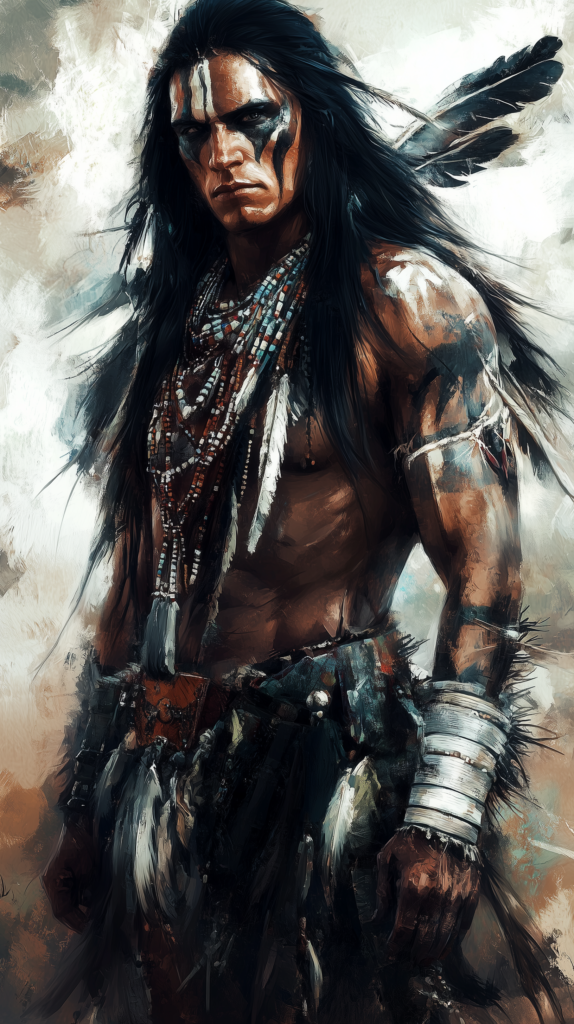
Crazy Horse (Tȟašúŋke Witkó) was an Oglala Lakota war leader. His exact birth date is disputed. He fought in Red Cloud’s War and played a major role in the 1876 battles of the Rosebud and Little Bighorn. He surrendered with his followers at Fort Robinson in May 1877 and died after being stabbed during an attempted arrest in September of that year. He did not sign the 1868 Fort Laramie Treaty. There are no authenticated photographs of him; the illustrations here are imaginative paintings, not portraits from life.
- National Park Service — Crazy Horse: campaigns, surrender and death.
- Aktá Lakota Museum — Crazy Horse: Lakota background and disputed birth details.
- Smithsonian National Postal Museum — Crazy Horse: leadership and absence of authenticated photographs.
Edition Rules and Licences
The D&D 5.5e / 2024 game conversion includes material from the System Reference Document 5.2.1 (SRD 5.2.1), © Wizards of the Coast LLC, available at D&D Beyond, under the Creative Commons Attribution 4.0 International License. The legacy 5e / 2014 conversion also uses modified SRD 5.1 rules under CC BY 4.0. These are original campaign statistics, not official game adaptations of the historical Crazy Horse.
The Pathfinder 1e and D&D 3.5e fighter conversions use Open Game Content from the Pathfinder Core Rulebook and D&D 3.5e System Reference Document under the Open Game License v1.0a reproduced below. Illustrations and the historical account are not designated Open Game Content.
Open Game License version 1.0a and copyright notices
OPEN GAME LICENSE Version 1.0a
The following text is the property of Wizards of the Coast, Inc. and is Copyright 2000 Wizards of the Coast, Inc (“Wizards”). All Rights Reserved.
1. Definitions: (a)”Contributors” means the copyright and/or trademark owners who have contributed Open Game Content; (b)”Derivative Material” means copyrighted material including derivative works and translations (including into other computer languages), potation, modification, correction, addition, extension, upgrade, improvement, compilation, abridgment or other form in which an existing work may be recast, transformed or adapted; (c) “Distribute” means to reproduce, license, rent, lease, sell, broadcast, publicly display, transmit or otherwise distribute; (d)”Open Game Content” means the game mechanic and includes the methods, procedures, processes and routines to the extent such content does not embody the Product Identity and is an enhancement over the prior art and any additional content clearly identified as Open Game Content by the Contributor, and means any work covered by this License, including translations and derivative works under copyright law, but specifically excludes Product Identity. (e) “Product Identity” means product and product line names, logos and identifying marks including trade dress; artifacts; creatures characters; stories, storylines, plots, thematic elements, dialogue, incidents, language, artwork, symbols, designs, depictions, likenesses, formats, poses, concepts, themes and graphic, photographic and other visual or audio representations; names and descriptions of characters, spells, enchantments, personalities, teams, personas, likenesses and special abilities; places, locations, environments, creatures, equipment, magical or supernatural abilities or effects, logos, symbols, or graphic designs; and any other trademark or registered trademark clearly identified as Product identity by the owner of the Product Identity, and which specifically excludes the Open Game Content; (f) “Trademark” means the logos, names, mark, sign, motto, designs that are used by a Contributor to identify itself or its products or the associated products contributed to the Open Game License by the Contributor (g) “Use”, “Used” or “Using” means to use, Distribute, copy, edit, format, modify, translate and otherwise create Derivative Material of Open Game Content. (h) “You” or “Your” means the licensee in terms of this agreement.
2. The License: This License applies to any Open Game Content that contains a notice indicating that the Open Game Content may only be Used under and in terms of this License. You must affix such a notice to any Open Game Content that you Use. No terms may be added to or subtracted from this License except as described by the License itself. No other terms or conditions may be applied to any Open Game Content distributed using this License.
3. Offer and Acceptance: By Using the Open Game Content You indicate Your acceptance of the terms of this License.
4. Grant and Consideration: In consideration for agreeing to use this License, the Contributors grant You a perpetual, worldwide, royalty-free, non-exclusive license with the exact terms of this License to Use, the Open Game Content.
5. Representation of Authority to Contribute: If You are contributing original material as Open Game Content, You represent that Your Contributions are Your original creation and/or You have sufficient rights to grant the rights conveyed by this License.
6. Notice of License Copyright: You must update the COPYRIGHT NOTICE portion of this License to include the exact text of the COPYRIGHT NOTICE of any Open Game Content You are copying, modifying or distributing, and You must add the title, the copyright date, and the copyright holder’s name to the COPYRIGHT NOTICE of any original Open Game Content you Distribute.
7. Use of Product Identity: You agree not to Use any Product Identity, including as an indication as to compatibility, except as expressly licensed in another, independent Agreement with the owner of each element of that Product Identity. You agree not to indicate compatibility or co-adaptability with any Trademark or Registered Trademark in conjunction with a work containing Open Game Content except as expressly licensed in another, independent Agreement with the owner of such Trademark or Registered Trademark. The use of any Product Identity in Open Game Content does not constitute a challenge to the ownership of that Product Identity. The owner of any Product Identity used in Open Game Content shall retain all rights, title and interest in and to that Product Identity.
8. Identification: If you distribute Open Game Content You must clearly indicate which portions of the work that you are distributing are Open Game Content.
9. Updating the License: Wizards or its designated Agents may publish updated versions of this License. You may use any authorized version of this License to copy, modify and distribute any Open Game Content originally distributed under any version of this License.
10. Copy of this License: You MUST include a copy of this License with every copy of the Open Game Content You Distribute.
11. Use of Contributor Credits: You may not market or advertise the Open Game Content using the name of any Contributor unless You have written permission from the Contributor to do so.
12. Inability to Comply: If it is impossible for You to comply with any of the terms of this License with respect to some or all of the Open Game Content due to statute, judicial order, or governmental regulation then You may not Use any Open Game Material so affected.
13. Termination: This License will terminate automatically if You fail to comply with all terms herein and fail to cure such breach within 30 days of becoming aware of the breach. All sublicenses shall survive the termination of this License.
14. Reformation: If any provision of this License is held to be unenforceable, such provision shall be reformed only to the extent necessary to make it enforceable.
15. COPYRIGHT NOTICE
Open Game License v 1.0a Copyright 2000, Wizards of the Coast, Inc.
System Reference Document Copyright 2000-2003, Wizards of the Coast, Inc.; Authors Jonathan Tweet, Monte Cook, Skip Williams, Rich Baker, Andy Collins, David Noonan, Rich Redman, Bruce R. Cordell, John D. Rateliff, Thomas Reid, James Wyatt, based on original material by E. Gary Gygax and Dave Arneson.
Pathfinder Roleplaying Game Core Rulebook © 2009, Paizo Publishing, LLC; Author: Jason Bulmahn, based on material by Jonathan Tweet, Monte Cook, and Skip Williams.
Keep this reference growing
If this page helped with your reading or game, you can support its upkeep or explore the curated books.
Explore the Bookshop — epics, classics and stories behind imagined worlds.