
Sir Elyan the White – Arthurian Knight of the Round Table
Sir Elyan the White – Arthurian Knight of the Round Table
The white-shield knight carries Camelot’s honour, Bors’s broken vow, and the blood of Constantinople into every court that names him.
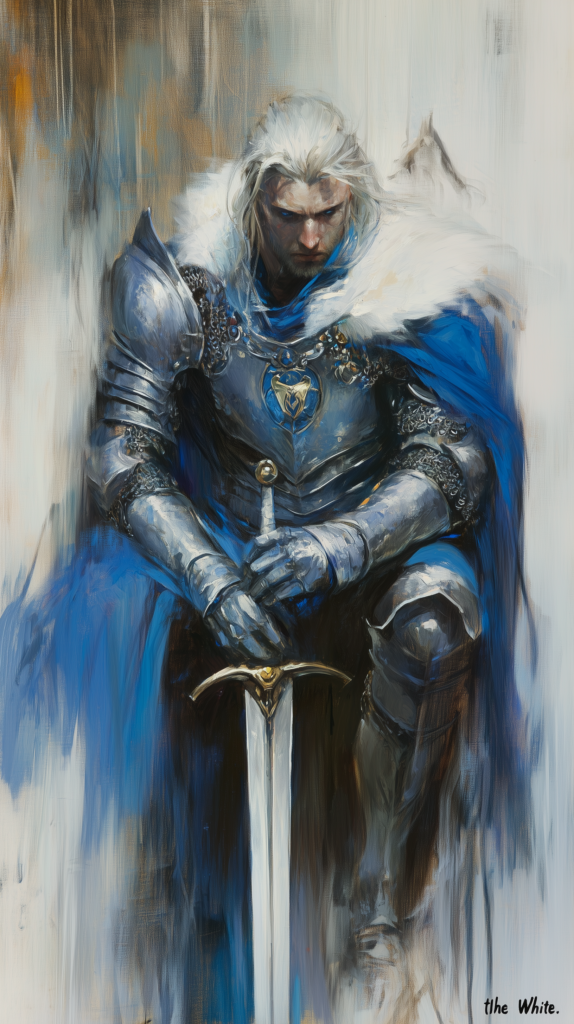
- Aliases: Elyan le Blanc, Helyan le Blanc, Helin le Blank, Helain, Helaine, Elain, Elayn, le Pale
- Culture: Arthurian romance, Vulgate Cycle, Post-Vulgate tradition, Prose Tristan
- Kind: Human knight
- Court Role: Knight of the Round Table
- Political Weight: Blood of Brandegore’s house and claimant-thread to Constantinople
- Faction Pressure: Arthur’s court, Bors’s honour, Lancelot’s kinship
- Lineage: Son of Sir Bors the Younger and Claire, daughter of King Brandegore
- Affiliations: King Arthur’s court, the Round Table, the House of Bors, Brandegore’s house, Lancelot’s kin
- Alignment: Lawful Good
- Loyalties: Arthur’s court in youth; Lancelot’s house when Camelot fractures
- Languages: English, French, Greek
Sir Elyan the White is a young Arthurian knight whose life begins in scandal and grows into honour. He is the son of Sir Bors the Younger and Claire, daughter of King Brandegore. Claire uses a magic ring to draw Bors into sleeping with her, creating the only famous breach of his vow of chastity. The result is Elyan: a child of enchantment, noble blood, and unresolved courtly silence.
At fifteen, Elyan is brought to Arthur’s court by Bors. He is recognised, accepted, and raised into the fellowship of the Round Table. He is not merely another young knight added to Camelot’s roll. His arrival binds together Bors’s reputation, Brandegore’s royal house, Sagramore’s family line, and the distant imperial blood of Constantinople.
Elyan’s story is larger than his age. He stands where Camelot, family honour, coercive love-magic, blood legitimacy, and imperial destiny meet. He is brave and courteous, but his name carries consequences before he has fully chosen what to do with them.
Appearance
Elyan is a young knight of composed courtly bearing, usually seen in polished mail and plate beneath a white or pale mantle. His shield is white, silver-white, or bone-pale, marked with a restrained device rather than loud heraldry.
The title “the White” belongs to his arms, shield, public image, and chivalric reputation. It does not need to mean white hair, glowing skin, or supernatural radiance.
At court, he looks carefully prepared: clean harness, controlled posture, measured words. On campaign, the mask loosens. He watches older knights closely, studies local custom before acting, and listens more than he speaks.
Personality
Elyan is courteous, disciplined, and serious without being cold. He believes in the Round Table because he enters it young enough for the ideal still to feel whole. He is not naive, but he has not yet become cynical.
He dislikes mockery aimed at birth, legitimacy, hidden parentage, broken vows, or uncertain inheritance. In open court he controls his temper, but in private he is easier to wound than he admits.
He respects Bors deeply, but his father’s holiness is also a burden. Elyan is the living reminder that even Bors’s discipline has one strange, enchanted exception.
Motivations
Elyan wants to prove that he deserves his seat at the Round Table. He wants a name that can stand beside Bors, Lionel, Lancelot, and the greater knights of his kin without being swallowed by them.
He is drawn to difficult oaths, border embassies, tournament challenges, disputed inheritances, and quests where judgement matters as much as courage.
His imperial blood troubles him. Through Claire, Brandegore, Sagramore, and their eastern ancestry, Elyan carries a connection to Constantinople. He does not yet know whether that inheritance is a destiny, a courtly claim, a political trap, or a romance trying to force itself into history.
Fears and Inner Conflict
Elyan fears becoming a political token. One court may praise him as a promising young knight while another quietly weighs his bloodline, usefulness, and future claim.
He also fears being treated as a stain on Bors’s virtue. He knows his birth is tied to enchantment and a broken vow, and he is old enough to understand that people may judge the child through the scandal of the parents.
His deepest conflict is not cowardice. Elyan is brave. The question is whether bravery is enough when every oath binds family, court, and empire together.
Role in the World
Elyan is a Round Table knight with strong political value. He is useful in tournaments, embassies, hostage plots, inheritance disputes, court accusations, eastern diplomacy, and quests involving family honour.
He should not be written as a generic holy warrior. His strength comes from training, lineage, horsemanship, court discipline, and the moral pressure of the Round Table.
Elyan’s connection to Constantinople is not a quiet title already settled on his shoulders. It is a dangerous claim, bloodline pressure, prophecy, or later destiny that foreign courts may try to force into the present. Envoys may seek him, rivals may kidnap him, eastern claimants may use him, and Camelot may find itself drawn into imperial politics through a young knight who never asks to become a banner.
Relationships
- Sir Bors the Younger: Elyan’s father. Bors brings him to Arthur’s court and gives him both legitimacy and impossible expectations. Elyan admires him, but living beneath Bors’s reputation is difficult.
- Claire: Elyan’s mother, daughter of King Brandegore. She uses a magic ring to draw Bors into sleeping with her. This makes Elyan’s origin politically and morally difficult: he is noble, useful to many, loved by some, and born from an act Camelot would rather not discuss too plainly.
- King Brandegore: Elyan’s maternal grandfather. Brandegore’s house gives Elyan rank, courtly weight, and access to the eastern imperial bloodline.
- Sir Sagramore: Claire’s half-brother in the tradition preserved here. This makes Sagramore Elyan’s maternal uncle and ties Elyan more firmly to foreign and imperial Arthurian material.
- Sir Lionel: Elyan’s uncle through Bors. Lionel is fierce, dangerous, and protective in a way that may not always be gentle.
- Sir Lancelot: Elyan’s famous cousin and one of the central powers of his life. Elyan later helps Lancelot rescue Guinevere after the affair is exposed and follows him into exile during the war with Arthur. This loyalty makes Elyan more than a neutral Round Table name; when Camelot breaks, he is drawn toward Lancelot’s side.
- Queen Guinevere: Elyan’s connection to Guinevere becomes dangerous after the exposure of her affair with Lancelot. His role in helping Lancelot rescue her places him inside the final political and moral fracture of the Round Table.
- King Arthur: Elyan’s liege. Arthur’s acceptance gives Elyan honour, but the later war forces Elyan into the tragedy of divided loyalties.
- Dragan / Dagarius: In the Prose Tristan tradition, Elyan takes the vacant Round Table seat that belonged to Dragan after Dragan is killed by Tristan. This gives Elyan’s seat a sharper edge: he does not simply enter an empty honour, but steps into a place opened by another knight’s violent end.
Current Use in the Campaign
Elyan works best as a young Round Table knight with real promise and real pressure. He can be an ally, escort, tournament rival, hostage, envoy, witness, accused knight, or reluctant claimant.
He is especially useful when the story needs a knight who still believes in Camelot but is already tied to the forces that will break it: Lancelot’s kinship, Guinevere’s rescue, exile, imperial politics, and the unresolved scandal of his own birth.
Mechanics Tabs
The rules below are mechanics compatible for different game editions.
Sir Elyan the White 5.5e
Sir Elyan the White Pathfinder 1e / 3.5e
Sir Elyan the White 5.5e-Compatible Rules
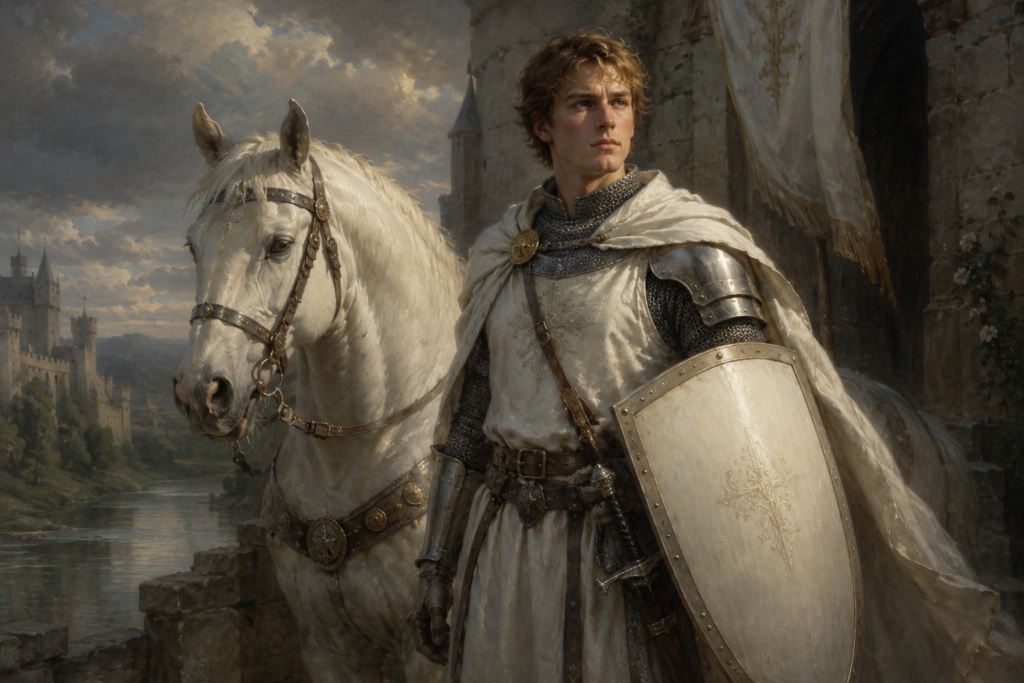
Sir Elyan the White
Medium Humanoid, Lawful Good
Armor Class 19
Initiative +1
Hit Points 112
Speed 30 ft.
Proficiency Bonus +3
| STR | DEX | CON | INT | WIS | CHA |
|---|---|---|---|---|---|
| 18 (+4) | 12 (+1) | 16 (+3) | 13 (+1) | 14 (+2) | 16 (+3) |
Saving Throws Str +7, Con +6, Wis +5, Cha +6
Skills Athletics +7, History +4, Insight +5, Perception +5, Persuasion +6
Condition Resistances advantage on saving throws against being frightened
Senses passive Perception 15
Languages English, French, Greek
Challenge 7
Traits
Knight of the White Shield. Elyan has advantage on saving throws against being frightened. Allies within 10 feet of him gain a +2 bonus to saving throws against being frightened while he is conscious and carrying his shield.
House of Bors Discipline. Once per day, when Elyan fails a Wisdom or Charisma saving throw, he can reroll it. He must use the new result.
Blood of Two Courts. Elyan has advantage on Charisma checks made to negotiate with nobles, envoys, oathbound knights, and recognised court officers from Arthurian, British, French, or eastern imperial courts. This trait does not apply to bandits, raiders, beasts, or enemies who reject courtly law.
Marked by a Broken Vow. Elyan has advantage on Wisdom saving throws against charm effects created by rings, tokens, love magic, courtly gifts, or similar personal objects. He does not gain this benefit against unrelated magic.
Mounted Knight. While mounted, Elyan has advantage on saving throws made to avoid being knocked prone or forcibly dismounted.
Heir’s Strike. Once on each of Elyan’s turns, when he hits a creature affected by his White Shield Challenge with a weapon attack, the target takes an extra 7 (2d6) damage.
Actions
Multiattack. Elyan makes two Longsword attacks or one Lance attack and one Shield Bash.
Longsword. Melee Weapon Attack: +7 to hit, reach 5 ft., one target. Hit: 8 (1d8 + 4) slashing damage, or 9 (1d10 + 4) slashing damage if used with two hands.
Lance. Melee Weapon Attack: +7 to hit, reach 10 ft., one target while mounted. Hit: 10 (1d12 + 4) piercing damage. If Elyan moved at least 20 feet straight toward the target while mounted before the hit, the target takes an extra 7 (2d6) piercing damage.
Shield Bash. Melee Weapon Attack: +7 to hit, reach 5 ft., one target. Hit: 6 (1d4 + 4) bludgeoning damage, and the target must succeed on a DC 15 Strength saving throw or fall prone.
White Shield Challenge. Elyan chooses one creature he can see within 30 feet. For 1 minute, Elyan has advantage on opportunity attacks against that creature, and the creature has disadvantage on attack rolls against creatures other than Elyan while it is within 5 feet of him. This effect ends early if Elyan is incapacitated or if another creature marks the same target with a similar challenge.
Rally the Oathbound. Recharge 5–6. Elyan chooses up to three allies within 30 feet who can hear him. Each chosen ally gains 9 temporary hit points and may move up to half its speed without provoking opportunity attacks.
Bonus Actions
Commanding Spur. While mounted, Elyan can command his mount to Dash or Disengage.
Guarded Advance. Elyan moves up to 10 feet without provoking opportunity attacks from one creature he has hit this turn.
Reactions
Shield the Oathbound. When a creature within 5 feet of Elyan is hit by an attack, Elyan adds +3 to that creature’s AC against the triggering attack, possibly causing it to miss. Elyan must be wielding a shield.
Parry. Elyan adds +3 to his AC against one melee attack that would hit him. He must see the attacker and be wielding a melee weapon.
Sir Elyan the White Pathfinder 1e / 3.5e-Compatible Rules
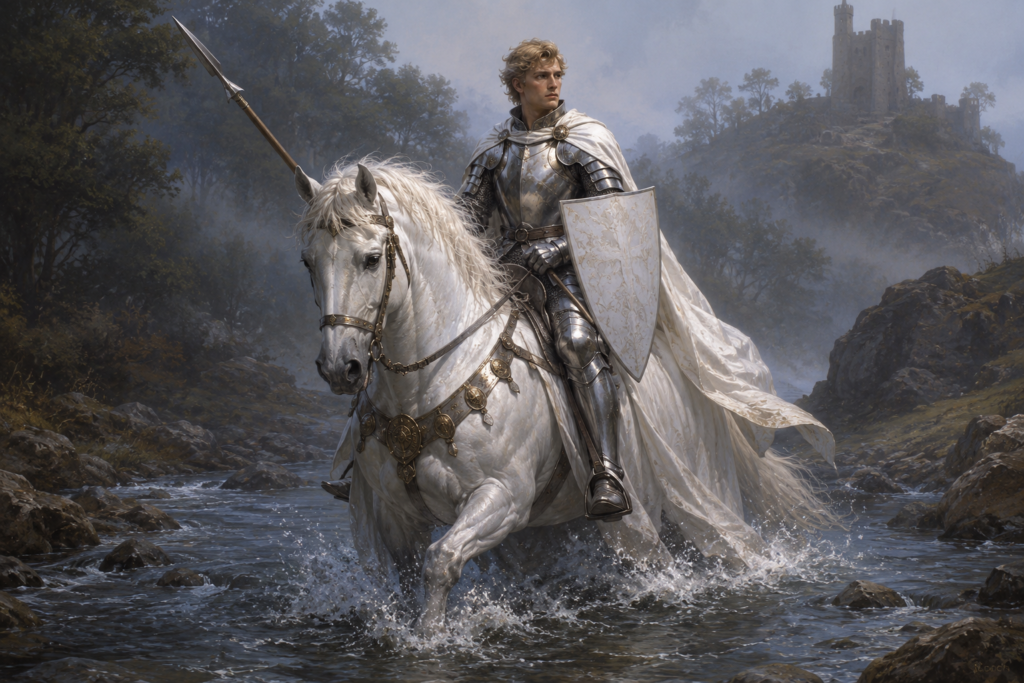
Sir Elyan the White
Male human fighter 5 / cavalier 3
Lawful Good Medium humanoid
CR 7
Init +1; Senses Perception +11
Defense
AC 22, touch 11, flat-footed 21
hp 72
Fort +10, Ref +3, Will +6
Defensive Abilities bravery +1, banner of the white shield
Offense
Speed 20 ft. in full plate, 30 ft. unarmoured
Melee masterwork longsword +15/+10 (1d8+5/19–20)
Mounted Lance masterwork lance +13 (1d8+4/x3), or 3d8+12 on a mounted charge with Spirited Charge
Shield Bash heavy steel shield +12 (1d4+4)
Special Attacks challenge 1/day, tactician 1/day, weapon training with heavy blades +1
Statistics
| STR | DEX | CON | INT | WIS | CHA |
| 18 (+4) | 12 (+1) | 16 (+3) | 13 (+1) | 14 (+2) | 16 (+3) |
Base Atk +8; CMB +12; CMD 23
Feats Combat Reflexes, Iron Will, Mounted Combat, Power Attack, Ride-By Attack, Shield Focus, Spirited Charge, Weapon Focus (longsword)
Skills Diplomacy +14, Handle Animal +11, Knowledge (nobility) +10, Perception +11, Ride +12, Sense Motive +11
Languages English, French, Greek
Combat Gear masterwork full plate, heavy steel shield painted white, masterwork longsword, masterwork lance, court horse, white mantle, signet of Brandegore’s house
Special Rules
Banner of the White Shield. Allies within 60 feet who can see Elyan’s shield or banner gain a +2 morale bonus on saving throws against fear and a +1 morale bonus on attack rolls made as part of a charge.
Blood of Two Courts. Elyan gains a +4 circumstance bonus on Diplomacy and Sense Motive checks involving Arthurian courts, British kings, French nobles, Round Table knights, eastern envoys, and formal imperial officers.
Marked by a Broken Vow. Elyan gains a +2 bonus on Will saves against charm, compulsion, and love-magic effects delivered through rings, tokens, courtly gifts, or similar personal objects.
House of Bors Discipline. Once per day, Elyan may reroll a failed Will save against fear, charm, compulsion, or an effect that would force him to break an oath. He must keep the second result.
3.5e Adjustment. Use Listen and Spot in place of Perception. If cavalier is not being used, treat Elyan as a human fighter 8 with Mounted Combat, Ride-By Attack, Spirited Charge, and a knightly challenge usable once per day.
Combat Tactics
Elyan fights like a trained court knight, not a berserker. He prefers to begin mounted, uses shield pressure to control space, and protects allies carrying banners, messages, relics, or wounded nobles.
He does not waste challenges on weak foes. Against oathbreakers, kidnappers, traitor knights, and those who attack envoys or prisoners, he becomes colder and more direct.
Elyan withdraws only to preserve an oath, a charge, or an innocent life. If forced to choose between winning a duel and protecting a sworn companion, he protects the companion.
Treasure and Rewards
Elyan does not carry treasure like a wandering mercenary. His possessions are courtly and symbolic: a white shield, knightly harness, seal, horse, lance, sword, letters of introduction, and sometimes a token from Brandegore’s house.
A party that earns his trust may gain a court introduction, a sealed passage through Arthurian lands, a place at a lesser tournament, or a letter that opens doors among nobles who respect the House of Bors.
Using Elyan in Your Game
Use Elyan when the campaign needs a knight who is good, but not simple. He can be rescued, challenged, escorted, accused, courted by rival factions, or sent as Arthur’s young representative to a dangerous border court.
He should not overshadow Lancelot, Bors, Galahad, Lionel, or Arthur. His strength is story pressure: inheritance, legitimacy, youth, court expectation, Lancelot’s faction, Guinevere’s rescue, and the burden of being watched by greater names.
Adventure Hooks
The Ring in Brandegore’s Vault
A servant steals the magic ring once used by Claire to draw Bors into desire. Some nobles want the ring destroyed, others want it hidden, and one eastern envoy wants it as proof that Elyan’s bloodline is compromised by enchantment. Elyan wants the truth, but truth may damage both his mother and father.
The Vacant Seat of Dragan
A knight loyal to Dragan’s memory claims Elyan has no right to the seat once held by the slain Dagarius. The dispute begins as a tournament challenge but becomes a legal and supernatural test of whether a Round Table seat can carry the unfinished wrath of its previous holder.
Envoys from Constantinople
Eastern envoys arrive at Camelot and name Elyan as a future imperial claimant. Accepting them may drag Arthur’s court into imperial politics. Refusing them may abandon a faction that needs Camelot’s protection. Elyan must decide whether he is a knight first, Bors’s son first, or an emperor whether he wants the title or not.
The Rescue of Guinevere
Rumours spread that Lancelot intends to rescue Guinevere. Elyan is asked to choose before the deed is done. Arthur’s officers want him watched. Bors wants him cautious. Lionel wants him ready. Elyan must decide whether family loyalty, royal law, or personal honour commands him now.
Mythic and Historic Context
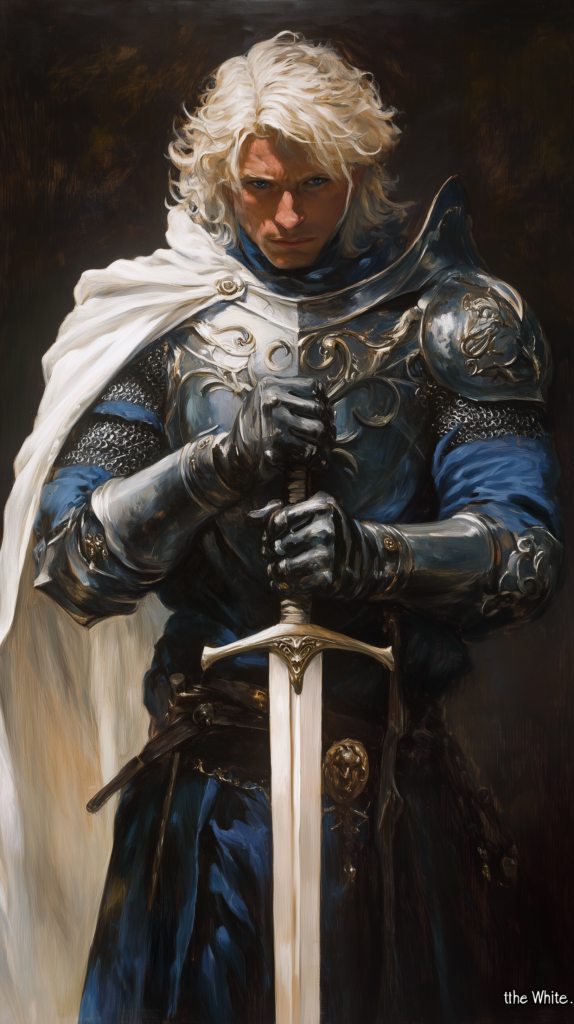
Sir Elyan the White is an Arthurian figure known under several related names, including Elyan le Blanc, Helyan le Blanc, Helin le Blank, Helain, Helaine, Elain, Elayn, and le Pale. The name “le Blanc” means “the White,” and this entry treats the title as a heraldic and courtly epithet rather than as proof of supernatural radiance.
The firmest source anchor for this entry is Le Morte d’Arthur, Book XII, Chapter IX. In that chapter, Sir Bors de Ganis and Sir Lionel come to the house of King Brandegore while searching for Lancelot. There Bors finds the son he had fathered on Brandegore’s daughter fifteen years earlier. The boy is named Helin le Blank. Bors takes him to Camelot, where King Arthur recognises him as Bors’s son and Brandegore’s nephew, has him made a Knight of the Round Table, and the text says that he proves a good and adventurous knight.
Le Morte d’Arthur is the best-known English prose compilation of Arthurian legend, completed by Sir Thomas Malory in the fifteenth century and printed by William Caxton in 1485. Malory draws on earlier French romance material, which helps explain why Elyan’s name, family details, and later destiny vary across Arthurian traditions.
The broader prose-romance tradition, especially the Vulgate Cycle, expands the material around Elyan’s birth and bloodline. In that tradition, Elyan is the son of Sir Bors the Younger and Claire, daughter of King Brandegore. Claire uses a magic ring to draw Bors into sleeping with her, creating the one famous breach of Bors’s vow of chastity. This makes Elyan’s birth noble, legitimate enough to matter, and morally difficult enough that courts may prefer silence to open judgement.
Claire’s family line also draws Elyan into wider imperial material. She is associated with Sagramore’s family and with descent from the Eastern Roman imperial line, which helps explain the later tradition that Elyan becomes Emperor of Constantinople. For this campaign entry, that material is best treated as a dangerous claim, prophecy, or later destiny rather than as a simple office he already holds.
The Post-Vulgate and Prose Tristan traditions also reshape Elyan’s role. In one strand, he takes the vacant Round Table seat that had belonged to Dragan, also called Dagarius, after Dragan is killed by Tristan. Later tradition places Elyan among Lancelot’s supporters: he helps Lancelot rescue Queen Guinevere after the affair is exposed and follows him into exile during the war with Arthur.
This entry keeps those traditions useful without making them all equally certain. Malory supplies the clean source core: Helin le Blank is Bors’s son, Brandegore’s grandson, and a young Round Table knight. The wider romance tradition supplies the pressure: Claire’s magic ring, Sagramore’s kinship, Constantinople’s imperial blood, Dragan’s vacant seat, Guinevere’s rescue, and Elyan’s later loyalty to Lancelot. Together they make Elyan more than a minor name in a knightly list. He becomes a young court figure whose honour, birth, and future title can pull Camelot into scandal, faction, and empire.
Keep this reference growing
If this page helped with your reading or game, you can support its upkeep or explore the curated books.
Explore the Bookshop — epics, classics and stories behind imagined worlds.