
Illusion • Mass Disguise
Seeming
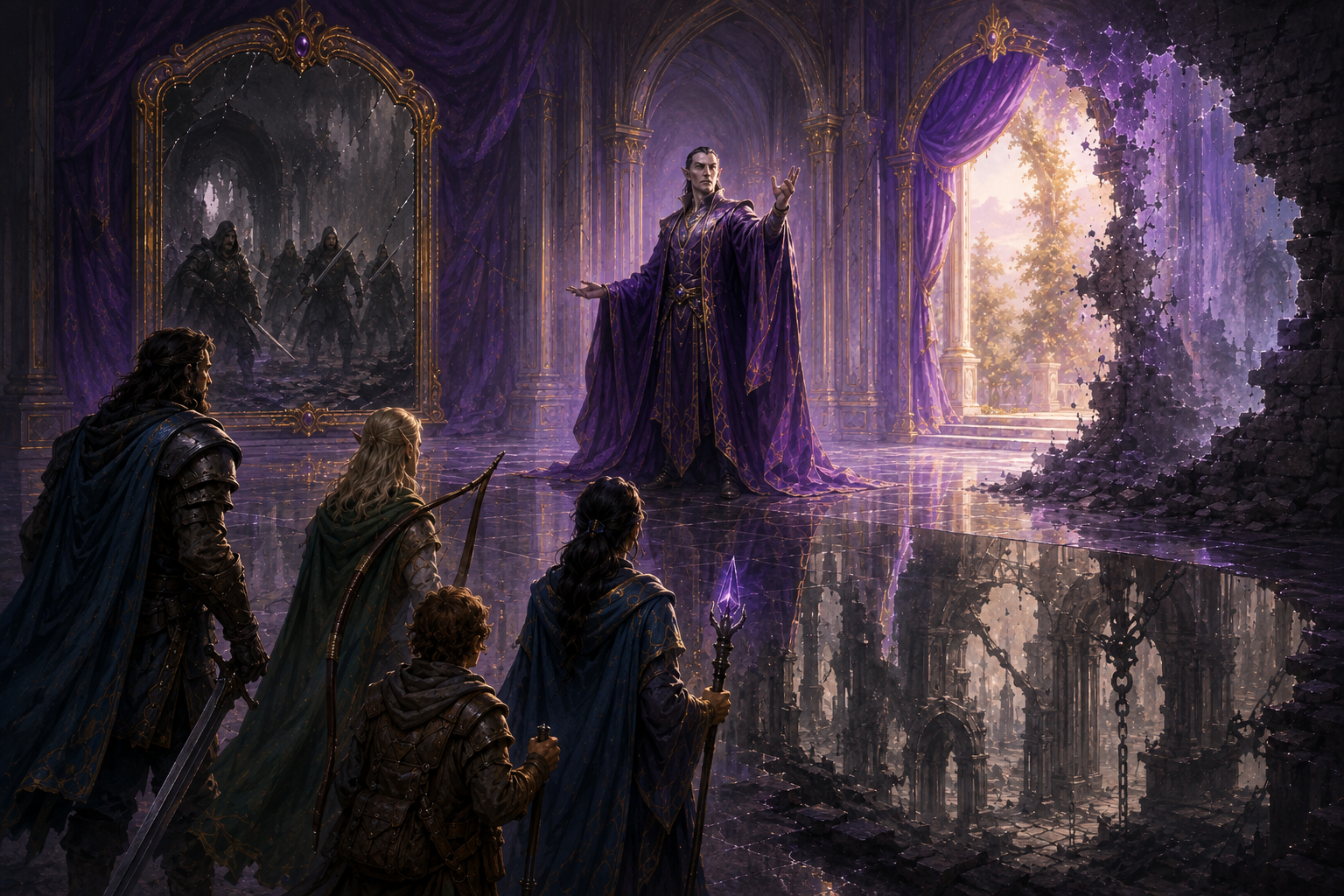
Seeming disguises an entire group at once. The modern versions can alter the apparent bodies and equipment of every chosen creature in range, while Pathfinder and D&D 3.5e use the older mass-Disguise Self framework.
Seeming at a Glance
| 5.5e / 2024 | 5th-level Illusion; 30-foot range; 8 hours |
|---|---|
| 5e / 2014 | 5th-level Illusion; 30-foot range; 8 hours |
| Pathfinder 1e | Bard 5, Sorcerer/Wizard 5; 12 hours |
| D&D 3.5e | Bard 5, Sorcerer/Wizard 5; 12 hours |
| Core limitation | The disguise is visual and fails physical inspection |
Spell Rules by Edition
Seeming — 5.5e / 2024
| Level | 5th-level Illusion |
|---|---|
| Casting Time | Action |
| Range | 30 feet |
| Components | V, S |
| Duration | 8 hours |
| Save | Charisma for an unwilling target |
Give an illusory appearance to each creature of your choice that you can see within range. You can give the targets the same appearance or different ones, changing both bodies and equipment.
A target can appear up to 1 foot shorter or taller and heavier or lighter, but must keep the same basic arrangement of limbs. Physical inspection exposes the illusion. A creature taking the Study action can make an Intelligence (Investigation) check against your spell save DC to recognize the disguise.
Seeming — 5e / 2014
| Level | 5th-level Illusion |
|---|---|
| Casting Time | 1 action |
| Range | 30 feet |
| Components | V, S |
| Duration | 8 hours |
| Save | Charisma for an unwilling target |
You change the appearance of any number of creatures you can see within range. The illusion covers bodies, clothing, armour, weapons and equipment but cannot change the basic arrangement of limbs.
Physical interaction reveals discrepancies. A creature can use its action to inspect a target and make an Intelligence (Investigation) check against your spell save DC.
Seeming — Pathfinder 1e
| School | Illusion (glamer) |
|---|---|
| Level | Bard 5, Sorcerer/Wizard 5 |
| Casting Time | 1 standard action |
| Components | V, S |
| Range | Close (25 ft. + 5 ft./2 levels) |
| Targets | One creature per two levels, no two more than 30 ft. apart |
| Duration | 12 hours (D) |
| Saving Throw | Will negates or Will disbelief if interacted with |
| Spell Resistance | Yes or no; see text |
The spell functions like Disguise Self except it can affect other creatures. Unwilling targets can resist with a Will save or Spell Resistance; affected creatures return to normal appearance if slain.
Seeming — D&D 3.5e
| School | Illusion (Glamer) |
|---|---|
| Level | Bard 5, Sorcerer/Wizard 5 |
| Components | V, S |
| Casting Time | 1 standard action |
| Range | Close (25 ft. + 5 ft./2 levels) |
| Targets | One creature per two levels, no two more than 30 ft. apart |
| Duration | 12 hours (D) |
| Saving Throw | Will negates or Will disbelief if interacted with |
| Spell Resistance | Yes or no; see text |
The 3.5e form also functions like Disguise Self applied to multiple creatures. The disguise is visual rather than physical and unwilling creatures can resist.
What Changed?
- 2024: the Study action is the explicit way to inspect the disguise, while the broad visual effect remains familiar.
- 2014: the same 30-foot, 8-hour mass-disguise concept uses an action for inspection.
- Pathfinder 1e / 3.5e: the spell affects one creature per two caster levels and lasts 12 hours.
Counterplay and Rulings
Seeming never changes a creature’s actual body or equipment. Touch, collisions, footprints, armour fit and other physical evidence can reveal that something is wrong.
Dispel Magic can end the effect under the normal rules of the edition. True-seeing effects and other illusion-piercing magic can also expose the disguise where their rules apply.
Using Seeming in Play
Seeming is built for group infiltration: disguising an adventuring party as guards, merchants, pilgrims, soldiers or members of another household. Its long duration makes it useful well beyond a single encounter.
Related Magic
Compare Disguise Self, Alter Self, Major Image, and the wider Witch spell archive.
Mythical Context
Ovid’s transformations show how outward form and hidden identity can diverge in myth. A disguised court, troop or household can carry the same ambiguity: which familiar face conceals the enemy, and which unexpected visitor is still a friend? See the Metropolitan Museum’s early printed Ovid.
Historical Context
Renaissance illustrated editions of the Metamorphoses preserved stories of bodily change in print and woodcut. Such images document literary interpretations of shape and disguise, rather than historical transformation spells that could remake a group at once. See the Metropolitan Museum’s 1501 Venetian Ovid.
Rules Sources and Licensing
2024 and 2014 use their respective D&D spell rules; Pathfinder 1e uses the Core Rulebook form; D&D 3.5e uses the SRD-era spell. Edition mechanics are kept separate.
Keep this reference growing
If this page helped with your reading or game, you can support its upkeep or explore the curated books.
Explore the Bookshop — epics, classics and stories behind imagined worlds.