
Lightning Bolt Spell
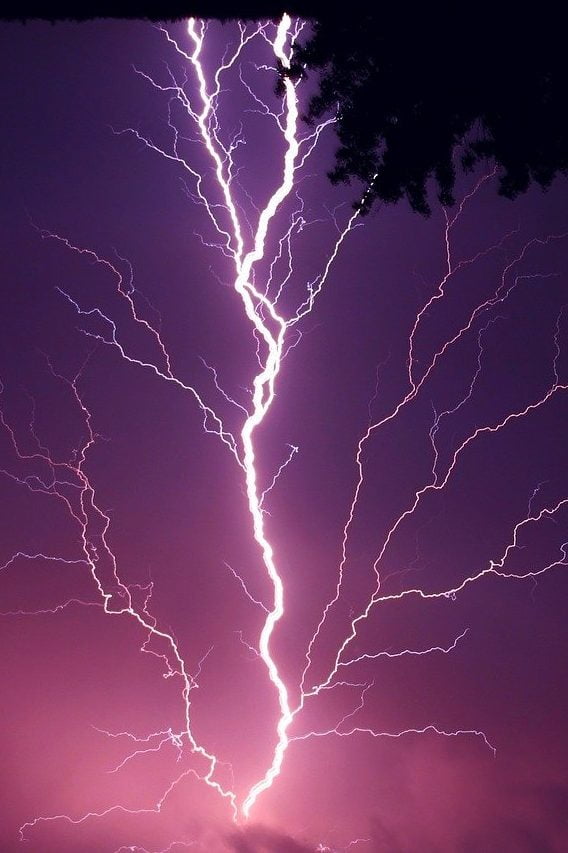
Lightning Bolt turns a straight line of battlefield into a killing ground. Unlike a blast centred at range, the spell begins with the caster and rewards clear lanes, narrow passages, ranks of enemies, bridges, corridors and any moment when several targets can be caught along one path.
The spell has changed less in raw damage than in the rules surrounding its path. Modern D&D fixes the line at 100 feet and scales damage with higher spell slots. Pathfinder 1e and D&D 3.5e use a 120-foot line, caster-level damage and much more explicit rules for objects, combustibles and barriers.
Quick Rules Reference
- School: Evocation.
- Core role: High lightning damage in a long, narrow line.
- Best terrain: Corridors, bridges, tunnels, streets, ranks and other spaces where enemies line up.
- Modern damage: 8d6 Lightning, Dexterity save for half; +1d6 per slot level above 3rd.
- Legacy damage: 1d6 electricity damage per caster level, maximum 10d6; Reflex save for half.
- Key difference: PF1e/3.5e contain explicit object, combustible, low-melting-metal and barrier rules that are not part of the 2024 spell text.
Rules
Lightning Bolt by Edition
Lightning Bolt — 5.5e / 2024
| Level | 3rd-level Evocation |
|---|---|
| Classes | Sorcerer, Wizard |
| Casting Time | 1 Action |
| Range | Self |
| Area | 100-foot-long, 5-foot-wide Line |
| Components | V, S, M (a bit of fur and a crystal rod) |
| Duration | Instantaneous |
| Save | Dexterity; half damage on a success |
A stroke of lightning blasts from you in a direction you choose. Each creature in the Line makes a Dexterity saving throw, taking 8d6 Lightning damage on a failed save or half as much on a successful one.
Using a Higher-Level Spell Slot: the damage increases by 1d6 for each spell slot level above 3rd.
Important: the 2024 spell text does not include the older clauses about igniting flammable objects, melting low-melting metals or continuing through a barrier it destroys.
Lightning Bolt — 5e / 2014
| Level | 3rd-level Evocation |
|---|---|
| Classes | Sorcerer, Wizard |
| Casting Time | 1 action |
| Range | Self (100-foot line) |
| Area | 100-foot-long, 5-foot-wide line |
| Components | V, S, M (a bit of fur and a rod of amber, crystal, or glass) |
| Duration | Instantaneous |
| Save | Dexterity; half damage on a success |
A stroke of lightning forms a 100-foot-long, 5-foot-wide line. Each creature in it takes 8d6 lightning damage on a failed Dexterity save or half as much on a success.
The lightning ignites flammable objects in the area that are not being worn or carried.
At Higher Levels: the damage increases by 1d6 for each spell slot level above 3rd.
Lightning Bolt — Pathfinder 1e
| School | Evocation [electricity] |
|---|---|
| Level | Sorcerer/Wizard 3 |
| Casting Time | 1 standard action |
| Components | V, S, M (fur and a glass rod) |
| Range | 120 ft. |
| Area | 120-ft. line |
| Duration | Instantaneous |
| Saving Throw | Reflex half |
| Spell Resistance | Yes |
The bolt deals 1d6 electricity damage per caster level, maximum 10d6, to each creature in its area.
It sets fire to combustibles and damages objects in its path. It can melt low-melting-point metals. If the damage destroys an intervening barrier, the bolt can continue beyond it if the remaining range permits; otherwise it stops at the barrier.
Lightning Bolt — D&D 3.5e
| School | Evocation [Electricity] |
|---|---|
| Level | Sorcerer/Wizard 3 |
| Casting Time | 1 standard action |
| Components | V, S, M |
| Range | 120 ft. |
| Area | 120-ft. line |
| Duration | Instantaneous |
| Saving Throw | Reflex half |
| Spell Resistance | Yes |
The spell deals 1d6 electricity damage per caster level, maximum 10d6, to each creature in the line.
Combustibles can ignite and objects in the path take damage. Low-melting-point metals can melt. A barrier destroyed by the bolt can allow the effect to continue beyond it if sufficient range remains.
Material component: a bit of fur and an amber, crystal, or glass rod.
What Changed?
- 2024 and 2014 deal the same base damage: 8d6 in a 100-foot by 5-foot line, with +1d6 for each slot level above 3rd.
- 2024 simplifies the environmental text: its core spell no longer states that the bolt ignites flammable objects.
- The 2024 material component is narrower: a bit of fur and a crystal rod, rather than the 2014 choice of amber, crystal or glass rod.
- Pathfinder 1e and D&D 3.5e use a longer 120-foot line and scale damage by caster level to a maximum of 10d6.
- PF1e/3.5e explicitly interact with objects and barriers: those rules should not be imported into modern D&D unless the table’s general rules independently produce the same result.
Using Lightning Bolt
Lightning Bolt rewards geometry. Fireball asks where the enemy is clustered; Lightning Bolt asks whether the battlefield can be turned into a line. Doorways, alleys, bridges, stairways, tunnels, ship decks and advancing ranks all make the spell more efficient.
Because the line begins at the caster, positioning matters before the spell is cast. A few feet of movement can change a one-target bolt into a three-target bolt—or put an ally in the line. The best caster often spends movement first, casts second, and already knows where the escape route lies afterward.
Tactics and Edge Cases
- Line up before you cast: use movement, forced movement, chokepoints and allied positioning to create a clean lane.
- Do not assume it bends: Lightning Bolt is a line, not a chain. Creatures outside that line are unaffected unless another rule says otherwise.
- Cover still matters through the edition’s general rules: do not import PF1e/3.5e barrier-destruction language into 2024 or 2014 automatically.
- Objects differ by edition: legacy rules explicitly damage objects in the path; modern D&D spell text primarily defines its effect on creatures, with 2014 additionally igniting exposed flammable objects.
- Resistance is often the real defence: creatures resistant or immune to lightning/electricity can blunt a perfect line, so identify the target before committing a high-level slot.
Lightning Bolt in the World
A straight-line killing spell changes how defenders build and how experienced soldiers stand. Long corridors become dangerous, gatehouses avoid neat ranks, and veteran troops learn not to offer a spellcaster a perfect file of bodies. On a ship, bridge or narrow street, a single caster can turn architecture into a weapon.
The visual signature is unmistakable: a violent stroke, ozone, scorched surfaces and a path that points directly back toward the caster. Unlike subtler magic, Lightning Bolt rarely leaves doubt about where the attack came from.
Related Magic
- Fireball — the other benchmark 3rd-level area-damage spell, trading a line for a sphere.
- Chain Lightning — higher-level lightning that jumps between selected targets.
- Call Lightning — sustained storm magic with repeated strikes.
- Protection from Energy — a direct defensive answer to elemental damage in modern editions.
- Resist Energy — the legacy-edition defensive counterpart.
Rules Sources and Licensing
The 2024 rules summary follows the current D&D Basic Rules and SRD 5.2.1 presentation. The 2014 rules summary follows the 2014 Basic Rules/SRD 5.1 presentation. Pathfinder 1e and D&D 3.5e mechanics are kept in separate legacy-edition sections and use their open rules references. Original explanatory prose, tactics and setting material are not rules text.
Keep this reference growing
If this page helped with your reading or game, you can support its upkeep or explore the curated books.
Explore the Bookshop — epics, classics and stories behind imagined worlds.