
Duchy of Berg (State of the Holy Roman Empire)
Duchy of Berg (State of the Holy Roman Empire)
Nestled in the western region of the Holy Roman Empire, the Duchy of Berg boasts a long history and a diverse cultural heritage. Despite its strategic location, the Duchy has remained relatively untouched by the turmoil of the past century, and its people have managed to maintain a strong sense of tradition and community.
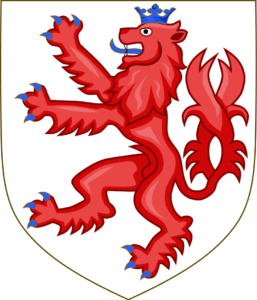
- Coat of arms/Flag: The coat of arms of the Duchy of Berg consists of a red lion on a silver background.
- Status: Duchy
- General Alignment: Neutral
- Capital City: Düsseldorf
- Other Settlements: Elberfeld, Barmen, Solingen, Remscheid, Ratingen and nearby market villages; Elberfeld and Barmen are separate communities, not one later city called Wuppertal.
- Common languages: German, French
- Religion(s): Local household, civic, rural, court and ancestral traditions
- Demographics: The Duchy of Berg is home to primarily German-speaking citizens.
- Government: Feudal Monarchy
- Legislature: Ducal Council
- Population: Approximately 150,000 people
- Places of interest:
- Schloss Burg, a medieval castle located in Solingen
- The wooded Düssel valley, limestone outcrops and old paths used by shepherds, hunters and woodland shrine keepers
- St. Lambertus Church, a Romanesque church located in Düsseldorf
- The fortified approaches to Jülich, seat of Gerhard’s other duchy; its later Renaissance citadel does not yet stand.
- Current Ruler: Gerhard VII, Duke of Jülich-Berg and Count of Ravensberg; a disputed proposed transfer of some family lands to Cologne places the dynasty under pressure.
- Other Notable residents:
- Johann Wilhelm, Elector Palatine
- Anna Maria Luisa de’ Medici, last descendant of the House of Medici
- Jan van Eyck, famous painter
- Nicholas Kratzer,renowned astronomer and mathematician
- Notable places:
- The ducal palace in Düsseldorf
- The separate market streets and magistrates’ courts of Barmen and Elberfeld
- The sacred precinct and old stone halls of Altenberg, whose temple keepers preserve guild pledges and ancestral land grants.
The Duchy of Berg is situated in the heart of the Rhineland, with the Rhine River forming its western boundary. To the north lies the Duchy of Cleves, while to the south is the Duchy of Jülich. The Duchy of Berg is characterized by its rolling hills, lush forests, and fertile farmland. The landscape is dotted with picturesque villages, each with its own unique character and customs.
The people of the Duchy of Berg are a diverse mix of cultures and traditions. The majority of the population is German, but there are also significant communities of Dutch and French immigrants. The Duchy is known for its skilled craftsmen and artisans, who produce a wide range of goods, including textiles, pottery, and jewelry.
Berg has not escaped the troubles of its duke. In 1444, Gerhard VII defeated Arnold of Egmont at Linnich while pressing his claim to Guelders. The victory did not resolve the succession: a negotiated settlement followed in 1447, and merchants still encounter armed retainers and conflicting safe-conducts on the roads between Jülich, Berg and Guelders. The forests of Berg also shelter creatures from local folklore and mythology. The most famous of these is the Berggeist, a spirit said to inhabit the hills and forests of the region. According to legend, the Berggeist is a mischievous creature who delights in playing pranks on travelers and locals alike. Other mythical creatures said to inhabit the Duchy include the Lindwurm, a dragon-like beast that terrorizes the countryside, and the Rübezahl, a giant who lives in the mountains and is said to possess great magical powers.
In summary, the Duchy of Berg is a diverse and culturally rich region, characterized by its picturesque landscape, skilled craftsmen, and unique folklore. Despite its relative isolation, the Duchy is home to a variety of mythical creatures and legendary figures, adding to its mystical allure.
Keep this reference growing
If this page helped with your reading or game, you can support its upkeep or explore the curated books.
Explore the Bookshop — epics, classics and stories behind imagined worlds.