
Venice — Capital of the Serene Republic
Capital City · Republic of Venice · Adriatic Lagoon · Merchant Power
Venice at a Glance
| Region | Venetian lagoon, northeastern Italy |
|---|---|
| Political status | Capital of the Republic of Venice |
| Ruler | Doge Francesco Foscari |
| Government | Patrician merchant republic governed through the Doge, Great Council, Senate and Council of Ten |
| Settlement type | Metropolis and maritime capital |
| Campaign alignment | Lawful Neutral; commercial, procedural and fiercely protective of state interests |
| Currency | Ducat and lira |
| Campaign tone | Merchant intrigue, naval power, espionage, ritual pageantry and hidden cargoes |
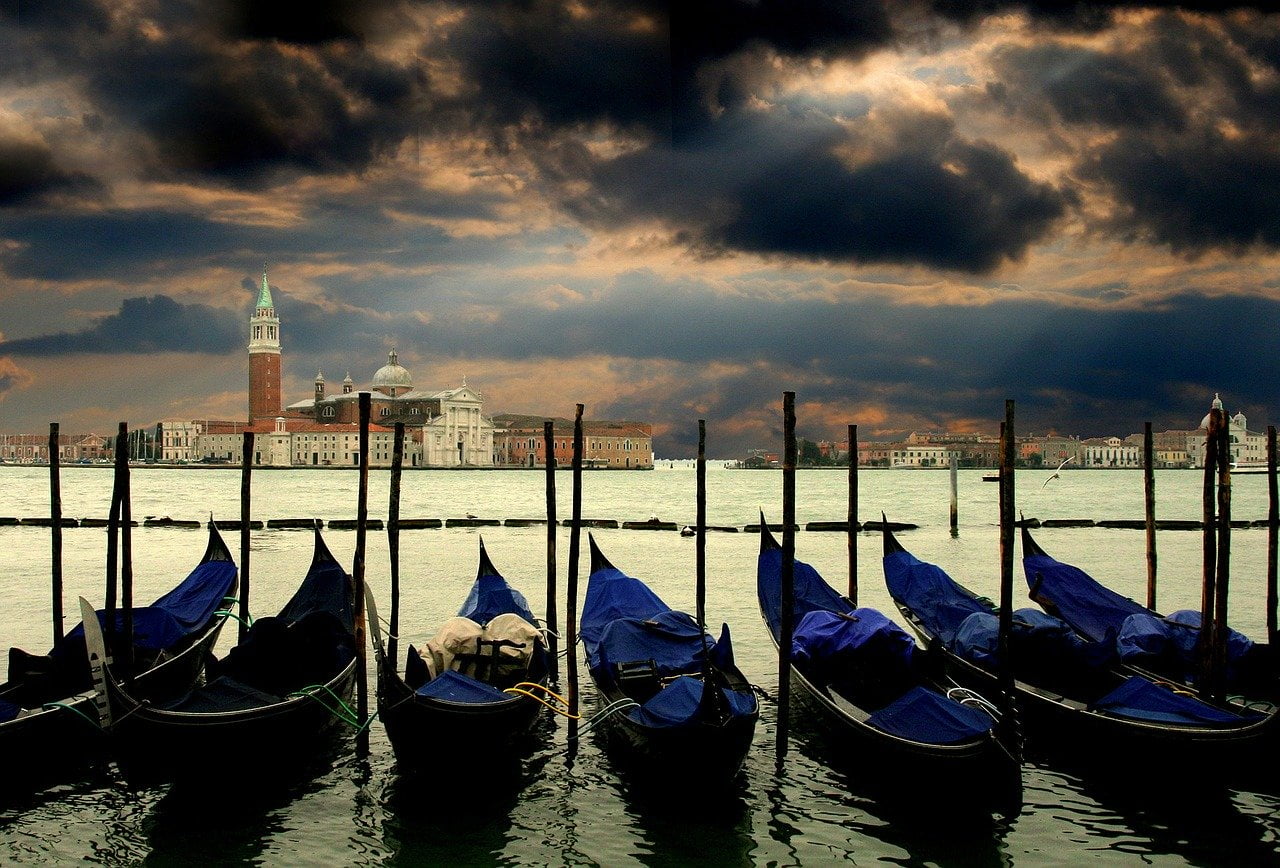
Venice is a capital built on movement. Cargo, credit, rumours, officials, priests, sailors and spies pass through the same canals and quays, but little moves without someone recording who paid, who vouched for it and who benefits. The city is wealthy because its merchants connect distant markets; it is powerful because its government turns that wealth into fleets, fortresses, diplomats and information.
Visitors notice beauty first: coloured stone, church domes, processions, banners, bridges and palaces reflected in the lagoon. Residents notice schedules, tides, manifests, patronage and jurisdiction. A missing seal can delay a cargo. A quiet accusation can reach the Council of Ten before its target knows an inquiry has begun.
Explore: Italy · Republic of Venice · Republic of Genoa · Duchy of Milan · Italian NPCs
What Is Happening Right Now?
The Peace of Lodi is fresh
The struggle with Milan has been checked by the peace agreed this year. Venetian captains, creditors and mainland officials are adjusting to new borders while old suspicions remain alive. A treaty can stop armies more quickly than it can stop private grudges.
Constantinople has fallen
The Ottoman conquest of Constantinople has transformed every eastern calculation. Venice is protecting commercial access while reassessing routes, colonies, intelligence networks and the military value of every harbour between the Adriatic and the eastern Mediterranean.
Eastern trade remains open
Venetian diplomacy is securing renewed rights for merchants and representatives in Ottoman territory. Interpreters, factors, captains and informants are therefore unusually valuable—and unusually vulnerable to accusations of divided loyalty.
Foscari’s rule is under pressure
Doge Francesco Foscari remains the public face of the republic, but Venice is not ruled by the Doge alone. Patrician families, councils and committees can turn a personal dispute into a question of state security.
Places Characters Reach First
Piazza San Marco
The ceremonial heart of the city places the Basilica, Doge’s Palace, government offices, foreign visitors and public ritual within sight of one another. Anyone seeking official recognition eventually ends up here whether invited or summoned.
Doge’s Palace
Reception rooms, courts, offices and guarded passages turn government into architecture. Public splendour sits close to private investigation; a character can leave one chamber honoured and enter the next under suspicion.
Rialto
The commercial heart of Venice is where money changes hands before goods do. Brokers price risk, merchants arrange credit, warehouse agents track cargoes and gossip moves faster than boats.
The Arsenal
Shipbuilding, rope, timber, sailcloth, metalwork and state security meet behind controlled access. Missing tools, stolen plans or bribed workers can become matters for the government rather than ordinary theft.
Grand Canal
The city’s principal waterway is a moving display of wealth and access. Palaces face the water because the canal is a road. Couriers, servants, nobles and smugglers may share the same route without sharing the same destination.
Lagoon Islands
Monasteries, workshops, gardens, fisheries and isolated buildings occupy islands beyond the crowded centre. A short boat journey can move an adventure from civic surveillance to near-total privacy.
People, Factions and Influence
The Doge and Patrician Councils
Doge Francesco Foscari gives Venice a face, but major decisions pass through institutions dominated by the patriciate. The Great Council supplies the political class; the Senate handles major policy and diplomacy; the Council of Ten investigates threats to the state. A useful patron may open one door while creating enemies behind three others.
Merchant Houses
Merchant families turn information into credit and credit into ships. They compete fiercely while depending on the same courts, warehouses, insurers, money changers and convoy arrangements. A family feud can remain polite for years before erupting over one cargo.
Arsenal Workers and Maritime Officers
Shipwrights, caulkers, rope-makers, sailors, pilots and officials make the republic’s power physical. Their knowledge is valuable enough that rival states, pirates and supernatural powers all have reasons to recruit, bribe or abduct them.
Foreign Merchants and Agents
Venice is full of outsiders who are useful precisely because they connect the city to somewhere else. Greeks, Germans, Levantine merchants, pilgrims, diplomats and interpreters bring opportunity and suspicion in equal measure.
Giacomo Casanova
Giacomo Casanova moves easily through circles where reputation, charm, gambling, secrets and patronage overlap. He is useful when the party needs an introduction no respectable clerk wants to arrange openly.
Services, Trade and Magic
- Money and credit: money changers, merchant bankers and factors can convert distant wealth into local purchasing power—if a reputable name stands behind it.
- Ships and passage: captains, pilots and brokers arrange transport across the lagoon, Adriatic and eastern routes. Urgency increases the price faster than distance does.
- Warehousing: secure storage exists, but customs seals, guild interests and ownership claims may matter more than the lock on the door.
- Maps and intelligence: pilots, merchants and officials possess charts that are valuable because they are current. A copied map can be more dangerous than a stolen purse.
- Healing and alchemy: physicians, apothecaries and specialist merchants can obtain expensive ingredients unavailable in smaller cities.
- Arcane services: discreet spellcasters work through patrons, confraternities, merchant houses and private contracts. Open magical disruption near state facilities receives swift attention.
Dangers, Rumours and Adventure Hooks
The Ottoman Letter
A sealed dispatch from the east reaches Venice with two different sets of instructions hidden inside it. Each appears genuine, and both name the same Venetian merchant as a traitor.
The Arsenal Ledger
A page recording timber and cannon fittings disappears from an Arsenal office. The theft looks commercial until investigators discover several entries describe materials that do not officially exist.
The Lodi Cargo
A barge arrives from the mainland carrying property seized during the Milanese wars. Returning it honours the new peace; keeping it protects a powerful Venetian patron.
The Empty Gondola
A government witness enters a boat under guard. The gondola reaches San Marco with the guards alive, the doors sealed and the witness missing.
The Counterfeit Ducats
Perfect coins begin appearing in Rialto. They are not merely false: divination suggests each was minted from metal taken from the same impossible source.
Casanova’s Invitation
Casanova offers access to a masked gathering where three rival powers are expected to trade information. His price is a favour to be named later.
Travel, Law and Getting Around
Water is the city’s road network. Gondolas, barges, ferries and private boats move people and cargo between islands and districts, while foot traffic crosses bridges and narrow lanes between canals. Travellers unfamiliar with the lagoon should hire a local boatman rather than assume open water is simple water.
Customs officials care about cargo, origin, ownership and tax. State officials care about weapons, political messages, restricted documents and anything that threatens the Arsenal or councils. Foreigners with a recognised patron generally move more easily than equally wealthy strangers without one.
From Venice, ships sail into the Adriatic and eastern Mediterranean. Mainland routes connect toward Padua, Verona, the Po valley and Milan. For the wider political and naval picture, use the Republic of Venice page.
Deeper History
Venice grew from lagoon communities into a maritime republic whose survival depended on ships, trade and political independence. Over centuries it developed institutions designed to prevent any one ruler from turning the republic into a hereditary monarchy while still allowing decisive action when commerce or security was threatened.
Under Francesco Foscari, Venice expanded more aggressively onto the Italian mainland and fought prolonged wars against Milan. That phase has just reached a settlement in the Peace of Lodi. At almost the same moment, the Ottoman conquest of Constantinople has altered the eastern world in which Venetian merchants and diplomats have operated for generations. The city therefore enters the campaign present wealthy and confident, but surrounded by reasons to be watchful.
Historical Sources
- Joanne M. Ferraro, Venice: History of the Floating City — political, commercial and urban history, including the 1454 settlement.
- Cambridge University Press, “The Venetian Republic Turns Global” — Venice’s 1454 agreement with the Ottoman dynasty and the role of the bailo.
- UNESCO, Venice and its Lagoon — the city’s lagoon setting and historical urban fabric.
Keep this reference growing
If this page helped with your reading or game, you can support its upkeep or explore the curated books.
Explore the Bookshop — epics, classics and stories behind imagined worlds.