
Mbanza Kongo — The Royal City Above the Forest
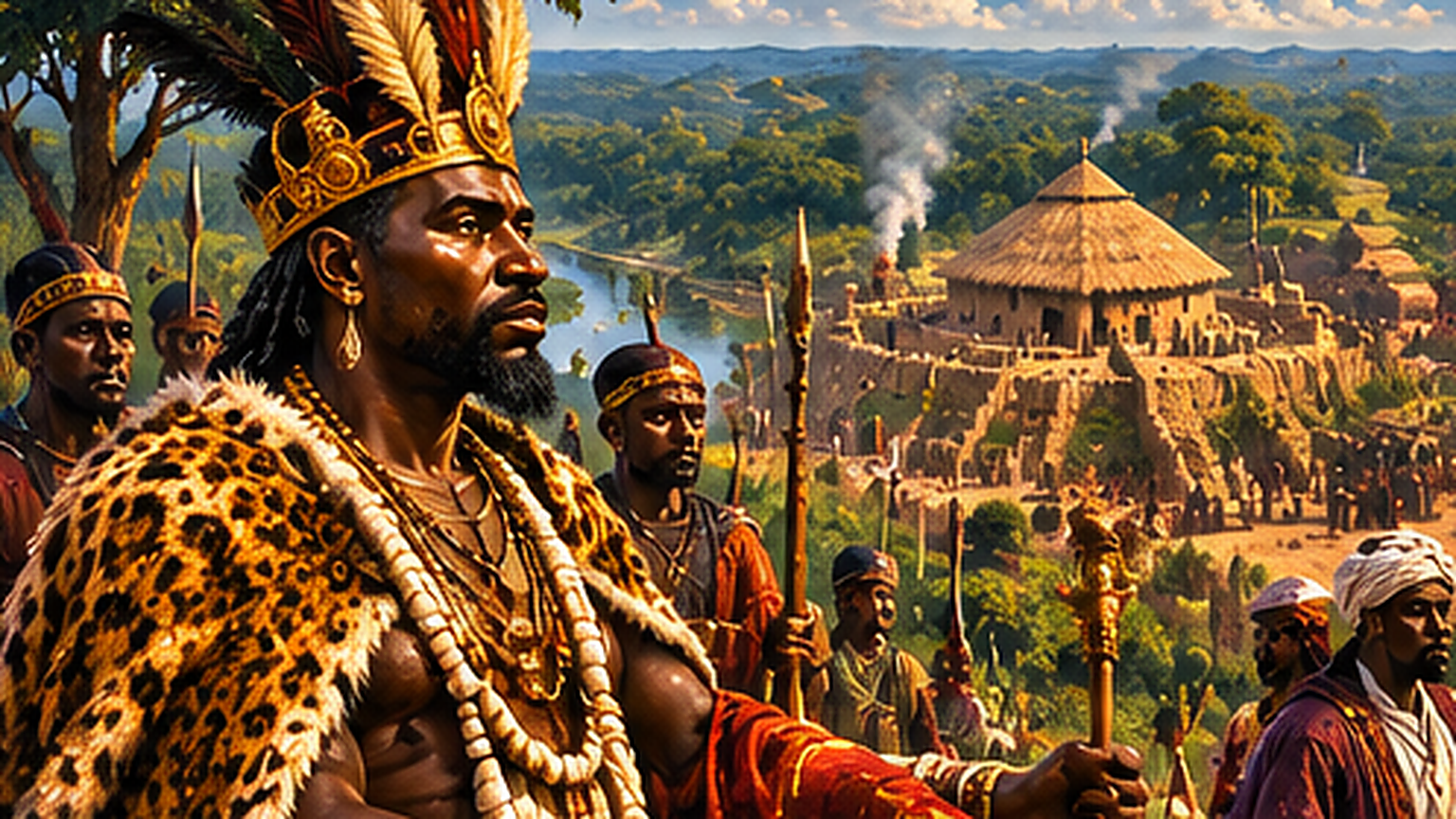
Kingdom of Kongo · Lower Congo world · Central Africa · 1454 CE
At a Glance
| Status | Royal capital and sacred centre of the Kingdom of Kongo |
|---|---|
| Setting | Defensible plateau above fertile valleys and intersecting regional routes |
| Authority | The Kongo ruler, royal household, powerful provincial lineages and local court |
| People | Courtiers, farmers, traders, smiths, weavers, porters and shrine custodians |
| Trade | Food, cloth, copper, ironwork, salt, shells, livestock and regional goods |
| Journeys | Plateau roads, river crossings, forest routes and trading settlements |
| Present | 1454 CE |

The roads climb towards a royal city set above the surrounding country. In the morning, food bearers enter alongside merchants carrying fine woven cloth, copper and carved goods. Palace servants hurry past a great gathering place where two provincial envoys wait for an audience. Both claim to bring a warning from the same distant district, and each demands that the other be turned away before speaking.
What Is Happening Right Now?
A newly appointed provincial official has arrived with orders to collect food and cloth for a royal undertaking. His predecessor promised the local farmers a season of relief after a poor harvest. The court cannot afford to appear weak, but if the officer takes everything promised, several villages will struggle to feed themselves.
A senior household has lost a ceremonial object entrusted to its keeping. The loss threatens more than prestige: an alliance ceremony between two leading families is approaching, and the person who borrowed the object has not returned. Those who speak too quickly risk accusing a family whose support the royal court needs.
News from the lower river is equally troubling. A canoe crew brought a cargo of copper and cloth, but no letter from the community that sent it. The cargo owner is alive and refusing to come to the palace. His silence has frightened people more than any rumour of river monsters.
The Royal City and Its Working Places
The Royal Residence and Gathering Ground
Royal officials, warriors and servants manage the business of the court. Visitors with a trustworthy introduction may speak to a steward; strangers asking for the ruler must work through patrons. Conflicting petitions from different provinces are common. The strongest ruler listens before sending soldiers, for a province will obey more readily if its needs have been heard.
The Sacred Tree and Ancestral Places
A revered old tree and lineage shrines give the city a sacred landscape remembered by its residents. The keepers of ancestral places may settle a quarrel or forbid a ceremony if proper obligations have been neglected. The greatest households respect them publicly, even when a decision frustrates their plans.
Craft and Market Compounds
Weavers, metalworkers, farmers and dealers meet on market days. Fine cloth and copper may signal wealth or political importance, while food and everyday tools sustain the city. No caravan can be supplied indefinitely without the surrounding villages; the market’s fortunes depend upon roads, gardens and public trust.
The Southern Road and River Approaches
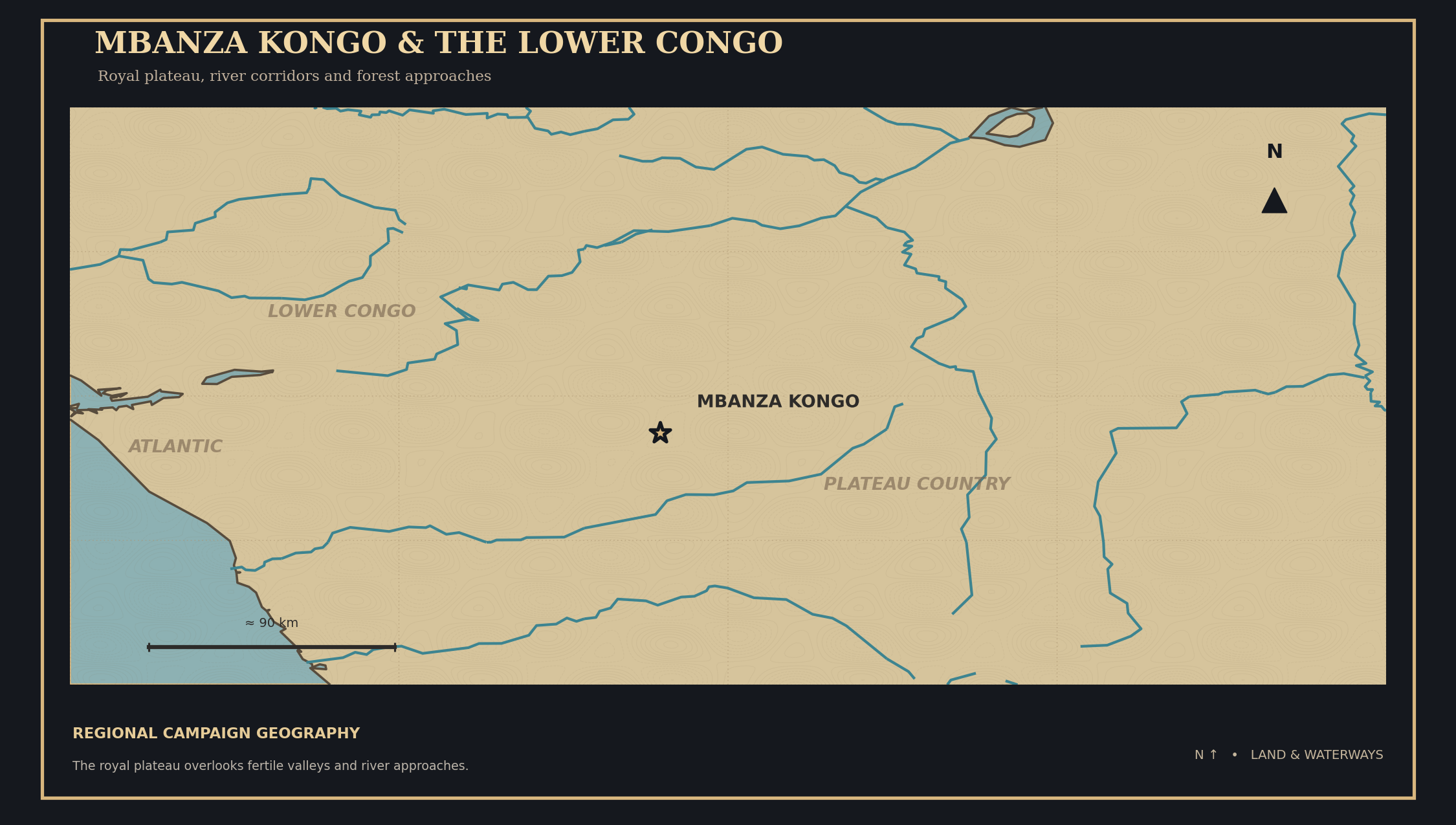
Paths descend from the plateau toward settlements and the lower Congo river system. Messengers change guides at community boundaries. Reaching the river does not guarantee an easy voyage: long stretches are interrupted by cataracts and rapids that require cargo to be carried around them.
People and the Royal Court
The Kongo ruler seeks secure roads, stable markets and loyal provincial houses. A just decision may return stolen stores to a village at the cost of angering a rich court supporter. A severe decision may gather provisions immediately but destroy the trust needed next season.
Provincial delegates protect local authority and bring both genuine grievances and selfish petitions to the royal residence. Royal officers serve their master but may compete for promotion; their conduct affects whether distant communities see the crown as a protector or a burden. Artisans, river crews and market families hold practical power because they keep the city supplied.
Some sacred specialists serve ancestral lineages; others are sought for healing, divination, protective workings or knowledge of a particular river or forest. Their duties belong to local relationships and do not form one uniform religion across the Congo Basin.
Where to Eat, Sleep and Find Help
Visitors with court business may lodge in guest compounds maintained by allied families. Traders find shelter with known partners; porters and servants gather around more modest cooking places. Food includes cultivated staples, vegetables and local produce, with supplies brought up from the surrounding valleys. Smiths and weavers provide practical repairs. For a journey to the river, hire a guide who knows both the path and the communities that control each landing.
A visitor seeking help with an ancestral rite must be introduced to the people who maintain it. Buying a sacrifice or a ritual object without understanding its purpose is more likely to provoke anger than provide protection.
Magic and Sacred Services
Specialist healers and ritual custodians may be called upon to prepare powerful objects, treat illness and witness binding obligations between families. A respected nganga refuses to release a protective object entrusted to her by a deceased court elder, even after a provincial claimant offers rich cloth and copper. The object may hold a true power over oath-breakers, or it may contain the evidence that determines a disputed inheritance. Anyone seeking help must first earn the confidence of those who guard it.
Dangers and Adventure Hooks
- The cloth levy. A provincial officer has demanded twice what the harvest can support. The court needs proof before it intervenes; the farmers need their stores before the next rains.
- The lost emblem. A ceremonial object vanishes on the eve of an alliance. The thief is not trying to sell it, but to prevent a marriage agreement that would dispossess a local household.
- The silent cargo. A river pilot refuses to name who sent his boat. Marks on the copper ingots point toward a village whose people have disappeared from the usual market routes.
- The burned crossing. A bridge is destroyed on a road carrying royal messengers. Everyone blames a rival province, but the missing repair tools were stolen before the fire.
Travel and Onward Routes
Roads from the royal plateau run to settlements that provide food, metalwork and fibres. The lower Congo allows river traffic only where rapids and cataracts permit; portage is often essential. Beyond the crown’s districts, independent peoples control their own paths, rivers and sacred places. Parties going farther inland must seek introductions rather than assume a royal seal gives them passage.
Explore the wider Central Africa region, return to the Africa atlas, or consult the African Bestiary for beings encountered beyond the roads.
Deeper History and Historical Sources
The Kingdom of Kongo was established in the late fourteenth century, and Mbanza Kongo developed as the capital and a place of royal and sacred authority. The city’s plateau position and its connection to trade routes made it formidable long before overseas fleets reached this coast. The specific court disputes and supporting people above are campaign fiction.
UNESCO: Mbanza Kongo · Royal Museum for Central Africa: The Kongo kingdom · Metropolitan Museum: Central Africa, 1400–1600.
Keep this reference growing
If this page helped with your reading or game, you can support its upkeep or explore the curated books.
Explore the Bookshop — epics, classics and stories behind imagined worlds.