
Dracula
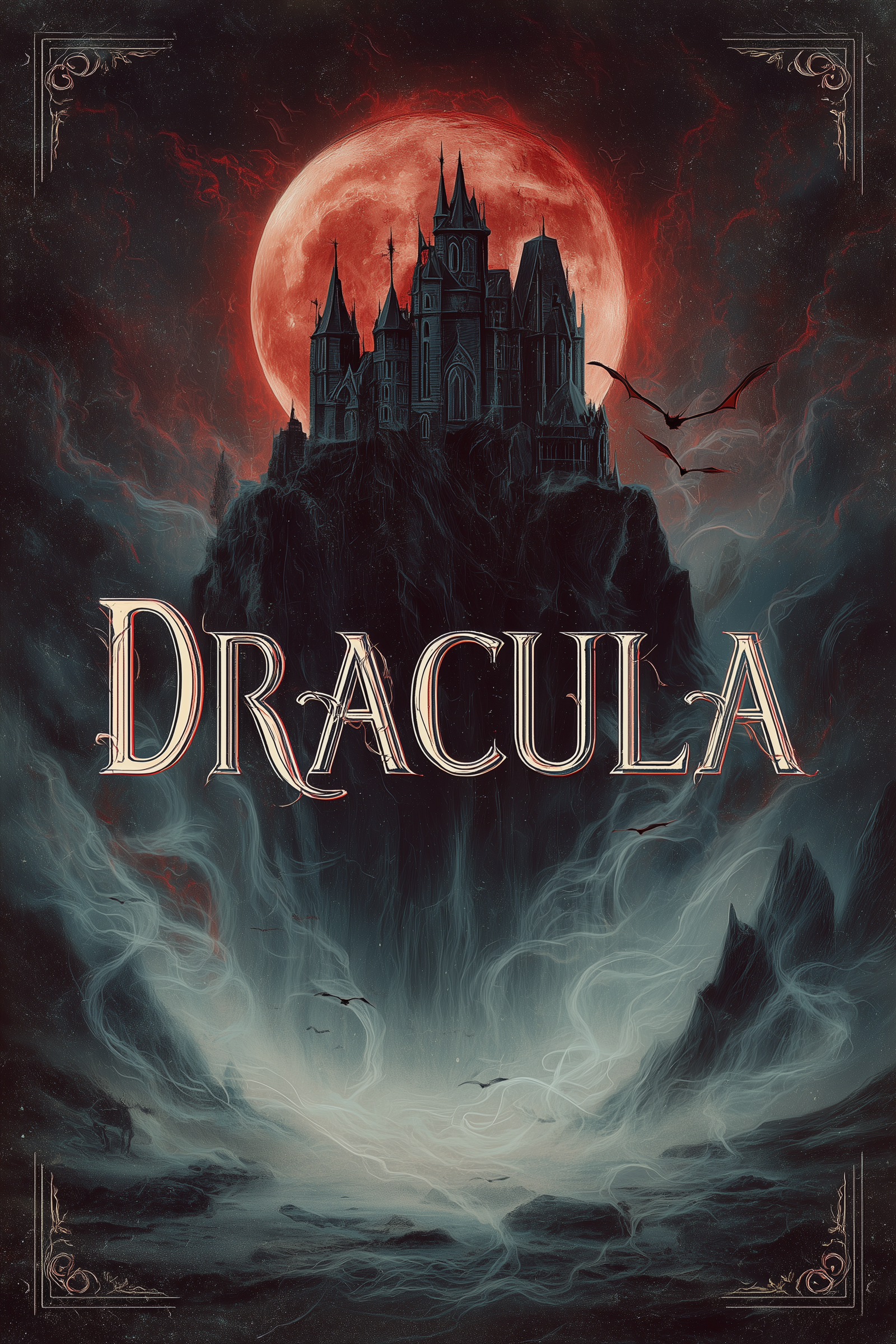
In Bram Stoker’s Dracula (1897), a young solicitor travels to a Transylvanian castle and discovers that his client is something far more dangerous than an eccentric nobleman. The horror spreads to England through a chain of letters, diaries and reports. At its heart, the book is an investigation: people who each see only part of the threat must learn to believe one another before their enemy can disappear again.
At a Glance
- Author: Bram Stoker (1847–1912)
- Published: London, Archibald Constable and Company, 1897
- Form: standalone English-language Gothic horror novel
- Structure: diaries, letters, newspaper reports, telegrams and other recorded testimony
- Setting: Transylvania, Whitby, London and the English countryside
- Major figures: Count Dracula, Jonathan and Mina Harker, Lucy Westenra, Abraham Van Helsing and Dr John Seward
- Reading route: begin with the original novel; no films or prequels are needed
Should you read Dracula?
Read it for: steadily mounting dread, the pursuit of a clever enemy, the contrast between old fears and modern technology, and an unusually collaborative band of protagonists. Stoker creates terror by letting ordinary facts become extraordinary only when gathered together. The result is more of a mystery and chase than a constant succession of vampire attacks.
Know before starting: its multiple narrators and Victorian pace demand attention. The opening castle chapters are relatively direct; the English chapters move between witnesses as the danger grows. The novel deals with death, illness, blood, coercion, sexual predation and disturbing Victorian prejudices. This guide does not disclose the ending.
The story — without the ending
Jonathan Harker has travelled abroad to complete an apparently routine property transaction for Count Dracula, who wishes to acquire a house in England. The host is dignified and hospitable at first, but Harker discovers locked doors, unexplained absences and a growing impossibility of escape. His journal gives readers the first evidence that the Count’s power extends beyond ordinary human conduct.
In England, Mina Murray and her friend Lucy Westenra exchange letters and confidences. Then a ship reaches Whitby under terrible circumstances. Lucy becomes ill, and those caring for her struggle to understand her symptoms. Dr Seward records clinical observations; his older teacher Professor Van Helsing begins to recognise a pattern that cannot be explained by medicine alone.
The book’s many witnesses gradually recognise that the events are connected. The Count has money, property and the means to cross borders. His pursuers must find where he is moving, identify what he needs, and turn isolated testimonies into a shared plan. Every delayed message and overlooked clue has a cost.
The characters who make the investigation possible
- Jonathan Harker: a solicitor whose precise, increasingly frightened journal is the first substantial record of the Count’s methods.
- Mina Harker: a careful thinker whose ability to collect, type and organise documents lets the investigators make sense of evidence that initially seems unconnected.
- Lucy Westenra: Mina’s friend, whose mysterious illness becomes an urgent test of medical understanding and personal loyalty.
- Abraham Van Helsing: a physician willing to take folklore seriously when observation demands explanations beyond received scientific assumptions.
- Dr John Seward: a doctor whose phonograph diary and dealings with his patient Renfield provide another strand of the evidence.
- Arthur Holmwood and Quincey Morris: allies whose generosity and courage help turn knowledge into practical action.
- Count Dracula: a predatory foreign nobleman who exploits hospitality, land ownership, transport and secrecy; Stoker reveals him mainly through the accounts of his victims and opponents.
Why the storytelling still works
The reader must assemble the case
Stoker does not provide one all-knowing narrator. Diaries and letters disagree in emphasis, and newspaper reports present alarming facts without their wider significance. Jonathan tries to reason with himself; Seward records what he can observe; Mina arranges material into a usable chronology. The reader can sometimes connect two details before the characters do, creating anxiety rather than a simple jump scare.
Modern tools do not make old fears vanish
Railways, telegrams, typewriters, shorthand and audio recordings become essential weapons. Their value is not that they defeat a supernatural enemy automatically, but that they let frightened people cooperate. The novel refuses the easy division of rational science from irrational superstition: the most effective investigators test a disturbing possibility against accumulated evidence.
The horror has an address
Property deals, shipping papers and the movement of crates turn geography into suspense. A house or harbour can conceal the next stage of a predator’s journey. The Count is frightening not only because he is dangerous in person, but because he can plan, move, purchase and disappear while respectable institutions attend to business as usual.
What Dracula is really about
Violation and control. Vampire attacks threaten bodies and private lives, while the novel repeatedly questions who has authority over another person’s choices. That can make the book uncomfortable, and discussions of Victorian gender and sexuality should be presented as readings of the text, not claims that every critic agrees.
Fear of strangers. The Count’s arrival from eastern Europe reflects contemporary British anxieties about invasion, borders and cultural change. Those attitudes belong to the novel’s historical circumstances and should not be presented as objective descriptions of Transylvania or its peoples.
Trust under pressure. The protagonists often hesitate to tell the truth because it sounds impossible. The story gains its momentum when they begin to believe one another’s evidence and take collective responsibility for what follows.
How the novel was written and published
Dracula was published by Archibald Constable in London in 1897. Stoker researched travel, geography, folklore and older writings, creating a novel tied to contemporary technology as much as to ancient-seeming fears. The Bram Stoker Estate documents the book’s earlier working title, The Un-Dead, and its publication history.
The fictional Count has often been compared with the historical Vlad III, but the novel is not a biography of the Wallachian ruler. Connections between Stoker’s research and later interpretations need separating carefully. The literary character also differs from familiar film imagery; readers should not assume that a screen version preserves the book’s descriptions or motives.
The short story Dracula’s Guest appeared after Stoker’s death in 1914. It is sometimes presented as material cut from the novel, but its precise relation to the earliest drafts is debated. When an edition includes it, treat it as an additional story rather than automatically as part of the 1897 text.
Choose a Dracula edition
Stoker wrote in English, so the decision is not between rival English translations. The practical choice is between a straightforward unabridged paperback and an edition with substantial historical notes. Check the precise ISBN: two publishers’ listings can refer to different contents even when the cover displays the same novel title.
For extra commentary, the Penguin Classics edition edited by Maurice Hindle, with a preface by Christopher Frayling (ISBN 9780141439846), provides a different reading package. It is not the same edition as the Penguin English Library paperback above.
A free digital reading option is available from Project Gutenberg, and a text following the early UK edition is also available there. When comparing precise wording in scholarly work, identify which edition the text represents.
At the table: three original investigations
These are new scenarios based on Stoker’s techniques of pursuit, secrecy and gathering evidence, not adaptations of his scenes or licensed campaign material.
- The ship with no crew. A vessel drifts into harbour with empty bunks and a dead captain. Cargo papers identify earth-filled crates sent to separate properties. The harbourmaster wants the cargo unloaded immediately. The party can inspect it, follow it or negotiate a delay — but each choice gives somebody else time to move.
- The landlord’s ledger. Tenants in several houses have vanished, yet their new owner never appears in daylight. The authorities ask the characters for evidence before granting access. Addresses and receipts become more useful than the best sword in town.
- Three witnesses, one impossible visitor. A physician, a night watchman and a messenger describe different events. Their stories seem contradictory until the party compares the timestamps. The culprit’s unusual movements may then become a route to finding the next threatened household.
Related books and sources
For another major Gothic novel, read our Frankenstein guide. Explore more fiction in the Books, Comics & Graphic Novels library. The literary Count is separate from any historical or fantasy-game interpretation of Vlad III.
- Bram Stoker Estate — original publication and textual history
- Penguin — Penguin English Library edition, ISBN 9780141199337
- Penguin — annotated Penguin Classics edition, ISBN 9780141439846
- Project Gutenberg — free electronic reading
Keep this reference growing
If this page helped with your reading or game, you can support its upkeep or explore the curated books.
Explore the Bookshop — epics, classics and stories behind imagined worlds.