
Greater Invisibility, “Unseen Dominion”
A combat illusion that carries invisibility beyond concealment and into sustained action: strike, cast, move and fight while ordinary sight still fails to hold you. Rules are presented separately for D&D 5.5e / 2024, Pathfinder 1e and D&D 3.5e.
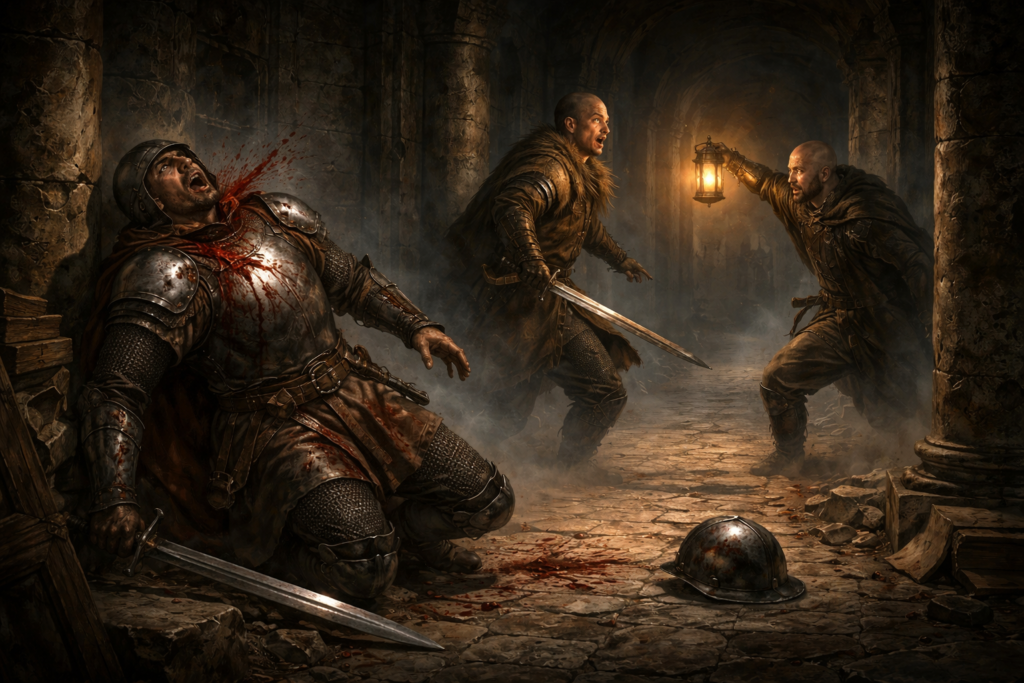
Ordinary Invisibility is chiefly a spell of approach, infiltration and escape. Greater Invisibility is different. It allows its subject to remain unseen while continuing to influence the battle: attacking, casting spells, changing position, protecting allies or forcing enemies to fight something they cannot properly see.
This is the meaning of the old magical epithet “Unseen Dominion.” The spell does not merely conceal a creature from sight. It permits that creature to continue exercising power over the visible world without surrendering the veil.
Quick Rules Reference
D&D 5.5e / 2024
4th-level Illusion
Action · Touch · V, S
Concentration, up to 1 minute
The touched creature gains the Invisible condition. Attacking, dealing damage and casting spells do not themselves end Greater Invisibility.
Pathfinder 1e
Illusion (glamer)
V, S · Touch
1 round/level (D)
Functions as Invisibility except that attacking does not end the spell.
D&D 3.5e
Illusion (Glamer)
Bard 4, Sorcerer/Wizard 4
1 round/level (D)
Functions like Invisibility except that attacking does not end the effect.
Game Statistics
D&D 5.5e / 2024
The creature you touch gains the Invisible condition until the spell ends. Unlike ordinary Invisibility, Greater Invisibility contains no special clause ending the spell when the subject attacks, deals damage or casts another spell.
- makes an attack,
- deals damage,
- or casts another spell.
The Invisible Condition
Under the 2024 rules, most of Greater Invisibility’s combat power comes from the Invisible condition.
- If the creature is Invisible when Initiative is rolled, it gains Advantage on that Initiative roll.
- Effects requiring their user to see a target normally cannot affect the invisible creature unless the user has a means of seeing it.
- Equipment worn or carried by the invisible creature is concealed with it.
- Attack rolls against the creature normally have Disadvantage while the attacker cannot see it.
- The invisible creature’s attack rolls normally have Advantage against creatures that cannot see it.
- Those sight-dependent benefits cease against an observer that can actually see the invisible creature.
Invisible Is Not the Same as Hidden
Greater Invisibility makes a creature impossible to see with ordinary vision, but it does not make that creature automatically silent or erase all evidence of its passage.
Footprints, sound, scent, disturbed curtains, opening doors, displaced dust, blood, shallow water and other clues can still provide information about its location.
Casting While Invisible
Casting another spell does not terminate Greater Invisibility. Verbal components remain audible, however, and visible magical effects can reveal useful information about where the caster is standing.
Greater Invisibility and Counterspell
The 2024 Counterspell requires its user to see the creature casting the spell. An enemy relying only on ordinary vision therefore cannot normally Counterspell a Greater Invisible caster.
This changes if that enemy can actually see the caster through Blindsight, Truesight, See Invisibility or another appropriate sense or effect.
Concentration Is the Weak Point
Greater Invisibility is a Concentration spell. Damaging or incapacitating the creature maintaining the spell can therefore be more useful than trying to attack the invisible beneficiary directly.
A single 2024 caster also cannot normally maintain Greater Invisibility alongside another Concentration spell such as Haste, Fly or Blur. Such combinations usually require a second caster.
Pathfinder 1e
Pathfinder Greater Invisibility functions as ordinary invisibility except for one crucial change: attacking does not terminate it.
Spell-list access includes Alchemist 4, Antipaladin 4, Bard 4, Inquisitor 4, Magus 4, Medium 3, Mesmerist 4, Occultist 4, Psychic 4, Sorcerer/Wizard 4, Spiritualist 4, Summoner 3 and Unchained Summoner 4.
Pathfinder Invisibility in Combat
- An invisible creature has total concealment against creatures unable to see it.
- Even when its square is correctly identified, attacks normally suffer the miss chance associated with total concealment.
- An invisible attacker gains the edition’s normal offensive advantages against creatures unable to see it.
- A defender unable to see its attacker normally loses its Dexterity bonus to AC against that attack.
- Because Greater Invisibility does not end after the first attack, these advantages can continue through later attacks.
Finding an Invisible Creature
Pathfinder does not treat invisibility as perfect undetectability. Invisible creatures can still make noise, leave tracks, disturb water, interact with objects and be discovered through suitable senses, magic or Perception.
Pinpointing an invisible creature’s square does not necessarily remove the total concealment provided by invisibility.
D&D 3.5e
The D&D 3.5e spell functions as Invisibility except that the effect does not end when its subject attacks.
Legacy Combat Effects
- A creature that cannot see the invisible subject normally treats it as having total concealment.
- Even if its location has been pinpointed, attacks normally retain the miss chance associated with total concealment.
- An invisible attacker gains the edition’s normal offensive benefit against a sighted opponent.
- The defender may lose its Dexterity bonus to AC against an attacker it cannot see.
- Because Greater Invisibility survives an attack, these advantages can continue through several rounds of combat.
Spot, Listen and Pinpointing
Third-edition rules use the older Hide, Spot and Listen framework rather than Pathfinder’s Stealth and Perception terminology.
A creature may notice evidence that an invisible opponent is nearby and eventually identify its square without actually seeing it. Pinpointing the creature does not itself end invisibility.

How Greater Invisibility Actually Works
Does Attacking Reveal You?
An attack can reveal useful information about where an invisible creature is, but it does not end Greater Invisibility.
This is the spell’s defining advantage over ordinary Invisibility. A swordsman can attack repeatedly, an archer can continue shooting, and a spellcaster can keep using magic without surrendering the veil.
Does Casting a Spell Reveal You?
Not visually by itself. Greater Invisibility remains active.
However, verbal components can be heard, projectiles or rays may suggest an origin, doors and curtains may move and visible magical effects can give enemies clues. The caster may therefore remain invisible while enemies obtain a reasonable idea of the caster’s location.
Can an Enemy Attack an Invisible Creature?
Yes, provided the enemy can determine or correctly guess where to attack. Invisibility is not immunity to weapon attacks.
In D&D 5.5e, an attacker that cannot see the target normally suffers Disadvantage. In Pathfinder 1e and D&D 3.5e, total concealment and its associated miss chance are the key mechanics.
Can a Spell Target an Invisible Creature?
It depends on the spell.
An effect requiring “a creature you can see” generally cannot target an invisible creature the caster cannot see. Area effects, however, can still affect the creature if its space lies within the area.
Special Senses and Greater Invisibility
Blindsight
In 2024 D&D, Blindsight allows a creature to see within its specified range without relying on ordinary vision, including seeing creatures with the Invisible condition.
Within that range, Greater Invisibility loses its normal sight-dependent advantages against that observer.
Truesight and True Seeing
Truesight is a direct answer to invisibility. A creature possessing sufficient Truesight can perceive an invisible subject within the sense’s range.
Legacy editions commonly produce a similar result through True Seeing. Use the exact rule for the edition being played.
See Invisibility
See Invisibility is the specialised magical counter. It allows its beneficiary to perceive invisible creatures according to the appropriate edition’s rules.
Tremorsense
Tremorsense requires more careful handling. In 2024 D&D it can pinpoint qualifying creatures through contact with a suitable surface, but Tremorsense does not itself count as sight.
A monster may therefore know exactly where an invisible adventurer is without actually being able to see them. Do not automatically treat Tremorsense as equivalent to Blindsight.
Countering Greater Invisibility
| Counter | How It Helps | Important Limitation |
|---|---|---|
| See Invisibility | Allows the observer to perceive invisible creatures under the spell’s rules. | Does not necessarily remove the spell for anyone else. |
| Blindsight | In 2024 D&D, sees Invisible creatures within the sense’s range. | Works only within its stated range. |
| Truesight / True Seeing | Defeats ordinary invisibility through supernatural perception. | Exact wording and range vary by edition. |
| Faerie Fire | Modern versions can prevent an affected creature from benefiting from the Invisible condition; legacy versions reveal outlined invisible creatures. | The subject must first be caught by the effect. |
| Glitterdust | A classic Pathfinder and 3.5e method of outlining invisible creatures. | Use the precise mechanics for the edition being played. |
| Invisibility Purge | A strong legacy-edition defence against nearby invisible creatures. | Primarily relevant to Pathfinder 1e and D&D 3.5e. |
| Dispel Magic | Can terminate Greater Invisibility directly. | In 2024 D&D, a 3rd-level Dispel Magic normally requires a DC 14 spellcasting ability check against this 4th-level spell. |
| Area Effects | Blasts, clouds and hazards often do not require sight of an individual creature. | The attacker must still choose an effective area. |
| Tremorsense | Can reveal an invisible creature’s location under appropriate conditions. | In 2024 D&D, it does not itself count as sight. |
| Break Concentration | In 2024 D&D, attacking the caster maintaining Greater Invisibility can end the spell indirectly. | Pathfinder 1e and 3.5e do not use the modern Concentration mechanic in the same way. |
Why Greater Invisibility Is So Dangerous
Ordinary invisibility asks a character to choose between remaining unseen and taking direct hostile action. Greater Invisibility removes that choice.
The subject remains an active combatant while forcing enemies to cope with the absence of ordinary visual information. That can alter targeting, attack accuracy, spell selection, movement and battlefield confidence simultaneously.
Sustained Unseen Offence
The most obvious use is a martial attacker making repeated attacks while invisible. Characters depending on multiple attack rolls, tactical movement or avoiding sight-based retaliation can gain exceptional value from the spell.
Invisible Spellcasting
A spellcaster can continue casting while Greater Invisibility remains active. This can frustrate spells and reactions requiring the enemy to see their target.
Repositioning
Greater Invisibility makes movement through a dangerous battlefield much more difficult to track. Enemies may still reason about the subject’s position, but ordinary visual pursuit is lost.
Extraction and Rescue
The target need not be the caster. A wounded commander, endangered ally, captured scout or important witness can be concealed while remaining capable of defending themselves.
Sabotage and Theft
Ordinary Invisibility is strongest before an alarm is raised. Greater Invisibility remains useful after the guards already know someone is there.
Psychological Pressure
The frightening part is not ignorance that an enemy exists. It is knowing that something dangerous is present while being unable to see where the next attack will originate.
Best Targets for the Spell
Martial Attackers
Characters making several attacks can exploit invisibility repeatedly rather than surrendering it after the first strike.
Mobile Skirmishers
Fast combatants can attack and then change position, making their next action considerably harder to predict.
Spellcasters
Especially valuable against enemies dependent on sight-targeted spells, attacks and reactions.
Practical Tactics
Move After You Attack
Remaining invisible does not automatically make a combatant unpredictable. If attacks repeatedly originate from the same position, intelligent enemies can respond to that location.
Use Terrain Carefully
The creature cannot be seen, but its environment remains visible. Dust, snow, shallow water, loose gravel, curtains, foliage and hanging chains can all betray movement.
Protect the Concentrating Caster
In 2024 D&D, the invisible warrior may not be the enemy’s most useful target. Once opponents understand what is happening, the creature maintaining Concentration may become their priority.
Know the Enemy’s Senses
Before committing a valuable 4th-level slot, consider whether the opposition possesses Blindsight, Truesight, See Invisibility or another appropriate counter.
Good Spell Combinations
Several spells work particularly well around Greater Invisibility. Remember that modern D&D Concentration rules can prevent a single caster from maintaining two Concentration effects simultaneously.
Related Invisibility and Illusion Magic
Greater Invisibility in the World
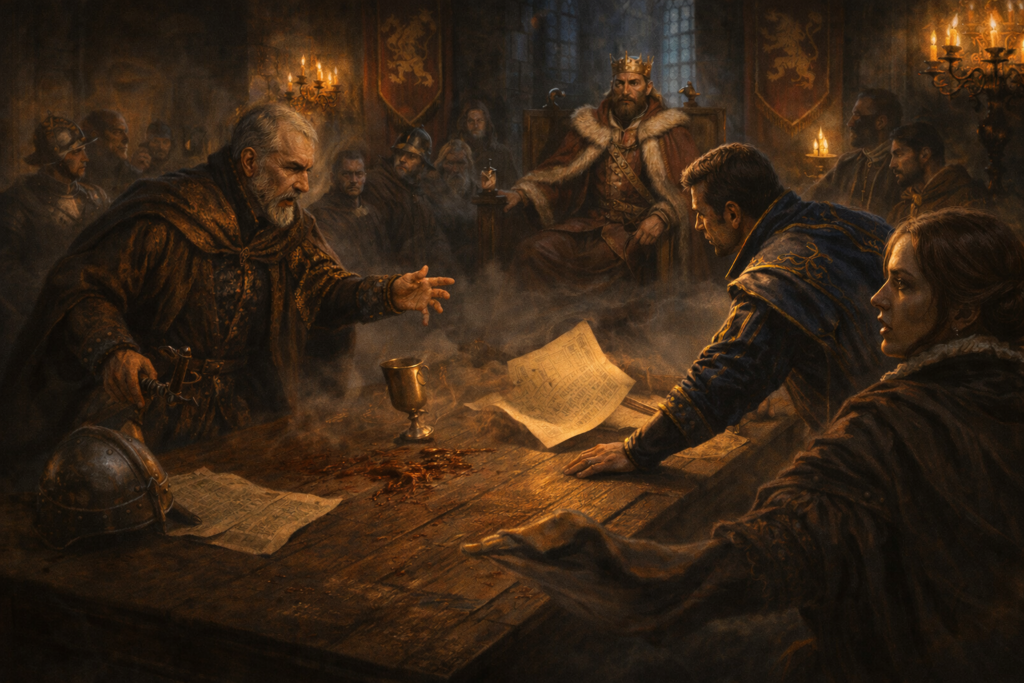
Among learned magicians, Greater Invisibility is sometimes described as the point at which illusion ceases merely to deceive and begins to dictate the terms under which other people are permitted to respond. That reputation gives rise to the title Unseen Dominion.
Its most feared practitioners are not necessarily assassins. They may be invisible bodyguards, battlefield magicians, spies inside supposedly private councils, duellists who refuse to appear until a fight is over or court agents who remain present while everyone else believes a chamber empty.
Courts and Diplomacy
A ruler who knows this spell exists cannot consider a closed door sufficient privacy. Important negotiations may therefore employ guarded thresholds, magical detection, trained animals, controlled lighting, hanging screens and specialist magicians capable of revealing invisible intruders.
War
On the battlefield the spell may conceal a champion before an assault, protect a messenger crossing exposed ground, hide a siege engineer, shield a spellcaster during a decisive exchange or allow an elite raider to operate behind a defensive line.
Crime and Espionage
An invisible burglar is dangerous. An invisible burglar who remains invisible after discovery is considerably worse. Wealthy vaults and intelligence services may therefore prepare specifically for intruders who can continue hostile action without becoming visible.
Monsters and Supernatural Predators
When a creature possesses Greater Invisibility innately, describe the absence rather than merely announcing the rule. Rain strikes an outline that cannot be seen. Floorboards bend beneath an unseen weight. A curtain moves against the wind. A weapon appears to swing without a wielder.
Using Greater Invisibility as a DM
The spell works best when invisibility creates tactical uncertainty rather than binary invulnerability. Let enemies use information they could reasonably obtain, but do not give them knowledge they have not earned.
- Do not automatically let every enemy know the invisible creature’s exact location.
- Do not automatically make an invisible creature perfectly silent.
- Separate knowing a location from actually seeing a target.
- Use Blindsight, Truesight and Tremorsense according to their actual rules.
- Allow intelligent opponents to adapt with area attacks, chokepoints, environmental clues and dispelling magic.
- Let unintelligent creatures react according to their senses and instincts rather than perfect tactical knowledge.
Adventure and Story Uses
The Invisible Guard
A monarch appears to travel with little protection because their most dangerous bodyguard is never visible.
The Empty Council
Secret negotiations are compromised by evidence that someone stood inside the supposedly sealed chamber.
The Unseen Duel
A renowned swordsman wins public duels against opponents unable to see where the blade is coming from.
The Broken Vault
The thieves have already been discovered. Their real advantage is that discovery does not make them visible.
The Rain Reveals It
A creature believed incorporeal is finally understood when rain breaks around the outline of an unseen body.
The Wrong Assassin
Witnesses blame the visible killer, unaware that an invisible second combatant struck the decisive blow.
Greater Invisibility FAQ
Does attacking end Greater Invisibility?
No. That is the defining difference between Greater Invisibility and ordinary Invisibility. The surrounding mechanics vary by edition, but attacking does not itself end this spell.
Does casting another spell end Greater Invisibility?
No. Casting another spell does not itself end Greater Invisibility. In 2024 D&D the effect can still end if Concentration is lost.
Does Greater Invisibility automatically make you Hidden?
No. Being unseen and concealing your location are related but separate matters. Noise, movement and environmental disturbance can still reveal where an invisible creature is.
Can See Invisibility defeat Greater Invisibility?
Yes, for the creature benefiting from See Invisibility under the appropriate edition rules. Greater Invisibility itself may remain active; that observer can simply perceive through it.
Does Blindsight defeat Greater Invisibility?
In 2024 D&D, Blindsight allows a creature to see Invisible creatures within the sense’s range. The usual sight-dependent benefits therefore do not function against that observer there.
Does Tremorsense defeat Greater Invisibility?
Not in the same way as Blindsight. In 2024 rules Tremorsense can pinpoint a qualifying creature’s location but does not itself count as sight.
Can Dispel Magic remove Greater Invisibility?
Yes. In 2024 D&D, Greater Invisibility is a 4th-level spell. A 3rd-level Dispel Magic therefore normally requires a DC 14 spellcasting ability check; a sufficiently high-level casting ends it automatically.
Can an area spell hit an invisible creature?
Yes. Invisibility does not remove the creature from its space. An area effect can affect it normally if that space lies within the area.
Can an invisible spellcaster be Counterspelled?
In D&D 2024, Counterspell requires the reacting creature to see the caster. A creature relying only on ordinary sight therefore cannot normally Counterspell a Greater Invisible caster. See Invisibility, Blindsight, Truesight or another suitable sense can change this. Older editions use different counterspelling procedures.
Rules Sources and Edition Notes
Greater Invisibility is presented separately for each supported rules set because the surrounding invisibility mechanics differ substantially between editions.
- D&D 5.5e / 2024: 4th-level Illusion using the modern Invisible condition, Concentration and 2024 sight rules.
- Pathfinder 1e: uses Pathfinder’s invisibility, total concealment, Stealth and Perception framework.
- D&D 3.5e: uses the legacy total-concealment, Hide, Spot and Listen framework.
See also Invisibility, See Invisibility, Faerie Fire, Glitterdust, Invisibility Purge, Displacement, Mislead, Mass Invisibility, Dispel Magic and the SpiralWorlds Magic reference.