
Cattle — Herds, Oxen and the Wealth of Farms
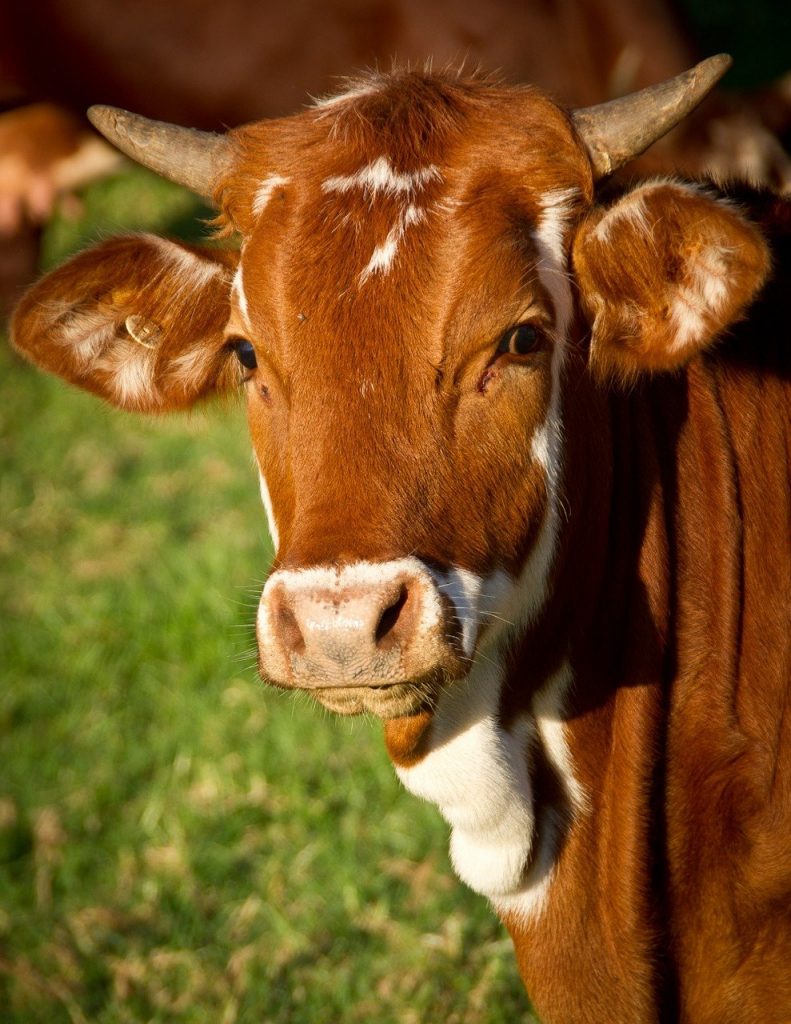
A herd of cattle fills the village road while the drover calls for the carts to stop. One young calf has turned towards the river, and the cows refuse to move without it. For the farmers, these animals are food, labour, wealth and the promise of another season’s work.
At a Glance
- Identity: Domestic cattle (Bos taurus and related domestic breeds), including cows, bulls, calves and working oxen
- Build: Large hoofed ruminant with sturdy body; horns, size and temperament vary by breed and individual
- Habitat: Farms, enclosed pasture, open grasslands and agricultural roads near settlements
- Behaviour: Herd-oriented grazer; usually avoids danger but may defend calves or push against confinement
- Signs: Broad cloven hoofprints, cropped grass, dung, trampled ground and paths worn towards water
- Encounter role: Valuable herd, draught animal, cattle drive, disputed property, stampede hazard or village food supply
- Threat: A bull or frightened cow can gore or trample someone, while panicked cattle on a narrow road pose a wider danger
- Distinction: Ordinary domestic cattle are not identical to wild Aurochs or the larger wild bison of another region
Game Statistics
Four original domestic cattle conversions are presented below; they are not the wild bison, aurochs or the stronger oxen of other published sources. These statistics describe a mature animal capable of defending itself rather than every cow, calf or young heifer.
Domestic Cattle — CR 1/4
Large Beast, Unaligned
AC 10 · Initiative +0 (10) · HP 19 (3d10 + 3) · Speed 30 ft.
| STR | DEX | CON | INT | WIS | CHA |
|---|---|---|---|---|---|
| 16 (+3) | 10 (+0) | 12 (+1) | 2 (−4) | 10 (+0) | 5 (−3) |
Skills Perception +2
Senses Passive Perception 12
Languages None
CR 1/4 (50 XP; PB +2)
Actions
Gore. Melee Attack Roll: +5, reach 5 ft. Hit: 7 (1d8 + 3) Piercing damage, or 12 (2d8 + 3) Piercing damage if the cattle moved at least 20 feet straight towards the target immediately before the hit.
Original 2024 Cattle conversion using the SRD 5.2.1 Beast and Boar conventions. Not an official Cattle stat block in the SRD. A placid cow may not use Gore at all; the statistics represent an adult capable of defending itself.
Domestic Cattle — CR 1/4
Large beast, unaligned
Armor Class 10
Hit Points 19 (3d10 + 3)
Speed 30 ft.
| STR | DEX | CON | INT | WIS | CHA |
|---|---|---|---|---|---|
| 16 (+3) | 10 (+0) | 12 (+1) | 2 (−4) | 10 (+0) | 5 (−3) |
Skills Perception +2
Senses passive Perception 12
Languages —
Challenge 1/4 (50 XP)
Traits
Charge. If the cattle moves at least 20 feet straight towards a target and hits with Gore on the same turn, the target takes an extra 3 (1d6) piercing damage and must succeed on a DC 13 Strength saving throw or be knocked prone.
Actions
Gore. Melee Weapon Attack: +5 to hit, reach 5 ft., one target. Hit: 7 (1d8 + 3) piercing damage.
Original D&D 2014 cattle adaptation based on the ordinary beast rules, not a published SRD 5.1 Cow or Ox stat block. It represents a mature bull or frightened cow, not a universal aggressive animal.
Domestic Cattle — CR 1
XP 400 · N Large animal
Init +0; Senses low-light vision; Perception +9
Defense
AC 11, touch 9, flat-footed 11 (−1 size, +2 natural)
hp 19 (3d8 + 6)
Fort +5, Ref +3, Will +1
Offense
Speed 30 ft.
Melee gore +5 (1d8 + 6)
Space/Reach 10 ft./5 ft.
| STR | DEX | CON | INT | WIS | CHA |
|---|---|---|---|---|---|
| 18 | 10 | 14 | 2 | 10 | 6 |
Base Atk +2; CMB +7; CMD 17 (21 vs. trip)
Feats Endurance, Skill Focus (Perception)
Skills Perception +9
Environment farms, temperate grassland and maintained pasture
Organisation solitary, pair or herd (6–30)
Treasure none
Original Pathfinder 1e domesticated cattle conversion using the Large Animal type and ordinary bovid baselines. Not the published wild Bison or a separate official Paizo Cow entry.
Domestic Cattle — CR 1
Large Animal; Always neutral
Hit Dice 3d8 + 6 (19 hp)
Initiative +0
Speed 30 ft. (6 squares)
Armor Class 11 (−1 size, +2 natural), touch 9, flat-footed 11
Base Attack/Grapple +2/+10
Attack/Full Attack gore +5 melee (1d8 + 6)
Space/Reach 10 ft./5 ft.
Special Qualities low-light vision
Saves Fort +5, Ref +3, Will +1
| STR | DEX | CON | INT | WIS | CHA |
|---|---|---|---|---|---|
| 18 | 10 | 14 | 2 | 10 | 6 |
Skills Listen +4, Spot +4
Feats Alertness, Endurance
Environment farms and pastures
Organisation herd (6–30)
Treasure none
Combat
A frightened animal may lower its head to gore a threat. The herd normally moves away from danger, but on a narrow road its size can block a path and endanger people without any direct attack.
Original D&D 3.5e cattle conversion built with Animal type mechanics. It is not the official wild Bison and does not inherit a bison stampede ability unless the GM selects a distinct larger herd creature.
Cattle in the Living World
A herd wanders across a damp meadow, chewing grass while its keeper watches the sky. One cow turns towards a calf calling near the fence. Another lingers at a gate worn smooth by years of passage. These are ordinary domestic animals, but they shape the countryside: where people graze them, where paths cross, how fields are worked and what a village can afford when winter comes.
Cattle are raised for meat, milk, leather and their ability to pull carts or ploughs. A trained ox is a practical working companion, not simply a monster with horns. It responds to familiar handlers and the rhythm of repeated tasks, while a young bull may be harder to manage. The health of a herd can mean the difference between a prosperous settlement and one forced to borrow grain or sell its land.
Herds and Working Animals
Domestic cattle vary by breed and condition. Dairy cows, hardy upland cattle, large draught oxen, aggressive bulls and dependent calves are not identical in mass or behaviour. A herd may graze together and follow established routes towards water. A cow with a calf may be more defensive than another animal browsing alone. A frightened herd can crowd a narrow passage, knock down a fence or move unpredictably when dogs bark or carts rattle.
On roads and farms cattle reveal the work of people. A cow found miles from its pasture may have escaped through a broken gate, been stolen by a desperate neighbour, or followed an old droving route. One animal may be marked with a household symbol, another with a bell, while a team of oxen belongs to a local mill. These details can lead adventurers towards NPCs and consequences that survive beyond a single encounter.
Tracks, Calls and Warning Signs
Broad split hoofprints, trampled grass and deep wagon ruts may show where cattle passed. A repeated trail to water can also reveal a safe crossing—or a path now damaged by flood. Droppings, worn fence rails, a torn halter and the sound of a distressed calf are clues. Survival helps determine whether a missing animal left with the herd or went another direction, while Perception may reveal a damaged gate or unexpected movement beyond a hill.
A bull lowering its head, pawing the soil or holding its ground may be warning someone away. A cow separating itself from a group may have a calf hidden nearby. No roll is necessary for a character to understand that running between a mother and her young is unwise when the warning is clearly visible.
Running Cattle Encounters
What They Want
Food, water, safety, the comfort of familiar companions and, for a mother, protection of her calf. A trained draught animal may also follow commands from a familiar drover. None has a reason to pursue adventurers for revenge or defend a political border.
If Violence Starts
A large adult can gore, push or trample someone who threatens it. A panicked group may create danger through its movement even when none intends to attack. Apply the selected edition’s actual Cattle stat block, remembering that all four on this page are original livestock conversions rather than a claim that the 2024 and 2014 SRDs publish a universal cow. The larger Aurochs is a distinct wild animal and may be more dangerous.
Counterplay
Slow the cart, clear a broad route, gather the leading animals and ask the drover for help. Keep dogs from scattering a nervous herd. A strong fence, a good gate and access to water can prevent more trouble than a fight with an animal that has never been trained to hurt people.
Consequences
A single lost ox may delay planting for an entire family. The party that returns it can earn shelter, supplies and a dependable ally; the one that kills an animal unnecessarily may be held responsible for the loss. These are meaningful stakes for characters who are still learning the roads and households of a region.
Encounters and Adventure Hooks
The Ox on the Bridge
Opening: Drover Marta’s ox refuses to cross an old timber bridge, blocking a caravan behind it. The cart is laden with seed grain needed for the coming planting. The far bank has begun to erode, and the river is rising.
Choices: Inspect the bridge, lighten the load, find another ford, or persuade the drover to halt until repairs are made. The ox has noticed unstable planks; forcing it forward may send cart and grain into the water. Saving the seed earns the village’s gratitude and future hospitality.
The Calf That Went Missing
Opening: Farmer Elspeth’s youngest calf disappeared after a night storm. Her neighbour claims a wolf took it; cattle tracks lead instead towards an old orchard and a broken gate.
Choices: Follow the tracks, check the gate, question a passing herder or search the orchard. The calf is stuck in a sunken ditch. Rescuing it before dark may restore trust between two families whose feud over grazing rights has lasted too long.
The Cattle Driven at Night
Opening: Several branded cattle arrive in a market town before dawn without their usual keeper. Merchant Havel offers to buy them cheaply and claims they are part of an overdue delivery. The animals wear unfamiliar halters.
Choices: Check the brands, question the drovers, follow hoofprints to the last village or seek the owner. The herd was diverted by thieves who intend to sell it before the real drover arrives. A careful investigation can save a farmer’s wealth and create allies on the trade road; an unfair accusation may ruin an innocent household.
The Bull at the Feast
Opening: During a village festival, a young bull breaks loose and wanders towards a crowded square. The butcher insists it will be easy to corner, while the animal is frightened by noise, drums and waving flags.
Choices: Clear the square, make an escape lane, calm the animal with its handler or trap it between wagons. A panicked bull can injure bystanders even without malice. A peaceful resolution wins the festival organisers’ help when the party returns, while a reckless pursuit could sour the celebration for years.
The Empty Winter Byre
Opening: A remote farm’s cattle have been moved to an unfamiliar shed just before the first frost. A widow named Signe says the animals were taken to keep them warm; her son insists a creditor seized them.
Choices: Inspect the old byre, trace the hoofprints, question the creditor or arrange shelter for the herd. The old roof was about to collapse, and the cattle were moved by neighbours without explaining their plan. The characters may reconcile the family, discover a debt that needs settling and secure the animals before a storm.
Livestock, Trade and Rumours
Hides, milk, meat and work make cattle valuable in a way that no challenge rating can measure. A well-trained ox can be worth more alive to a ploughman than a butcher will pay for its meat. Breeding stock, disease, season and local scarcity affect prices. A herd does not carry coins, and the GM should value the relationships and livelihoods it represents.
The beast that knows danger: An ox stops at a crossing. A broken bridge, an unfamiliar scent or fatigue may be explanation enough.
The stolen herd: Someone claims a raiding monster took the cattle, but the hoofprints and halter marks point towards an ordinary human quarrel.
Related Animals and Rules
Compare the wool-bearing Sheep, browsing Goat, and wild Aurochs. The Horse performs different work and travels at different speeds. For further livestock and wild animals, visit the Animal Bestiary. Tracking and handling may involve Survival, Perception and the selected edition’s animal-training rules.
Sources and Rules Notices
Domestic cattle are ordinary livestock. The 2024 and 2014 panels use original compatible animal conversions informed by SRD 5.2.1 and 5.1 conventions (CC BY 4.0). Pathfinder 1e and D&D 3.5e cattle are original conversions informed by the Animal type and wild bovid rules of the Pathfinder Reference Document and D&D 3.5e SRD, respectively. None is a separately published official Cattle stat block in these references.
The previous page noted older appearances of herd animals in Monstrous Compendium, Monster Manual, Monstrous Manual, Ultimate Monsters and Conan the Roleplaying Game. Those are historical references, not falsely claimed sources for the four original conversions above. The existing cow-and-calf image is retained, and the named encounters are original site material.
Keep this reference growing
If this page helped with your reading or game, you can support its upkeep or explore the curated books.
Explore the Bookshop — epics, classics and stories behind imagined worlds.