
Satakunta
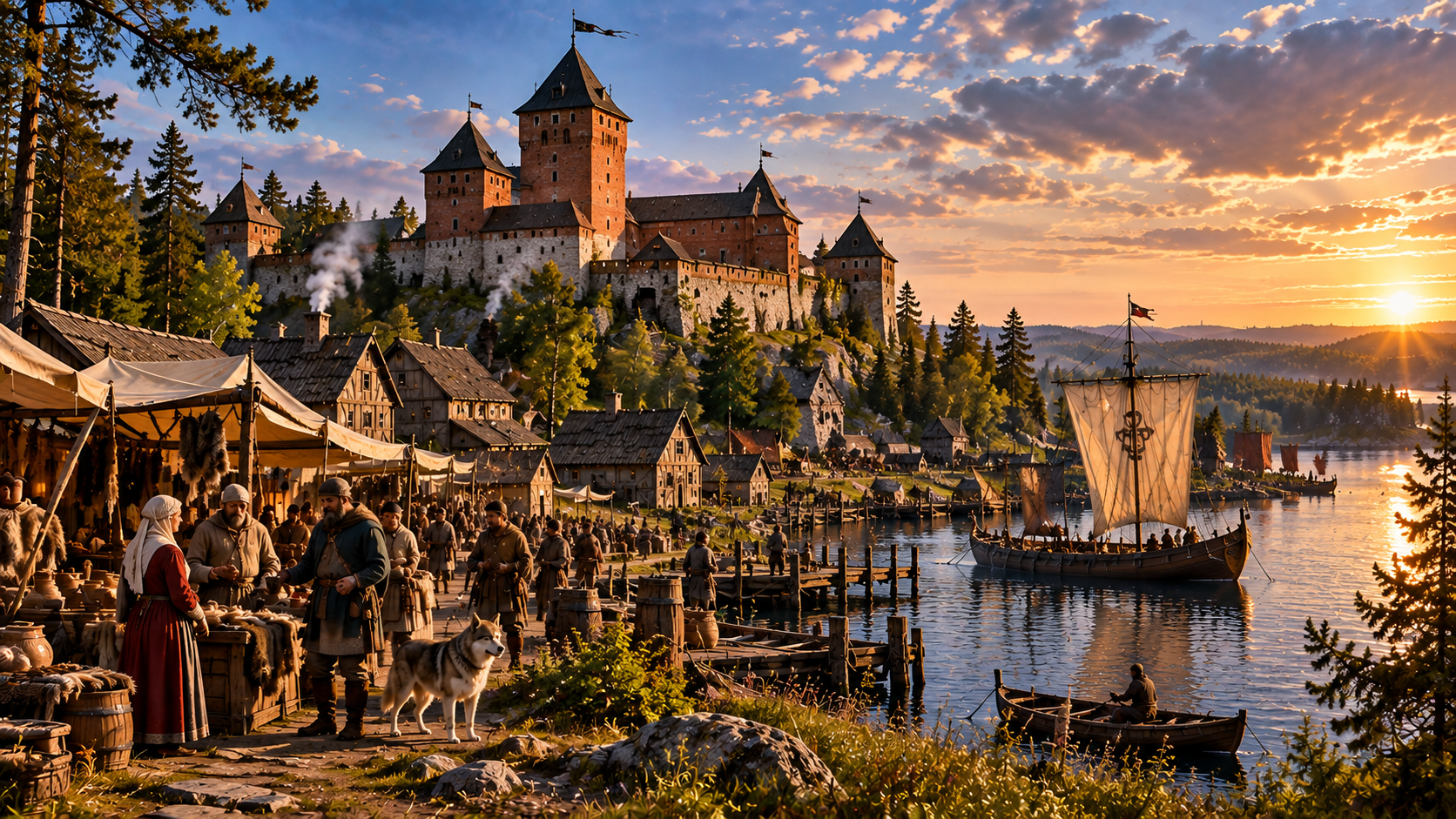
The Gulf of Bothnia trade-country of Ulvila, young Rauma, river routes and northern sea traffic
At a Glance
| Region | Western Finland on the Gulf of Bothnia |
|---|---|
| Principal Towns | Ulvila and Rauma |
| Political Authority | Under Charles VIII’s Swedish crown through town privileges, royal officers, parishes and local households |
| Trade Routes | Kokemäenjoki river traffic, Gulf of Bothnia shipping and inland roads toward Tavastia |
| Economy | Grain, fish, hides, timber, tar, livestock, river commerce and Baltic merchant traffic |
| Faith | Finnish sacred traditions, ancestral and local rites, and Christian institutions |
| Campaign Themes | Merchant rivalry, new town rights, river tolls, shipwrecks, smuggling, coastal spirits and crown regulation |

Satakunta is a west-coast region where river traffic becomes Baltic trade. The Kokemäenjoki carries inland goods toward the sea, while Ulvila and Rauma compete for merchants, ships and royal attention. The coast looks peripheral on a court map; to anyone moving cargo through the Gulf of Bothnia it is a strategic hinge.
Ulvila has possessed town rights since 1365 and remains one of the crown’s important northern trading centres. Rauma is the newcomer: its town rights were granted in 1442, so merchants, craftsmen and neighbouring landholders are still discovering what the new privileges mean in practice.
That creates immediate pressure. Older routes do not vanish because a king grants rights to a town. Inland traders, coastal households, foreign merchants and local sacred powers all possess expectations about who may use rivers, landing places and forests.
Explore: Finland Proper · Tavastia · Turku · Åland · Union of Midgard
What Is Happening Right Now?
Rauma Is Still Becoming a Town
Twelve years after receiving town rights, Rauma’s merchants and craftsmen are pushing for privileges that older neighbours consider disruptive. Every dispute over market days, harbour use or jurisdiction tests how real those new rights are.
Ulvila Wants Its Northern Trade Protected
Ulvila’s position at the Kokemäenjoki mouth links inland Finland to the Gulf of Bothnia. Merchants press the crown to suppress unlicensed trade while river communities defend customary routes.
The River Is Delivering Impossible Cargo
Barrels marked with inland owners arrive downstream before the goods inside have supposedly been produced. Someone—or something—is moving cargo outside ordinary time.
The Coast Is Full of Unrecorded Landings
Fishing coves and small beaches allow cargo to bypass town oversight. Some smugglers use them; others refuse particular coves because lights rise from the water on moonless nights.
Places to Use in Play
Ulvila
Ulvila is the older chartered town and a major outlet for Gulf of Bothnia commerce. Its merchants care intensely about who is allowed to buy, sell and ship through the river mouth.
Rauma
Rauma’s 1442 town rights make it one of Finland’s newest urban experiments. A campaign here can revolve around expanding privileges, ambitious merchants, new civic identity and people whose older obligations do not fit neatly inside the town charter.
The Kokemäenjoki
The river is both highway and boundary. Barges and boats carry cargo inland and out to sea. Floods, shifting channels and river spirits can change which route is considered safe or lawful.
The Gulf Coast
Fishing communities and small anchorages support trade beyond formal harbours. The coast is ideal for wrecks, smuggling, private messages and supernatural sea encounters.
People and Powers
| Power | What It Wants | Adventure Pressure |
|---|---|---|
| Ulvila Merchants | Protected trading privileges and control over Gulf of Bothnia commerce. | Convoys, commercial espionage, missing cargo and toll disputes. |
| Rauma’s New Burghers | Recognition of their recent town rights and room to expand trade. | Charter disputes, rival markets and accusations of poaching business. |
| River and Coastal Households | Fishing, transport, customary landing rights and freedom from excessive regulation. | Smuggling, rescue, local feuds and resistance to town claims. |
| Royal Officers | Revenue, enforceable privileges and dependable northern shipping. | Warrants, investigations, escorts and contested seizures. |
| Water and Forest Specialists | Proper relations with rivers, coastal spirits and inland sacred places. | Floods, curses, drowned dead and spirit bargains. |
Dangers, Rumours and Adventure Hooks
- The New Charter. Two different copies of Rauma’s town rights circulate, each granting a different harbour privilege.
- The Upriver Corpse. A drowned merchant floats against the current carrying tomorrow’s market prices.
- The Ulvila Seal. A cargo bears an authentic town mark despite never passing through Ulvila.
- The Sunken Road. Fishermen find cart tracks on the seabed leading toward an island visible only at low mist.
- The Merchant War. Rauma and Ulvila traders hire rival adventuring companies to prove who has the right to a disputed northern cargo.
- The River Bride. A boatman promises marriage to a water spirit in exchange for safe passage, then decides not to honour the bargain.
Travel and Law
The Kokemäenjoki is the great inland artery, while coastal ships link Satakunta to Turku, Åland and ports around the Baltic. Roads connect the farming districts, but water usually moves bulk goods faster.
Town rights create legal islands of privilege inside a wider landscape of village custom and crown authority. The most interesting disputes occur when Ulvila or Rauma claims exclusive rights over trade that local people have practised for generations.
Deeper History
Ulvila received town rights in 1365 and became an important medieval trading centre at the mouth of the Kokemäenjoki. Its position gave access both to the Gulf of Bothnia and the interior. Rauma received town rights on 17 April 1442, making its urban privileges strikingly recent in the present day.
Explore the Midgard Cluster
Union of Midgard · Finland · Finland Proper · Tavastia · Turku · Åland