
Epidaurus — The Ancient Sanctuary of Healing
At a Glance
| Place | Epidaurus and the surrounding Argolid countryside, north-eastern Peloponnese |
|---|---|
| Ancient sanctuary | Healing complex dedicated to Asclepius, with theatre, temples, ritual spaces and sleeping halls |
| Campaign-present character | Rural communities, old ruins, local roads and political uncertainty in the Morea |
| Known for | Healing, dream visions, sacred snakes and the stories of Asclepius |
| Nearby routes | Argos, coastal roads and inland approaches to the wider Peloponnese |
| Best for | Medical mysteries, disputed cures, forgotten ritual spaces and protecting vulnerable visitors |
A feverish stranger arrives at a hillside farm carrying a wooden token marked with a serpent. He says a healer at the ancient sanctuary promised him three nights of dreams. The sanctuary is in ruins, the villagers insist, but the stranger wakes each morning with less fever—and with a memory that belongs to someone who died centuries ago.
What Is Happening Right Now?
In the late-medieval Argolid the ancient sanctuary no longer functions as the great public healing institution of Classical times. Local families graze animals, trade food and guide travellers among its buildings and ruins. The Morea’s political troubles make distant patrons unreliable; anyone seeking a cure may be desperate enough to trust a charlatan or risk a forbidden chamber.
Places to Investigate
The Ancient Sanctuary of Asclepius
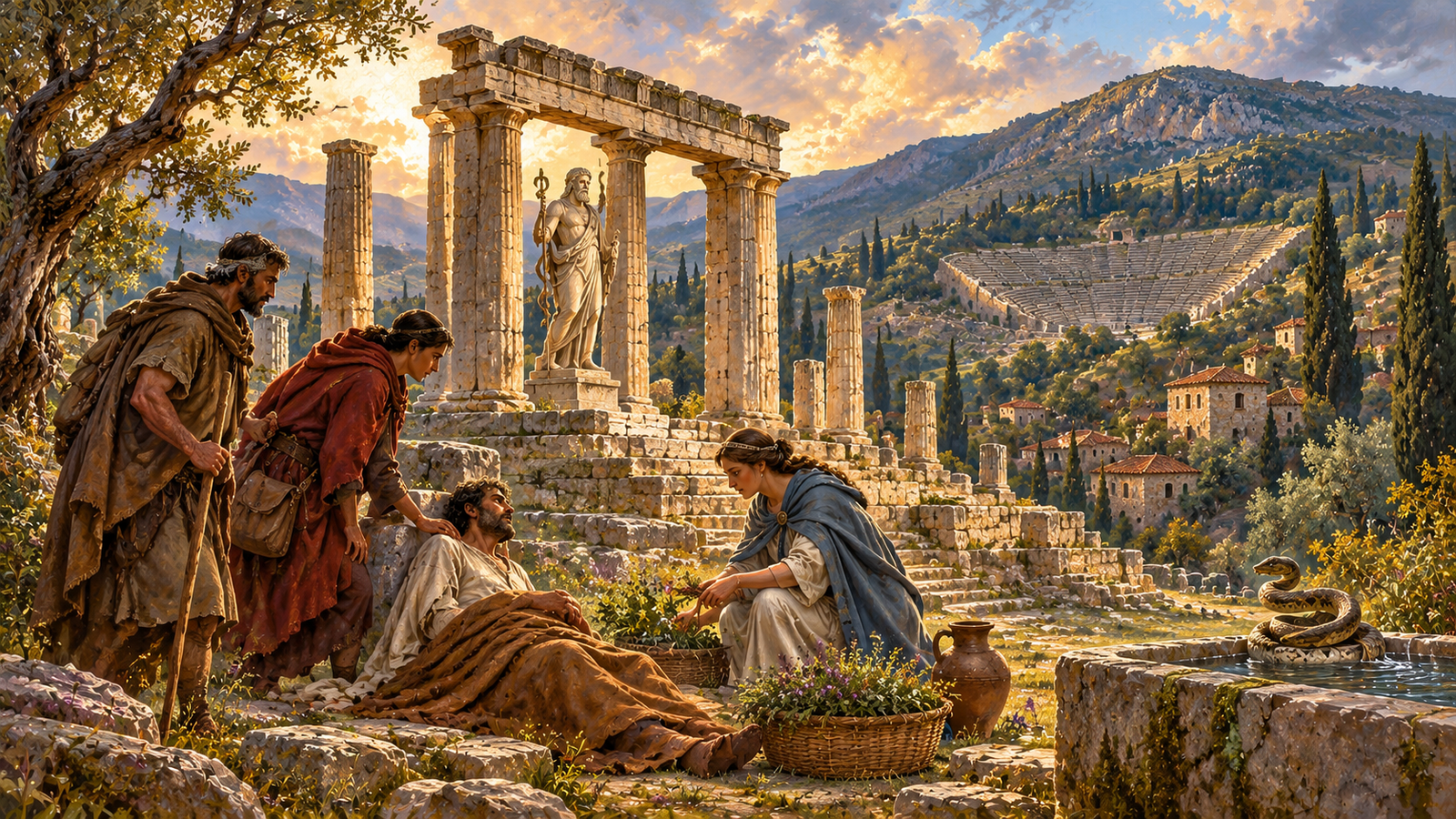
The ruins encompass temples, healing spaces, a theatre, a circular building and structures once used by visitors seeking divine aid. Their arrangement matters: a secret passage is more convincing when connected to actual old rooms and drainage than when a vast new dungeon appears beneath every column. Historic chambers can conceal evidence, offerings, watercourses or a genuine presence.
The Theatre and Terraces
The great theatre sits above the sanctuary. Its stone seats and passages can hide a messenger, provide a vantage for a pursuit or become a meeting place for two factions who dare not speak inside a village. Wind, distance and the acoustics of the place shape what can be overheard.
The Village and Roads
Farmers, shepherds, herbalists, traders and passing boatmen offer shelter and practical help. A wounded villager needs bandages, water and food as surely as any noble visitor. Dangerous rumours about the ruins may disrupt trade or bring armed men to an otherwise peaceful place.
Where Travellers Find Help
The Laurel Roof — Farm Lane Below the Sanctuary
Ione keeps a low stone guesthouse beside the road through the fields. She serves lentils, bread, olives and diluted wine and offers modest sleeping space on straw mattresses. A walled yard holds a few pack animals, but valuables stay safe only if left with her trusted sister. Patients and their families are welcome, while wealthy travellers seeking privacy pay more. Ione knows which guides have brought the sick to the old ruins and will make introductions to Philippa when she believes a visitor will not exploit her.
Philippa’s Healing Room and the Old Paths
Philippa, the healer, works from a clean room in the village and takes payment in food or help when a family has no coin. She tends wounds, burns, infections and frightened children; she cannot raise the dead or guarantee a divine cure. Stavros, a shepherd and guide, supplies rope, lanterns and pack-animal care and knows which cisterns fill after rain. In the nearest market, common herbs and clothing can be found, but rare spells, masterwork tools and enchanted goods require a journey to a larger town or an actual named patron.
People and Healing
Philippa treats illness with care and observation, and she is furious that a visiting charlatan has convinced poor families to sell their medicines for an expensive charm. Stavros knows a safe approach to the ancient sleeping hall but fears the illness is spreading through its flooded chambers. Melantho, a pilgrim with a gravely ill brother, is ready to pay any price for a cure; Philippa believes the brother can be saved, provided he receives skilled treatment and rest before his next visit to the sanctuary. All three need the party’s help for different reasons.
Asclepius has answered Melantho’s plea. In the ancient sleeping chamber a sacred serpent has settled beside her brother’s mat, and the sick man dreams of a plant growing in a shaded cleft near the theatre. Philippa recognises the herb and can prepare it, but the cleft lies beyond a collapsed walkway. A grateful family offers food and lodging to anyone who retrieves it. The god has shown a path to healing, not replaced a healer’s skill or opened a market in miracles.
Dangers and Services
Loose masonry and open cisterns threaten anyone searching the sleeping hall, and a rainstorm can fill the ancient drains before the party returns. The charlatan has told villagers that the sacred serpent is venomous: if it is killed, Melantho’s brother loses the vision and Philippa must seek another remedy. Stavros can guide cautious travellers over the safer terrace while a skilled climber reaches the herb from above. A party may also expose the charlatan’s fraud without harming desperate families who believed him.
Adventure Openings
- The borrowed dream. A visitor is cured but begins remembering a life that ended violently in the sanctuary. Following the memories may uncover a crime, a false healer or a spirit seeking justice.
- The sacred serpent. Villagers accuse a rare snake of poisoning their water. A healer suspects a nearby mine; a wealthy patron wants the creature killed before anyone investigates.
- The sealed hall. Workmen open an ancient room and find objects left by desperate patients. Some descendants want the offerings returned; others hope to sell them. The party must decide what belongs to whom.
When the Patient Wakes
If Philippa obtains the plant and treats Melantho’s brother, the family returns to care for others and Ione welcomes the party whenever they visit. Asclepius’s serpent withdraws to the ruins, where a new supplicant may find a dream of their own. If the charlatan keeps his trade, villagers turn away from Philippa, and the next outbreak is far harder to contain. The people remember who sold false hope and who worked beside them.
Travel and Connections
The roads linking Epidaurus to Argos and the coast pass farms and rough hills. Reliable access depends on weather and local guides rather than a guarantee of an open road. Athens is a separate political centre farther away; local people do not automatically obey its ducal household.
Deeper History and Sources
The Sanctuary of Asclepius was a major healing centre in the ancient Greek and Roman worlds. Its ritual and medical buildings and famous theatre are described by the UNESCO World Heritage Centre. In this setting, ancient divine traditions may survive in isolated encounters, but the ruin’s former society is not simply unchanged.
Continue Exploring
Keep this reference growing
If this page helped with your reading or game, you can support its upkeep or explore the curated books.
Explore the Bookshop — epics, classics and stories behind imagined worlds.