
Divine Magic • Core Spell Reference
Divination
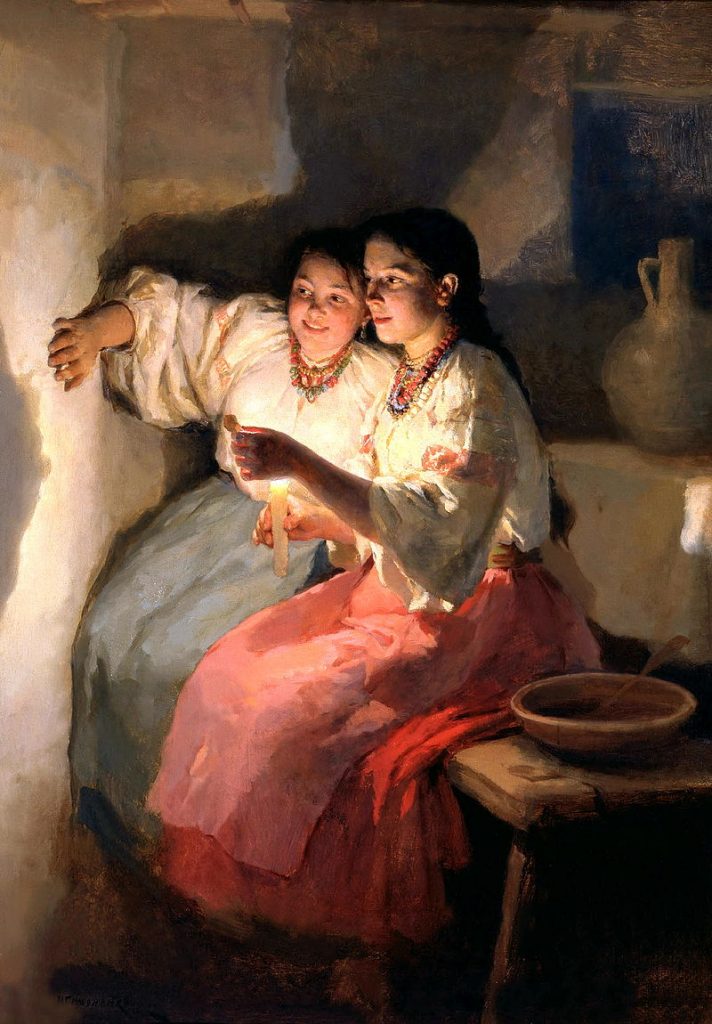
Divination grants an omen or a useful answer about a specific plan within the coming week. Fifth edition offers a truthful but potentially cryptic reply; Pathfinder and 3.5e use a level-based reliability roll. Unlike the shorter-sighted Augury spell, Divination concerns events up to seven days ahead.
Divination at a Glance
| 5.5e (2024) | Level 4 |
|---|---|
| 5e (2014) | Level 4 |
| Pathfinder 1e | Cleric 4, Witch 4 |
| D&D 3.5e | Level 4 |
| Browse | Cleric spells • Witch spells |
Spell Rules
Divination — 5.5e (2024)
4th-level Cleric, Druid and Wizard spell. 2024 rules reference.
| Spell | Level 4 Divination (Cleric, Druid, Wizard) |
|---|---|
| Casting Time | Action or Ritual |
| Range | Self |
| Components | V, S, M (incense worth 25+ GP, which the spell consumes) |
| Duration | Instantaneous |
This spell puts you in contact with a god or a god’s servants. You ask one question about a specific goal, event, or activity to occur within 7 days. The GM offers a truthful reply, which might be a short phrase or cryptic rhyme. The spell doesn’t account for circumstances that might change the answer, such as the casting of other spells. If you cast the spell more than once before finishing a Long Rest, there is a cumulative 25 percent chance for each casting after the first that you get no answer.
Divination — 5e (2014)
Cleric spell level 4. Edition source.
| Spell | 4th-level divination (ritual) |
|---|---|
| Casting Time | 1 action |
| Range | Self |
| Components | V, S, M (incense and a sacrificial offering appropriate to your religion, together worth at least 25 gp, which the spell consumes) |
| Duration | Instantaneous |
Your magic and an offering put you in contact with a god or a god’s servants. You ask a single question concerning a specific goal, event, or activity to occur within 7 days. The GM offers a truthful reply. The reply might be a short phrase, a cryptic rhyme, or an omen. The spell doesn’t take into account any possible circumstances that might change the outcome, such as the casting of additional spells or the loss or gain of a companion. If you cast the spell two or more times before finishing your next long rest, there is a cumulative 25 percent chance for each casting after the first that you get a random reading. The GM makes this roll in secret.
Divination — Pathfinder 1e
Cleric 4 and Witch 4 (the Witch entry is listed in the Advanced Player’s Guide). Pathfinder core spell source.
| School | divination |
|---|---|
| Level | Cleric 4, Witch 4 (Advanced Player’s Guide) |
| Casting Time | 10 minutes |
| Components | V, S, M (incense and an appropriate offering worth 25 gp) |
| Range | personal |
| Target | you |
| Duration | instantaneous |
Related spell: Augury (reference only — not Divination’s procedure)
Important: the following inherited text describes the separate Augury spell, which sees approximately 30 minutes ahead. Divination itself concerns a question about a goal within one week and uses its own reliability rules below.
An augury can tell you whether a particular action will bring good or bad results for you in the immediate future.
The base chance for receiving a meaningful reply is 70% + 1% per caster level, to a maximum of 90%; this roll is made secretly. A question may be so straightforward that a successful result is automatic, or so vague as to have no chance of success. If the augury succeeds, you get one of four results:
- Weal (if the action will probably bring good results).
- Woe (for bad results).
- Weal and woe (for both).
- Nothing (for actions that don’t have especially good or bad results).
If the spell fails, you get the “nothing” result. A cleric who gets the “nothing” result has no way to tell whether it was the consequence of a failed or successful augury.
The augury can see into the future only about half an hour, so anything that might happen after that does not affect the result. Thus, the result might not take into account the long-term consequences of a contemplated action. All auguries cast by the same person about the same topic use the same die result as the first casting.
Divination’s actual spell effect (one-week horizon)
Changes for this spell: more powerful, a divination spell can provide you with a useful piece of advice in reply to a question concerning a specific goal, event, or activity that is to occur within 1 week. The advice granted by the spell can be as simple as a short phrase, or it might take the form of a cryptic rhyme or omen. If your party doesn’t act on the information, the conditions may change so that the information is no longer useful. The base chance for a correct divination is 70% + 1% per caster level, to a maximum of 90%. If the die roll fails, you know the spell failed, unless specific magic yielding false information is at work.
As with augury, multiple divinations about the same topic by the same caster use the same dice result as the first divination spell and yield the same answer each time.
Divination — D&D 3.5e
Cleric spell level 4. Edition source.
| School | Divination |
|---|---|
| Level | Clr 4, Knowledge 4 |
| Components | V, S, M |
| Casting Time | 10 minutes |
| Range | Personal |
| Target | You |
| Duration | Instantaneous |
Related spell: Augury (reference only — not Divination’s procedure)
Important: the following inherited text describes the separate Augury spell, which sees approximately 30 minutes ahead. Divination itself concerns a question about a goal within one week and uses its own reliability rules below.
An augury can tell you whether a particular action will bring good or bad results for you in the immediate future.
The base chance for receiving a meaningful reply is 70% + 1% per caster level, to a maximum of 90%; this roll is made secretly. A question may be so straightforward that a successful result is automatic, or so vague as to have no chance of success. If the augury succeeds, you get one of four results:
- Weal (if the action will probably bring good results).
- Woe (for bad results).
- Weal and woe (for both).
- Nothing (for actions that don’t have especially good or bad results).
If the spell fails, you get the “nothing” result. A cleric who gets the “nothing” result has no way to tell whether it was the consequence of a failed or successful augury.
The augury can see into the future only about half an hour, so anything that might happen after that does not affect the result. Thus, the result might not take into account the long-term consequences of a contemplated action. All auguries cast by the same person about the same topic use the same dice result as the first casting.
Material Component: Incense worth at least 25 gp.
Focus: A set of marked sticks, bones, or similar tokens of at least 25 gp value.
Divination’s actual spell effect (one-week horizon)
Changes for this spell: more powerful, a divination spell can provide you with a useful piece of advice in reply to a question concerning a specific goal, event, or activity that is to occur within one week. The advice can be as simple as a short phrase, or it might take the form of a cryptic rhyme or omen. If your party doesn’t act on the information, the conditions may change so that the information is no longer useful. The base chance for a correct divination is 70% + 1% per caster level, to a maximum of 90%. If the dice roll fails, you know the spell failed, unless specific magic yielding false information is at work.
As with augury, multiple divinations about the same topic by the same caster use the same dice result as the first divination spell and yield the same answer each time.
Material Component: Incense and a sacrificial offering appropriate to your religion, together worth at least 25 gp.
What Changed?
- 2024: Clerics, Druids and Wizards may cast Divination with an Action or as a Ritual; repeated casting risks receiving no answer.
- 2014: the spell uses an action and ritual casting; repeated casting risks a random reading, rather than no answer.
- Pathfinder 1e: Clerics and Witches may cast it; the ten-minute casting and success chance of 70% + 1% per caster level, capped at 90%, govern the answer.
- D&D 3.5e: Clerics and the Knowledge domain use the older d20 version with its ten-minute casting and percentage success check.
Using Divination in Play
Ask a specific question whose answer could change what the party does next. Divination is most valuable before a dangerous journey, negotiation, ritual or assault when several possible plans are still open.
Counterplay and Rulings
- Divination is information magic: it does not force the future to happen and does not override free choice.
- Counterspell: can stop the casting where the chosen edition allows it.
- Dispel Magic: normally has little to undo once an instantaneous answer has been received.
- Unclear questions: vague wording can produce equally vague or cryptic answers; use the selected edition’s exact limits.
Related Magic
Worked Example: The Road Through the Pass
A Witch wants to know whether the party should cross an avalanche-prone mountain pass within the next seven days. She asks a precise question about the planned crossing rather than demanding an account of her whole future.
Pathfinder 1e, caster level 8: the base chance for a correct answer is 70% + 8% = 78%. The Games Master makes the roll in secret. On a failure, the caster knows the divination failed unless specific magic supplies false information. Asking again about the same subject does not grant a new roll or different answer.
2024: the Games Master gives a truthful but potentially cryptic response. A second Divination before a Long Rest carries a 25% chance of receiving no answer.
2014: the second casting instead carries a 25% chance of a random reading. Do not exchange these two outcomes between editions.
Mythical Context
Ancient Greek tradition named Gaia, Themis and Phoebe as earlier holders of the Delphic prophetic seat before Apollo. In Aeschylus’ Eumenides, the priestess recounts this succession before delivering the god’s oracle. The myth gives divination its sense of inherited, sometimes cryptic authority; it does not establish the spell’s chance of success or casting time.
Ancient testimony on the Delphic oracle and its mythical origins
Historical Context
At Delphi, petitioners travelled to Apollo’s sanctuary to receive counsel through the Pythia. The site’s oracle had major political and religious influence across the Greek world, especially by the sixth century BCE. The surviving sanctuary and votive monuments provide archaeological evidence for the institution of consultation; its prophecies should not be treated as verified predictions.
UNESCO: Archaeological Site of Delphi and the oracle’s historical role
Rules Sources and Licensing
This work includes material from the System Reference Document 5.2.1 and/or 5.1 by Wizards of the Coast LLC. The original documents are available at D&D Beyond and are licensed under CC BY 4.0. Presentation and formatting have been changed.
The Pathfinder and 3.5 spell mechanics and their tables are Open Game Content under the Open Game License v1.0a. Artwork and original setting prose are excluded from that designation.
Open Game License v1.0a and copyright notices
Permission to copy, modify and distribute the files collectively known as the System Reference Document (“SRD”) is granted solely through the use of the Open Gaming License, Version 1.0a.
This material is being released using the Open Gaming License Version 1.0a and you should read and understand the terms of that license before using this material.
The text of the Open Gaming License itself is not Open Game Content. Instructions on using the License are provided within the License itself.
The following items are designated Product Identity, as defined in Section 1(e) of the Open Game License Version 1.0a, and are subject to the conditions set forth in Section 7 of the OGL, and are not Open Content: Dungeons & Dragons, D&D, Player’s Handbook, Dungeon Master, Monster Manual, d20 System, Wizards of the Coast, d20 (when used as a trademark), Forgotten Realms, Faerûn, proper names (including those used in the names of spells or items), places, Red Wizard of Thay, the City of Union, Heroic Domains of Ysgard, Ever-Changing Chaos of Limbo, Windswept Depths of Pandemonium, Infinite Layers of the Abyss, Tarterian Depths of Carceri, Gray Waste of Hades, Bleak Eternity of Gehenna, Nine Hells of Baator, Infernal Battlefield of Acheron, Clockwork Nirvana of Mechanus, Peaceable Kingdoms of Arcadia, Seven Mounting Heavens of Celestia, Twin Paradises of Bytopia, Blessed Fields of Elysium, Wilderness of the Beastlands, Olympian Glades of Arborea, Concordant Domain of the Outlands, Sigil, Lady of Pain, Book of Exalted Deeds, Book of Vile Darkness, beholder, gauth, carrion crawler, tanar’ri, baatezu, displacer beast, githyanki, githzerai, mind flayer, illithid, umber hulk, yuan-ti.
All of the rest of the SRD is Open Game Content as described in Section 1(d) of the License.
More information on the Open Game License can be found at www.wizards.com/d20.
The terms of the Open Gaming License Version 1.0a are as follows:
OPEN GAME LICENSE Version 1.0a
The following text is the property of Wizards of the Coast, Inc. and is Copyright 2000 Wizards of the Coast, Inc (“Wizards”). All Rights Reserved.
1. Definitions: (a)”Contributors” means the copyright and/or trademark owners who have contributed Open Game Content; (b)”Derivative Material” means copyrighted material including derivative works and translations (including into other computer languages), potation, modification, correction, addition, extension, upgrade, improvement, compilation, abridgment or other form in which an existing work may be recast, transformed or adapted; (c) “Distribute” means to reproduce, license, rent, lease, sell, broadcast, publicly display, transmit or otherwise distribute; (d)”Open Game Content” means the game mechanic and includes the methods, procedures, processes and routines to the extent such content does not embody the Product Identity and is an enhancement over the prior art and any additional content clearly identified as Open Game Content by the Contributor, and means any work covered by this License, including translations and derivative works under copyright law, but specifically excludes Product Identity. (e) “Product Identity” means product and product line names, logos and identifying marks including trade dress; artifacts; creatures characters; stories, storylines, plots, thematic elements, dialogue, incidents, language, artwork, symbols, designs, depictions, likenesses, formats, poses, concepts, themes and graphic, photographic and other visual or audio representations; names and descriptions of characters, spells, enchantments, personalities, teams, personas, likenesses and special abilities; places, locations, environments, creatures, equipment, magical or supernatural abilities or effects, logos, symbols, or graphic designs; and any other trademark or registered trademark clearly identified as Product identity by the owner of the Product Identity, and which specifically excludes the Open Game Content; (f) “Trademark” means the logos, names, mark, sign, motto, designs that are used by a Contributor to identify itself or its products or the associated products contributed to the Open Game License by the Contributor (g) “Use”, “Used” or “Using” means to use, Distribute, copy, edit, format, modify, translate and otherwise create Derivative Material of Open Game Content. (h) “You” or “Your” means the licensee in terms of this agreement.
2. The License: This License applies to any Open Game Content that contains a notice indicating that the Open Game Content may only be Used under and in terms of this License. You must affix such a notice to any Open Game Content that you Use. No terms may be added to or subtracted from this License except as described by the License itself. No other terms or conditions may be applied to any Open Game Content distributed using this License.
3.Offer and Acceptance: By Using the Open Game Content You indicate Your acceptance of the terms of this License.
4. Grant and Consideration: In consideration for agreeing to use this License, the Contributors grant You a perpetual, worldwide, royalty-free, non-exclusive license with the exact terms of this License to Use, the Open Game Content.
5.Representation of Authority to Contribute: If You are contributing original material as Open Game Content, You represent that Your Contributions are Your original creation and/or You have sufficient rights to grant the rights conveyed by this License.
6.Notice of License Copyright: You must update the COPYRIGHT NOTICE portion of this License to include the exact text of the COPYRIGHT NOTICE of any Open Game Content You are copying, modifying or distributing, and You must add the title, the copyright date, and the copyright holder’s name to the COPYRIGHT NOTICE of any original Open Game Content you Distribute.
7. Use of Product Identity: You agree not to Use any Product Identity, including as an indication as to compatibility, except as expressly licensed in another, independent Agreement with the owner of each element of that Product Identity. You agree not to indicate compatibility or co-adaptability with any Trademark or Registered Trademark in conjunction with a work containing Open Game Content except as expressly licensed in another, independent Agreement with the owner of such Trademark or Registered Trademark. The use of any Product Identity in Open Game Content does not constitute a challenge to the ownership of that Product Identity. The owner of any Product Identity used in Open Game Content shall retain all rights, title and interest in and to that Product Identity.
8. Identification: If you distribute Open Game Content You must clearly indicate which portions of the work that you are distributing are Open Game Content.
9. Updating the License: Wizards or its designated Agents may publish updated versions of this License. You may use any authorized version of this License to copy, modify and distribute any Open Game Content originally distributed under any version of this License.
10. Copy of this License: You MUST include a copy of this License with every copy of the Open Game Content You Distribute.
11. Use of Contributor Credits: You may not market or advertise the Open Game Content using the name of any Contributor unless You have written permission from the Contributor to do so.
12. Inability to Comply: If it is impossible for You to comply with any of the terms of this License with respect to some or all of the Open Game Content due to statute, judicial order, or governmental regulation then You may not Use any Open Game Material so affected.
13. Termination: This License will terminate automatically if You fail to comply with all terms herein and fail to cure such breach within 30 days of becoming aware of the breach. All sublicenses shall survive the termination of this License.
14. Reformation: If any provision of this License is held to be unenforceable, such provision shall be reformed only to the extent necessary to make it enforceable.
15. COPYRIGHT NOTICE
Open Game License v 1.0a Copyright 2000, Wizards of the Coast, Inc.
System Reference Document Copyright 2000-2003, Wizards of the Coast, Inc.; Authors Jonathan Tweet, Monte Cook, Skip Williams, Rich Baker, Andy Collins, David Noonan, Rich Redman, Bruce R. Cordell, John D. Rateliff, Thomas Reid, James Wyatt, based on original material by E. Gary Gygax and Dave Arneson.
Pathfinder Roleplaying Game Core Rulebook. © 2009, Paizo Publishing, LLC; Author: Jason Bulmahn, based on material by Jonathan Tweet, Monte Cook, and Skip Williams.
Pathfinder Roleplaying Game Advanced Player’s Guide. © 2010, Paizo Publishing, LLC; Author: Jason Bulmahn.
END OF LICENSE
Keep this reference growing
If this page helped with your reading or game, you can support its upkeep or explore the curated books.
Explore the Bookshop — epics, classics and stories behind imagined worlds.