
Versatile Performer — The Many-Talented Bard
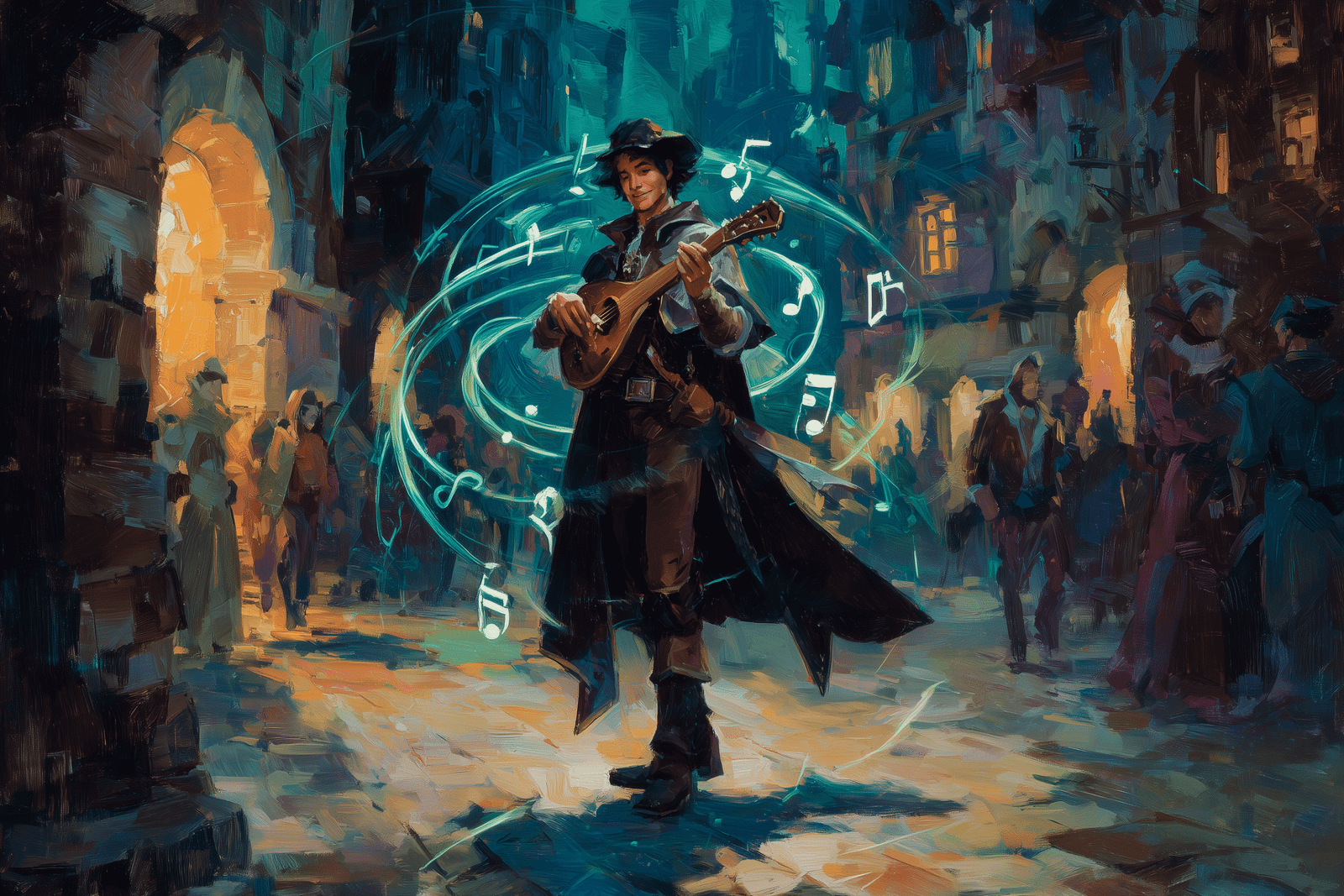
A travelling performer who can sing, tell stories, dance and play different instruments is worth more than an evening’s applause. Such a character can enter a city with a single lute and leave knowing the gossip of its market, the worries of its guards and which innkeeper will offer a night’s lodging in exchange for a song.
At a Glance
| Feat | Versatile Performer |
|---|---|
| Talent | Master several forms of music, dance or storytelling |
| Benefit | Additional artistic proficiency and better combined performances |
| Prerequisite | Performance training appropriate to the edition |
| Characters | Bards, poets, actors, singers, dancers and minstrels |
Rules by Edition
A master performer moves easily between song, dance, storytelling and instruments.
Versatile Performer — D&D 2024
General Feat (Prerequisite: Level 4+, proficiency in Performance)
Many Talents
Gain proficiency with two musical instruments or artisan’s tools of your choice. You also gain proficiency in one additional skill of your choice from Acrobatics, Deception, Insight, Persuasion or Sleight of Hand.
Seamless Performance
When you make a Charisma (Performance) check that genuinely combines two trained performance arts—for example, singing while playing a lute, or dance with dramatic storytelling—you have Advantage on the check. If an instrument or tool is involved, you must be proficient with it to use this benefit. You cannot apply this benefit to combat attack rolls or spellcasting checks.
Example: A bard proficient in Performance and the lute sings while playing an improvised ballad. The Charisma (Performance) check has Advantage. Making a Persuasion check afterward does not automatically gain it.
Versatile Performer — D&D 2014
Feat (Prerequisite: proficiency in Performance)
Benefit
Gain proficiency with any two musical instruments or artistic tools of your choice. When you make a Charisma (Performance) check combining at least two trained performance forms at the same time, add +2 to the check. This bonus applies only to the combined act and not to ordinary Persuasion, Deception or Acrobatics checks.
Choose the instruments or tools when you acquire this feat; these proficiencies remain yours.
Example: A minstrel performs song and lute together with proficiency in both. The combined Performance check gains +2. A later lute solo uses the normal check without this bonus.
Versatile Performer — Pathfinder 1e
General Feat · Prerequisites: 5 ranks in any one Perform skill; Intelligence 13.
Benefit
Choose a number of additional Perform skill categories equal to your Intelligence modifier (minimum one). When making Perform checks with the chosen categories, treat them as having the same number of ranks as your best-ranked Perform skill. These effective ranks change when your highest Perform rank total rises. They are not actual ranks and do not satisfy feat prerequisites or grant additional skill points.
You gain a +2 bonus on one Perform check that combines at least two distinct performance categories simultaneously; use the higher applicable Perform modifier. You choose extra categories if a permanent Intelligence increase grants more choices.
Example: A bard with Perform (sing) 11 ranks and Intelligence 16 chooses Perform (dance), Perform (oratory) and Perform (string instruments). All three count as 11 ranks for their Perform checks. Singing with a lute gains +2 on the combined check.
Versatile Performer — D&D 3.5e
General Feat · Source: Complete Adventurer, page 112. Prerequisite: 5 ranks in any one Perform skill.
Benefit
Choose a number of additional Perform categories equal to your Intelligence modifier (minimum one). When making a Perform check with a selected category, treat its number of ranks as equal to your highest-ranked Perform category. Those effective ranks automatically increase as your strongest Perform skill improves. The chosen categories cannot otherwise be changed unless a permanent increase in Intelligence grants more choices.
When you make a single act using at least two Perform categories at once, gain a +2 bonus to the combined Perform check. Apply it to the higher of the two relevant Perform modifiers. Effective ranks do not satisfy feat or prestige-class prerequisites requiring actually purchased ranks.
Example: A bard with Perform (sing) 12 ranks and Intelligence 14 chooses Perform (oratory) and Perform (dance), treating both as 12 ranks for checks. Singing and dancing together uses the higher modifier with +2.
The Performer’s Repertoire
Choose the art for which the character is famous, then two more skills displayed only when the occasion demands. A bard known for battlefield songs might also be a gifted dancer and storyteller; a travelling singer might play several instruments well enough to pass among royal musicians. A fine performance should win an audience, draw a patron’s attention or open a conversation that a blade never could.
At the Table
The Two-Instrument Performance
During a crowded inn supper, the bard must keep playing while answering a merchant’s questions in rhyme. The merchant will reveal a missing caravan’s last road only if the story sounds true. A successful act earns the clue, but failure need not end the encounter: the merchant may accept payment or demand a second story from a travelling witness.
The Festival Challenge
A local festival pits singers, dancers and musicians against one another. A performer who knows several disciplines can compete in more events, but local audiences care more about the subject of a song than a single die roll. Let preparation, costume, language and the interests of the crowd affect the difficulty.
How Much Does It Earn?
In games that use separate Perform skills and published earning tables, apply the relevant edition’s skill rules. In other games, a performance check can set the quality of a show, but money, lodging and contacts are determined by what the crowd can actually offer. An excellent singer cannot earn a noble’s purse in a village where everyone is hungry.
Further Reading
Bard class and world traditions · Perform skill reference · Pathfinder Bard rules · D&D 2024 Origin Feats.
Sources and Licensing
The D&D 3.5e feat is from Complete Adventurer (2005), page 112, paraphrased for play. The D&D 2024, D&D 2014 and Pathfinder 1e versions are original feats. Encounter examples and world material are original.
Keep this reference growing
If this page helped with your reading or game, you can support its upkeep or explore the curated books.
Explore the Bookshop — epics, classics and stories behind imagined worlds.