
At a Glance
Pantheon: Mesopotamian. Divine Rank: Greater Deity. Alignment: Neutral Good. Titles: Lady of Health; Great Healer; Lady of Isin. Portfolio: healing, medicine, restoration, herbs, protection, regenerative life, dream incubation. Symbol: seated healer with sacred dog; campaign emblem uses a dog beside a sprouting medicinal plant. Sacred Animal: dog. Favoured Weapon: staff. Worshippers: physicians, healers, herbalists, midwives, temple attendants, soldiers recovering from wounds and families seeking cures. Major Cult Centres: Isin and other Mesopotamian healing cult centres. Divine Realm: The House Where the Broken Are Made Whole.
Gula is the great healer who makes the broken whole again. Under names including Gula, Ninkarrak and Ninisinna, she stands at the meeting point of medicine, protective incantation, healing herbs, dream revelation and the stubborn return of life after injury.
Game Mechanics
5.5e / 2024 — Direct Divine Manifestation
Medium Celestial (Greater Deity), Neutral Good. AC 27; HP 780; Speed 40 ft.; CR 34; PB +10. STR 24, DEX 24, CON 34, INT 32, WIS 38, CHA 32. Saves Con +22, Int +21, Wis +24, Cha +21. Skills Medicine +24, Nature +21, Insight +24, Religion +21. Resistances acid, cold, fire; Immunities necrotic, poison, radiant. Condition Immunities diseased effects, poisoned, frightened, charmed. Truesight 180 ft.; telepathy 1 mile.
Divine Nature; Legendary Resistance (4/Day); Magic Resistance. Great Healer: whenever Gula restores hit points to a creature, that creature may also end one disease or poison affecting it, unless the effect comes from an artifact or equal divine power. Sacred Dog: a luminous divine hound occupies a space within 30 feet of Gula; once per round when an ally within 30 feet would fall to 0 hit points, the hound can move adjacent and the ally instead falls to 1 hit point. Herb Grower: nonmagical medicinal plants within 1 mile flourish, and Wisdom (Medicine) checks made with them have Advantage.
Actions: Healing Staff +18 to hit, 3d8+7 bludgeoning plus 5d8 radiant. Physician’s Touch: one creature within 60 feet regains 55 hit points and ends one blinded, deafened, poisoned or paralyzed condition. Cut Away the Corruption: DC 29 Constitution save, one creature within 120 feet; 55 radiant damage and one ongoing curse, disease, parasitic effect or necromantic attachment is suppressed until the end of Gula’s next turn on failure. House of Recovery (Recharge 5–6): 30-foot-radius aura for 1 minute; allies entering or starting turns there regain 15 hit points and have Advantage on death saving throws.
Legendary Actions: Move; Staff Strike; Diagnose (1) — Gula learns one damage immunity, disease, curse or condition affecting a creature; Healing Word (2) — ally within 120 feet regains 30 hp; Interpose the Hound (2) — impose Disadvantage on an attack against an ally; Restore the Broken (3) — one ally ends one condition and regains 40 hp.
5.5e cleric themes: Life, Nature and Knowledge. Campaign Healing Domain spells: healing word, sanctuary; lesser restoration, prayer of healing; revivify, protection from energy; aura of life, divination; greater restoration, mass cure wounds.
Pathfinder 1e — Campaign Adaptation
CR 34 / MR 9; Medium outsider (divine, good); AC 54; hp 720; Fort +36, Ref +29, Will +40; DR 15/epic; SR 45. Signature abilities: Great Healer (Su), healing also removes poison or disease; Sacred Dog (Su), prevents an ally within 30 ft. from dying once per round; Dream Incubation (Su), creatures sleeping in Gula’s consecrated area may receive divination; Herb Grower (Su), grants +4 sacred on Heal checks using local plants. Domains: Healing, Good, Knowledge, Plant, Protection.
D&D 3.5e — Campaign Adaptation
Greater Deity; Divine Rank 14; Outsider 20 / Cleric 25; Neutral Good. Suggested CR 47. DR 25/epic; SR 61. Salient divine abilities: Avatar, Divine Spellcasting, Gift of Life, Life and Death, Rejuvenation, See Magic. Domains: Healing, Good, Knowledge, Plant, Protection. Favoured weapon: quarterstaff.
What Is Gula Doing Right Now?
Gula’s temples are receiving patients before they receive pilgrims. Epidemics, battlefield wounds and dangerous magical diseases have made healing cults politically important again, and Gula is determined that treatment not become merely another privilege of wealth.
Her sacred dogs have begun appearing at roadsides and ruined infirmaries. They do not attack travellers. They sit beside the person most urgently in need of treatment and refuse to move until someone notices.
Appearance & Manner
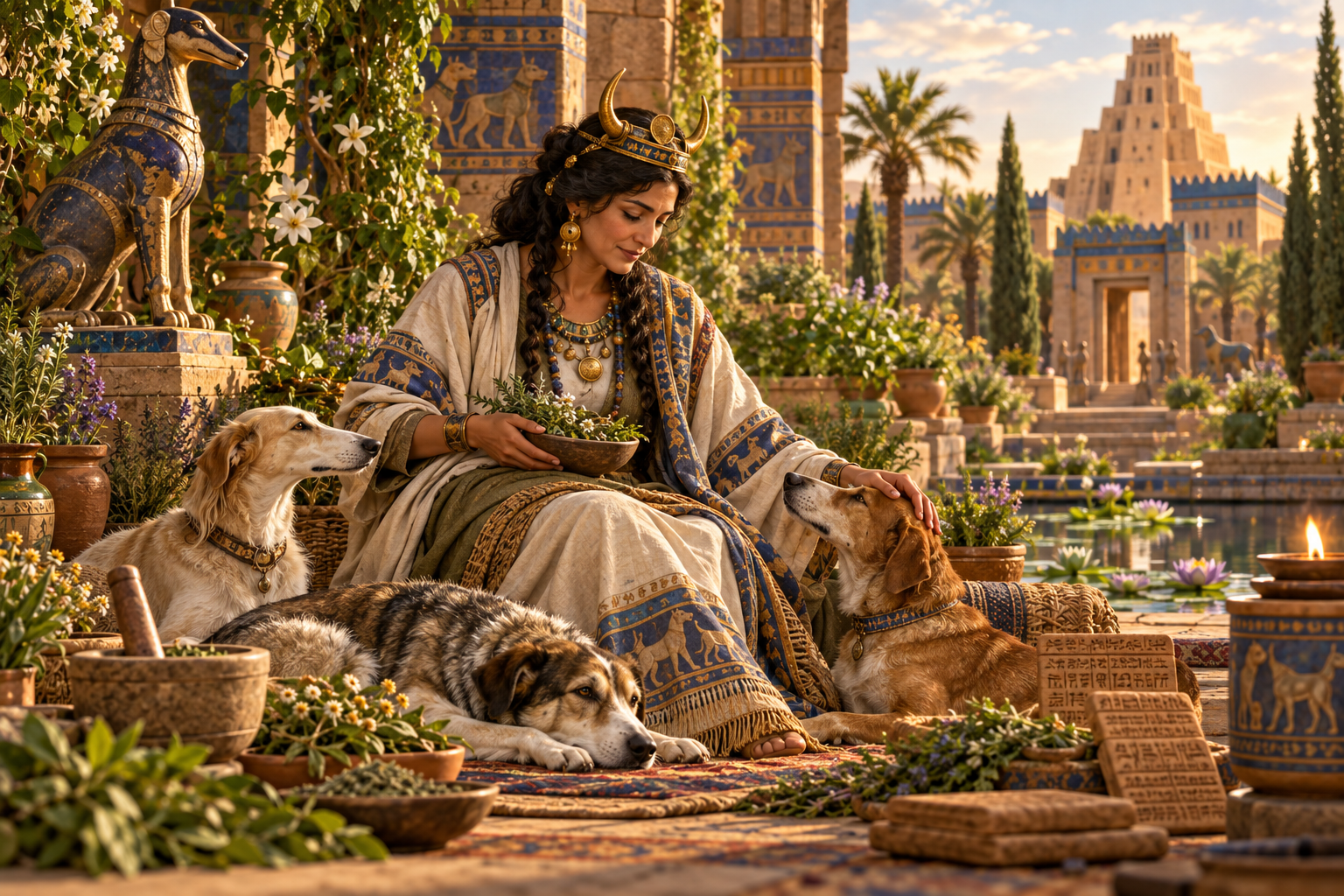
Gula appears as an enthroned Mesopotamian goddess in a horned crown with a calm, assessing gaze. A dog rests at her feet. She speaks like an experienced physician: direct, observant and unimpressed by dramatic complaints that distract from the actual wound.
Myths & Divine Relationships
Gula/Ninkarrak is one of Mesopotamia’s major healing divinities and shares healing epithets with Damu. She is described as a great healer, a grower of herbs and a power that makes what is broken whole. Later evidence also gives her a strong dream-incubation aspect. Her sacred association with dogs is one of the most distinctive pieces of Mesopotamian divine iconography.
Worship & Priesthood
Her priests maintain treatment rooms, herb gardens, clean water and records of symptoms. They value diagnosis over spectacle. Offerings often come from recovered patients: food for temple dogs, medicinal plants, bandages, lamps or payment for the care of someone who cannot afford it.
Omens, Favour & Displeasure
Favour appears as a dog sleeping beside a sickbed, an herb growing out of season, a fever breaking before dawn or a healer remembering an obscure treatment at exactly the right moment. Gula disfavors deliberate contamination, withholding treatment for leverage, cruelty to the sick and healers who conceal dangerous mistakes.
Encounters & Adventure Use
The Dog at the Gate: a sacred dog blocks a fortress entrance because someone inside carries a hidden plague. The Broken Healer: a famous physician has lost the ability to heal after falsifying a cure record. The Dream Ward: patients in a temple all dream of the same sealed room beneath the building.
Divine Realm
The House Where the Broken Are Made Whole resembles an immense temple-hospital surrounded by gardens and kennels. Its halls are quiet rather than sterile. No patient is turned away for being cursed, undead-adjacent, politically inconvenient or difficult to save.
Relics & Sacred Magic
The Collar of the Faithful Hound allows its bearer to sense the nearest dying creature within a mile once each dawn. The Herb-Knife cuts diseased tissue without harming healthy flesh. Gula’s Dream Bowl produces one truthful symbolic dream when filled with clean water beside a sleeping patient.
Historical & Mythological Context
Gula/Ninkarrak is securely attested as a major healing goddess, called the Lady of Health and great healer. Sources connect her with herbs, regenerative power, dream incubation and dogs. The game mechanics, divine realm, relics and current activity are campaign development rather than claims about ancient ritual practice.
Sources & Licensing
ORACC — Gula/Ninkarrak: https://oracc.museum.upenn.edu/amgg/Listofdeities/GulaNinkarrak/index.html . Game mechanics and campaign material are original adaptation.
Keep this reference growing
If this page helped with your reading or game, you can support its upkeep or explore the curated books.
Explore the Bookshop — epics, classics and stories behind imagined worlds.