
Weapon, Type
Understanding Weapon Damage Types
The Type column in the Weapons tables tells you whether an attack does bludgeoning, piercing or slashing damage. Blows from clubs and hammers typically bludgeon; spearpoints pierce; cutting edges slash. Some creatures and spells interact differently with particular damage types, so read the attack and the target’s actual rules before applying resistance or immunity.
What ‘and’ and ‘or’ Mean in Legacy Tables
In Pathfinder 1e and D&D 3.5e, an entry marked ‘piercing or slashing’, such as a dagger, lets the attacker use either listed type where it matters. An entry marked ‘bludgeoning and piercing’, such as a legacy morningstar, counts as both types for that edition’s resistance and immunity rules. It does not divide the rolled damage in half. The weapon’s own entry can refine this general rule.
These phrases describe the older editions’ weapon classifications. They are not permission to add an extra damage type to a similarly named weapon in 2014 or 2024 fifth edition.
How Each Edition Handles the Type
D&D 2024 (5.5e)
Use the damage type printed alongside the damage die of the specific 2024 weapon. For example, the 2024 dagger deals piercing damage, not a free choice of piercing or slashing. Other features, spells and creature traits may alter what happens after damage is rolled; the weapon table alone does not assign two types.
D&D 2014 (5e)
Read the weapon’s listed damage type in the 2014 table and use that type when applying the target’s resistance, immunity or vulnerability. The 2014 dagger is listed as piercing, although earlier d20 versions offer piercing or slashing. Do not import the older rule.
Pathfinder 1e
Read the legacy table’s and/or wording literally, then consult the relevant creature damage reduction and attack rules. A morningstar’s bludgeoning and piercing designation is different from a dagger’s piercing or slashing choice.
D&D 3.5e
The 3.5e weapons table also distinguishes an attack that counts as both named types from one where the wielder can choose either type. Monster damage reduction in this edition is not automatically equivalent to fifth-edition resistance: check the actual creature and the rules system being played.
A Quick Example
A character attacks a foe with a dagger. Using the Pathfinder 1e or 3.5e weapon entry, that character can choose a piercing or slashing attack when the distinction matters. With a 2014 or 2024 fifth-edition dagger, the listed damage is piercing. This simple difference can matter when a monster has a type-specific defence; the decision must come from the correct weapon entry, not from a generic assumption about what a dagger could do.
Rules Sources and Other Columns
D&D 2024 equipment · D&D 2014 equipment · Pathfinder 1e equipment · D&D 3.5e weapons. You can also compare Weapon Damage, Critical and Special Properties.
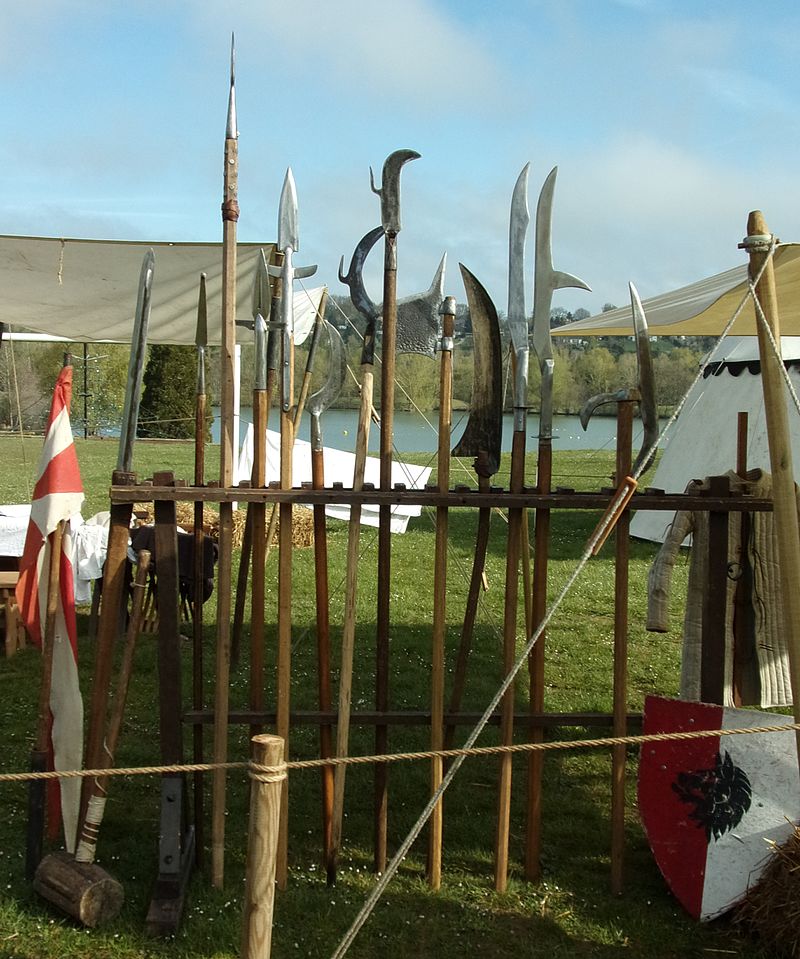
Historical Arms Illustration
Related Videos
Keep this reference growing
If this page helped with your reading or game, you can support its upkeep or explore the curated books.
Explore the Bookshop — epics, classics and stories behind imagined worlds.