
Adam the Leper — Outlaw Captain of the Old Roads
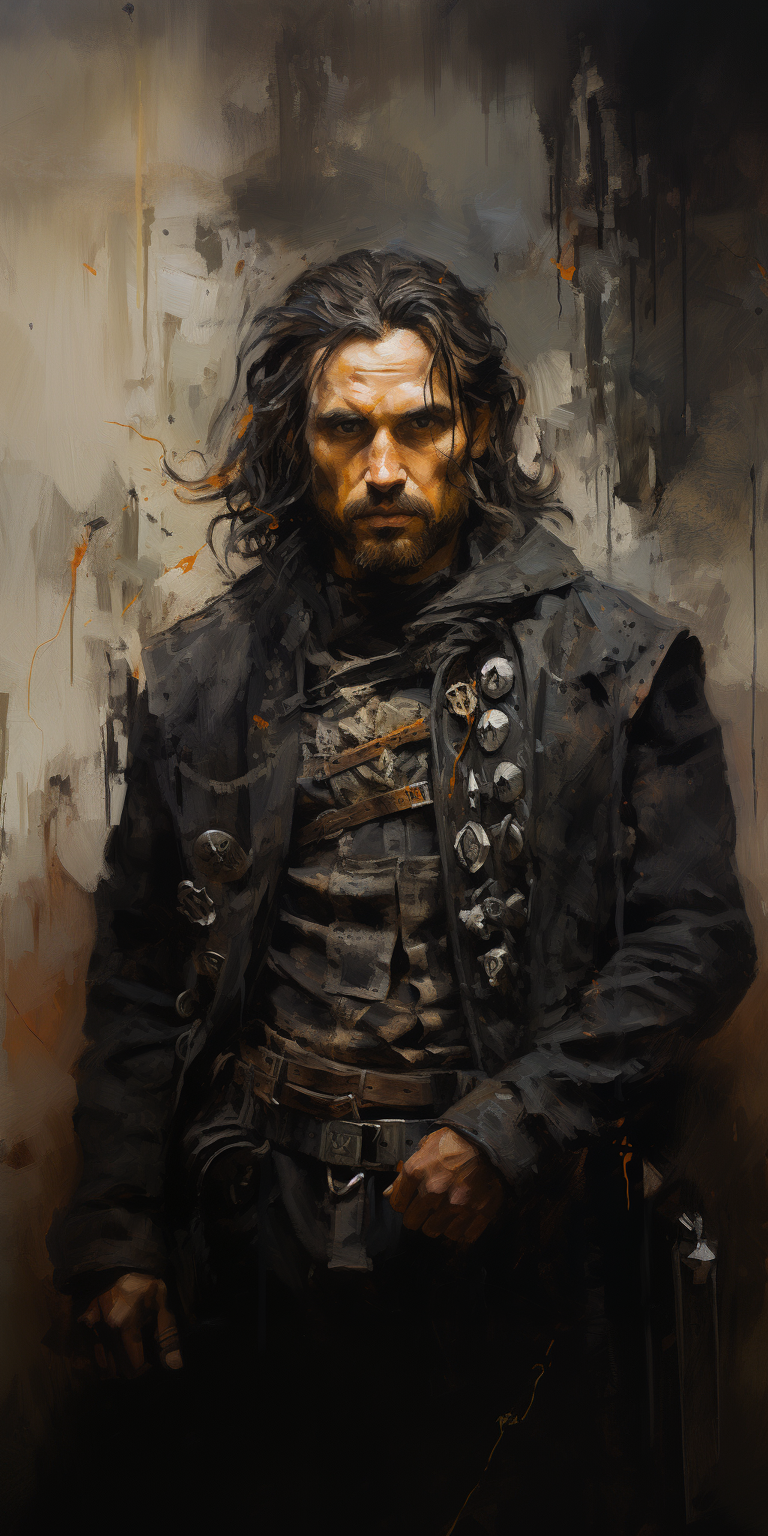
Adam is an outlaw leader with an old and feared epithet, a disciplined band and a reputation for striking targets everyone else assumes are too well protected.
Adam is adapted directly into the campaign era as a notorious English outlaw captain whose byname has followed him longer than any official record. He leads raids against wealthy travellers, state convoys and rival criminals, and he understands how quickly folklore can become strategic camouflage. The page treats the historical epithet as a name by which others know him, not as a definition of his worth or capabilities.
At a Glance
- Species: Human
- Role: Outlaw captain, urban raider and convoy breaker
- Primary region: London, south-east England and the roads linking major towns
- Status: Alive, active and pursued by royal officers
- Campaign use: Ambush leader, dangerous patron, criminal rival or temporary ally against a worse official
- Reputation: Bold enough to strike royal property and organised enough to make witnesses disappear before the law can catch up
- Immediate pressure: A planned revenue-convoy robbery has become entangled with sealed political correspondence hidden among the coin chests
- Power: CR 7 in 5.5e; CR 8 in Pathfinder 1e and D&D 3.5e
Game Statistics
Adam the Leper
Medium Humanoid (Human)
AC 18; Initiative +4 (14)
HP 110 (13d8 + 52)
Speed 30 ft.
Skills Athletics +7, Deception +6, Intimidation +9, Perception +6, Stealth +8
Senses Passive Perception 16
Languages English, thieves’ cant
CR 7 (XP 2,900; PB +3)
Gear shortsword, longbow, dagger, leather-and-mail coat, false papers and signal whistle
Traits
Ambush Leader. Adam and allied creatures within 30 feet gain a +2 bonus to Initiative while beginning combat from concealment or prepared positions.
Break the Convoy. Once per turn, when Adam hits a creature guarding a vehicle, prisoner, strongbox or carried treasure, the attack deals an extra 7 (2d6) damage.
Planned Escape. Adam has Advantage on checks made to identify an escape route, hidden exit or defensible withdrawal point in a settlement, roadside camp or fortified house.
Actions
Multiattack. Adam makes two Shortsword or Longbow attacks.
Shortsword. Melee Attack Roll: +7, reach 5 ft. Hit: 7 (1d6 + 4) Piercing damage.
Longbow. Ranged Attack Roll: +7, range 150/600 ft. Hit: 8 (1d8 + 4) Piercing damage.
Collapse the Route (Recharge 5–6). Adam orders prepared obstacles, wagons, ropes or caltrops released across a point he can see within 60 feet. Creatures in a 15-foot square must succeed on a DC 15 Dexterity saving throw or fall Prone and treat the area as Difficult Terrain until cleared.
Bonus Actions
Signal the Cut-Off. One allied creature within 30 feet that can hear Adam may move up to half its Speed without provoking Opportunity Attacks.
Reactions
Withdraw on Signal. When an ally within 30 feet is reduced to 0 Hit Points, Adam moves up to 15 feet without provoking Opportunity Attacks.
Adam the Leper — 5e / 2014
Medium humanoid (human), chaotic neutral
Armor Class 18 (leather-and-mail coat and defensive technique); Hit Points 110; Speed 30 ft.; Challenge 6 (2,300 XP; proficiency bonus +3).
STR 17 (+3), DEX 18 (+4), CON 18 (+4), INT 13 (+1), WIS 14 (+2), CHA 16 (+3).
Saving Throws Str +6, Dex +7, Con +7, Wis +5, Cha +6; Skills Athletics +6, Deception +6, Intimidation +9 (expertise), Perception +5, Stealth +7; Senses passive Perception 15; Languages English, thieves’ cant.
Traits
Ambush Leader. Adam and willing allies within 30 feet who begin combat in hiding or prepared positions gain a +2 bonus to initiative checks.
Break the Convoy (1/Turn). When Adam hits a creature actively guarding a vehicle, prisoner, strongbox or carried treasure, the hit deals an extra 7 (2d6) damage.
Planned Escape. Adam has advantage on Intelligence (Investigation) checks to find usable escape routes in a place he has actually scouted, not in unknown buildings.
Actions
Multiattack. Adam makes two shortsword or longbow attacks.
Shortsword. Melee Weapon Attack: +7 to hit, reach 5 ft., one target. Hit: 7 (1d6 + 4) piercing damage.
Longbow. Ranged Weapon Attack: +7 to hit, range 150/600 ft., one target. Hit: 8 (1d8 + 4) piercing damage.
Collapse the Route (Recharge 5–6). If Adam previously prepared obstacles, he can release them into one 15-foot square within 60 feet. Creatures in the area make a DC 15 Dexterity saving throw or fall prone; the area becomes difficult terrain until cleared. There is no effect without those prepared objects.
Bonus Actions
Signal the Cut-Off. One willing ally within 30 feet who can hear Adam can use its reaction to move up to half its speed without provoking opportunity attacks.
Reactions
Withdraw on Signal. When an ally within 30 feet drops to 0 hit points, Adam may move up to 15 feet without provoking opportunity attacks.
Original 2014 rules conversion. The historical outlaw’s epithet is a medieval byname, not a game disease effect or a moral judgement about leprosy; retain all existing editions.
Adam the Leper CR 8
XP 4,800
Male human fighter 3/rogue 5
Init +8; Senses Perception +14
Defense
AC 21, touch 14, flat-footed 17
hp 78
Fort +9, Ref +10, Will +5; evasion, uncanny dodge
Offense
Speed 30 ft.
Melee masterwork shortsword +13/+8 (1d6+4/19–20)
Ranged longbow +12/+7 (1d8+3/×3)
Special Attacks sneak attack +3d6
Statistics
Str 17, Dex 18, Con 16, Int 13, Wis 14, Cha 16
Base Atk +6; CMB +9; CMD 23
Feats Improved Initiative, Power Attack, Point-Blank Shot, Precise Shot, Toughness
Skills Acrobatics +15, Bluff +14, Intimidate +16, Perception +14, Stealth +16
Special Abilities
Convoy Breaker (Ex). Adam gains a +2 circumstance bonus on attack and damage rolls against creatures directly guarding a vehicle, prisoner or portable treasure during a planned ambush.
Adam the Leper
Medium Humanoid (Human)
| Hit Dice | 8 class levels (66 hp) |
|---|---|
| Class Levels | Fighter 3/Rogue 5 |
| Initiative | +8 |
| Speed | 30 ft. |
| Armor Class | 20, touch 14, flat-footed 16 |
| Base Attack/Grapple | +6/+9 |
| Attack | Masterwork shortsword +12 melee (1d6+3/19–20) |
| Full Attack | Masterwork shortsword +12/+7 melee (1d6+3/19–20) |
| Special Attacks | Sneak attack +3d6 |
| Special Qualities | Evasion, trap sense +1, uncanny dodge |
| Saves | Fort +8, Ref +9, Will +4 |
| Abilities | Str 17, Dex 18, Con 16, Int 13, Wis 14, Cha 16 |
| Skills | Hide +15, Move Silently +15, Intimidate +14, Listen +12, Spot +12, Tumble +14 |
| Feats | Improved Initiative, Power Attack, Point Blank Shot, Precise Shot, Stealthy |
| Challenge Rating | 8 |
What Is Adam Doing Right Now?
Adam has identified a heavily guarded revenue convoy moving toward London. The obvious cargo is coin, but one wagon is guarded more carefully than the money chests and never leaves the sight of two royal clerks. Adam believes it carries sealed correspondence that somebody at court values more highly than the tax revenue.
A second faction wants those papers and has offered Adam enough money to leave the silver behind. He distrusts the offer. If the documents can topple an official, they are worth more than the buyer admits; if they are forged, taking them may turn his gang into the convenient culprit for a much larger conspiracy.
Encounters
- The Revenue Convoy: Adam offers the party a share of the robbery if they can identify which wagon carries the real prize.
- The False Raid: A violent robbery is blamed on Adam, but the attackers used methods his band deliberately avoids.
- The Burning House: A merchant barricades himself inside a townhouse while Adam’s men demand property hidden within; the party arrives before threats become fire.
- The Hidden Cache: One of Adam’s old stores contains jewels and documents that connect a respected official to crimes committed years earlier.
- The Courtroom Watch: Adam is captured, but armed members of his gang gather around the court exits and make it clear that any sentence will have consequences.
Using Adam at the Table
Adam should feel like an organised criminal commander rather than a romantic woodland hero. He plans routes, watches guards, places lookouts and prepares an exit before the first weapon is drawn. He can be an effective patron when the party’s target is corrupt, but his willingness to use intimidation, arson and hostage pressure should keep the alliance uncomfortable.
- First meeting: Adam already knows where the party entered, who followed them and which member looks most likely to break under questioning.
- Planning a raid: He divides the problem into guards, witnesses, cargo, pursuit and escape. He has little patience for plans that address only the attack.
- In combat: Adam uses allies and terrain to isolate a valuable target, hits hard, then withdraws before reinforcements can trap him.
- When bargaining: He prefers tangible exchanges—coin, safe passage, documents, prisoners or silence—over vague promises.
Personality
Adam is hard, opportunistic and deeply suspicious of authority, but not reckless. He respects people who share risk honestly and despises anyone who sends others into danger while keeping themselves safe. He can be generous after a successful raid because loyalty bought after the danger is cheaper than loyalty bought before it.
He has a sharp sense for weakness and a habit of testing new allies with small lies to see what they repeat. Once he trusts someone, he becomes direct almost to the point of rudeness.
Appearance and Manner
Adam dresses as a practical road fighter: layered wool, leather, mail where it matters and a weatherproof cloak with no distinctive colours. He carries a bow when the road allows it and a short blade when it does not. His band avoids uniforms because witnesses remember uniforms.
His old epithet is widely known and often used by enemies as if it explains the man. Adam himself rarely discusses it. At the table, the name should function as a feared historical byname, not as a substitute for personality or as a mechanical weakness.
Ambition, Pressure and Private Truth
Adam wants a criminal network strong enough to survive royal sweeps without becoming dependent on a single noble patron. He is willing to work with corrupt officials, local communities and other outlaws, but he avoids arrangements that give any one faction control over his routes.
His immediate problem is the convoy correspondence. Privately, Adam suspects the buyer wants him to steal the letters precisely so the theft can be blamed on an outlaw rather than traced back to the political faction that commissioned it. He is deciding whether to take the job, expose the buyer or steal both the letters and the evidence of who paid for them.
Relationships and Influence
- His outlaw band: Chosen comrades bound by profit, shared danger and the knowledge that betrayal invites retaliation.
- Robin Hood: A possible ally and moral rival. Robin’s reputation can open doors Adam cannot, while Adam is willing to use methods Robin may reject.
- Sheriff of Nottingham: A powerful law officer whose patrols, informers and warrants can disrupt outlaw routes well beyond Nottinghamshire.
- London merchants: Targets, informants and occasional clients who know that stolen property and private revenge often travel through the same networks.
- Road officials: Enemies in public, but some quietly bargain for stolen goods, intelligence or the removal of rivals.
Equipment and Resources
- Shortsword, longbow and dagger
- Leather-and-mail road armour and weatherproof cloak
- Rope, caltrops, wedges and tools for blocking roads or doors
- False travel papers and copied seals
- Hidden coin, weapon and clothing caches
- Lookouts in inns, markets and roadside settlements
- A small network of buyers who can turn jewellery and plate into portable wealth
Adventure Hooks
- The Revenue Convoy: Money is only the visible cargo; the sealed letters are the true prize.
- The False Raid: Someone copies Adam’s methods but adds unnecessary killings to turn public opinion against him.
- The Queen’s Jewels: Old royal jewellery resurfaces in a hidden cache, and several factions would rather destroy it than explain how it got there.
- The Courtroom Siege: Adam is finally arrested, but his gang surrounds the court and threatens everyone involved in the prosecution.
- The Robin Problem: Robin Hood and Adam agree on the target but not on whether hostages are acceptable.
- The Captured Captain: Freeing Adam may solve an immediate problem while putting the party in debt to one of England’s most dangerous criminal networks.
Connected Places and People
Mythical and Historical Context
Adam the Leper was a documented fourteenth-century English outlaw associated with robberies directed at royal households and their agents. Accounts place his gang in the 1330s and 1340s, with Adam thought to have died by the early 1360s. The living captain found here in 1454 is therefore an explicit fictional survival or adopted outlaw title, rather than an assertion that the original Adam remained alive. The historical overview of Adam the Leper gives sources for the early crimes; his present convoy plots are original campaign adventures. His epithet conveys no magical curse, infectious game trait or inherent moral character.
Historical Context
The historical Adam the Leper was a fourteenth-century English gang leader active in the 1330s and 1340s, especially in south-east England and urban centres. The best-known account describes Adam’s gang attacking the London house of a merchant who held jewels belonging to Queen Philippa of Hainault. When the merchant refused to surrender them, the house was attacked and burned and the royal property taken.
Later accounts also associate Adam with a criminal network capable of resisting prosecution and intimidation. The historical figure appears to have survived for years after his most notorious crimes. The campaign preserves that reputation for bold attacks on protected wealth while extending his life into the campaign present.
Sources and Adaptation
The historical foundation comes from Luke Owen Pike’s A History of Crime in England (1873), a public-domain work based on public records and contemporary evidence. A digitised public-domain copy is available through Open Library. The convoy plot, current relationships, extended survival and game encounters are campaign adaptations rather than claims about the historical record.
Rules and Image Licensing
The 5.5e / 2024, Pathfinder 1e and D&D 3.5e statistics are original game adaptations using the open rules conventions of their respective systems. The historical epithet is retained as the character’s established byname and carries no automatic mechanical penalty. The existing Adam artwork remains the page hero and featured image until replaced by newer campaign artwork.
Keep this reference growing
If this page helped with your reading or game, you can support its upkeep or explore the curated books.
Explore the Bookshop — epics, classics and stories behind imagined worlds.