
 Buy me a coffee
Dispel Magic, “Arcane Revocation“
End what should not continue, and strip power from the moment that holds it.
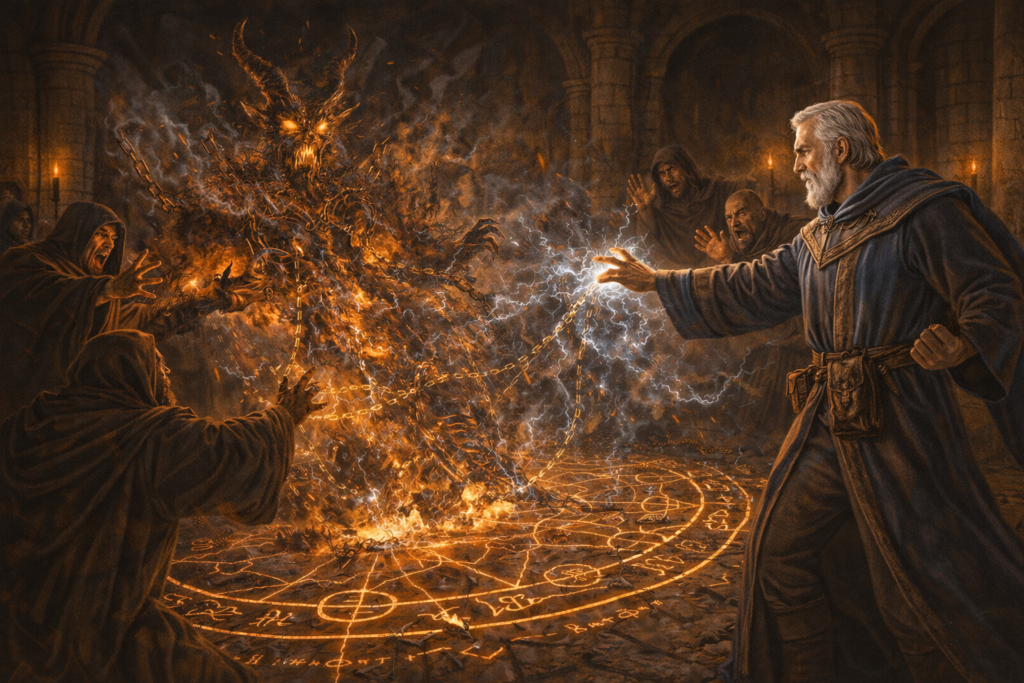
Dispel Magic is not destruction. It is revocation.
Other spells impose force, transformation, concealment, or control. This one does something quieter and more severe: it declares that an active working of magic no longer has the right to persist.
That is why the spell feels so cold in play. There is no necessary spectacle. No duel of beams. No dramatic shattering. A spell simply stops holding. The ward fails. The blessing releases. The illusion ceases to be convincing because it ceases to be there at all.
This makes Dispel Magic one of the clearest expressions of magical authority in the game. It does not outshine another spell. It ends its claim to continue.
Dispel Magic 5.5
Dispel Magic 3.5
Dispel Magic
3rd-Level Abjuration
Casting Time: 1 Action
Range: 120 feet
Components: V, S
Duration: Instantaneous
Available To: Bard, Cleric, Druid, Paladin, Sorcerer, Warlock, Wizard
Effect
Choose one creature, object, or magical effect within range. Any ongoing spell of 3rd level or lower on the target ends automatically. For each ongoing spell of 4th level or higher on the target, make an ability check using your spellcasting ability. The DC equals 10 + that spell’s level. On a success, the spell ends.
When you cast Dispel Magic using a higher-level spell slot, you automatically end an ongoing spell on the target if that spell’s level is equal to or lower than the slot you used.
This spell is best read narrowly and precisely: it ends ongoing spells on the chosen target. It is not a universal eraser for magic in general.
Why This Spell Is Dangerous in the World
Dispel Magic is dangerous because it makes established magic conditional.
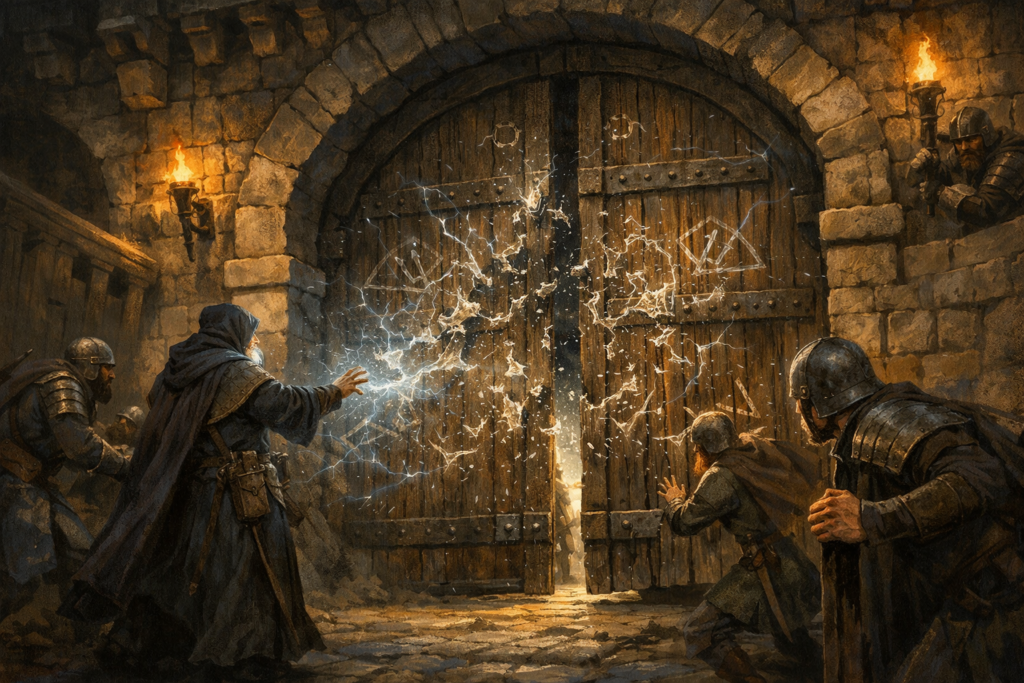
A protected chamber is no longer secure because it is warded. A noble is no longer safe because they are blessed. A prison is no longer reliable because it is sealed with sorcery. If an effect can be ended, then all power built upon that effect becomes vulnerable to interruption.
This changes institutions, not just battles. Temples must account for revoked blessings. Courts must account for broken compulsions and dissolved disguises. Mages must accept that once magic enters the world, it may still be judged unfit to remain.
The spell does not merely counter power. It makes power provisional.
Best Uses
Break the Spell Defining the Situation:
The best target is often not the loudest magic, but the one currently shaping the encounter.
Remove Buffs and Protections:
Strip away magical defenses before committing to a harder assault.
Free Allies:
End hostile control, restraint, deception, or other ongoing spell pressure affecting your side.
Collapse Magical Terrain:
A wall, veil, trap, or zone effect may matter more than the caster who created it.
Force Reinvestment:
Even when it does not win the fight outright, Dispel Magic can force enemies to spend actions and resources rebuilding their advantage.
Tactics
Use Dispel Magic with precision, not excitement.
The spell is strongest when cast against the effect that is doing the most real work: the barrier holding the line, the enchantment suppressing an ally, the invisibility preserving an enemy, the transformation that has changed the fight’s terms.
Because it targets only one creature, object, or magical effect, selection matters. The spell rewards exact judgment. Used carelessly, it removes something useful but secondary. Used well, it changes the entire logic of the scene.
Upcasting is reliability. If the situation cannot tolerate failure, spending the higher slot is often the correct decision.
DM Notes
Run Dispel Magic as quiet finality.
Its best dramatic presentation is usually minimal: a shimmer gone flat, a glow withdrawing, a pressure suddenly absent, a spell effect ending so cleanly that the room feels emptier for a second. The quieter it is, the more absolute it feels.
Be strict about scope. The spell ends ongoing spells on the target. It does not automatically unravel every supernatural feature in sight, and it should not become a catch-all answer to anything merely because it is magical in flavour. The page works best, and the world stays clearest, when that boundary is held firmly.
Good Combinations
- Counterspell: One prevents the spell from taking hold; the other ends it after it has.
- Banishment: Remove the creature, or remove the spell advantage protecting it.
- Silence: Shut down further casting while undoing what is already active.
- Wall of Force: Control the shape of the field, then revoke hostile spell support around it.
- Greater Restoration: A useful contrast in function: one ends spells, the other cures deeper afflictions that are not solved by dispelling alone.
The defining truth of Dispel Magic is simple:
It does not overpower magic.
It rules that the magic is over.
Dispel Magic
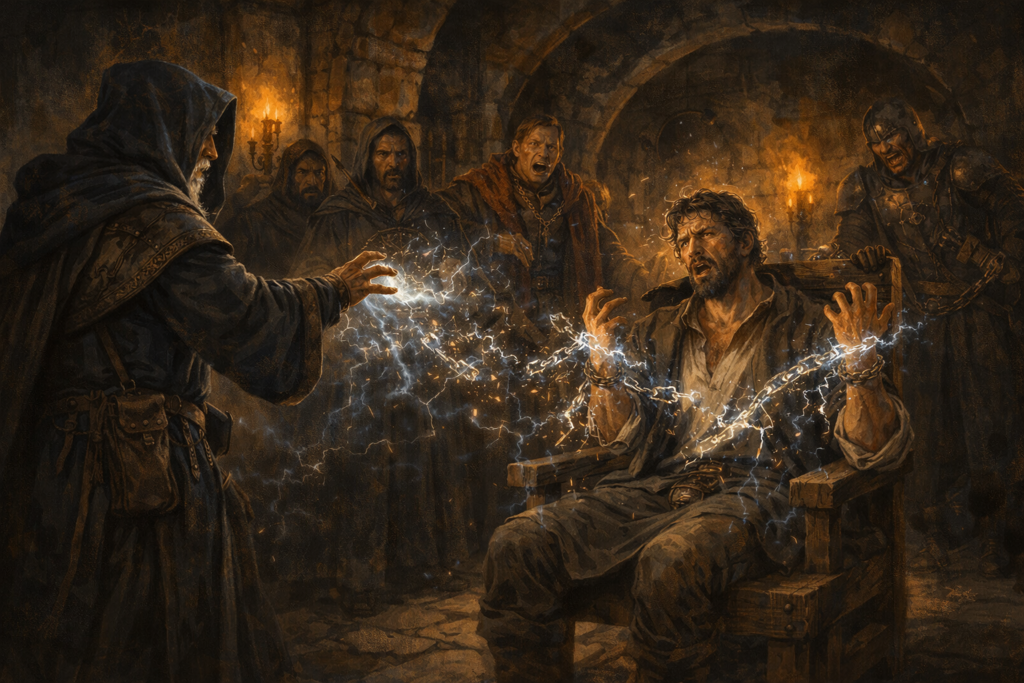
You can use dispel magic to end ongoing spells that have been cast on a creature or object, to temporarily suppress the magical abilities of a magic item, to end ongoing spells (or at least their effects) within an area, or to counter another spellcaster’s spell.
This material is Open Game Content, and is licensed for public use under the terms of the Open Game License v1.0a.
Abjuration
Level Bard 3, Cleric 3, Druid 4, Magic 3, Paladin 3, Sorcerer/Wizard 3
Components V, S
Casting Time 1 standard action
Range Medium (100 ft. + 10 ft./level)
Target or Area One spellcaster, creature, or object; or 20-ft.-radius burst
Duration Instantaneous
Saving Throw None
Spell Resistance No
A dispelled spell ends as if its duration had expired. Some spells, as detailed in their descriptions, can’t be defeated by dispel magic. Dispel magic can dispel (but not counter) spell-like effects just as it does spells.
Note The effect of a spell with an instantaneous duration can’t be dispelled, because the magical effect is already over before the dispel magic can take effect.
You choose to use dispel magic in one of three ways: a targeted dispel, an area dispel, or a counterspell:
Targeted Dispel One object, creature, or spell is the target of the dispel magic spell. You make a dispel check (1d20 + your caster level, maximum +10) against the spell or against each ongoing spell currently in effect on the object or creature. The DC for this dispel check is 11 + the spell’s caster level. If you succeed on a particular check, that spell is dispelled; if you fail, that spell remains in effect.
- If you target an object or creature that is the effect of an ongoing spell (such as a monster summoned by monster summoning), you make a dispel check to end the spell that conjured the object or creature.
- If the object that you target is a magic item, you make a dispel check against the item’s caster level. If you succeed, all the item’s magical properties are suppressed for 1d4 rounds, after which the item recovers on its own. A suppressed item becomes nonmagical for the duration of the effect. An interdimensional interface (such as a bag of
holding) is temporarily closed. A magic item’s physical properties are unchanged: A suppressed magic sword is still a sword (a masterwork sword, in fact). Artifacts and deities are unaffected by mortal magic such as this. - You automatically succeed on your dispel check against any spell that you cast yourself.
Area Dispel When dispel magic is used in this way, the spell affects everything within a 20-foot radius.
- For each creature within the area that is the subject of one or more spells, you make a dispel check against the spell with the highest caster level. If that check fails, you make dispel checks against progressively weaker spells until you dispel one spell (which discharges the dispel magic spell so far as that target is concerned) or until you fail all your checks. The creature’s magic items are not affected.
- For each object within the area that is the target of one or more spells, you make dispel checks as with creatures. Magic items are not affected by an area dispel.
- For each ongoing area or effect spell whose point of origin is within the area of the dispel magic spell, you can make a dispel check to dispel the spell.
- For each ongoing spell whose area overlaps that of the dispel magic spell, you can make a dispel check to end the effect, but only within the overlapping area.
- If an object or creature that is the effect of an ongoing spell (such as a monster summoned by monster summoning) is in the area, you can make a dispel check to end the spell that conjured that object or creature (returning it whence it came) in addition to attempting to dispel spells targeting the creature or object.
- You may choose to automatically succeed on dispel checks against any spell that you have cast.
Counterspell When dispel magic is used in this way, the spell targets a spellcaster and is cast as a counterspell. Unlike a true counterspell, however, dispel magic may not work; you must make a dispel check to counter the other spellcaster’s spell.