
Masterwork Items
Rules for exceptional nonmagical weapons, armour, shields, and ammunition in D&D 5.5e / 2024, Pathfinder 1e, and D&D 3.5e.
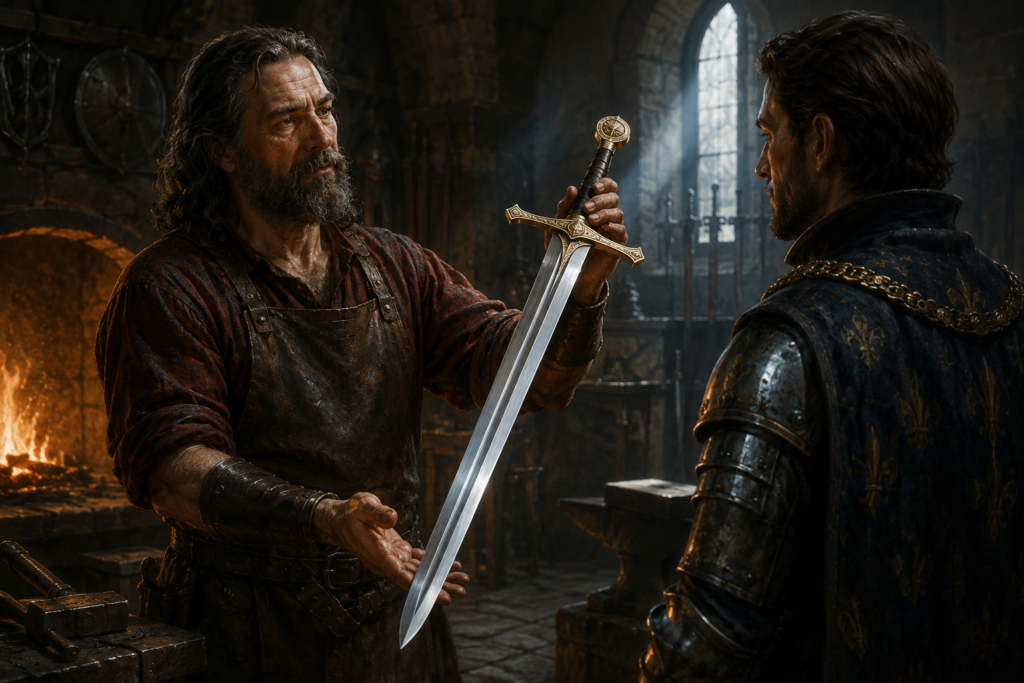
The finest work of mortal hands
A masterwork item is not simply expensive equipment. It is an exceptional example of its kind: a sword whose balance reveals the hand of a great smith, armour fitted so precisely that its weight moves with the wearer, a shield built around a perfectly judged grip, or an arrow made straight enough for the finest bowyer to sign it.
Masterwork quality comes from materials, workmanship, fitting, tempering, joinery, balance, and finishing. Decoration may accompany that quality, but gold leaf, gemstones, engraving, or heraldry do not make an ordinary item masterwork.
A masterwork item is not magical unless it has separately been enchanted. It has no supernatural aura merely because it was made exceptionally well. Its importance lies in what a skilled craftsperson can achieve without magic.
Masterwork Game Rules
Choose the rules for the edition being used. Pathfinder 1e and D&D 3.5e have native masterwork mechanics. The D&D 5.5e / 2024 rules below are the SpiralWorlds conversion of that older equipment quality.
D&D 5.5e / 2024 Masterwork Items
Masterwork is not a standard equipment quality in the 2024 rules. This version preserves the older d20 concept as a restrained nonmagical equipment option while using the 2024 equipment and crafting framework.
| Item | Masterwork Benefit | Additional Cost |
|---|---|---|
| Weapon | +1 bonus to attack rolls; no bonus to damage | +300 gp |
| Ammunition | +1 bonus to the attack roll for that piece of ammunition | +6 gp each |
| Armour | Halved don/doff time; listed Strength threshold for avoiding the Speed reduction is treated as 2 lower | +150 gp |
| Shield | May be donned or doffed as a Bonus Action | +150 gp |
Masterwork Weapons
When you make an attack with a masterwork weapon, you gain a +1 bonus to the attack roll.
The bonus applies only to the attack roll. Masterwork quality does not increase the weapon’s damage, change its damage type, alter its Mastery property, or make the attack magical.
A purely masterwork weapon remains a nonmagical weapon for every rule that distinguishes between magical and nonmagical attacks.
Masterwork Ammunition
A piece of masterwork ammunition grants a +1 bonus to the attack roll made using it.
The precision that provides this benefit is expended when the ammunition is used. Even if the physical arrow, bolt, bullet, or other projectile is later recovered, it no longer provides the masterwork attack bonus unless it is properly restored by a qualified craftsperson.
If a masterwork ranged weapon fires masterwork ammunition, the two masterwork bonuses do not stack. The attack gains only one +1 masterwork bonus.
Masterwork Armour
Masterwork armour is carefully fitted, balanced, articulated, and finished for ease of movement. It does not increase Armour Class.
- The normal time required to don or doff the armour is halved.
- If the armour has a score listed in its Strength column, treat that listed score as 2 lower when determining whether the armour reduces the wearer’s Speed by 10 feet.
- This adjusted Strength threshold cannot be reduced below 10.
- Masterwork quality does not remove Disadvantage on Dexterity (Stealth) checks if the armour normally imposes it.
For example, masterwork plate armour remains AC 18 and still imposes Disadvantage on Dexterity (Stealth) checks. Its normal Strength 15 threshold is treated as Strength 13 when determining whether the wearer suffers the armour’s 10-foot Speed reduction.
Masterwork chain mail likewise treats its listed Strength 13 threshold as Strength 11 for that purpose.
Masterwork Shields
A masterwork shield has carefully fitted straps, grips, balance, and reinforcement. A creature with Shield training can don or doff a masterwork Shield as a Bonus Action instead of using the normal Utilize action.
Its normal AC bonus does not increase. Masterwork quality also provides no bonus to an attack made with the shield as an improvised weapon.
Masterwork and Magic
A masterwork item can later become a magic item when the appropriate magic-item creation rules allow it.
Once an item becomes magical, use the magic item’s listed mechanical properties in place of the masterwork numerical or action-economy benefit. Masterwork craftsmanship remains part of the item’s physical history, quality, appearance, and value, but it is not an additional magical bonus.
A +1 magic longsword therefore does not become a +2 weapon merely because the blade was masterwork before enchantment.
Crafting a Masterwork Item
Use the normal 2024 procedure for crafting nonmagical equipment, treating the masterwork surcharge as part of the item’s total purchase price.
- Add the masterwork surcharge to the normal purchase price of the item.
- The crafter needs raw materials worth half the total purchase price, rounded down .
- Divide the total purchase price in gp by 10 to determine the number of 8-hour crafting days, rounding any fraction up to a full day.
- The crafter must have proficiency with the tool required to make the underlying item and must use that tool while crafting it.
If qualified characters work together, the normal 2024 rules for assisting with a crafting project can reduce the total time.
| Example | Finished Price | Materials | Time |
|---|---|---|---|
| Masterwork Longsword | 315 gp | 157 gp | 32 days |
| Masterwork Shield | 160 gp | 80 gp | 16 days |
| Masterwork Plate Armour | 1,650 gp | 825 gp | 165 days |
Required Tools
Use the tool associated with the underlying item in the 2024 equipment rules.
- Smith’s Tools: any melee weapon except the club, greatclub, quarterstaff, and whip; medium armour except hide; heavy armour; firearm bullets; and sling bullets.
- Leatherworker’s Tools: slings, whips, hide armour, leather armour, and studded leather armour.
- Woodcarver’s Tools: clubs, greatclubs, quarterstaffs, ranged weapons other than the pistol, musket, and sling, as well as arrows and bolts.
- Tinker’s Tools: pistols and muskets.
- Weaver’s Tools: padded armour.
Not every possible object is assigned a crafting tool in the equipment list. For an unlisted item, the DM chooses the tool appropriate to its construction. A steel shield might therefore require Smith’s Tools, while a predominantly wooden shield could require Woodcarver’s Tools.
Reforging and Repair
Masterwork quality normally belongs to the original construction of the item. Simply polishing, sharpening, refitting, or decorating an ordinary object does not make it masterwork.
A badly damaged masterwork item can retain its quality after repair if the essential work survives and the repair is carried out to the same standard. An item destroyed and rebuilt from fragments is effectively a new crafting project.
Pathfinder 1e Masterwork Items
| Item | Effect | Additional Cost |
|---|---|---|
| Weapon | +1 enhancement bonus on attack rolls | +300 gp |
| Ammunition | +1 enhancement bonus on the attack roll | +6 gp each |
| Double Weapon | Both ends made masterwork | +600 gp |
| Armour | Armour check penalty reduced by 1 | +150 gp |
| Shield | Armour check penalty reduced by 1 | +150 gp |
Masterwork Weapons
A masterwork weapon grants a +1 enhancement bonus on attack rolls made with that weapon. It provides no corresponding bonus on damage rolls.
Masterwork quality normally has to be built into a weapon when it is created. The masterwork surcharge is 300 gp for a weapon, 6 gp for one piece of ammunition, or 600 gp when both ends of a double weapon are made masterwork.
Masterwork ammunition is damaged and effectively destroyed when used. Its enhancement bonus does not stack with an enhancement bonus supplied by the projectile weapon firing it.
Masterwork Armour and Shields
A masterwork suit of armour or masterwork shield functions as the ordinary item except that its armour check penalty is reduced by 1.
The masterwork surcharge is 150 gp. Masterwork quality does not provide an attack or damage bonus if armour or a shield is subsequently used as a weapon.
Magic Weapons, Armour, and Shields
Pathfinder magic weapons, magic armour, and magic shields are treated as masterwork equipment. The +1 attack bonus from masterwork weapon quality does not stack with the enhancement bonus supplied by magic.
For the wider relationship between masterwork weapons and enchantment, see Magic Weapons and Magic Items: Basics & Creation .
Crafting Masterwork Equipment
Use the Craft skill . The masterwork portion is created as a separate component in addition to the ordinary item.
- Masterwork weapon component: 300 gp.
- Masterwork armour or shield component: 150 gp.
- Craft DC for the masterwork component: 20.
- The normal Craft rules determine raw-material expenditure and progress.
Masterwork Transformation
Pathfinder contains an important magical exception to the normal requirement that masterwork quality be included during construction.
The spell masterwork transformation can convert a suitable non-masterwork object into its masterwork equivalent.
This is a magical transformation and does not change the normal mundane Craft rule.
D&D 3.5e Masterwork Items
| Item | Effect | Additional Cost |
|---|---|---|
| Weapon | +1 enhancement bonus on attack rolls | +300 gp |
| Ammunition | +1 enhancement bonus on the attack roll | +6 gp each |
| Double Weapon | Both ends made masterwork | +600 gp |
| Armour | Armour check penalty reduced by 1 | +150 gp |
| Shield | Armour check penalty reduced by 1 | +150 gp |
Masterwork Weapons
A masterwork weapon is an exceptionally well-made version of an ordinary weapon. It grants a +1 enhancement bonus on attack rolls, but it does not add that bonus to damage.
The quality must normally be included when the weapon is crafted. It cannot simply be added to an already completed ordinary weapon.
The masterwork surcharge is 300 gp for a normal weapon, 6 gp for an individual piece of ammunition, and 600 gp when both ends of a double weapon are masterwork.
Masterwork ammunition is damaged and effectively destroyed when used. Its bonus does not stack with an enhancement bonus provided by the weapon that launches it.
Masterwork Armour and Shields
Masterwork armour and shields reduce their normal armour check penalty by 1.
A masterwork suit of armour or shield costs an additional 150 gp. Masterwork quality does not increase AC and provides no attack or damage bonus when the armour or shield is used offensively.
Magic Equipment
Magic weapons, magic armour, and magic shields are made as masterwork items. The enhancement bonus provided by masterwork weapon quality does not stack with a magical enhancement bonus.
Masterwork equipment therefore forms the normal craftsmanship foundation beneath many D&D 3.5e magic arms and armour.
Crafting Masterwork Equipment
Use the Craft skill . A masterwork item is made by completing the ordinary object and its exceptional masterwork component.
- The masterwork component of a weapon has a finished value of 300 gp.
- The masterwork component of armour or a shield has a finished value of 150 gp.
- The Craft DC for the masterwork component is 20.
- The normal Craft rules determine raw-material costs and progress.
The linked Craft entry gives the full progress procedure, including materials, successful and failed checks, repairs, and masterwork components.
Recognising, Buying, and Commissioning Masterwork Gear
Masterwork quality is usually visible to someone who understands the craft. The signs are practical rather than merely decorative: even tempering, clean riveting, fitted articulation, straight grain, exact joinery, balanced weight, precise lockwork, carefully finished edges, and materials chosen for the job rather than for display.
Recognising the Work
A character trained in the relevant craft can normally recognise obvious masterwork quality after close examination. Maker’s marks, guild stamps, regional techniques, unusual alloys, characteristic stitching, or forge patterns may also reveal who made it.
Counterfeits
Decoration can be forged more easily than craftsmanship. False guild marks, softened steel beneath bright polish, stolen signatures, cheap fittings, and ornamental blades sold as fighting weapons can all deceive a buyer until someone qualified handles them.
Buying
Masterwork equipment has no universal campaign rarity. Whether one can be bought depends on the settlement, the craft involved, access to skilled workers, patronage, available materials, existing commissions, and the reputation of the buyer.
Commissioning
The listed rules price represents the mechanical cost of masterwork quality. A famous maker may demand considerably more for reputation, heraldry, rare materials, priority work, secrecy, unusual measurements, or a dangerous commission.
An item made from an unusual substance may also use the rules in the Special Materials Codex . The properties of the material and the properties of masterwork craftsmanship should be applied according to the rules of the edition being used.
Masterwork Equipment in the World
A masterwork item carries a reputation before anyone draws it.
A knight wearing a perfectly fitted harness has access to money, patronage, or an exceptional armourer. A mercenary carrying a masterwork sword has either prospered, been rewarded, inherited well, or taken it from someone important.
A guild-marked dagger found in a thief’s possession can be evidence. A famous bow may identify the workshop that made it before anyone knows who fired the arrow.
This makes masterwork equipment particularly useful in a late-medieval campaign. Great court armourers, urban craft guilds, dwarven workshops, elven bowyers, gunsmiths, military arsenals, tournament craftsmen, and independent masters can all produce work that is visibly better than ordinary issue without making every valuable object magical.
Common Forms
- Guild Masterpiece. A signed or recorded object associated with a particular workshop or master.
- Noble Commission. Fitted to one patron and often carrying heraldry, inscriptions, or identifiable household marks.
- Campaign Armour. Plain, durable work commissioned for a veteran commander, knight, guard captain, or professional soldier.
- Dwarven Forgework. Work prized for exact construction, structural discipline, and the reputation of the forge that produced it.
- Elven Bowyer’s Work. Carefully selected wood, horn, sinew, glue, tillering, and balance shaped around the needs of a particular archer.
- Gunsmith’s Work. Precision barrels, locks, springs, stocks, fittings, and shot produced by craftsmen whose errors can be measured in shattered weapons and missing fingers.
- Heirloom. A piece valued as much for its maker, bearer, or history as for its mechanical advantage.
Masterwork as Treasure
Masterwork equipment is useful when treasure should matter without immediately becoming magical. It can reward a low-level character, mark promotion within a military order, serve as a tournament prize, fulfil a noble commission, or become the mundane foundation of a later enchanted weapon.
A masterwork object can also be valuable even when nobody in the party wants to use it. Its maker’s mark, former owner, heraldry, reputation, or disputed history may be far more important than its rules bonus.
Adventure Hooks
Historical and Mythic Context
The fantasy idea of a masterwork item fits naturally into the world of specialist craftsmen, regulated trades, prestigious workshops, costly commissions, military households, and objects whose makers were known by reputation.
There was no single medieval rule shared by every European guild under which every craftsperson had to produce an identical kind of “masterpiece.” Customs differed between places, periods, and trades. The broader idea is nevertheless sound: training, recognised workmanship, workshop reputation, controlled standards, and proof of professional competence could all matter enormously.
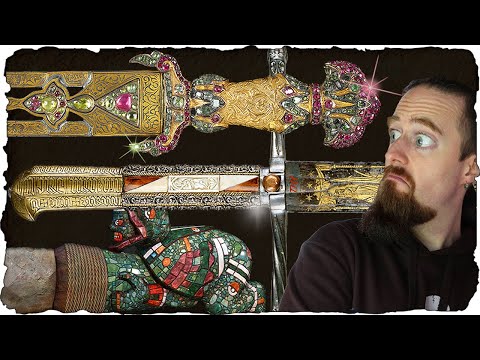
The same distinction can be seen in surviving arms and armour. Fine armour is not simply ordinary plate covered with decoration. Articulation, shaping, fitting, weight distribution, fastening, metallurgy, and finishing determine whether a harness actually works on the body. A splendid sword can likewise be beautiful because it is well made rather than merely well ornamented.
Smiths of Myth
Myth repeatedly pushes exceptional craftsmanship toward the boundary between mortal skill and magic.
Hephaestus, the divine smith of the Hellenic Pantheon , forges extraordinary arms, armour, devices, and treasures for gods and heroes.
Wayland the Smith appears across Germanic traditions as a craftsman of almost frightening ability, his skill entangled with captivity, vengeance, kings, and legendary weapons.
In Irish tradition, Goibhniu is the divine smith of the Tuatha Dé Danann, joining smithcraft to supernatural weapons, sacred craft, and the powers of the Celtic Pantheon .
These figures are useful models even when an item itself is entirely mundane. A sword does not need to glow to matter. It may be the last work of a dead smith, the blade that established a guild master’s name, the armour in which a king won his throne, or the only object considered worthy of receiving a future enchantment.
Exceptional Arms and Craftsmanship
Rules Sources and Game Context
D&D 5.5e / 2024: The masterwork benefits presented on this page are a SpiralWorlds conversion. The underlying armour, Shield, tool, and nonmagical crafting framework is drawn from System Reference Document 5.2.1 .
SRD 5.2.1 attribution: Material from System Reference Document 5.2.1, by Wizards of the Coast LLC. The document is available from D&D Beyond’s System Reference Document page and is licensed under the Creative Commons Attribution 4.0 International License .
Pathfinder 1e: The native masterwork weapon, ammunition, armour, shield, and crafting mechanics are drawn from the Pathfinder First Edition rules. References: Masterwork Weapons , Masterwork Armour , and Masterwork Transformation .
D&D 3.5e: The masterwork equipment and Craft mechanics use the D&D 3.5 System Reference Document framework. The SpiralWorlds Craft skill entry contains the associated Craft procedure and Open Game Content information.
Keep this reference growing
If this page helped with your reading or game, you can support its upkeep or explore the curated books.
Explore the Bookshop — epics, classics and stories behind imagined worlds.