
Enchantment • Repulsion and Magical Aversion
Antipathy / Antipathy-Sympathy
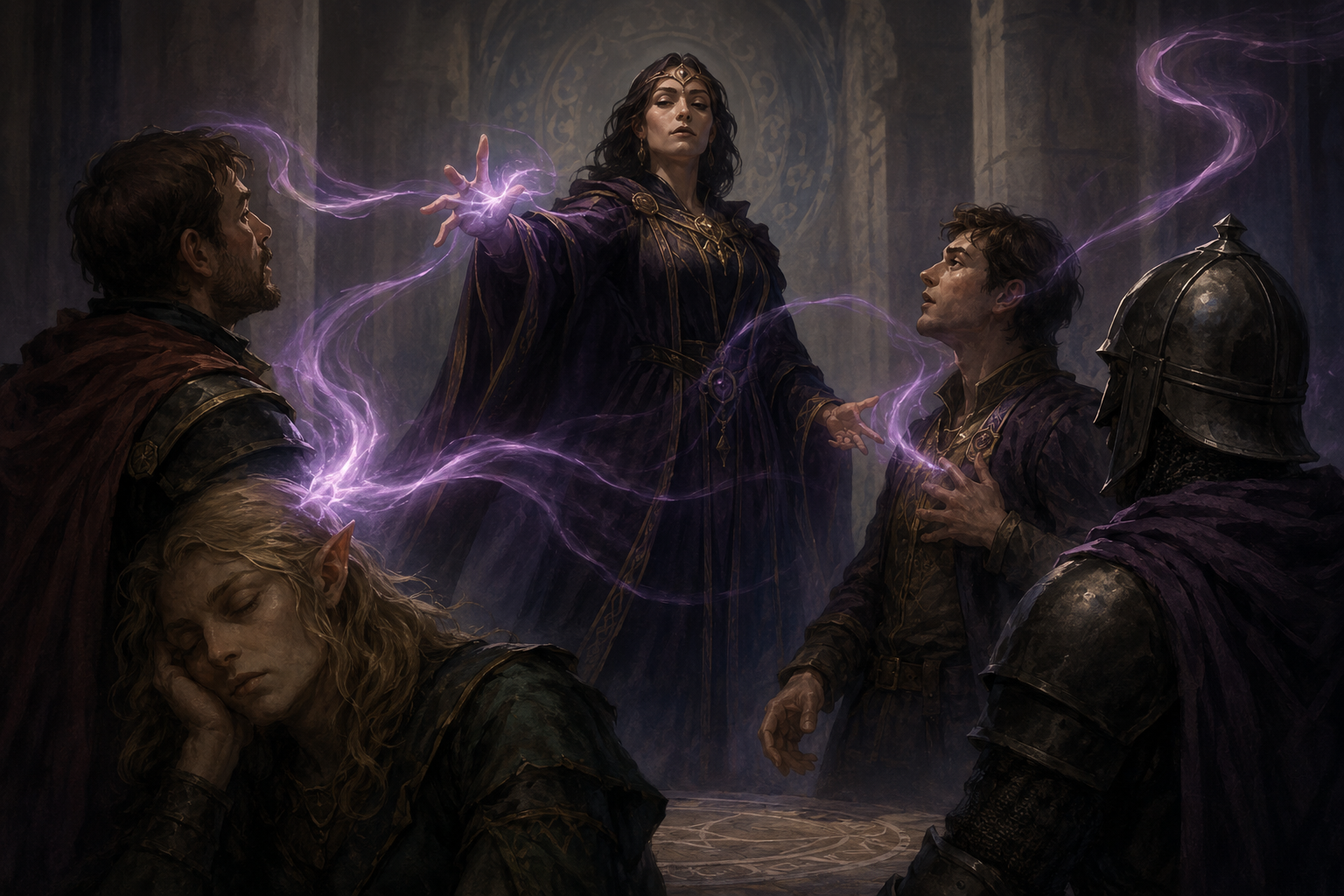
In modern D&D, Antipathy is one mode of the combined Antipathy/Sympathy spell. PF1e and D&D 3.5e keep Antipathy as its own spell with older creature-or-alignment targeting.
At a Glance
| 2024 | Antipathy/Sympathy — Bard 8, Druid 8, Wizard 8 |
|---|---|
| 2014 | Antipathy/Sympathy — Druid 8, Wizard 8 |
| PF1e | Antipathy — Druid 9, Sorcerer/Wizard 8 |
| D&D 3.5e | Antipathy — Druid 9, Sorcerer/Wizard 8 |
| Modern role | Repel a specified kind of creature from a chosen creature or object |
Choose Your Edition
Antipathy Mode — 5.5e / 2024
| Level | 8th-level Enchantment |
|---|---|
| Casting Time | 1 hour |
| Range | 60 feet |
| Components | V, S, M (a mix of vinegar and honey) |
| Duration | 10 days |
| Classes | Bard, Druid, Wizard |
Choose one creature or object that is Huge or smaller, then specify a kind of creature. A creature of that kind makes a Wisdom save when it comes within 120 feet of the target.
On a failed save in Antipathy mode, the creature has the Frightened condition and must use its movement to get as far from the target as possible by the safest route.
If the creature ends its turn more than 120 feet away, it makes another Wisdom save. On a success, it is no longer affected and is immune to that target’s effect for 1 minute.
Antipathy Mode — 5e / 2014
| Level | 8th-level Enchantment |
|---|---|
| Casting Time | 1 hour |
| Range | 60 feet |
| Components | V, S, M (a lump of alum soaked in vinegar) |
| Duration | 10 days |
| Classes | Druid, Wizard |
Target a Huge or smaller creature or object, or an area no larger than a 200-foot cube, then specify a kind of intelligent creature.
A matching creature that sees the target or comes within 60 feet makes a Wisdom save or becomes Frightened. It must move to the nearest safe place where it cannot see the target.
Once farther than 60 feet and unable to see the target, the Frightened state ends, but it can return if the creature sees the target or moves within 60 feet again. Affected creatures also receive later saves as described by the spell.
Antipathy — Pathfinder 1e
| School | Enchantment (Compulsion) [Mind-Affecting] |
|---|---|
| Level | Druid 9, Sorcerer/Wizard 8 |
| Casting Time | 1 hour |
| Range | Close (25 ft. + 5 ft./2 levels) |
| Target | One location up to a 10-ft. cube/level, or one object |
| Duration | 2 hours/level (D) |
| Saving Throw | Will partial |
| Spell Resistance | Yes |
Specify a particular kind of intelligent creature or a particular alignment. Matching creatures feel an overpowering urge to leave the area or avoid the object.
A creature that succeeds on its save can remain, but the magical discomfort imposes a −4 penalty to Dexterity while it does so.
Arcane material component: a lump of alum soaked in vinegar. Antipathy counters and dispels Sympathy.
Antipathy — D&D 3.5e
| School | Enchantment (Compulsion) [Mind-Affecting] |
|---|---|
| Level | Druid 9, Sorcerer/Wizard 8 |
| Casting Time | 1 hour |
| Range | Close (25 ft. + 5 ft./2 levels) |
| Target | One location up to a 10-ft. cube/level, or one object |
| Duration | 2 hours/level (D) |
| Saving Throw | Will partial |
| Spell Resistance | Yes |
The 3.5e spell uses the same core legacy repulsion rule: name a specific creature kind or alignment, force affected creatures away, and impose the −4 Dexterity penalty on creatures that successfully resist but remain near the target.
Antipathy counters and dispels Sympathy.
What Changed?
- 2024: Bard joins the class list, trigger range becomes 120 feet, and the spell targets one Huge-or-smaller creature or object rather than a large area.
- 2014: Druid/Wizard only, 60-foot or line-of-sight trigger, and the target may be an area up to a 200-foot cube.
- PF1e / 3.5e: separate Antipathy spell, level-scaled area, alignment targeting and the legacy Dexterity penalty for resisting creatures that remain.
Related Magic
- Sympathy — the attraction counterpart and the other modern mode of the spell.
- Fear — shorter-duration battlefield fear.
- Bard Spells — 2024 Bard access.
Mythical Context
In Greek myth, Medusa’s face could inspire terror while its image became an emblem that warded off danger. Antipathy gives a place that same unsettling quality: some visitors feel the site itself has rejected them. See the Metropolitan Museum’s account of Medusa in Greek art.
Historical Context
Protective gems and amulets were worn in Greco-Roman society to avert hostile glances and feared supernatural influences. Their survival records a historical practice of seeking protection, not a spell that physically compels an enemy to retreat. See the Metropolitan Museum’s Roman protective ring stone.
Sources and Licensing
- D&D 2024 Basic Rules — Antipathy/Sympathy.
- D&D 2014 Basic Rules — Antipathy/Sympathy.
- Pathfinder 1e Core Rulebook — Antipathy.
- D&D 3.5 SRD — Antipathy.
Keep this reference growing
If this page helped with your reading or game, you can support its upkeep or explore the curated books.
Explore the Bookshop — epics, classics and stories behind imagined worlds.