
Tombstone
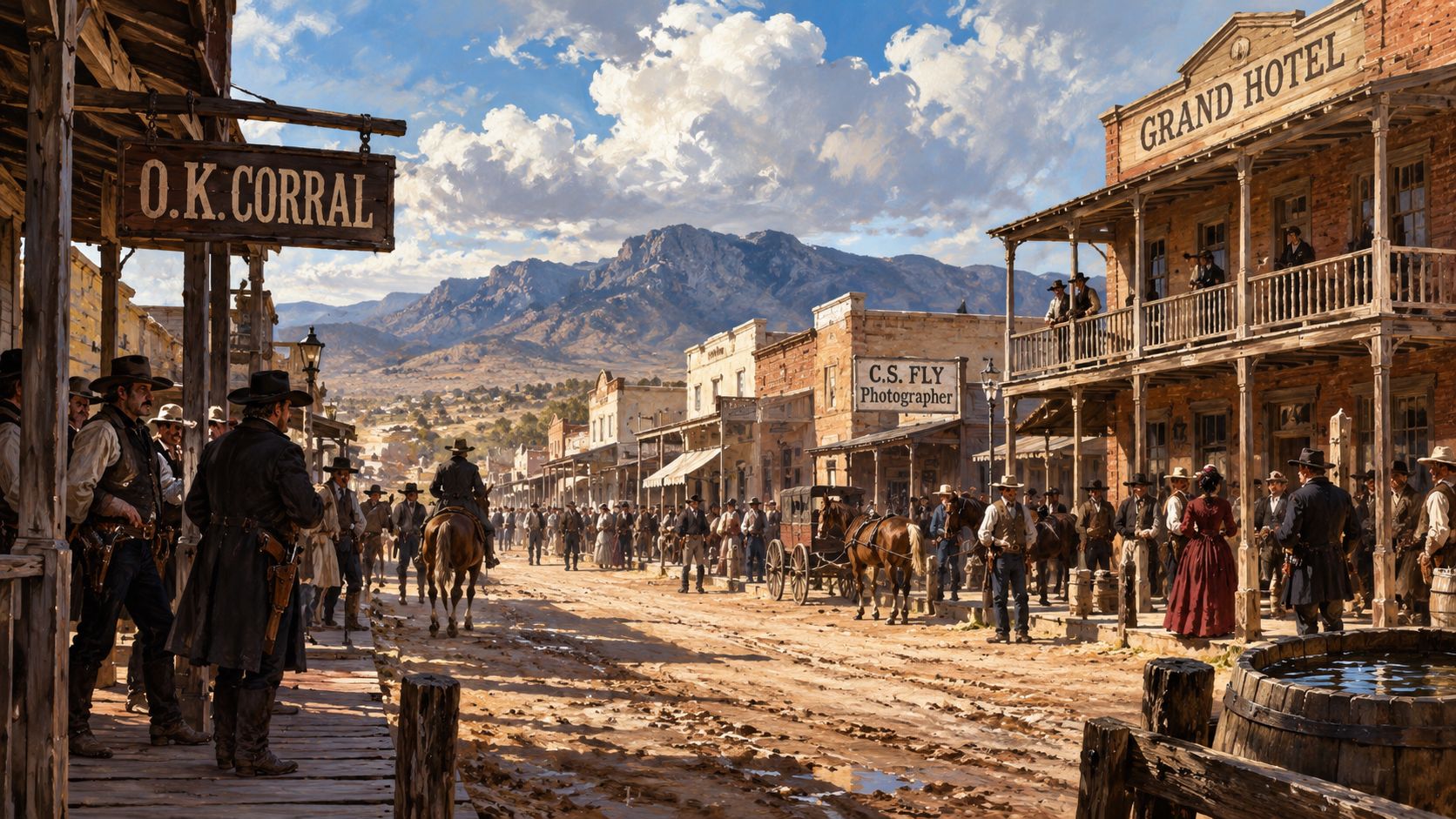
Painted campaign interpretation of Tombstone’s silver-boom streets, not an exact historical street reconstruction.
At a Glance
| Settlement | Silver-mining town, established during the 1878–79 rush |
|---|---|
| Region | Cochise County, Arizona Territory; hills and ranch country north of the Mexican border |
| Landmarks | Allen Street; Fremont Street; the O.K. Corral; C. S. and Mollie Fly’s gallery and boarding house; nearby silver mines |
| Trade and work | Silver ore, milling, freight, ranch cattle, stabling, gambling, hotels, food and drink |
| Local authority | Town marshal Virgil Earp; county sheriff Johnny Behan has separate county duties and supporters |
| Conflict | Town merchants and Earp associates, Cowboy-linked ranchers, disputed weapons and testimony |
| Travellers need | Safe lodging, drinking water, a sound horse, reliable guides and discretion about whom they trust |
| Campaign scope | An alternate-history frontier; personalities and outcomes need not repeat the recorded gunfight |
Overview
Silver brings men and women into Tombstone faster than the streets can accommodate them. Mule carts take ore from the hills; boarding-house owners are always weighing whether a stranger can pay; and a good horse can mean the difference between getting a witness home safely and leaving them on an exposed road. Allen Street is busy with saloons, goods for sale and the noise of building work. Around Fremont Street, families, photographers and small businesses live close to the places where armed arguments may break out.
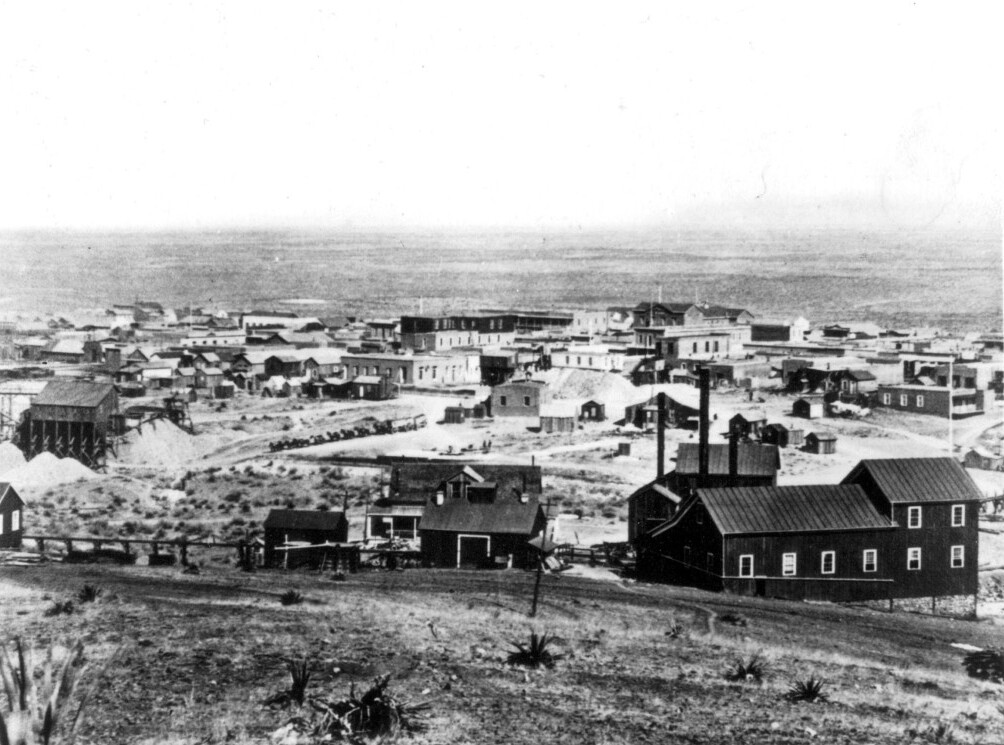
It is tempting to describe the town as a battle between law and lawlessness. That misses most of its residents. Mine workers want wages and water. Ranch families want cattle brought safely to market. Saloon owners and gamblers may have money in the same investments as the men wearing badges. People who dislike the Earps need not be thieves; people who support them are not all honest. The adventurers can find work, warmth, credit, stories and trouble without ever firing a shot.
What Is Happening Now?
Three newly arrived cattle drovers are accused of carrying revolvers into a rooming house, but the host says she never saw their weapons. Virgil Earp wants testimony before attempting an arrest. Frank McLaury is concerned that an accusation will cost his associates a legitimate cattle sale; Tom would rather check what was left at the stables. The players can interview the host, locate the missing saddle bags or escort the drovers out without violence. Their choice changes who will speak to them on the next visit.
At the same time, a cart of silver ore comes down from the hills short of its driver. The animals returned on their own, wearing harnesses scratched against stone. The foreman fears a damaged mine entrance; the miners blame an unsafe timbering job and refuse to work below until someone has examined it. The problem might be an accident or something deeper that has only just been uncovered. There is paid work for investigators, guards, carpenters and anyone who knows how to descend a shaft without making it worse.
Streets, Places and Services
Allen Street and the Silver-Mining Trade
Allen Street offers a practical first stop: food merchants, tack repairs, a blacksmith, laundry, drinking places, gaming rooms and labourers waiting for an offer. Merchants accept coin, and some miners are paid through arrangements that make credit as valuable as a full purse. Ask at the loading yards for an ore-hauling job or at a stable for a horse that has not been ridden to exhaustion.
Fremont Street, Fly’s Studio and the Corral
Camillus and Mollie Fly run a photographic gallery and boarding house near the O.K. Corral. Mollie manages much of the portrait work and the business when her husband is away. A visitor can commission a portrait, enquire after a room or ask whether a particular person was seen in the vicinity. The narrow vacant lot beside the Fly property is where the historical gunfight occurred — not inside the corral itself. In a campaign still before that confrontation, the lot is just another awkward space between buildings where people can be cornered.
The O.K. Corral and the Stables
The O.K. Corral takes in animals moving between Allen and Fremont streets. Stable hands, feed merchants and drovers know when riders arrive and whether a horse was worked hard before it was put away. Adventurers can pay for stabling or hire an honest handler; a horse with a fresh shoe or a distinctive brand can also provide a lead that no shouted accusation would uncover.
Boothill and the Roads Beyond
The old burial ground is a reminder of ordinary illness and accident as much as violence. Beyond town, rough tracks lead to silver claims, ranches, isolated water and the uplands. A traveller who leaves at noon without checking distance and water may find the journey more threatening than a saloon full of quarrelling men.
Inns, Saloons and Lodgings
The Grand Hotel — comfortable but politically exposed. This historically attested hotel opened in 1880 and offered fine furniture, carpets and an expensive standard of accommodation. Cowboys and their associates were among its customers. A traveller with money may obtain better comfort than at an ordinary boarding house, but conversation in its public rooms is not neutral. Guests should ask what can be locked away and arrange stabling separately if needed.
Fly’s Boarding House — practical rooms by the gallery. Camillus and Mollie Fly’s historically attested business at 312 Fremont Street provides a place where a visitor may find lodging and a photographic studio. The price and availability of a room depend on the campaign day; do not assume the household will risk protecting a fugitive. A traveller who respects Mollie’s work may learn more than one who barges in demanding names.
The Oriental Saloon — elegant, expensive and factionally dangerous. Opened in 1880 at Fifth and Allen, the Oriental offers drinks, games and a chance to meet men who finance much of the town’s business. Wyatt Earp has an interest in its faro concession during the relevant historical period; Doc Holliday is another recognisable face. A visitor can listen, gamble or make a private business arrangement, but a dispute over cards may attract people with old grudges. This is not a guaranteed safe bed for the night.
Mesquite Yard Rooms — plain and affordable (original campaign venue). Behind a small freight yard off the busier streets, a widow called Rosa Calder lets out four clean but narrow rooms above her store of harnesses and lamp oil. The supper is beans and flatbread, the stabling is basic, and the back door is kept barred after dark. Rosa will lend a bucket and tell travellers where to find water; she will not hide a dangerous stranger for the price of a single night’s rent. Her most troublesome regular is a teamster who pays on time but lets his hired men drink on credit. This rooming house and its proprietor are fictional additions for play, not claimed historical Tombstone establishments.
People and Rivalries
Virgil Earp has official responsibilities as town marshal. His brothers Wyatt and Morgan work beside him in different capacities; James knows saloons and travellers better than an armed patrol route. Their friend Doc Holliday is a gambler and trained dentist rather than a town marshal. Each can give a party different help, and each has commitments that may obstruct another’s plans.
The ranching side includes Frank and Tom McLaury, associated with Ike and Billy Clanton. Some Cowboys steal cattle or use intimidation, but being a cattle rancher does not make a person an outlaw. County sheriff Johnny Behan has his own office and political following. Miners, Mexican traders, hotel workers, photographers and the town’s women also have decisions worth hearing: they are not a chorus waiting for a gunfight.
Advanced firearms in the wider fantasy setting may be supplied by gnomish gunsmiths and regional gunpowder traders. Such weapons remain expensive, noisy and dependent on ammunition. The town does not gain an unlimited arsenal simply because its most famous people carry revolvers.
Dangers and Adventures
A Light in the Silver Shaft
Ore workers hear tapping from a closed drift after the mine’s lamps have been taken out. The foreman proposes a reward for locating two missing men; their families want a rescue first and a report later. The first clue is not a monster but recently cut rope near a shaft support. Beyond it, the GM can choose an ordinary collapse, a concealed smuggling route or an established subterranean creature from the Bestiary. Do not assume a supernatural cause until the investigation warrants it.
Whose Horse Is This?
A valuable horse is recovered at the O.K. Corral with a bloody saddle, but its owner is a stranger who cannot prove he has lost it. The stable record, a worn shoe and the testimony of an overnight worker lead toward different people. The characters may reunite an injured rider with his mount, expose a stolen horse or find that the missing person never rode into town at all. Killing the suspected thief before hearing the witnesses can lose the evidence that matters.
A Show That Must Go On
A travelling performer loses a trunk of costumes, instruments and ticket takings on the road into town. The carrier swears he never opened it. The equipment has turned up separately in a cheap gaming room and an honest repair shop, and both owners can prove they paid for what they bought. Finding who broke the lock will matter more to the performer than punishing everyone who handled the goods afterward.
Getting Around
Within the town, distances between the principal saloons, boarding houses and corrals can be walked. Outside it, water, heat and the condition of horses are decisive. Travellers should obtain directions to the next well, take food for delays and avoid assuming a line on a map is a reliable road for a loaded wagon. Wagons and ore carts travel more slowly than lone riders; a party escorting witnesses or prisoners must plan for that difference.
For a guide to neighbouring sites and peoples, see North America. A useful Tombstone session can begin with a rented room, a job at a mine, an evening game or a missing rider; it need not begin with the historical shootout.
History and Sources
Ed Schieffelin’s silver claim gave Tombstone its name, and the camp grew rapidly after the strike of 1878–79. In real history the community developed saloons, hotels, newspapers and a county government around mining and freight. The 26 October 1881 fight occurred in a vacant lot on Fremont Street beside Fly’s photography gallery, not in the O.K. Corral. Historical accounts disagree over individual decisions and who fired first. The town later suffered devastating fires in 1881 and 1882; those dates are historical references, not compulsory events in this alternate-history campaign.
Historical references: Advisory Council on Historic Preservation — Tombstone; O.K. Corral historical overview; C. S. and Mollie Fly’s boarding house; Oriental Saloon history; Grand Hotel historical marker; Arizona Memory Project — 1881 gunfight record. The Mesquite Yard Rooms and the adventure situations are original campaign material.
Further Viewing
Keep this reference growing
If this page helped with your reading or game, you can support its upkeep or explore the curated books.
Explore the Bookshop — epics, classics and stories behind imagined worlds.