
Perfect Two-Weapon Fighting Epic Feat — D&D 3.5e
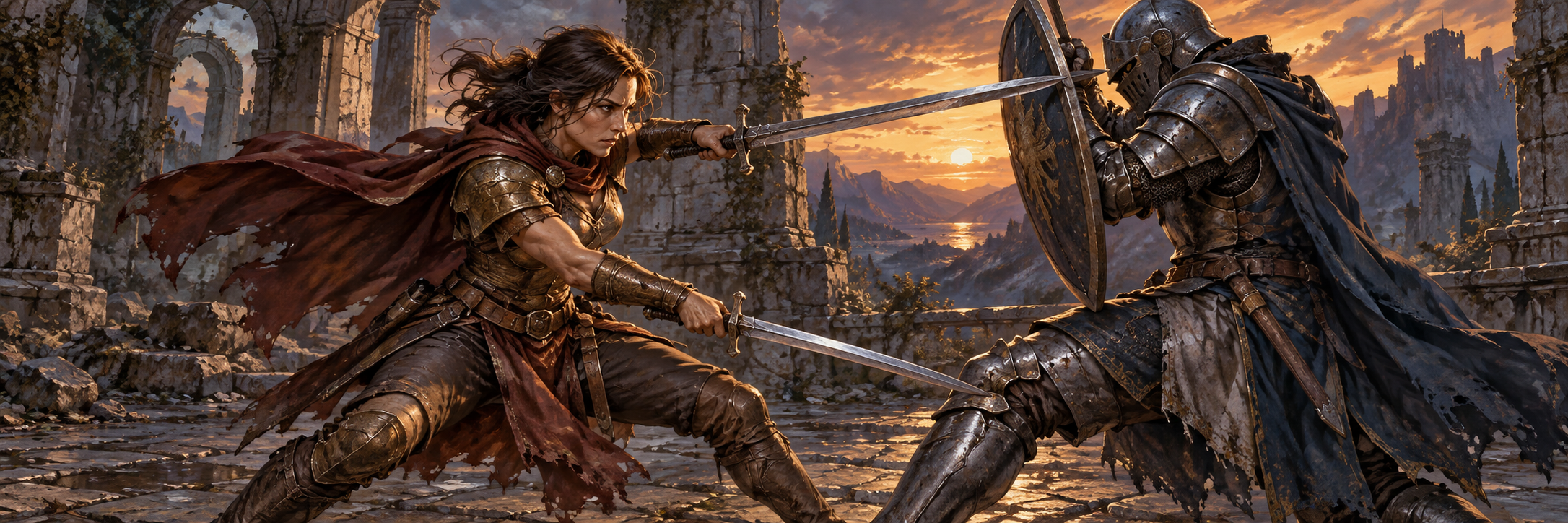
Epic Feat · D&D 3.5e
The Perfect Two-Weapon Fighting epic feat lets a master of paired weapons make as many off-hand attacks as primary-hand attacks, using the same base attack bonuses. Normal two-weapon penalties still apply, and the feat preserves the usual full-attack requirements.
At a Glance
- Original rules
- D&D 3.5e epic feat
- Prerequisites
- Dexterity 25; Two-Weapon Fighting, Improved Two-Weapon Fighting and Greater Two-Weapon Fighting; normal epic feat eligibility
- Benefit
- Off-hand attacks match the primary weapon’s attack count and base attack bonuses
- Limits
- Normal two-weapon penalties, damage modifiers and action requirements remain
- Related editions
- 2024 Fighting Style feat, 2014 Fighting Style class feature, and Pathfinder 1e Greater Two-Weapon Fighting
Perfect Two-Weapon Fighting Epic Feat: Rules by Edition
The original epic feat and the related options below use different rules. Choose your edition before calculating attacks. The D&D 3.5e panel retains the original prerequisites, benefit, normal rules and examples.
Two-Weapon Fighting — D&D 5.5e (2024)
Related native option: Two-Weapon Fighting is a Fighting Style feat in the 2024 Basic Rules. The Perfect Two-Weapon Fighting epic feat’s matching attack sequences are not its benefit.
Prerequisite. The Fighting Style feature.
Benefit. When a weapon’s Light property gives you an extra attack, you can add your ability modifier to that attack’s damage if it is not already being added.
Normal. After taking the Attack action and attacking with a Light weapon on your turn, the Light property allows one extra attack as a Bonus Action later that turn, using a different Light weapon. Ordinarily, a positive ability modifier is omitted from the extra attack’s damage; a negative modifier still applies.
Nick mastery. A character able to use the appropriate weapon mastery can make the Light property’s extra attack within the Attack action rather than as a Bonus Action. Nick permits that extra attack only once per turn. It changes the attack’s timing, while the Fighting Style changes its damage.
2024 Worked Example
Assume a level-5 Fighter has Extra Attack, Dexterity 16, proficiency bonus +3, the Two-Weapon Fighting style, proficiency with both weapons and the ability to use a scimitar’s Nick mastery. They attack twice with a shortsword, then make the Light property’s extra attack with a different Light weapon, the scimitar, within the same Attack action. This produces three attacks, with the Bonus Action available for another legal use.
Before other effects, each Finesse attack uses +6 to hit: +3 Dexterity and +3 proficiency. Each successful hit deals 1d6+3 damage. The Fighting Style supplies the +3 damage modifier on the extra Light attack. Without the style, that extra attack would ordinarily deal 1d6. Without access to Nick, taking the extra Light attack would normally use the Bonus Action.
Sources. 2024 Basic Rules — Fighting Style feats; Light, Finesse and Nick weapon rules.
Two-Weapon Fighting — D&D 5e (2014)
Related native option: Two-Weapon Fighting is a Fighting Style class feature in the 2014 rules. It is distinct from the Perfect Two-Weapon Fighting epic feat and from a feat selected through the optional feat rules.
Acquisition. A Fighter can choose this Fighting Style at Fighter level 1; a Ranger can choose it at Ranger level 2.
Benefit. When using two-weapon fighting, add the appropriate ability modifier to the second weapon’s damage.
Normal. Take the Attack action and attack with a Light melee weapon held in one hand. You may then spend a Bonus Action to attack with a different Light melee weapon in the other hand. The bonus attack normally omits a positive ability modifier from damage, but includes a negative modifier. A weapon with the Thrown property can be thrown instead of used for a melee attack.
2014 Worked Example
A level-5 Fighter with Dexterity 16, proficiency bonus +3, Extra Attack, two shortswords and this Fighting Style can make two attacks with the Attack action and one with the Bonus Action. Each attack uses +6 to hit, and each successful hit deals 1d6+3 before other effects. The additional attack does not repeat for every attack granted by Extra Attack.
The character still has only one Bonus Action on the turn. Spending it on another feature means it is unavailable for the two-weapon bonus attack. The 2024 Nick mastery rule does not apply to this 2014 sequence.
Sources. 2014 Basic Rules — Fighter and Ranger Fighting Styles; 2014 two-weapon fighting rules.
Greater Two-Weapon Fighting — Pathfinder 1e
Related native option: a combat feat from the Pathfinder Core Rulebook. It grants a third off-hand attack. It does not reproduce the Perfect Two-Weapon Fighting epic feat’s full matching sequence.
Prerequisites. Dexterity 19, Improved Two-Weapon Fighting, Two-Weapon Fighting and base attack bonus +11.
Benefit. Gain a third off-hand attack with a –10 penalty. This penalty is the step down from the first off-hand attack; the usual two-weapon penalties and other modifiers still apply.
Feat chain. Two-Weapon Fighting requires Dexterity 15 and reduces the two-weapon penalties. Improved Two-Weapon Fighting requires Dexterity 17, Two-Weapon Fighting and BAB +6, and adds a second off-hand attack at –5. Greater Two-Weapon Fighting adds the third at –10.
Pathfinder Attack Sequence
At BAB +16, the ordinary primary-hand sequence is +16/+11/+6/+1. With the complete three-feat chain, the off-hand sequence is +16/+11/+6 before two-weapon penalties and other modifiers. That gives four primary attacks and three off-hand attacks during a full attack.
If the off-hand weapon is Light and the character has Two-Weapon Fighting, apply –2 to both sequences: +14/+9/+4/–1 primary and +14/+9/+4 off-hand, before ability modifiers, enhancement bonuses and other effects. Greater Two-Weapon Fighting does not supply a fourth off-hand attack to match the primary hand’s last attack.
Mythic options, where allowed, have their own prerequisites and benefits. This ordinary combat feat is not automatically mythic, and mythic tiers do not replace the D&D 3.5e epic feat prerequisites.
Source. Pathfinder PRD — Greater, Improved and ordinary Two-Weapon Fighting.
Perfect Two-Weapon Fighting Epic Feat — D&D 3.5e
- Prerequisites Dexterity 25, Greater Two-Weapon Fighting, Improved Two-Weapon Fighting, Two-Weapon Fighting.
- Benefit You can make as many attacks with your off-hand weapon as with your primary weapon, using the same base attack bonus. You still take the normal penalties for fighting with two weapons.
- Normal Without this feat, you can only get a single attack with an off-hand weapon (or two attacks with an off-hand weapon if you have Improved Two-Weapon Fighting, or three attacks with an off-hand weapon if you have Greater Two-Weapon Fighting).
Epic eligibility. The usual epic feat rules apply. Characters normally begin selecting epic feats at character level 21, and every listed prerequisite must be met to select and use the feat.
Perfect Two-Weapon Fighting in Play
Perfect Two-Weapon Fighting rewards an epic combatant who has mastered fighting with a weapon in each hand. Instead of stopping at the extra off-hand attacks provided by the earlier feats in its chain, the character can make as many off-hand attacks as primary-hand attacks, using the corresponding base attack bonuses. The feat does not remove the normal penalties for fighting with two weapons.
Worked Attack Example
Suppose a character’s base attack bonus grants four primary-hand attacks in a full attack, at +20/+15/+10/+5 before other modifiers. With Perfect Two-Weapon Fighting, the character may also make four off-hand attacks using those corresponding base attack bonuses, again before applying the normal two-weapon penalties and any other relevant modifiers. The feat increases the off-hand attack count; it does not guarantee that any particular attack hits.
Prerequisite Checklist
- Dexterity 25 or higher.
- Improved Two-Weapon Fighting.
- Greater Two-Weapon Fighting.
- Two-Weapon Fighting.
Common Adjudications
Use the normal full-attack requirements and two-weapon fighting rules for the edition. Having this feat does not allow the character to make a full sequence of attacks as part of an ordinary single attack action. Likewise, retain the usual distinctions between main-hand and off-hand weapons, attack modifiers, and damage where the rules require them.
Rules Edition and Related Feats
This entry presents the D&D 3.5e epic feat. The rule above is the original game mechanic; the example is guidance, not a new feat benefit or a conversion to another edition. Explore the Epic Feats collection for additional high-level combat options, including Two-Weapon Rend.
Full Attack with Complete Modifiers
For a worked calculation, assume a level-21 combatant has BAB +20, an epic attack bonus of +1, Strength 20 (+5), Dexterity 25, proficiency with both weapons and all the prerequisite feats. They wield a +1 longsword in the primary hand and a +1 shortsword, a Light weapon, in the off hand. No other attack modifiers apply.
The first primary attack is +25: BAB +20, epic bonus +1, Strength +5, weapon enhancement +1 and two-weapon penalty –2. The iterative sequence is therefore +25/+20/+15/+10. The off-hand weapon has the same enhancement bonus and uses the same Strength modifier, so the Perfect Two-Weapon Fighting epic feat gives it the same +25/+20/+15/+10 sequence.
This means eight attack rolls in the full attack. Without the epic feat, Greater Two-Weapon Fighting would provide the first three off-hand attacks, giving seven attack rolls in this example. The extra off-hand roll is at the lowest step, +10; the feat does not turn every roll into an attack at the highest bonus.
The corresponding ordinary damage is 1d8+6 for the longsword and 1d6+3 for the shortsword: the off hand adds half the positive Strength bonus, rounded down, plus its own +1 weapon enhancement. The Perfect Two-Weapon Fighting epic feat matches attack counts; it does not make the weapons’ damage calculations identical.
Epic Bonuses and Weapon Choice
Above character level 20, the epic attack bonus improves accuracy but does not grant further iterative attacks. At level 23, the epic attack bonus is +2 rather than +1. With all other assumptions unchanged, both sequences become +26/+21/+16/+11. The increase does not create a fifth primary attack or a fifth corresponding off-hand attack.
The matching base attack bonus in the Perfect Two-Weapon Fighting epic feat does not erase weapon-specific modifiers. If the off-hand weapon had a +2 enhancement instead of +1, its attack sequence would be one point higher than the primary weapon’s in the example. Calculate proficiency, enhancement and other applicable bonuses for each weapon.
Weapon weight also matters. With Two-Weapon Fighting and a Light off-hand weapon, the usual penalties are –2/–2. With a non-Light off-hand weapon, they are normally –4/–4. Changing that shortsword to another one-handed, non-Light weapon would reduce every attack bonus in the example by a further 2; this epic feat does not waive the difference.
Dexterity 25 is a prerequisite, not an instruction to use Dexterity for every attack or damage roll. Use the edition’s normal ability rules and any relevant feat. The longsword example above uses Strength, even though the character has the required high Dexterity.
Sources. 3.5e SRD — Perfect Two-Weapon Fighting; epic attack bonuses; two-weapon penalties.
What Changed Between Editions
- D&D 3.5e: the Perfect Two-Weapon Fighting epic feat matches the off-hand attack count to the primary weapon, retaining penalties and full-attack requirements.
- Pathfinder 1e: the related ordinary feat chain grants up to three off-hand attacks; Greater Two-Weapon Fighting adds the third.
- D&D 2014: the Fighting Style improves the bonus attack’s damage; the ordinary two-weapon attack uses a Bonus Action.
- D&D 2024: the Fighting Style is a feat, and access to Nick mastery can move the Light property’s extra attack into the Attack action.
Using the Perfect Two-Weapon Fighting Epic Feat
Prepare separate primary-hand and off-hand attack lines before play. Record each weapon’s damage, enhancement, reach and any special property beside its own sequence. This makes the benefit visible without treating the two weapons as mechanically identical.
At the beginning of a turn, decide whether the character can make a full attack under the normal rules. Moving to reach an enemy does not become free because the character has mastered paired weapons. A single attack action still gives its normal attack, rather than the eight-roll sequence in the worked example.
Resolve each attack against the appropriate Armor Class and apply damage only on a hit. Lower iterative bonuses remain lower, so the added attack improves opportunity rather than guaranteeing damage. Keep conditions, cover and weapon-specific effects in the calculation where they apply.
If a character loses a prerequisite, the normal epic feat eligibility rules govern whether they can use the feat. For example, losing the required Dexterity does not grant a different version with fewer prerequisites. Recheck the complete feat chain when a character’s statistics or available feats change.
Sources and Licensing
This material is Open Game Content, and is licensed for public use under the terms of the Open Game License v1.0a.
The original D&D 3.5e prerequisites, benefit and normal rule are retained in their edition panel. Pathfinder’s related combat feat is attributed to the Core Rulebook PRD. The D&D 2014 and 2024 panels summarise their native Basic Rules options; they are not conversions of the original epic feat. The worked calculations state their assumptions, and the hero is original artwork created for this page.
Keep this reference growing
If this page helped with your reading or game, you can support its upkeep or explore the curated books.
Explore the Bookshop — epics, classics and stories behind imagined worlds.