
Nineteen Eighty-Four — George Orwell’s 1949 Novel
At a Glance
- Author — George Orwell (Eric Arthur Blair)
- First published — 8 June 1949, Secker & Warburg, London
- Form — Dystopian political novel
- Setting — Airstrip One, part of the fictional superstate Oceania
- Central character — Winston Smith, an employee of the Ministry of Truth
- First reading — An unabridged edition of the novel
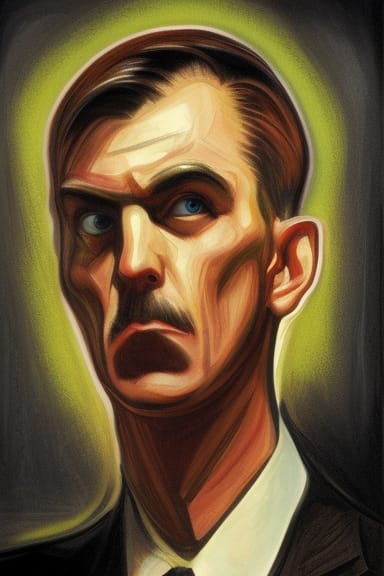
Nineteen Eighty-Four is George Orwell’s 1949 dystopian novel about a society in which the state tries to control public behaviour, memory, language and private thought. It follows Winston Smith, a records worker who begins to question the system he is employed to serve.
What happens in the story? — no spoilers
Winston works for the Ministry of Truth, changing old records to agree with the Party’s latest declarations. His everyday routine makes a contradiction impossible to ignore. The Party asks people to trust its account of events while it rewrites the records they could use to check its claims.
Big Brother is the Party’s omnipresent symbol. Surveillance, ritualised public loyalty and the threat of the Thought Police discourage dissent, while the controlled language called Newspeak attempts to narrow the very possibilities of expression. Winston’s small, private acts of resistance put him on a course that tests how much truth can survive when fear governs both speech and relationships.
Why the book matters
Orwell gives recurring political dangers names. They include doublethink, the simultaneous acceptance of incompatible assertions; thoughtcrime, the criminalisation of prohibited beliefs; and Newspeak, a deliberately restricted language. These inventions give the novel its force by showing what it costs to exercise independent judgement under the Party.
What to notice while reading
- Records and evidence — Pay attention to who can alter the past, and who can contradict an official version of events.
- Language and power — Observe the connection between vocabulary and the ability to argue about reality.
- Private trust — Consider which parts of ordinary friendship, affection and memory remain possible under surveillance.
- Fear as administration — Look at the small mechanisms by which ordinary institutions enforce conformity.
Choosing an edition
For a first reading, choose an unabridged edition of Orwell’s text. Introductions, appendices and scholarly notes can be useful, but some modern introductions discuss the ending in detail. Save them until after you have read the novel if you want to avoid spoilers. Check the publisher and contents rather than treating all editions with similar covers as identical.
At the table — the archive that keeps changing
In a fortified city, the public chronicle records three mutually incompatible accounts of the same battle. The archivist who noticed the discrepancies has disappeared, and the city’s officials claim the older copies are forgeries. The characters must recover independent witnesses, protect the evidence and decide when—or whether—to make it public. The game turns on whether the community can agree on what happened once the official records are gone.
Continue exploring
For another world in which institutions and absurd language distort common sense, see The Hitchhiker’s Guide to the Galaxy. Read more about Orwell’s novel at The Orwell Foundation.
Explore more novels in the Books, Comics & Graphic Novels library.
Read the Book
Ad – affiliate link. If you buy through the Bookshop.org link below, the site can earn a commission at no extra cost to you.
Nineteen Eighty-Four — George Orwell (Penguin Classics) at Bookshop.org
Keep this reference growing
If this page helped with your reading or game, you can support its upkeep or explore the curated books.
Explore the Bookshop — epics, classics and stories behind imagined worlds.