
Don Quixote
Why Don Quixote still feels modern
Don Quixote is funny because its hero keeps mistaking the world for the chivalric romances he has read. It lasts because Cervantes never leaves the joke that simple. Don Quixote’s fantasies can be ridiculous, destructive, generous and strangely moving, while the supposedly sensible people around him are often vain, cruel or just as committed to their own illusions.
The story
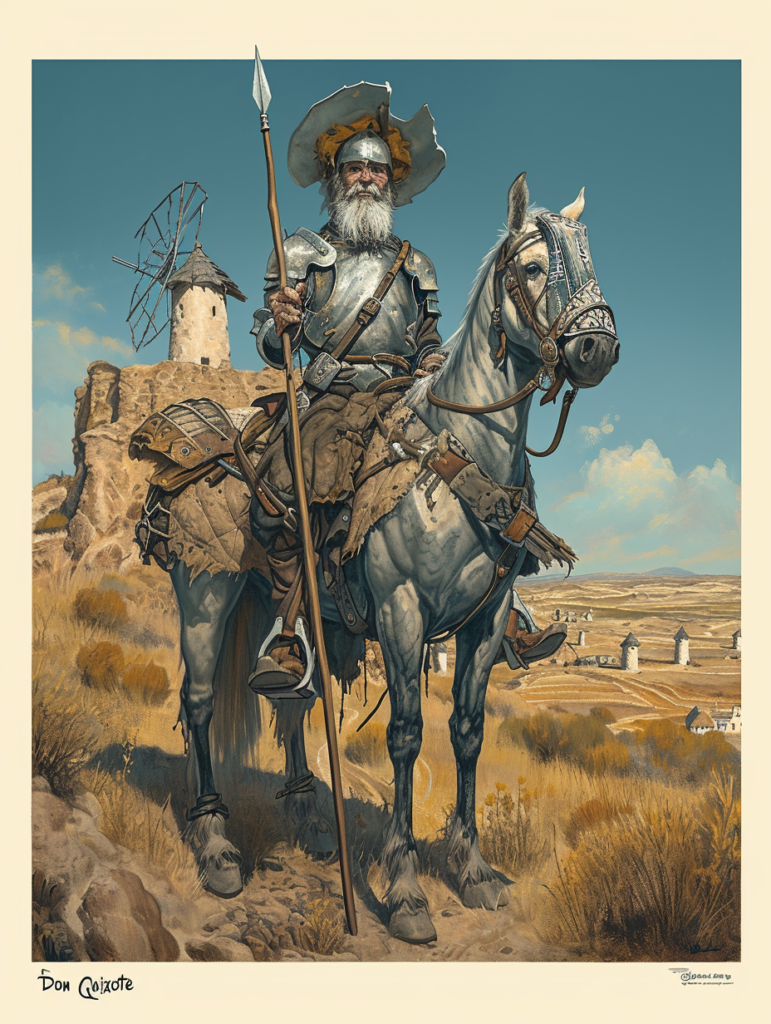
Alonso Quixano, a country gentleman obsessed with tales of knights-errant, renames himself Don Quixote and sets out to revive chivalry. Inns become castles, ordinary people become figures from romance, and windmills become giants because he insists on reading the world through the stories in his head.
His companion Sancho Panza is practical, hungry, sceptical and every bit as memorable. Their partnership gives the novel its engine: Quixote pushes reality toward impossible ideals, while Sancho keeps dragging the conversation back toward food, money, pain and common sense. Over time each begins to influence the other.
More than a parody of knights
Cervantes certainly mocks worn-out chivalric conventions, but the book keeps widening its target. It asks who gets to decide what is true, how reputation is manufactured, why people need stories, and what happens when a person refuses the role society has assigned him. The comedy can turn abruptly into embarrassment, violence or sympathy, which is part of the novel’s unsettling power.
A book aware of itself
The first part appeared in 1605 and the second in 1615. In the later book, Cervantes goes further with the joke: characters can know about the earlier published adventures of Don Quixote, so fame, authorship and competing versions of the story become part of the story itself. The result feels remarkably modern without needing the reader to treat it as a museum piece.
What to watch for
- Reality versus interpretation: the same event can mean entirely different things depending on the story a character wants to believe.
- Idealism and damage: Quixote’s desire to act nobly does not prevent his actions from hurting himself or other people.
- Sancho’s transformation: the supposed realist gradually learns to speak and imagine in Quixote’s terms.
- Stories inside stories: narrators, manuscripts, performances and invented authorities constantly make the reader question how a tale acquires truth.
- Comedy with consequences: absurd scenes often have bruises, humiliation and social cruelty underneath them.
Reading it today
The novel is long and deliberately episodic, so it rewards being read as a sequence of encounters rather than raced through for a single plot. Translation matters as well: tone has to carry slapstick, wordplay, argument and sudden seriousness. The edition recommended above uses Edith Grossman’s English translation.
Explore more landmark works in the Books, Comics & Graphic Novels library.
Keep this reference growing
If this page helped with your reading or game, you can support its upkeep or explore the curated books.
Explore the Bookshop — epics, classics and stories behind imagined worlds.