
Lion — African Predator and D&D 3.5e Statistics
Lion at a Glance
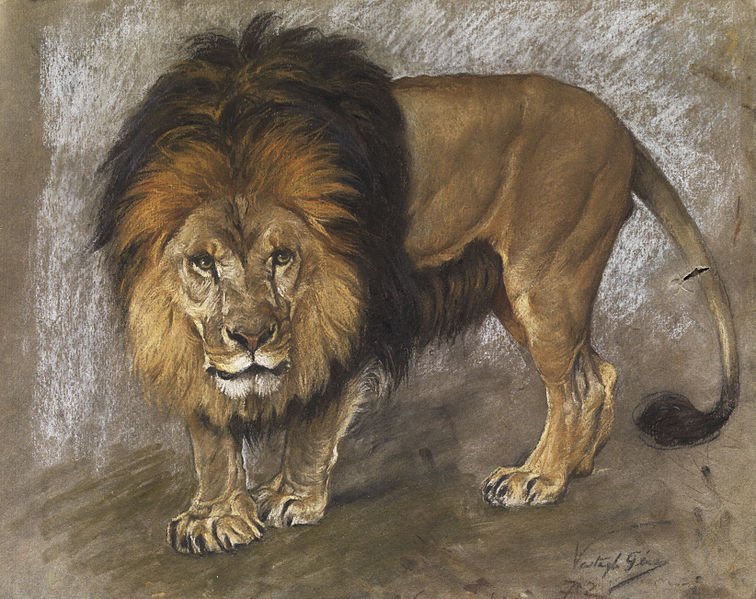
The statistics presented here describe a male African lion, which is 5 to 8 feet long and weighs 330 to 550 pounds. Females are slightly smaller but use the same statistics.
| Lion | |
| Large animal | |
| Hit Dice | 5d8+10 (32 hp) |
| Initiative | +3 |
| Speed | 40 ft. (8 squares) |
| Armor Class | 15 (-1 size, +3 Dexterity, +3 natural), touch 12, flat-footed 12 |
| Base Attack/Grapple | +3/+12 |
| Attack | Claw +7 melee (1d4+5) |
| Full Attack | 2 claws +7 melee (1d4+5) and bite +2 melee (1d8+2) |
| Space/Reach | 10 ft./5 ft. |
| Special Attacks | Pounce, improved grab, rake 1d4+2 |
| Special Qualities | Low-Light Vision, Scent |
| Saves | Fort +6, Ref +7, Will +2 |
| Abilities | Strength 21, Dexterity 17, Constitution 15, Intelligence 2, Wisdom 12, Charisma 6 |
| Skills | Balance +7, Hide +3*, Listen +5, Move Silently +11, Spot +5 |
| Feats | Alertness, Run |
| Environment | Warm plains |
| Organization | Solitary, pair, or pride (6-10) |
| Challenge Rating | 3 |
| Advancement | 6-8 HD (Large) |
| Level Adjustment | – |
Combat
Pounce (Ex) If a lion charges a foe, it can make a full attack, including two rake attacks.
Improved Grab (Ex) To use this ability, a lion must hit with its bite attack. It can then attempt to start a grapple as a free action without provoking an attack of opportunity. If it wins the grapple check, it establishes a hold and can rake.
Rake (Ex) Attack bonus +7 melee, damage 1d4+2.
Skills Lions have a +4 racial bonus on Balance, Hide, and Move Silently checks.
*In areas of tall grass or heavy undergrowth, the Hide bonus improves to +12.
Hunting Behaviour
Lions do not need to pursue every traveller they encounter. A pride may shadow a camp, guard a carcass or defend cubs, while a hungry individual looks for prey that has become isolated from the group. The approach is most dangerous when the grass hides the animal’s movement until its charge is already underway. Read the creature’s statistics above as a D&D 3.5e animal entry, not as numbers to apply unchanged to another edition.
How to Run a Lion Encounter
Establish the ground first: open plains favour a clear view of the charge; tall grass and scattered scrub provide concealment. Describe signs before the attack—flattened grass, a distant warning call or the sudden flight of smaller animals—so the players have a meaningful chance to investigate or choose another route.
- Approach: Use the listed Hide and Move Silently rules, remembering the special Hide modifier in tall grass or heavy undergrowth.
- Charge: A lion that can charge may use pounce for its full attack, including the two rake attacks permitted by its entry.
- Hold: If the bite connects, the lion can attempt improved grab under the stated conditions. Keep grappling and rake damage distinct from the initial attack.
- Response: A beast defending its territory or meal may retreat when opponents prove dangerous; a desperate predator may press its advantage.
Adventure: The Vanished Herd
Caravans arriving at an oasis find livestock penned behind makeshift thorn fences. A herder blames an enormous lion for the missing animals, but the party discovers that the tracks belong to several ordinary lions. One member of the pride has been wounded by an illegal trap, making the animals more unpredictable near the settlement. The characters can drive the lions away, find the owner of the trap, or prevent the villagers from burning the grassland in retaliation.
Rules and Sources
The original numerical stat block, special attacks and CR 3 above follow the D&D 3.5e System Reference Document — Lion. The behaviour and adventure suggestions here are original Games Master guidance. For more wildlife encounters, visit the Animal bestiary.
Keep this reference growing
If this page helped with your reading or game, you can support its upkeep or explore the curated books.
Explore the Bookshop — epics, classics and stories behind imagined worlds.