
Belt of Dwarvenkind – Magic Item
Belt of Dwarvenkind – Magic Item
A heavy clan-worked belt that gives an outsider the tongue, endurance, stone-sense, and dangerous social weight of the dwarves.
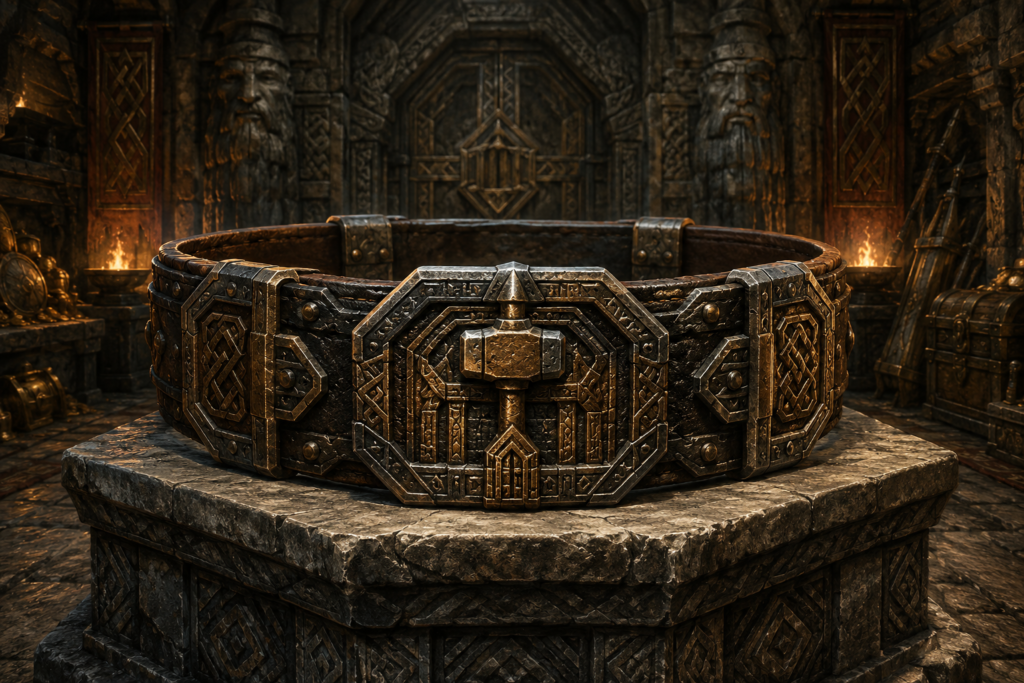
A Belt of Dwarvenkind is a dwarven answer to the question of trust: who may enter the deep road, speak before the gate, read the warning-stone, and bear the weight of old mountain law?
It is not simply a belt of health, darkvision, or resistance. It is a worked oath of stone, language, endurance, reputation, and suspicion. When worn openly, it marks the bearer as someone touched by dwarven craft and judged worthy, useful, tolerated, claimed, or dangerously indebted.
Among dwarves, such a belt is never neutral. It may be a gift, treaty-token, clan honour, diplomatic pass, tomb-relic, or stolen sign of authority. A stranger wearing one can gain entry where another outsider would be turned away, but the same stranger may be asked where the belt came from, who gave it, what debt it represents, and why they think they have the right to bear it.
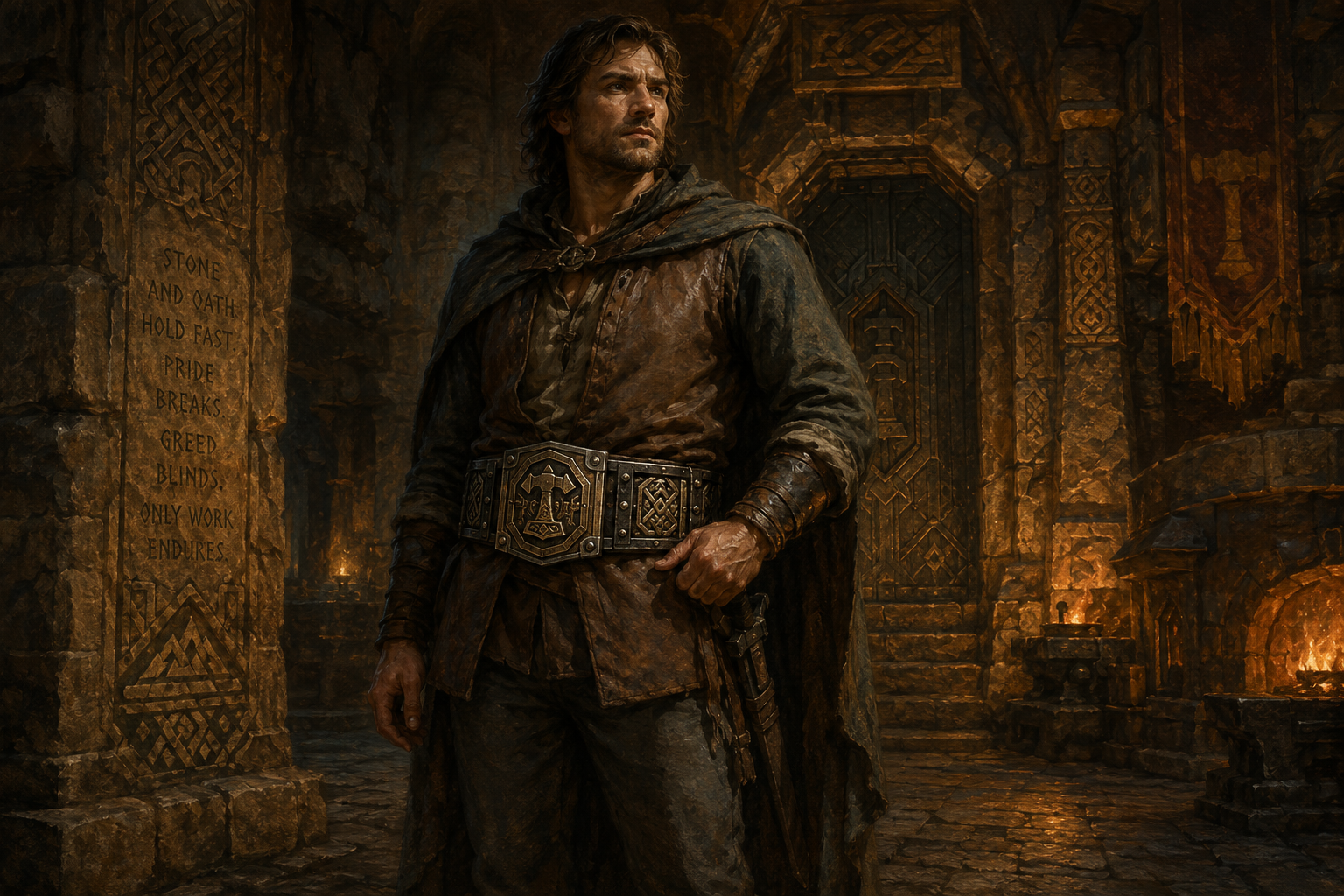
The belt teaches more than words. It gives the wearer the weight of dwarven speech, the patience of underground stone, and a sharper instinct for masonry, poison, old passages, craft marks, and old grudges. It can make an outsider more acceptable to dwarves, gnomes, and halflings, but it can also make others wary. A person wearing dwarvenkind around their waist looks less like a free agent and more like someone bound to deep halls, ancestral bargains, and mountain law.
Physical Description
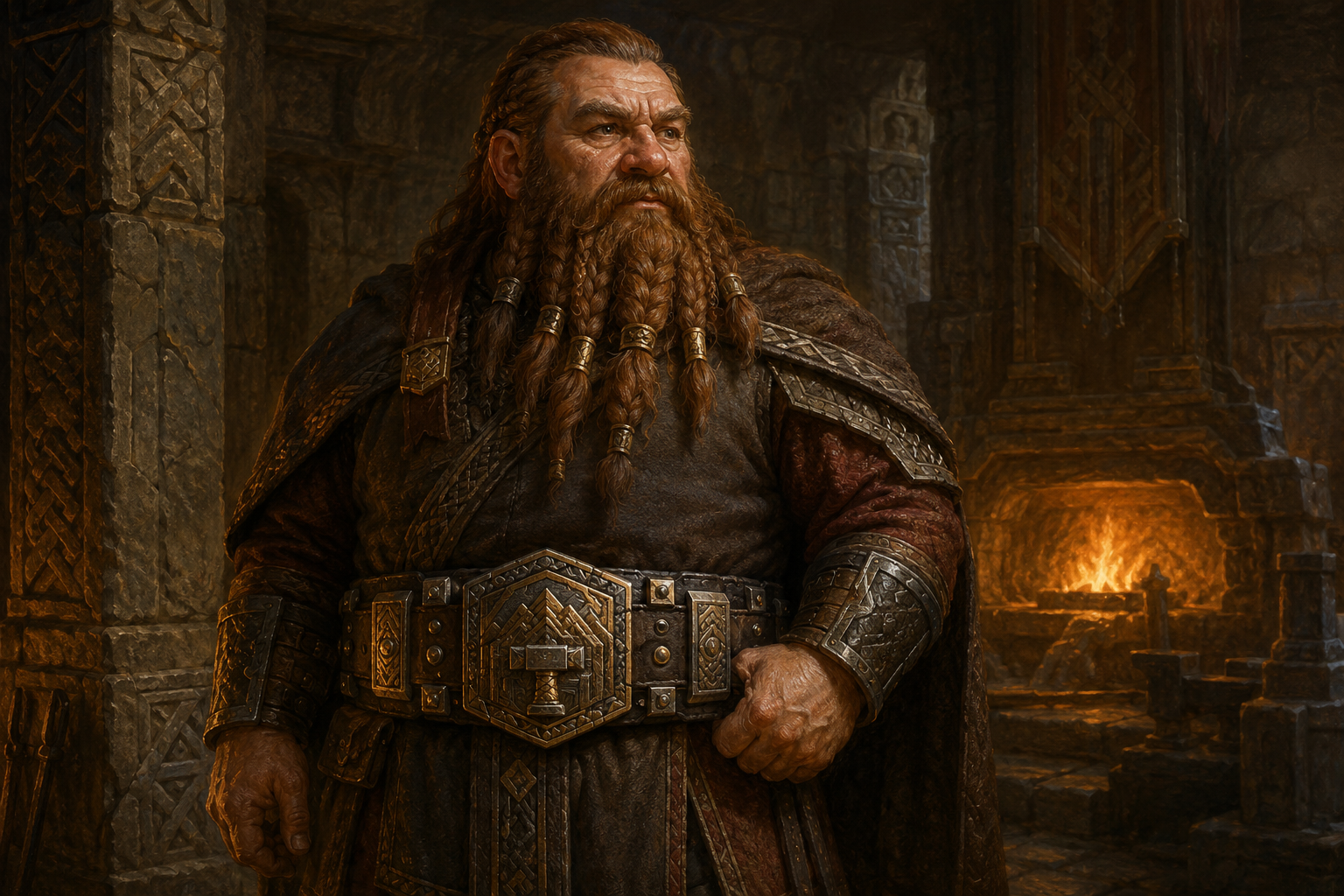
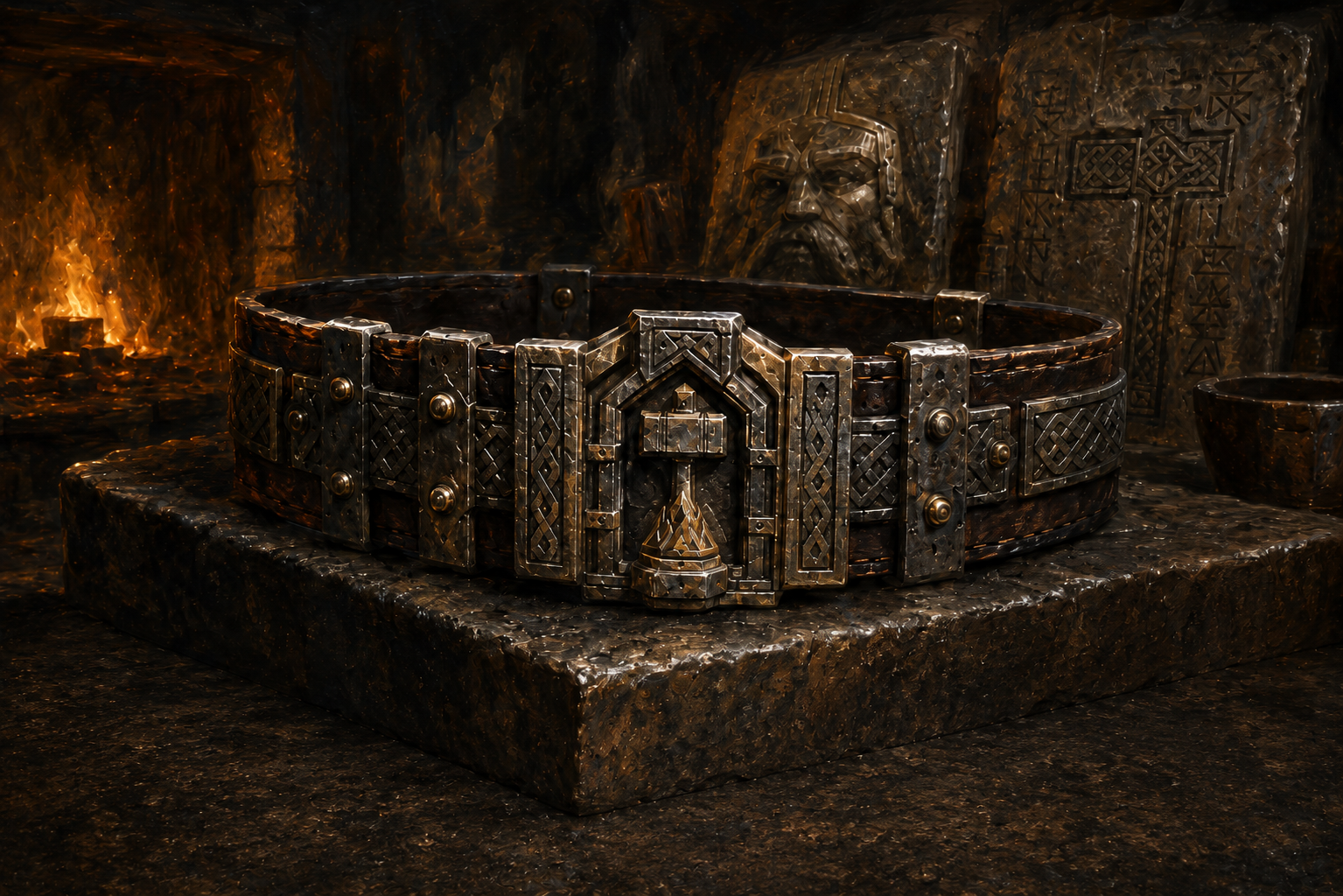
A Belt of Dwarvenkind is broad, dense, and made to outlast flesh. Most are formed from dark leather, iron plates, bronze rivets, silver knotwork, or rune-cut stone settings. The buckle is usually the most important part: a mountain gate, forge hammer, anvil, crossed axes, deep-delving lamp, clan seal, or stylised beard worked into metal.
The belt never looks delicate. Even courtly versions retain the hard geometry of mine architecture and fortress craft. Its inner face may carry a maker’s mark, lineage rune, hidden oath, or the name of the dwarf who first earned it.
Its magic is not showy. The belt does not blaze with light or announce itself with spectacle. The wearer’s voice settles. Their breath deepens. Dwarven script begins to make sense. Stonework that once looked merely old begins to show seams, repairs, pressures, and intent.
Why This Item Matters
This item matters because it grants belonging with consequences.
A cloak of protection keeps a wearer alive. A Belt of Dwarvenkind changes who will speak to them, what doors may open, what warnings they can read, and what obligations may suddenly recognise them. It can allow an outsider to negotiate with a sealed hold, survive poisoned hospitality, read a warning carved into a mine road, or notice that a collapsed passage was deliberately cut from within.
In a strong campaign, the belt is not merely treasure. It is proof, accusation, invitation, disguise, and burden. Dwarves may honour the wearer, test them, challenge them, or demand the belt’s return.
Mechanics Tabs
The rules below are mechanics tabs for different game editions.
Belt of Dwarvenkind 5.5e / 2024
Belt of Dwarvenkind Pathfinder 1e
Belt of Dwarvenkind 3.0e
Belt of Dwarvenkind 5.5e / 2024
Wondrous Item, Rare
Requires Attunement
Suggested Price: 8,000 gp
Weight: 1 lb.
While wearing and attuned to this belt, you gain the following benefits.
Dwarven Speech. You can understand, speak, and read Dwarvish.
Dwarven Endurance. Your Constitution score increases by 2, to a maximum of 20.
Darkvision. If you do not already have Darkvision, you gain Darkvision with a range of 60 feet.
Stonecunning. You have Advantage on Intelligence checks related to stonework, worked stone, underground construction, mines, masonry, carved passages, stone traps, and unusual stone features. This includes recognising newer stonework, unsafe tunnels, disguised stone doors, dwarven engineering, and signs of deliberate collapse.
Poison-Hardiness. You have Advantage on saving throws against poison, and you have Resistance to Poison damage.
Dwarven Resolve. You gain a +1 bonus to saving throws against spells and magical effects. This bonus represents old dwarven stubbornness, warding craft, and resistance to hostile magic without turning the belt into a general protective cloak.
Clan-Bearing. When you make a Charisma check to influence dwarves, you have Advantage if the belt is visible, recognised, or its authority is known.
When you make a Charisma check to influence gnomes or halflings, you may add 1d4 to the roll if the check involves trade, craft, kinship, old alliances, tunnels, roads, mines, shared enemies, local trust, or practical negotiation.
When you make a Charisma check to influence any creature other than a dwarf, gnome, or halfling, subtract 1d4 from the roll if the belt’s dwarven identity would reasonably hinder the interaction. This usually applies when dealing with ancestral enemies, rival guilds, anti-dwarven nobles, raiders, underworld powers, hostile elves, or anyone who sees the belt as proof of divided loyalty. It does not apply to every casual conversation.
Notes
This 5.5e version keeps the older item’s social identity without turning the drawback into a universal penalty. The belt helps when dwarven identity matters and hinders when dwarven identity creates distrust.
The +1 bonus against spells and magical effects is deliberately smaller than Advantage. Constant Advantage against all spells would make the belt too strong and would drift away from the item’s intended role.
Belt of Dwarvenkind Pathfinder 1e
Aura: Moderate divination
Caster Level: 12th
Slot: Belt
Price: 14,900 gp
Weight: 1 lb.
This belt gives the wearer a +4 competence bonus on Charisma checks and Charisma-based skill checks as they relate to dealing with dwarves, a +2 competence bonus on similar checks when dealing with gnomes and halflings, and a –2 competence penalty on similar checks when dealing with anyone else.
The wearer can understand, speak, and read Dwarven.
If the wearer is not a dwarf, the wearer also gains the following benefits:
- Darkvision 60 ft.
- Stonecunning, as the dwarf racial trait.
- +2 enhancement bonus to Constitution.
- +2 resistance bonus on saving throws against poison, spells, and spell-like abilities.
Construction
Requirements: Craft Wondrous Item, tongues, creator must be a dwarf
Cost: 7,450 gp
Notes
The Pathfinder version should be treated as a social and ancestral item first, with defensive and physical benefits second. The Charisma modifiers apply when ancestry, reputation, language, clan authority, trade trust, cultural expectations, old alliances, or old grudges matter to the interaction.
Belt of Dwarvenkind 3.0e
This belt gives the wearer a +4 competence bonus on Charisma checks and Charisma-based skill checks as they relate to dealing with dwarves, a +2 competence bonus on similar checks when dealing with gnomes and Halflings, and a -2 competence penalty on similar checks when dealing with anyone else. The wearer can understand, speak, and read Dwarven. If the wearer is not a dwarf, he gains 60-foot Darkvision, dwarven stonecunning, a +2 enhancement bonus to Constitution, and a +2 resistance bonus on saves against poison, spells, or spell-like effects.
Moderate divination; CL 12th; Craft Wondrous Item, tongues, creator must be a dwarf; Price 14,900 gp; Weight 1 lb.
How It Enters Play
A Belt of Dwarvenkind should usually enter the campaign as a gift, inheritance, ransom, treaty object, tomb treasure, diplomatic badge, or recovered clan relic. It is too culturally loaded to feel like a random belt sitting in a shop beside anonymous potions.
It may appear when a dwarven hold grants it to an outsider after a life-debt is repaid. It may be found on a dead envoy in a collapsed tunnel, still buckled over formal travelling clothes. A human noble may possess one illegally after looting an old dwarf road-fort. A gnome banking house may accept it as proof of a contract older than the current kingdom. A dwarf clan may demand its return because the present wearer has no recognised right to bear it.
The best use of the item is not “the party finds a belt.” It is “the party finds a belt that means something.”
Provenance and Rightful Ownership
A Belt of Dwarvenkind should have a known origin whenever possible. Dwarves care who made it, who wore it, who gifted it, and whether the current bearer has any right to carry that authority.
A belt granted by a living hold may open gates, secure hospitality, or allow an outsider to speak before a dwarven council. A belt taken from a tomb, battlefield, murdered envoy, or looted treasury may do the opposite. It can mark the wearer as a thief, oath-breaker, heir, claimant, witness, or fool who does not understand what hangs at their waist.
The belt’s magic works regardless of politics, but dwarven society does not. A character can use its language, endurance, and stone-sense immediately. The social weight must be earned, explained, inherited, stolen, or answered for.
Failure, Risk, and Misuse
A Belt of Dwarvenkind is dangerous because it can be mistaken for permission.
The wearer may speak Dwarven, read warning-stones, and recognise stonework, but none of that proves they understand dwarven law. A gate-warden may let the belt-bearer pass, only for a council elder to demand an oath. A mine-clan may accept the wearer as an envoy, only to hold them responsible for the debt of the dwarf who first gave the belt away. A young adventurer may treat the belt as a useful tool and discover too late that the buckle is a recognised mark in a feud older than their kingdom.
The most common misuse is false authority. A merchant might wear the belt to secure trade rights. A noble might display it as proof of dwarven support. A thief might use it to read old passage marks and open roads meant to stay sealed. A mercenary captain might use it to recruit gnomes, halflings, or under-road guides by implying a dwarven alliance that does not exist.
The belt should not behave like a curse, and it should not constantly punish the wearer. Its danger appears when someone recognises it and believes it means something. The belt can open the first door. It cannot answer the second question.
Value in the World
A Belt of Dwarvenkind is worth more than its market price in lands where dwarves control mines, roads, armouries, banks, bridges, under-mountain passages, siegecraft, or stone law. It can serve as a pass-key, oath-token, diplomatic badge, inheritance claim, or political insult.
Dwarves rarely sell such belts openly. When one appears in a market, it usually means a clan has fallen, a tomb has been robbed, a treaty has failed, or a non-dwarven owner does not understand what they possess.
The listed price measures its adventuring value. Its true value depends on provenance.
Adventure and Worldbuilding Hooks
The Gate Opens Too Easily
The belt allows the party to pass through a sealed dwarven road-gate that should have remained closed. Inside, the road is intact, the lamps are trimmed, and the stone signs still welcome travellers in perfect Dwarven. The problem is that no living hold admits to maintaining it.
The belt did not unlock a dungeon. It recognised an old right of passage that should have expired generations ago.
The Debt Around the Waist
A dwarven clan honours the belt-bearer as the legal successor to a dead oath-friend. At first this brings hospitality, safe passage, and respect. Then the clan presents the unpaid debt: a bridge must be rebuilt, a stolen anvil recovered, or a murderer named before the next winter court.
Refusing the debt does not stop the belt working, but it changes what dwarves think the wearer is.
The Belt Speaks Better Than Its Bearer
A negotiator is using a stolen Belt of Dwarvenkind to win trust among dwarves, gnomes, and halflings. His words are correct, his accent is flawless, and his trade promises are almost believable. The only flaw is cultural: he keeps missing the silences, pauses, and ritual refusals that matter more than speech.
The party must expose him without insulting the dwarves who already accepted him.
Historical and Mythic Context
The Belt of Dwarvenkind draws first from the old image of dwarves as hidden makers: under-earth beings of stone, metal, treasure, secrecy, and dangerous craft. In Germanic and Norse tradition, dwarfs are not merely miners or small folk. They are makers of wondrous things, keepers of buried knowledge, and figures whose gifts often carry obligation, bargain, pride, or peril. That older background gives the belt its strongest identity. It is not just useful equipment. It is a crafted social claim.
A useful overview of dwarf mythology can be found in Encyclopaedia Britannica’s entry on dwarfs in folklore and mythology. For Norse mythic context, the World History Encyclopedia article Elves & Dwarves in Norse Mythology is useful for dwarves as makers of precious objects and morally complex craft-beings.
The belt also belongs to the wider mythic family of power-bearing girdles and belts. A belt can be more than clothing: it can bind strength, status, authority, restraint, oath, or divine force to the body. One clear Norse parallel is Thor’s magic belt, Megingjörð, which increases his strength when worn; Britannica’s student article on Thor notes this tradition: Britannica Kids: Thor.
The Belt of Dwarvenkind should not be treated as a direct copy of Thor’s belt. Its focus is not overwhelming strength, but dwarven endurance, recognition, language, poison-hardiness, stone-lore, and social belonging. It is closer to a clan-token than a hero’s lifting belt: a magic item that changes who will speak to the wearer, what warnings they can read, what doors may open, and what old obligations may suddenly recognise them.