
Solomon Islands — Reefs, Voyagers and the Adaro of Makira
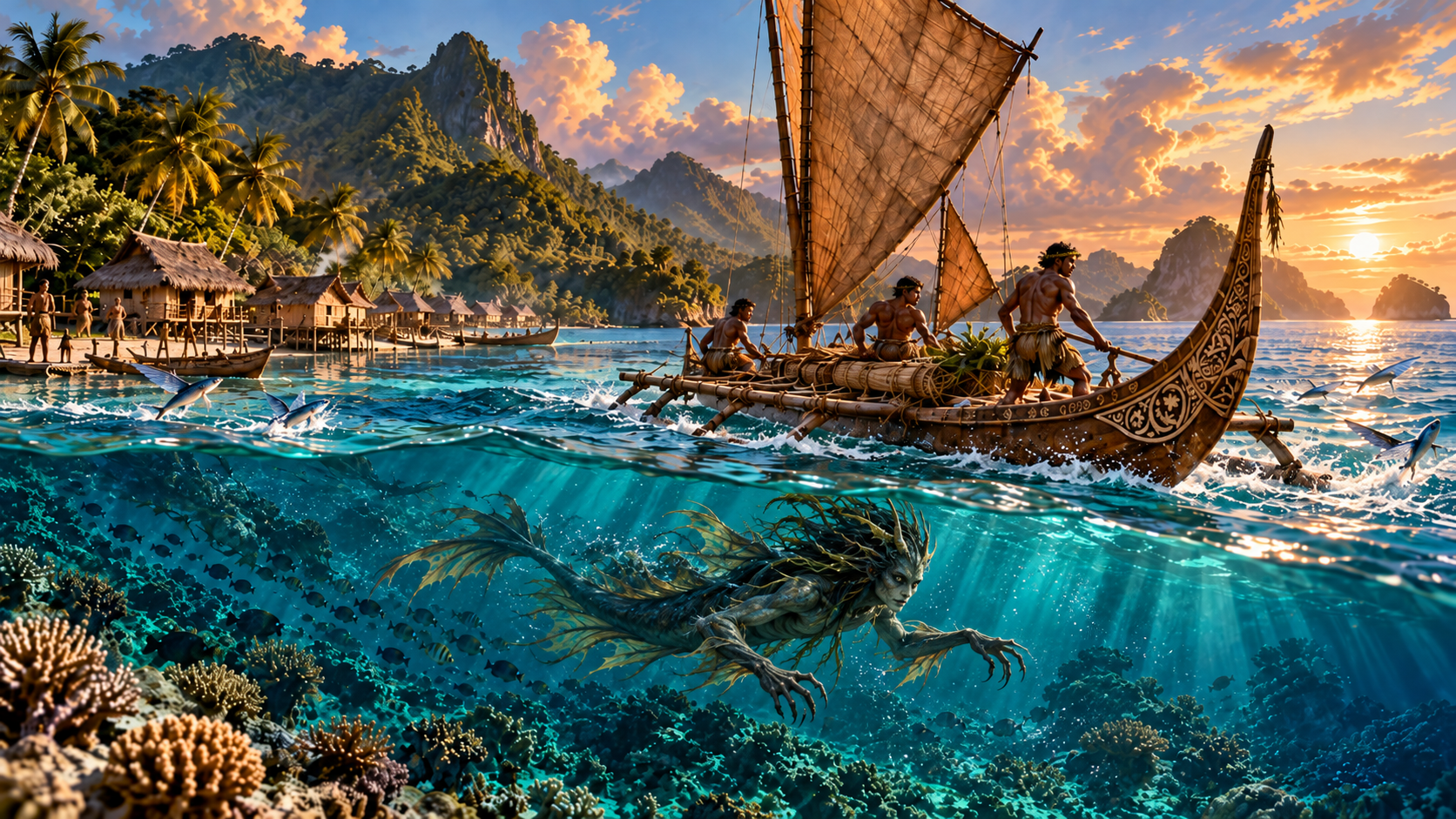
The reef is almost invisible until the sea breaks over it. A lookout in the bow calls a turn; the canoe slips between two dark patches of coral and reaches water smooth enough to reflect the palms. Beyond the beach, a village stands at the foot of a green mountain. Fish dry beside the houses, a builder pares wood for a new paddle, and somebody has begun to beat a drum.
The Solomon Islands lie scattered across a great sweep of the western Pacific. Their shores are linked by canoes, marriages, visits and exchange, but the mountains of Guadalcanal, the lagoons of Malaita, the sea-haunted coast of Makira and the distant voyaging islands of Taumako do not answer to one ruler. A traveller can find hospitality, a shipbuilder, a healer or a hostile reception here. First the traveller must reach the right beach.
At a Glance
| Character | Volcanic islands, forested ridges, working lagoons, coral passages and far-flung sea roads |
|---|---|
| Inhabitants | Many island and coastal peoples, speaking different languages; leadership rests with particular communities and lineages |
| Places | Guadalcanal, Malaita, Makira, New Georgia and Roviana, Santa Cruz and Taumako |
| To travel | Obtain a sound canoe, a competent navigator, water, provisions and knowledge of the intended landfall |
| Trade and crafts | Fish, garden food, timber, canoe-making, shell ornaments and valuables, woven materials and exchanges between neighbouring coasts |
| Dangers | Coral shallows, sudden weather, swollen rivers, warfare in particular waters and the Adaro haunting a reef off Makira |
What Is Happening Right Now?
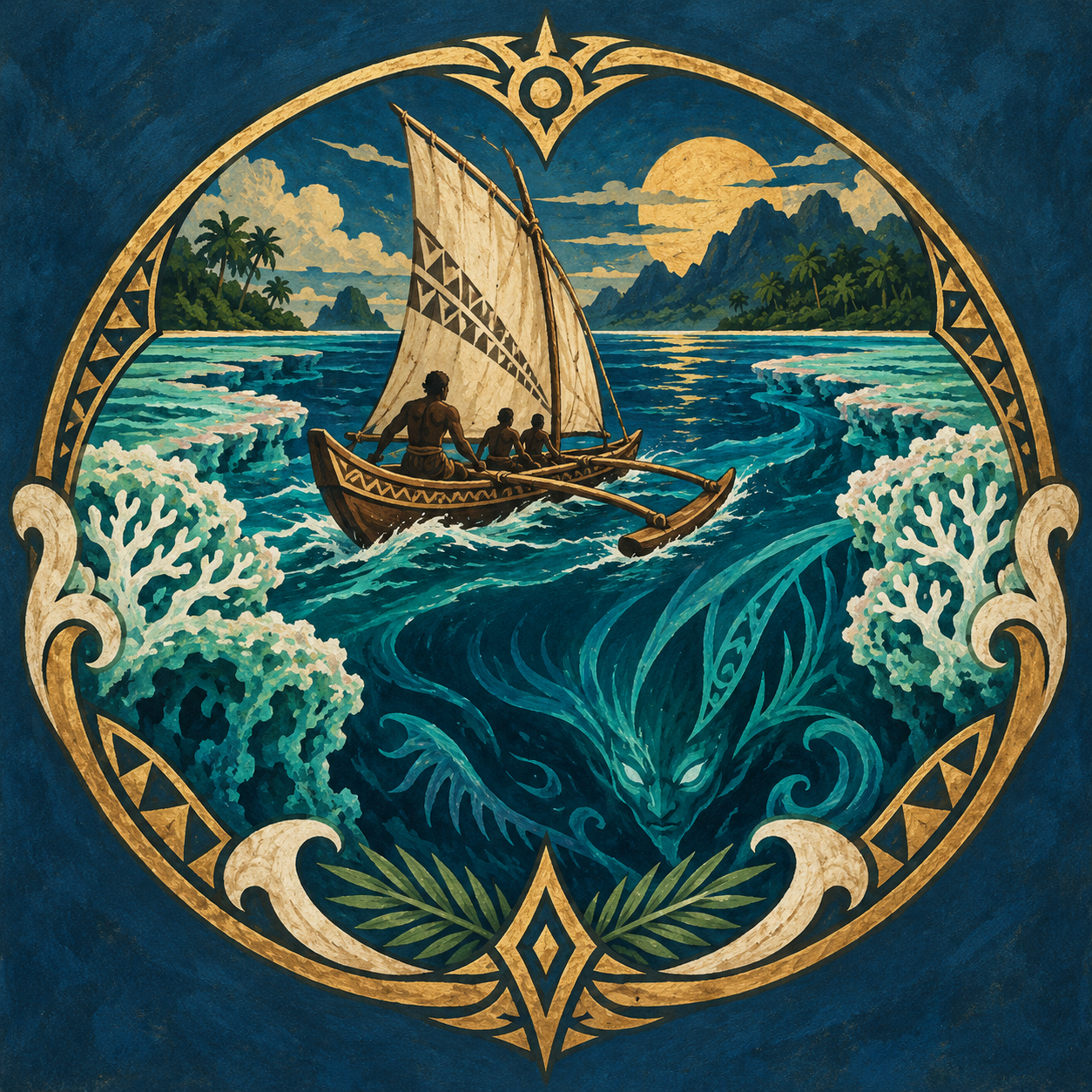
Makira’s fishing passage has gone quiet. Three boats have returned early in the past eight days. One fisherman lies feverish after a flying fish struck him hard enough to pierce his skin. His companions speak of a shape that kept pace with their hull beneath the breakers. The Adaro of the passage is no sailor’s invention. It has begun hunting near the reef, and the households that depend on that water have lost a good part of their catch.
A voyage is being delayed on Taumako. The crew has prepared food and a distant family is expecting its arrival, but the steering gear of the great canoe has split. Its chief builder refuses to launch it in such a condition. The argument has lasted two days, and another change in weather may make the decision for them.
On Malaita, a valuable cargo sits in the mud. Shell-workers and fishermen carrying their goods between shores have grounded in a lagoon channel on a falling tide. Their intended trading partners are already waiting. The crew need light boats and willing hands, not another captain promising to take command.
The Islands and Their Shores
Guadalcanal — the forest above the beach
Guadalcanal rises steeply from a coast of creeks, gardens and beaches into mountainous forest. The sea is the easiest road between distant coastal places; the interior is a harder country of ridges, deep shade and fast-changing streams. A guide who knows one valley may not know the route over the next watershed. After heavy rain, a crossing used in the morning may be waist-deep before nightfall.
For a newly arrived party, the first necessities are fresh water, a safe place to draw a boat above the tide and an introduction to people living on that shore. Food grows in gardens inland, but a vessel carrying strangers does not arrive at an unclaimed storehouse.
Malaita — the shore and the lagoon
Malaita’s western coast opens into sheltered shallows where the passage between reef, mudbank and deeper water is best known by local paddlers. Families fish, cultivate food and make useful things from wood and shell. An exchange may involve catches from the sea, food from the inland gardens, a boat part patiently made, or shell valuables whose importance goes beyond their weight.
Some later periods will know this coast especially for the coral-built islets and celebrated shell-working settlements of Langalanga. Those elaborate settlements have their own history and should not be mistaken for the capital of a timeless island state. In the present sea-country, shallow channels, family ties and the ability to carry goods between shore and lagoon already give the place its character.
Makira — the coast of the Adaro
Makira’s inlets face a restless sea. At Wango and among other communities of the island, accounts of the dead and of dangerous Adaro have long given certain waters a fearful reputation. Fishers know the outer reefs, where the waves break and a canoe can be driven sideways into coral. They also know the marks of an unnatural attack. A fish that leaps clear of the surface is not always merely a fish.
The Adaro now hunting a reef passage has driven boats away from a productive ground. It strikes from the sea, and a wounded man may weaken afterwards even when the wound seems small. Elders disagree on whether it was angered or summoned; none disputes that it is there. Closing the passage protects the next boat but leaves families short of fish. Sending warriors into the water may only give the spirit more victims.
New Georgia and Roviana — the western lagoons
Westward, long chains of reefs shelter bays and island passages. Skilled woodworkers fashion canoes for fishing, transport and, when conflict demands, fighting. Roviana is a place of islands, deep channels and close attention to who can cross them. Some crews have knowledge of war as well as trade. A carved prow, a capable paddle crew and a hull well suited to shallow water are real advantages here.
The famous large tomoko war canoes and some of the chiefly institutions remembered from later centuries have long histories of their own; they are not proof that every settlement has the same customs or that every boat is made for raiding. A stranded traveller is much more likely to need a work canoe than a war vessel.
Santa Cruz and Taumako — the ocean road
The eastern outliers are distant enough that a voyage requires more than a quick look at the horizon. Taumako’s voyaging knowledge survives in the making and sailing of the te puke, a great outrigger vessel of the tradition associated with Lata, the voyaging culture hero. Its crew must be fed, its lashings sound, and its sail and steering gear properly maintained. A canoe is the work of many hands, and preparations can begin in gardens long before anyone touches the timber.
There are sea roads beyond the archipelago, but they are not roads that an outsider can follow simply by keeping land in sight. A navigator reads swell, wind, sky and the marks of approaching islands. A damaged canoe at Taumako is therefore a serious community matter, not an easily replaced object.
Ashore: Food, Shelter and Help
By a sheltered beach, canoe owners draw their craft above the reach of ordinary waves. Fish are cleaned and dried, garden produce is brought down from the slopes, and people work on cordage, paddles and hulls. An outsider may eat and sleep with a household that has agreed to receive them, find a place under a covered work shelter, or remain aboard until someone can make an introduction. A fine coin purse is less useful than good manners and a willingness to carry a load.
A competent woodworker can repair a split paddle or patch a damaged boat; nobody can promise that an ocean canoe will be made ready in an afternoon. For wounds and fever there are people with local knowledge of treatment, though a badly injured visitor may need protection and rest rather than another difficult crossing. A party bringing armour and pack animals will soon discover that both are burdens in boats and on steep forest paths.
Two-Paddle Landing is a small, fictional stopping place on a western lagoon. Naro, a boatbuilder whose canoe transports children and food between shores, is trying to find sound fibre for a repair. His sister, Sela, handles a household’s exchanges with visitors and has promised a passage to another family. Neither will surrender the only working boat to strangers with a grand adventure in mind. Both will remember someone who helped without making the household poorer.
The Dead, the Sea and Other Powers
At Makira the Adaro are bound to accounts of the dead and their dealings with the living. Some haunt the sea; in a recorded tradition, spirits use fish as invisible darts against people travelling the reefs. Rival ghosts may contend over the sick. The island’s Adaro is one manifestation made flesh in this world, with powers dangerous enough to turn ordinary fishermen from their grounds.
Not every island recognises that being or tells the same stories. Around other coasts, ancestors and sacred places have different names and claims; some are known only to the people responsible for them. A shrine, a carved object or a place where a family remembers its dead is part of living society, not an abandoned hoard. Visitors who mistake it for treasure can do lasting harm without meeting a monster at all.
On Taumako, the voyager Lata is remembered through the care and craft of making an ocean vessel. The canoe itself is a marvel: timber, cordage, sail, outriggers, food and generations of knowledge work together to carry people over the horizon. Divine favour is no substitute for the builders or the garden that feeds them.
Journeys from the Landing
Along the lagoon: a small canoe can pass among reefs and villages where a deep-hulled foreign ship would ground. A local pilot is valuable at every change of tide. Fresh water, repairs and food can often be found by arranging a stop with inhabitants, not by counting miles on a chart.
Into the mountains: travel quickly becomes a walking journey. Rain, steep slopes and swollen rivers make light loads and guides indispensable. A sheltered coastal anchorage offers no guarantee of an easy inland crossing.
Across the open sea: from the main islands towards Santa Cruz and Taumako, the crew must plan landfall, wind, provisions and emergency repairs before departure. Bad weather can force a return or a wait of several days. The right canoe and navigator matter more than a sword or a spell.
For neighbouring lands and distant voyages consult Oceania. The Oceania Bestiary collects other dangerous beings of the wider ocean, though their homelands are not interchangeable.
The Canoes of the Islands
The western sea canoe. In the lagoons around New Georgia, long, skilfully joined hulls are worked by coordinated crews. Carved ornament marks the labour of the builder and the standing of those who commissioned a vessel. The powerful tomoko of later Roviana war leaders are famous, but a fisher’s smaller boat is more useful in a narrow passage. Both demand trained hands. Paddlers must agree on a course long before coral appears beneath the bow.
The voyaging canoe of Taumako. The te puke has a substantial outrigger and sailing gear suited to reaching islands beyond easy sight of land. Its lashings, timber, sail and stores represent the work of households, not just one captain. When a crew plans a long departure, families prepare food and materials in advance. Someone who damages a steering paddle has harmed far more than a piece of wood.
An Archipelago Older Than Its Name
The islands were inhabited long before distant foreigners began drawing them on maps. The name Solomon Islands belongs to a later outside tradition; no single island crown or national heraldry held these waters in the earlier era. Settlements, alliances and craft traditions developed differently around the coasts. Many of the famous artificial islets of Langalanga and the best-documented forms of Roviana chiefly warfare are known from substantially later histories. They belong to the living span of the setting’s possible ages, not to a single frozen moment.
Sources
- R. H. Codrington, The Melanesians, chapter XII — an early recorded account of Adaro ghosts around Makira.
- Pei-yi Guo, Birana i Wala — Wala oral history and the growth of Langalanga settlement and shell-working traditions.
- Australian Museum, Tomoko — western Solomon canoe craft, warfare and historical change.
- Vaka Taumako Project, The Art and Craft of a Polynesian Voyaging Canoe — Taumako voyaging skills and the work behind a vessel.
The named people and events at Two-Paddle Landing and the current adventure situations are inventions for the setting. Historical sources are identified because the cultures and folklore of these islands are distinct.
Keep this reference growing
If this page helped with your reading or game, you can support its upkeep or explore the curated books.
Explore the Bookshop — epics, classics and stories behind imagined worlds.