
Transmutation • Shapechanging Magic
Polymorph
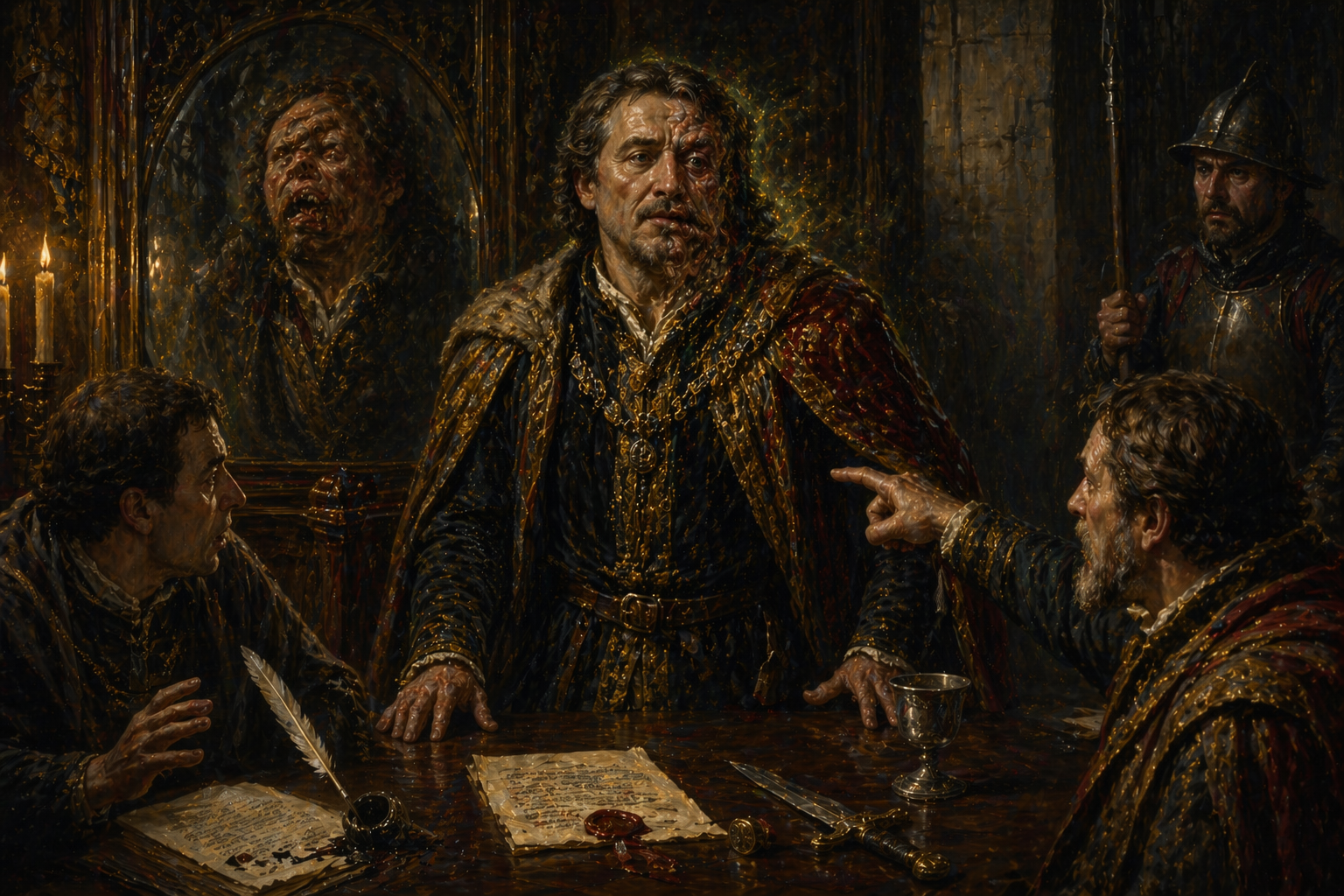
Polymorph is one of the clearest examples of edition drift. D&D 2024 uses a Beast stat block plus Temporary Hit Points, 2014 replaces the target’s statistics and Hit Points with the Beast’s, Pathfinder 1e uses defined form spells, and D&D 3.5e uses the older Hit Dice and creature-type system.
Polymorph at a Glance
| 5.5e / 2024 | 4th-level Transmutation; Bard, Druid, Sorcerer, Wizard; every target makes a Wisdom save; Beast stat block with original HP retained and Beast HP added as Temporary Hit Points |
|---|---|
| 5e / 2014 | 4th-level transmutation; Bard, Druid, Sorcerer, Wizard; unwilling targets save; Beast statistics and Hit Points replace the target’s statistics and HP |
| Pathfinder 1e | Sorcerer/Wizard 5; willing living target; form spells: Beast Shape II for animal or magical beast, Elemental Body I, or Alter Self |
| D&D 3.5e | Sorcerer/Wizard 4; willing living target; physical scores change; form Hit Dice limited by caster/target HD, maximum 15 |
| AD&D legacy: Polymorph Other | Wizard 4, permanent, another creature, saving throw versus Polymorph, System Shock and mentality change risk |
| AD&D legacy: Polymorph Self | Wizard 4, caster only, 2 turns/level, repeated shape changes without System Shock or mental transformation |
Do not mix the editions: an AD&D permanent Polymorph Other curse is not the 2024 Temporary Hit Point effect; Polymorph Self does not grant the physical attacks of 3.5e Polymorph, and Pathfinder uses its explicitly named form-package spells.
Polymorph, Polymorph Other and Polymorph Self
The older Witch spell index preserves the separate Polymorph Other and Polymorph Self names. Their distinct AD&D second-edition mechanics are supplied later on this page and are not silently treated as Pathfinder or 3.5e spells. The four edition tabs immediately below cover the later spell named Polymorph.
Modern and d20 Polymorph rules · Polymorph Other — legacy rules · Polymorph Self — legacy rules
Choose Your Edition
Polymorph — 5.5e / 2024
| Level | 4th |
|---|---|
| School | Transmutation |
| Casting Time | Action |
| Range | 60 feet |
| Components | V, S, M (a caterpillar cocoon) |
| Duration | Concentration, up to 1 hour |
| Saving Throw | Wisdom; every target must save (2024) |
| Classes | Bard, Druid, Sorcerer, Wizard |
Choose a creature you can see within range. In 2024 every target makes the Wisdom saving throw, including a willing creature; on a failure, it shape-shifts into a Beast whose Challenge Rating is no higher than the target’s Challenge Rating, or its level if it has no Challenge Rating.
The Beast stat block replaces the target’s game statistics except for its alignment, personality, creature type, current Hit Points and Hit Point Dice.
The target gains Temporary Hit Points equal to the Beast form’s Hit Points. The spell ends early when those Temporary Hit Points are gone.
The target cannot speak or cast spells. Its gear melds into the form and cannot be used or provide benefits while transformed.
Polymorph — 5e / 2014
| Level | 4th |
|---|---|
| School | Transmutation |
| Casting Time | 1 action |
| Range | 60 feet |
| Components | V, S, M (a caterpillar cocoon) |
| Duration | Concentration, up to 1 hour |
| Saving Throw | Wisdom negates; only an unwilling target saves |
| Classes | Bard, Druid, Sorcerer, Wizard |
Only an unwilling creature makes a Wisdom saving throw in the 2014 spell. The spell has no effect on a shapechanger or a creature at 0 Hit Points.
The new form can be any Beast whose Challenge Rating is no higher than the target’s Challenge Rating, or level if it has no Challenge Rating.
The target’s game statistics, including mental ability scores, are replaced by the Beast’s statistics, while alignment and personality remain.
The target assumes the Beast’s Hit Points. When it reverts, it returns to the Hit Points it had before transforming; excess damage from reducing the Beast form to 0 carries over.
The target cannot speak, cast spells, or perform actions requiring hands or speech. Its equipment melds into the form.
Polymorph — Pathfinder 1e
| School | Transmutation (Polymorph) |
|---|---|
| Level | Sorcerer/Wizard 5 |
| Casting Time | 1 standard action |
| Components | V, S, M (a piece of the creature whose form you choose) |
| Range | Touch |
| Target | One willing living creature |
| Duration | 1 minute/level (D) |
| Saving Throw | Will negates (harmless) |
| Spell Resistance | Yes (harmless) |
Choose an animal, magical beast, humanoid or elemental form. The spell does not hand the subject the creature’s full stat block; it delegates to another polymorph spell:
- Animal or magical beast: Beast Shape II, granting only abilities permitted by that spell.
- Elemental: Elemental Body I.
- Humanoid: Alter Self.
The subject can resume its normal form as a full-round action, ending the spell for itself.
Polymorph — D&D 3.5e
| School | Transmutation |
|---|---|
| Level | Sorcerer/Wizard 4 |
| Casting Time | 1 standard action |
| Components | V, S, M (an empty cocoon) |
| Range | Touch |
| Target | One willing living creature |
| Duration | 1 minute/level (D) |
| Saving Throw | None |
| Spell Resistance | No |
The spell functions like Alter Self but permits a wider list of living creature types. The assumed form cannot have more Hit Dice than the caster level or subject’s Hit Dice, whichever is lower, and is capped at 15 Hit Dice.
The subject gains the form’s Strength, Dexterity and Constitution scores while keeping its own Intelligence, Wisdom and Charisma.
It gains extraordinary special attacks of the form but not extraordinary special qualities, supernatural abilities or spell-like abilities.
Changing form restores lost Hit Points as if the subject had rested for a night, but does not provide the other benefits of rest.
Polymorph Other — Original AD&D Legacy Spell
Historical spell, not a replacement for the four-edition Polymorph tabs. This is a practical reference to the separate 4th-level AD&D second-edition Wizard spell (1990s Player’s Handbook). Its saving throws, System Shock and mentality rules are not used automatically in D&D 3.5e, Pathfinder 1e, 2014 or 2024. Campaign Witches may use this older spell only if their Games Master has adopted the legacy Witch-list entry.
| Edition / Class | AD&D 2e — Wizard 4 (legacy Witch 4 only by campaign permission) |
|---|---|
| School | Alteration |
| Casting Time | 4 (segments, using AD&D 2e spell-casting time conventions) |
| Range | 5 yards per caster level |
| Components | V, S, M (a caterpillar cocoon) |
| Area of Effect | One creature |
| Duration | Permanent until reversed or dispelled, subject to the original rules |
| Saving Throw | Saving throw versus Polymorph negates |
| Additional Risk | System Shock check on transformation, then daily personality and mentality checks |
Transformation. On a failed save, the target transforms into a creature chosen by the caster. It must survive the AD&D System Shock roll based on its Constitution; failure can be fatal. While its original mentality remains intact, it keeps its original Hit Points and saving throws, but acquires the new shape’s ordinary physical form, movement and natural attack routines. This does not grant unrestricted spell-like abilities, energy drains, magical breath or a new character class. Equipment merges into the body; the ability to cast spells depends on whether the new shape can perform the required components.
Mind at risk. Each day the subject may mentally become the assumed creature rather than retaining its original personality. The historical rule sets the number of successful results on a d20 as 20 − original Intelligence + (new form’s Hit Dice − original Hit Dice), adjusted to the possible d20 results. If this change occurs, the being takes on the new form’s identity and fuller abilities, generally becoming controlled by the GM until appropriate powerful magic restores its former mind. The daily check is an important danger of Polymorph Other, not part of Polymorph Self.
Ending and counterplay. A suitable Dispel Magic can restore the original shape, with the source’s additional System Shock consequences; undoing an assumed identity can require stronger magic. Natural shapeshifters can generally restore themselves after a round. A creature slain in its new shape reverts, but remains dead. The spell cannot produce a noncorporeal form.
Worked example. A 9th-level Wizard has a range of 45 yards. A 4-HD creature with Intelligence 12 is changed to a 2-HD animal and survives System Shock. The daily personality-change chance is 20 − 12 + (2 − 4) = 6 results in 20, or 30%. It continues to make that check each day until it changes mentally or the transformation is removed. Use the original edition’s Constitution/System Shock table, not a modern Constitution saving-throw DC.
Primary historical reference: AD&D 2e Wizard Alteration spell list — Polymorph Other.
Polymorph Self — Original AD&D Legacy Spell
Separate historical 4th-level AD&D second-edition Wizard spell. The caster changes only themself, and this version has neither the unwilling-target save nor the personality-loss/System Shock mechanics of Polymorph Other. Campaign Witch 4 availability is an adopted legacy-list option, not Pathfinder or D&D 3.5e official access.
| Edition / Class | AD&D 2e — Wizard 4 (legacy Witch 4 only by GM permission) |
|---|---|
| School | Alteration |
| Casting Time | 4 |
| Range / Target | 0 / caster only |
| Components | V only |
| Duration | 2 turns per caster level (in AD&D, a turn is ten minutes) |
| Saving Throw | None |
| Changing Form | As often as desired during duration, one round per change |
| Recovery | Voluntary return to original shape when ending the spell restores 1d12 Hit Points |
Effect. The caster may assume a corporeal creature’s outward form, from a tiny bird to a large animal, gaining its normal way of moving and breathing. The new shape does not grant the form’s unusual attacks, offensive or defensive magical powers, or specialised senses. Hit Points, attack rolls, saving throws and mental abilities remain those of the caster. Gear melds into the new form; spells can still be cast only if their components can actually be performed or provided. Returning from a bird shape does not grant a bird’s special eyesight, and assuming a monster shape does not automatically give that monster’s breath weapon.
Repeatable shifts. The caster can change to another form once per round until the spell ends. A voluntary return to their own body ending the spell restores 1d12 Hit Points. Returning because of death or dispelling does not grant this healing; a slain caster remains dead. There is no System Shock roll and no progressive loss of personality in this spell.
Worked example. An 8th-level Wizard has a duration of 16 turns, or 160 minutes. The Wizard becomes an owl to fly above a watchtower, then takes another round to shift into a small land creature to pass through a narrow opening. The Wizard keeps their own Hit Points and does not gain the owl’s specialised vision or other abilities. If the Wizard voluntarily ends the spell and resumes their original body, roll 1d12 Hit Points restored as the original rule directs.
Primary historical reference: AD&D 2e Player’s Handbook — Polymorph Self.
What Changed?
- 2024: the target keeps its original Hit Points and gains the Beast’s Hit Points as Temporary Hit Points.
- 2014: the Beast form replaces the target’s Hit Points and almost all game statistics, including mental ability scores.
- PF1e: moves to a form-package system rather than replacing the subject with an entire creature stat block.
- D&D 3.5e: uses creature types and Hit Dice limits, with physical ability scores replaced but mental scores retained.
Using Polymorph in Play
Choosing the Form
Decide the legal form first. In 2024 and 2014, select a Beast stat block whose Challenge Rating does not exceed the target’s CR or character level. In Pathfinder, select the creature shape and apply only the statistics granted by the relevant Beast Shape II, Elemental Body I or Alter Self rules. In 3.5e, check eligible types and the smaller of the caster’s level and the subject’s Hit Dice, with a cap at 15 Hit Dice.
Do not mix Hit Point systems. The 2024 spell retains the target’s current Hit Points and gives the Beast’s listed HP as Temporary Hit Points. In 2014, it uses the Beast form’s HP pool and excess damage can carry over on reversion. Neither rule is used for historical AD&D Polymorph Self or Other.
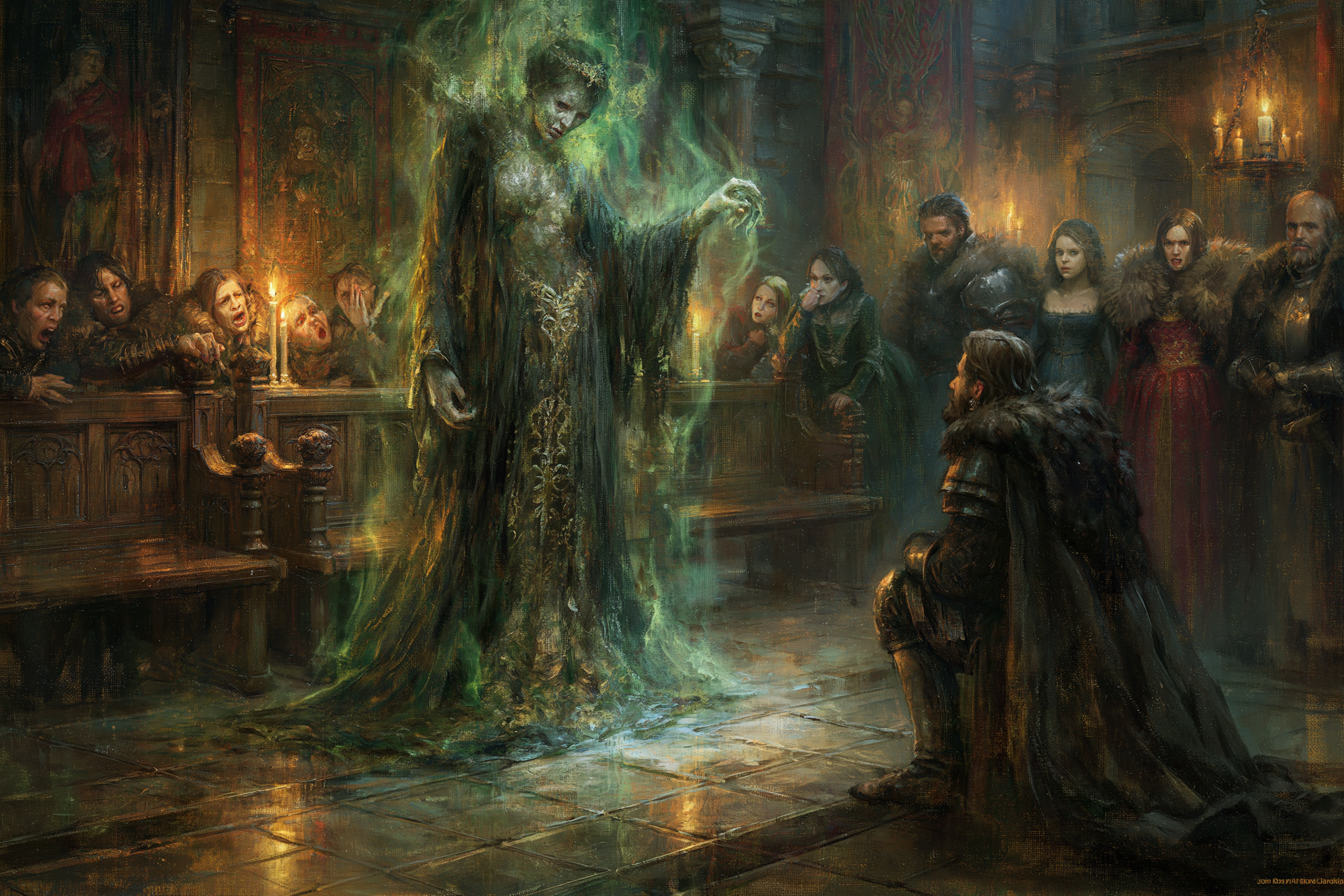
Worked Example: The Watchtower Pursuit
A level-7 adventurer with 27 current Hit Points needs a swift Beast form to reach a fleeing enemy. The caster selects a legal Beast stat block with a listed 42 Hit Points; the exact attack, movement and physical scores depend on the chosen stat block, not on an invented generic creature.
| 5.5e / 2024 | After a failed Wisdom save, even if the target is willing, the adventurer keeps 27 actual HP and gains 42 Temporary HP. When those Temporary HP are depleted, Polymorph ends. Use the Beast stat block for other replaced statistics; no separate 42-HP form pool exists. |
|---|---|
| 5e / 2014 | The willing adventurer doesn’t need the spell’s unwilling-target save, and receives a 42-HP Beast form while their underlying 27 HP are set aside. If the form takes 47 damage, the excess 5 damage transfers to the original body on reversion, leaving 22 HP if no other effects intervene. |
| Pathfinder 1e | A caster level-9 Sorcerer touches a willing creature and chooses an animal or magical-beast form granted by Beast Shape II, for 9 minutes. Use the relevant form package’s size, movement, enhancements and permitted abilities—not 42 Beast HP from another edition. |
| D&D 3.5e | A caster level-9 Wizard changes a willing 8-HD ally. The new form can have no more than 8 HD (the lower of 9 caster levels and 8 target HD). It inherits permitted physical ability scores and extraordinary attacks, not the 2024 Temporary Hit Point model. |
Counterplay and Form Restrictions
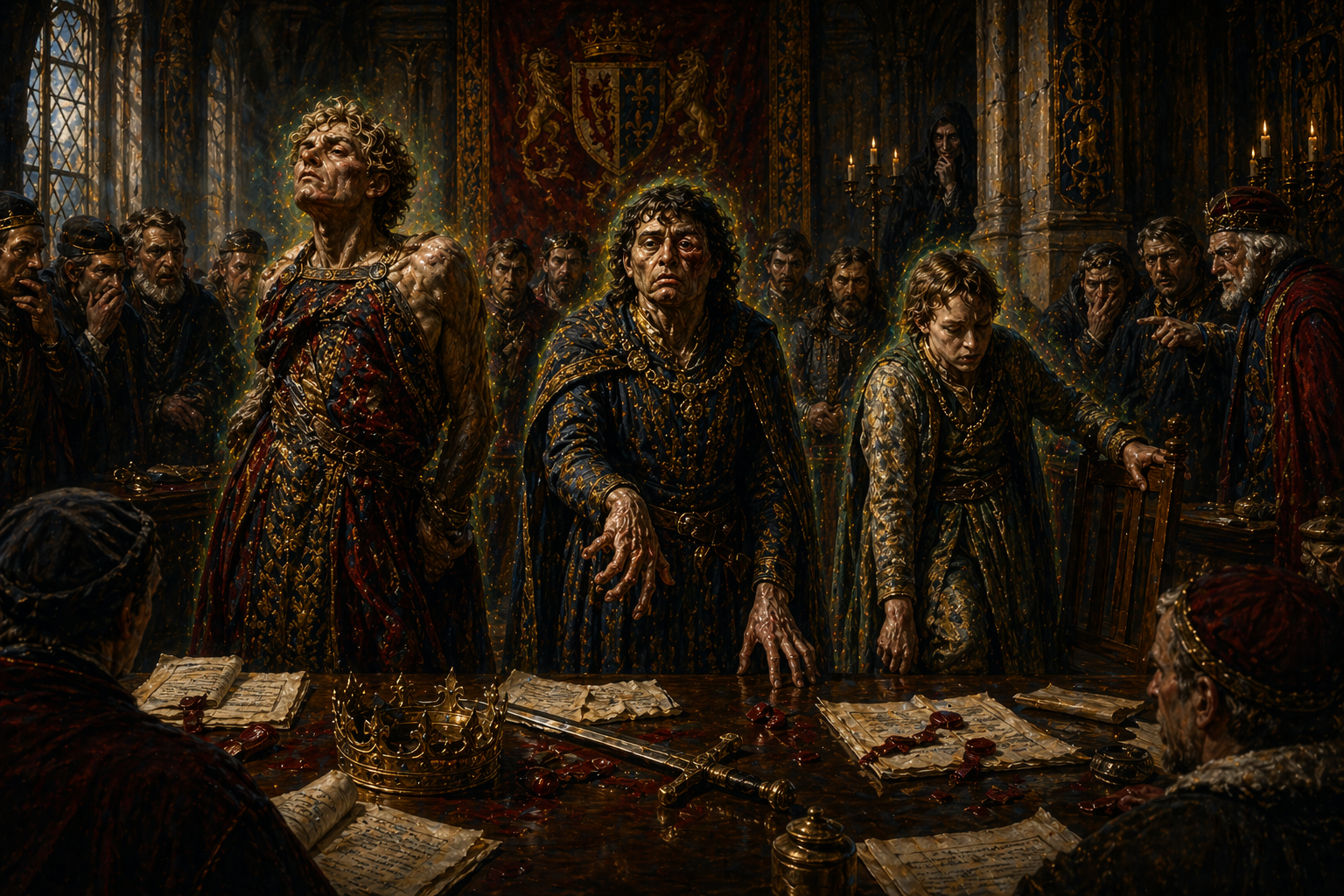
Visible clue. The target takes on a new bodily outline, gait, breathing and movement. Altered gear becomes unusable while melded into the form. Observers can notice the change if present during casting.
Dispel or break concentration. Dispel Magic can end an eligible ongoing spell; fifth-edition Concentration may be disrupted by damage or another Concentration spell. A transformed 2024 subject also reverts when it has no Temporary Hit Points remaining.
Target eligibility. Pathfinder and 3.5e versions require a willing living subject, while the modern versions can attempt to transform a hostile creature. The older Polymorph Other instead uses its own AD&D saving throw and risks System Shock; Polymorph Self always targets the caster.
Mythical Context
In Homer’s Odyssey Book 10, the enchantress Circe transforms Odysseus’s companions into swine, but their human minds remain aware of the indignity. Her potion and wand evoke the distinction between outward change and inward identity—a distinction that becomes vital when deciding whether a spell affects a subject’s personality or only its body. Homer, Odyssey 10 — Circe and the transformed companions.
Later accounts of Proteus, who repeatedly changes shape to evade a questioner, offer a different model: self-directed transformation rather than a curse placed upon an unwilling victim. Proteus, the changing sea-god — ancient accounts.
Historical Context
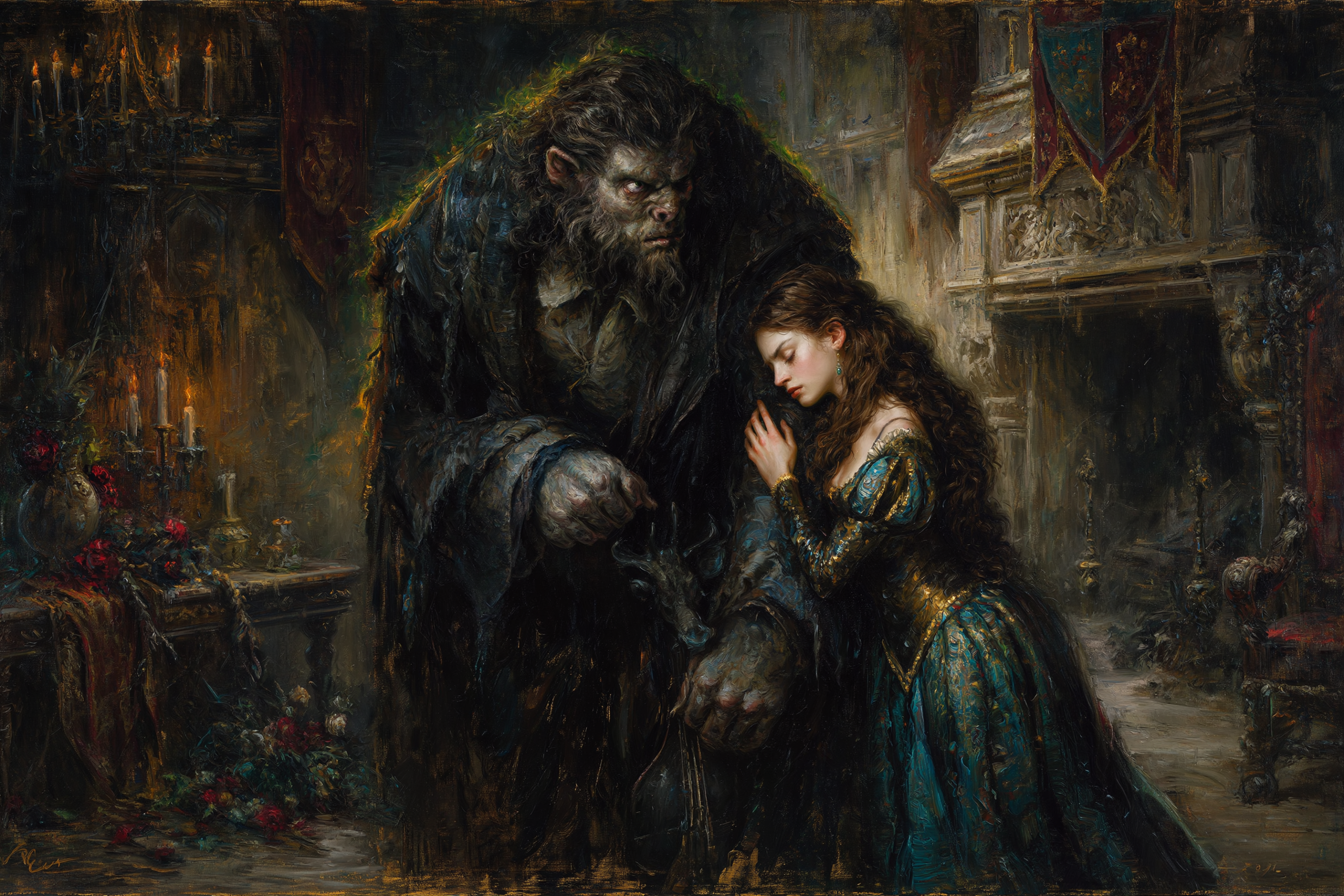
Stories of transformation were collected, copied and illustrated long before tabletop roleplaying rules existed. A surviving medieval manuscript of Ovid’s Metamorphoses, copied in southern Italy around the eleventh century, demonstrates the continuing fascination with characters whose identities are altered by supernatural powers. Printed illustrated editions carried those stories further into early modern Europe.
Library of Congress — medieval Neapolitan manuscript of Ovid’s Metamorphoses · National Gallery of Art — transformation imagery in Ovid’s reception. These are literary and artistic sources, not historical evidence of actual magical shapechanging.
Related Magic
- Alter Self — a foundation for the legacy polymorph family.
- Shapechange — higher-level transformation magic.
- True Polymorph — the modern 9th-level counterpart when that page is available.
- Bard Spells — fifth-edition Bard access.
- Druid Spells — fifth-edition Druid access.
Counterplay and Rulings
- Concentration: in fifth edition, breaking concentration ends the spell.
- Dispel Magic: can end an ongoing Polymorph effect under the active edition’s normal rules.
- Form legality: use only creatures and transformation packages legal in the chosen edition; do not mix 2024, 2014, Pathfinder and 3.5e form rules.
- Hit Points: 2024 Temporary Hit Points and 2014 replacement Hit Points are different systems and must not be combined.
Rules Sources and Licensing
D&D 5.5e / 2024: Polymorph — D&D 2024, SRD 5.2.1. D&D 5e / 2014: Polymorph — SRD 5.1. Both are published fourth-level Transmutation spells, but the Temporary Hit Points model and the target’s saving-throw conditions differ. The D&D SRD 5.2.1 and 5.1 material is made available under Creative Commons Attribution 4.0; see the official SRD documents. Edition rules and examples have been edited and reformatted.
Pathfinder 1e: Polymorph — Pathfinder Core Rulebook, Sorcerer/Wizard 5, whose form choices use Beast Shape II, Elemental Body I or Alter Self. D&D 3.5e: Polymorph — D&D 3.5 SRD, Sorcerer/Wizard 4, with permitted form types and Hit Dice restrictions. These published d20 mechanics are Open Game Content under OGL v1.0a; the complete licence and applicable inherited notices are below.
Separate historical spells, not open-licence reproductions: Polymorph Other and Polymorph Self are fourth-level AD&D 2e Player’s Handbook spells, not spells present in the later SRD lists under those names. Their mechanics are summarized for rules comparison and campaign reference; the original AD&D published prose is not designated as OGL or Creative Commons content. The historical Witch class association is treated as campaign-optional and does not establish official Witch access in newer editions.
Open Game Content designation: the Pathfinder 1e and D&D 3.5e SRD mechanics are used in accordance with OGL 1.0a. This page’s images, campaign examples, original explanatory passages, mythic/historical essays and AD&D source quotations/identification are not newly designated as third-party Open Game Content.
Open Game License v1.0a and copyright notices
Permission to copy, modify and distribute the files collectively known as the System Reference Document (“SRD”) is granted solely through the use of the Open Gaming License, Version 1.0a.
This material is being released using the Open Gaming License Version 1.0a and you should read and understand the terms of that license before using this material.
The text of the Open Gaming License itself is not Open Game Content. Instructions on using the License are provided within the License itself.
The following items are designated Product Identity, as defined in Section 1(e) of the Open Game License Version 1.0a, and are subject to the conditions set forth in Section 7 of the OGL, and are not Open Content: Dungeons & Dragons, D&D, Player’s Handbook, Dungeon Master, Monster Manual, d20 System, Wizards of the Coast, d20 (when used as a trademark), Forgotten Realms, Faerûn, proper names (including those used in the names of spells or items), places, Red Wizard of Thay, the City of Union, Heroic Domains of Ysgard, Ever-Changing Chaos of Limbo, Windswept Depths of Pandemonium, Infinite Layers of the Abyss, Tarterian Depths of Carceri, Gray Waste of Hades, Bleak Eternity of Gehenna, Nine Hells of Baator, Infernal Battlefield of Acheron, Clockwork Nirvana of Mechanus, Peaceable Kingdoms of Arcadia, Seven Mounting Heavens of Celestia, Twin Paradises of Bytopia, Blessed Fields of Elysium, Wilderness of the Beastlands, Olympian Glades of Arborea, Concordant Domain of the Outlands, Sigil, Lady of Pain, Book of Exalted Deeds, Book of Vile Darkness, beholder, gauth, carrion crawler, tanar’ri, baatezu, displacer beast, githyanki, githzerai, mind flayer, illithid, umber hulk, yuan-ti.
All of the rest of the SRD is Open Game Content as described in Section 1(d) of the License.
More information on the Open Game License can be found at www.wizards.com/d20.
The terms of the Open Gaming License Version 1.0a are as follows:
OPEN GAME LICENSE Version 1.0a
The following text is the property of Wizards of the Coast, Inc. and is Copyright 2000 Wizards of the Coast, Inc (“Wizards”). All Rights Reserved.
1. Definitions: (a)”Contributors” means the copyright and/or trademark owners who have contributed Open Game Content; (b)”Derivative Material” means copyrighted material including derivative works and translations (including into other computer languages), potation, modification, correction, addition, extension, upgrade, improvement, compilation, abridgment or other form in which an existing work may be recast, transformed or adapted; (c) “Distribute” means to reproduce, license, rent, lease, sell, broadcast, publicly display, transmit or otherwise distribute; (d)”Open Game Content” means the game mechanic and includes the methods, procedures, processes and routines to the extent such content does not embody the Product Identity and is an enhancement over the prior art and any additional content clearly identified as Open Game Content by the Contributor, and means any work covered by this License, including translations and derivative works under copyright law, but specifically excludes Product Identity. (e) “Product Identity” means product and product line names, logos and identifying marks including trade dress; artifacts; creatures characters; stories, storylines, plots, thematic elements, dialogue, incidents, language, artwork, symbols, designs, depictions, likenesses, formats, poses, concepts, themes and graphic, photographic and other visual or audio representations; names and descriptions of characters, spells, enchantments, personalities, teams, personas, likenesses and special abilities; places, locations, environments, creatures, equipment, magical or supernatural abilities or effects, logos, symbols, or graphic designs; and any other trademark or registered trademark clearly identified as Product identity by the owner of the Product Identity, and which specifically excludes the Open Game Content; (f) “Trademark” means the logos, names, mark, sign, motto, designs that are used by a Contributor to identify itself or its products or the associated products contributed to the Open Game License by the Contributor (g) “Use”, “Used” or “Using” means to use, Distribute, copy, edit, format, modify, translate and otherwise create Derivative Material of Open Game Content. (h) “You” or “Your” means the licensee in terms of this agreement.
2. The License: This License applies to any Open Game Content that contains a notice indicating that the Open Game Content may only be Used under and in terms of this License. You must affix such a notice to any Open Game Content that you Use. No terms may be added to or subtracted from this License except as described by the License itself. No other terms or conditions may be applied to any Open Game Content distributed using this License.
3.Offer and Acceptance: By Using the Open Game Content You indicate Your acceptance of the terms of this License.
4. Grant and Consideration: In consideration for agreeing to use this License, the Contributors grant You a perpetual, worldwide, royalty-free, non-exclusive license with the exact terms of this License to Use, the Open Game Content.
5.Representation of Authority to Contribute: If You are contributing original material as Open Game Content, You represent that Your Contributions are Your original creation and/or You have sufficient rights to grant the rights conveyed by this License.
6.Notice of License Copyright: You must update the COPYRIGHT NOTICE portion of this License to include the exact text of the COPYRIGHT NOTICE of any Open Game Content You are copying, modifying or distributing, and You must add the title, the copyright date, and the copyright holder’s name to the COPYRIGHT NOTICE of any original Open Game Content you Distribute.
7. Use of Product Identity: You agree not to Use any Product Identity, including as an indication as to compatibility, except as expressly licensed in another, independent Agreement with the owner of each element of that Product Identity. You agree not to indicate compatibility or co-adaptability with any Trademark or Registered Trademark in conjunction with a work containing Open Game Content except as expressly licensed in another, independent Agreement with the owner of such Trademark or Registered Trademark. The use of any Product Identity in Open Game Content does not constitute a challenge to the ownership of that Product Identity. The owner of any Product Identity used in Open Game Content shall retain all rights, title and interest in and to that Product Identity.
8. Identification: If you distribute Open Game Content You must clearly indicate which portions of the work that you are distributing are Open Game Content.
9. Updating the License: Wizards or its designated Agents may publish updated versions of this License. You may use any authorized version of this License to copy, modify and distribute any Open Game Content originally distributed under any version of this License.
10. Copy of this License: You MUST include a copy of this License with every copy of the Open Game Content You Distribute.
11. Use of Contributor Credits: You may not market or advertise the Open Game Content using the name of any Contributor unless You have written permission from the Contributor to do so.
12. Inability to Comply: If it is impossible for You to comply with any of the terms of this License with respect to some or all of the Open Game Content due to statute, judicial order, or governmental regulation then You may not Use any Open Game Material so affected.
13. Termination: This License will terminate automatically if You fail to comply with all terms herein and fail to cure such breach within 30 days of becoming aware of the breach. All sublicenses shall survive the termination of this License.
14. Reformation: If any provision of this License is held to be unenforceable, such provision shall be reformed only to the extent necessary to make it enforceable.
15. COPYRIGHT NOTICE
Open Game License v 1.0a Copyright 2000, Wizards of the Coast, Inc.
System Reference Document Copyright 2000-2003, Wizards of the Coast, Inc.; Authors Jonathan Tweet, Monte Cook, Skip Williams, Rich Baker, Andy Collins, David Noonan, Rich Redman, Bruce R. Cordell, John D. Rateliff, Thomas Reid, James Wyatt, based on original material by E. Gary Gygax and Dave Arneson.
Pathfinder Roleplaying Game Core Rulebook. © 2009, Paizo Publishing, LLC; Author: Jason Bulmahn, based on material by Jonathan Tweet, Monte Cook, and Skip Williams.
END OF LICENSE
Keep this reference growing
If this page helped with your reading or game, you can support its upkeep or explore the curated books.
Explore the Bookshop — epics, classics and stories behind imagined worlds.