
Grotesque Polymorph spell, “Curse of the Warped Flesh”
Grotesque Polymorph spell, “Curse of the Warped Flesh”
A cruel transmutation curse that twists living flesh into a distorted, burdened shadow of its natural form.
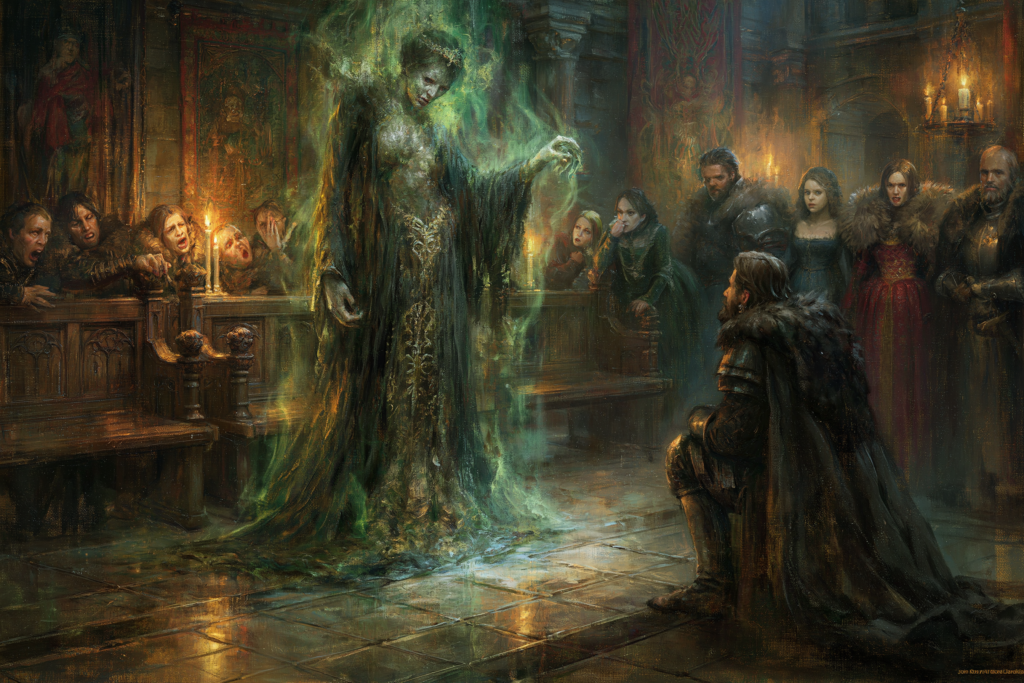
Magic does not always destroy the body by burning it, breaking it, or turning it into something else. Some spells are crueller because they leave the victim recognisably themselves, yet twisted into a form that makes movement painful, presence difficult, and every public appearance a wound.
Overview
The Grotesque Polymorph spell is a severe transformation curse used to ruin strength, grace, bearing, and social authority without killing the victim outright. Unlike ordinary polymorph magic, it does not turn the target into a beast or replace their body with a new creature form. Instead, it reshapes the victim into a warped version of themselves, bending posture, thickening features, twisting balance, and burdening the body with visible magical wrongness.
The spell is feared because its cruelty remains visible. A warrior may survive the casting but find their sword-arm stiffened and their stride ruined. A courtier may keep their title but lose the ease, charm, and public confidence on which their influence depends. A tyrant may still sit on the throne, yet find every audience darkened by revulsion, pity, or fear.
This is not a simple cosmetic curse. The Grotesque Polymorph spell imposes real physical and social penalties, and its permanence makes it a weapon of exile, humiliation, punishment, and political revenge. Those who survive it often become living proof that some arcane punishments are designed to continue long after the battle ends.
Editions
Grotesque Polymorph 5.5e / 2024
Grotesque Polymorph spell Pathfinder 1e / 3.5e
Grotesque Polymorph spell 3.5
Grotesque Polymorph spell
8th-Level Transmutation
Casting Time: 1 action
Range: 100 feet
Components: V, S, M
Material Component: A lock of hair, nail clipping, or similar bodily fragment taken from a naturally misshapen creature, and an insect crushed during the casting
Duration: Permanent
Saving Throw: Constitution
Available To: Sorcerer, Wizard, Witch, Satire
Alternative Spell Name: Curse of the Warped Flesh
Effect
You attempt to grotesquely transform up to three creatures within range. Each target must make a Constitution saving throw. On a failed save, the target’s body is permanently warped into a distorted version of itself.
The target does not become a different creature. It retains its memories, statistics, equipment, languages, class features, and general body plan, but its form is altered by magical distortion chosen by the caster.
When you cast the spell, choose one of the following severity levels. All affected targets suffer the same severity, though the visible form of the distortion may differ from target to target.
Minor Distortion
The target suffers a visible but limited magical deformity, such as warped skin, distorted facial features, asymmetrical posture, twisted hands, or other marks of unnatural transformation.
The target takes a -2 penalty to Charisma checks and has disadvantage on Charisma checks made to make a good first impression.
Severe Distortion
The target’s body becomes heavily warped. Its balance, coordination, posture, or bearing is visibly damaged by the spell.
Choose two of the following: Strength checks, Dexterity checks, or Charisma checks. The target takes a -2 penalty to both chosen types of checks.
In addition, the target’s speed is reduced by 10 feet.
Ruinous Distortion
The target is transformed into a deeply warped version of itself. Movement, expression, posture, and social presence are all damaged by the curse.
The target takes a -2 penalty to Strength checks, Dexterity checks, and Charisma checks.
In addition, the target’s speed is reduced by 10 feet, and the target has disadvantage on Charisma checks made to influence creatures that can clearly see it.
Social Aversion
A creature affected by Grotesque Polymorph carries an unnatural aura of aversion. This is not merely ugliness. The spell gives the body a sense of magical wrongness that unsettles ordinary observers.
Creatures that can clearly see the target begin social interactions one step less friendly than they otherwise would, unless they already know the target well or have a strong reason to ignore the transformation. This effect should be adjudicated by the DM and should not override loyalty, love, duty, fear, faith, or strong existing relationships.
This social aversion stacks with any Charisma penalty or disadvantage caused by the spell.
Limits of the Transformation
The target remains the same creature type and retains its normal game statistics except where this spell specifically changes them.
Grotesque Polymorph does not grant natural weapons, special senses, armour, flight, swimming speed, burrowing speed, or other new creature traits. The DM may allow cosmetic changes that suggest such features, but they provide no mechanical benefit.
The transformation is permanent until removed.
Ending the Spell
The spell can be ended by wish without question. It can also be ended by dispel magic, greater restoration, remove curse, break enchantment, limited wish, miracle, or similar magic, but only if that magic overcomes the strength of the original casting.
Because Grotesque Polymorph is a permanent 8th-level transformation, ordinary removal should not be automatic. A caster using lower-level restorative or dispelling magic must succeed on a spellcasting ability check against the original spell save DC. On a failure, the magic does not remove the transformation, though it may reveal the nature of the curse, identify the spell, or briefly soften its visible effects.
For a more dramatic campaign, the DM may require one meaningful act of restoration before the spell can be removed: recovering the original caster’s focus, obtaining a confession from the one who ordered the curse, performing a rite at a sacred spring, or casting the counter-magic with a fragment of the victim’s former body. This keeps the curse serious without making it hopeless.
Grotesque Polymorph spell
School: Transmutation; Subschool: Polymorph
Level: Sorcerer/Wizard 8, Witch 8, Satire 8
Components: V, S, M
Casting Time: 1 standard action
Range: Medium, 100 ft. + 10 ft./level
Targets: Up to three living creatures, no two of which may be more than 30 feet apart
Duration: Permanent
Saving Throw: Fortitude negates
Spell Resistance: Yes
On a failed Fortitude save, each target is transformed into a grotesquely distorted version of itself. The target does not become a different creature, but its body is magically warped in a way that damages its strength, balance, bearing, appearance, or social presence.
When the spell is cast, the caster chooses how many creatures are being targeted. This choice determines the maximum penalty each failed target can suffer.
| Number of Creatures Targeted | Maximum Total Penalty Per Failed Target |
|---|---|
| 1 creature | Up to -12 total |
| 2 creatures | Up to -6 total each |
| 3 creatures | Up to -4 total each |
The caster divides each target’s penalty among Strength, Dexterity, and Charisma. The chosen distribution must be the same for every failed target, though the visible form of the distortion may differ from creature to creature.
For example, if the caster targets three creatures, the maximum penalty for each failed target is -4 total. The caster might choose -2 Strength and -2 Charisma, or -4 Dexterity, or -1 Strength, -1 Dexterity, and -2 Charisma. Every failed target suffers that same distribution.
These penalties are permanent magical ability-score penalties, not ability damage or ability drain. They do not heal naturally, cannot be removed by ordinary healing magic, and cannot reduce any ability score below 3.
In addition to the ability-score penalties, each affected creature suffers a visible aura of magical aversion. Whenever the creature’s altered appearance is relevant and visible, NPC reactions toward it shift one step closer to hostile. This reaction shift stacks with any Charisma penalty caused by the spell, but it should not override strong loyalty, fear, duty, love, or established allegiance.
The spell ends if the target dies, at which point the body returns to its natural form.
Grotesque Polymorph can also be removed by wish or miracle without question. It may be removed by dispel magic, break enchantment, remove curse, limited wish, or similar magic, but only if the caster succeeds on the appropriate caster level check or dispel check against the original spell. Because this is an 8th-level permanent transmutation, the DM should not allow low-level removal magic to end it automatically.
For a more story-driven campaign, the DM may require a specific restorative condition before the curse can be fully undone, such as recovering the caster’s focus, obtaining a fragment used in the original casting, performing a rite at a sacred spring, or securing a confession from the one who ordered the transformation.
Grotesque Polymorph
This special variant of the Polymorph-others spell, changes several creatures into misshapen forms of themselves. The subjects of this spell not only become ugly, but also get impediments from their deformities.
Celtic Druids and the Tuatha de Dannan
By Dominique Crouzet
Transmutation
Level: Sorcerer/Wizard 8, Witch 8, Satire 8
Components: V, S, M
Casting Time: 1 action
Range: Medium (100 ft. + 10 ft./level).
Targets: Up to three creature, no two of whom can be more than 30 ft. apart.
Duration: Permanent
Saving Throw: Fortitude negates
Spell Resistance: Yes
Upon casting the spell, you must determine what kind of deformities your targets will get, and how much it will hinder them. It can be as lenient as getting a few warts on the nose, to grievous as being changed into a club-footed hunchbacked midget with a snarling distorted face. Then, the deformities inflicted will incur impediments and penalties upon the subjects of the spell.
As such you can determine a loss of -2 to -12 points of ability scores among Strength, Dexterity, and Charisma of the targets. The amount and distribution of this loss is determined by yourself, but should match the deformities suffered. For instance, a few warts on the nose would incur a -2 loss of Charisma; while being changed into a club-footed hunchbacked midget with a snarling distorted face, may incur a loss of 4 points of Strength, dexterity, and Charisma each.
Note that this loss must be the same for all the targets, although the deformities they gain may be different. Also, the maximum loss of points is 12, whether there are one, two, or three targets. That is, three targets would loose up to only 4 points of ability score each, while a single target may loose up to 12 points. No ability score may be lowered under 3 by use of this spell.
Otherwise, this spell incurs a secondary effect. The targets· grotesque appearance will now induce aversion in others. That is, from that time on, all reaction rolls concerning the targets will be shifted one factor closer to a ·Hostile Attitude· reaction. Note this is independent from the eventual loss of Charisma points due to the spell, and add to it if any.
Like other polymorph spells, the subjects of this spell return to normal upon death, or through the use of a successful Dispel-magic spell.
Arcane Material Components: a lock of hair, nail, or else, of a naturally malformed character, plus an insect which is crushed upon casting.
Why This Spell Is Dangerous in the World
The Grotesque Polymorph spell is dangerous because it attacks identity, status, and public authority as much as flesh. It can ruin a champion without killing them, destroy a noble’s marriage prospects, turn a beloved ruler into an object of fear, or mark a rival with a visible punishment that cannot easily be hidden.
In courts, the spell is treated as an act of political mutilation. In temples, it may be condemned as a violation of the body’s ordained form. Among witches, satirists, and curse-workers, it is sometimes used as punishment for vanity, cruelty, oathbreaking, or tyrannical pride.
A single casting can alter succession, diplomacy, inheritance, and reputation. The victim may live, but their life has been made into a public wound.
Best Uses
Punishing powerful enemies without killing them.
The spell is ideal for villains, curse-workers, and vindictive archmages who want a rival remembered as defeated rather than dead.
Breaking social authority.
A ruler, priest, champion, or ambassador affected by this spell may find their political power weakened even if their legal authority remains intact.
Creating long-term consequences.
Because the spell is permanent, it works well as a major campaign curse, family scandal, or motivation for a restoration quest.
Marking the guilty.
In darker cultures, the spell may be used as a magical sentence imposed on traitors, oathbreakers, corrupt judges, false lovers, or defeated enemies.
Tactics
A caster should use the Grotesque Polymorph spell against targets whose power depends on physical ability, beauty, grace, reputation, balance, or public image. It is especially effective against nobles, duelists, commanders, performers, diplomats, and proud champions.
The spell is less effective against creatures that do not rely on appearance, movement, or social standing. A cave beast, demon, undead horror, or solitary monster may still suffer the penalties, but the curse’s full horror is greatest when the victim has something public to lose.
For maximum cruelty, a caster may use the spell before a trial, coronation, marriage, duel, audience, or negotiation.
DM Notes
This spell should be handled carefully. Its power is not only mechanical; it has social and narrative consequences. Avoid turning it into cheap mockery. The spell works best when presented as magical warping, curse-shaping, and symbolic punishment.
For a cleaner modern rules version, use check penalties, speed reduction, disadvantage, and social reaction shifts rather than large permanent ability-score loss. For Pathfinder 1e or 3.5e play, the ability-score penalty model is appropriate, but the scaling should remain explicit.
Because the spell is permanent and can affect up to three creatures, it belongs at 8th level. It is weaker than instant death magic in combat, but potentially more damaging in campaign consequences.
Good Combinations
- Bestow Curse: Adds a more specific magical punishment to the victim’s existing physical and social ruin.
- Hold Monster: Prevents a dangerous target from escaping or interrupting the casting setup.
- Dispel Magic: Useful for testing whether ordinary countermeasures can undo such a high-level curse.
- Geas: Forces a transformed victim into service, penance, exile, or confession after their body has already been warped.
- Seeming: Temporarily conceals the transformation, creating courtly intrigue around a cursed noble, hidden heir, or disguised tyrant.
Using This Spell in Your Game
Use the Grotesque Polymorph spell when you want a magical curse that matters beyond the battlefield. It is a spell for feuds, scandals, tyrants, witch-trials, courtly punishments, divine mockery, and villainous revenge.
It should rarely feel casual. A caster who uses this spell is making a statement: the victim is not merely to be defeated, but remade into a warning.
The spell can also drive an entire adventure. A prince seeks restoration before his coronation. A knight refuses to remove his curse because it reminds him of an oath he broke. A village hides a transformed noblewoman whose enemies still hunt her. A court magician is accused of ruining three heirs at once, though the real caster remains hidden.
Spellcasting Culture and Worldbuilding Hooks
In some courts, Grotesque Polymorph is forbidden by name and counted among spells of unlawful bodily violation. In others, it is kept as a secret punishment for treason, adultery, blasphemy, oathbreaking, or betrayal of blood.
Witches may cast it as a vengeance curse against those who scorned the old ways. Satirists and magical poets may use it as a dreadful extension of public shame, turning mockery into flesh. Arcane tyrants may preserve it as a tool of terror, displaying cursed enemies as living proof of their reach.
The spell’s material component makes it especially grim. By requiring a bodily fragment and a crushed insect, the caster symbolically reduces the target’s dignity and stability of form. The magic feels less like a clean act of battle and more like a ritual of contempt.
Adventure Hooks
The Loathly Lady’s Bargain: A cursed noblewoman appears at court in a grotesquely transformed body and demands that the finest knight present answer her riddle before sunset. She claims the curse was laid by a jealous sorcerer, but the truth is stranger: only a knight who grants her true sovereignty over her own fate can break the spell. The adventure echoes the tale of Sir Gawain and the Loathly Lady, turning the Grotesque Polymorph spell into a test of honour, consent, appearance, and hidden nobility.
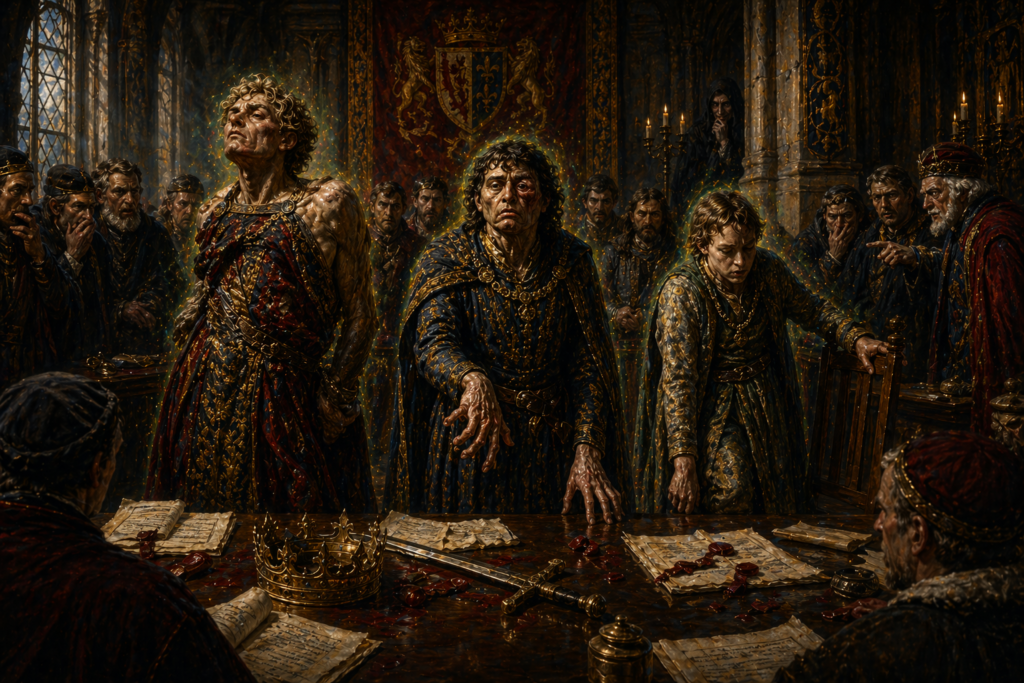
The Warped Heirs: Three royal heirs are transformed before a succession council. Each house accuses the others, but the caster may have been hired by a fourth claimant.
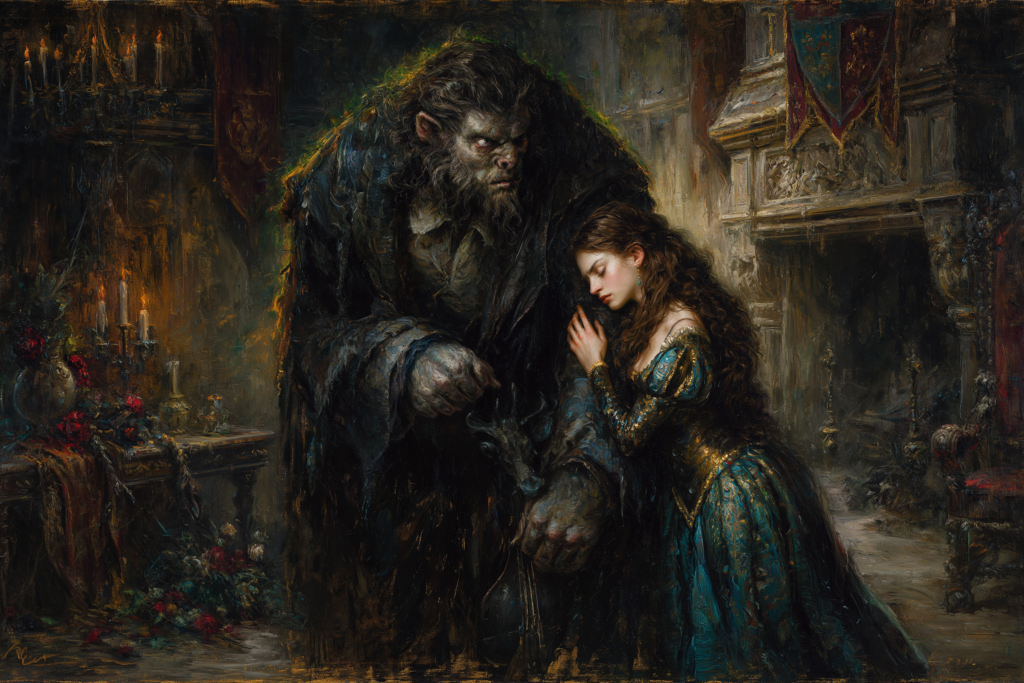
Beauty’s Prisoner: A proud lord once rejected a beggar, spirit, witch, or wronged woman because of her appearance. In punishment, he was struck by Grotesque Polymorph and now hides in his own castle, his body warped into a beastlike distortion of his former self. A guest, hostage, healer, or intended bride must decide whether the curse reveals his true nature, punishes it, or gives him one final chance to become better than the man he was.
The Frog Bridegroom: A young noble vanishes before his wedding and is found living under a grotesque animal-shaped curse beside a sacred pool. The transformation can be broken, but only if his betrothed learns whether the curse is punishment, protection, or a test of faithfulness.
The Sovereignty Riddle: A queen, witch, or land-spirit offers to break the curse on a beloved knight if the court can answer what every person most desires. Each wrong answer worsens the victim’s transformation, and each right answer reveals an uncomfortable truth about power, marriage, and rule.
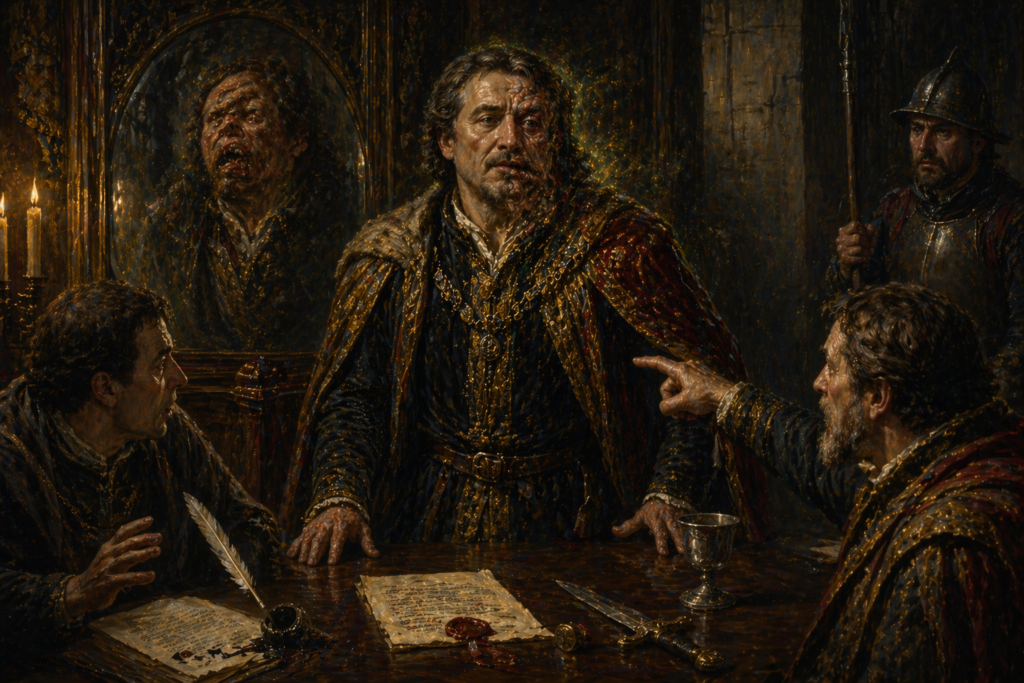
The Mask That Will Not Lie: A vain ambassador is struck by Grotesque Polymorph before peace talks. His new face changes whenever he lies, becoming more warped with each falsehood. The court wants him cured; the common people want him questioned.
The Hidden Bride: A noblewoman cursed on the eve of marriage is being concealed in a monastery while her family searches for the witch responsible. The bride herself may not want the curse removed if it frees her from a political marriage.