
Trade Domain
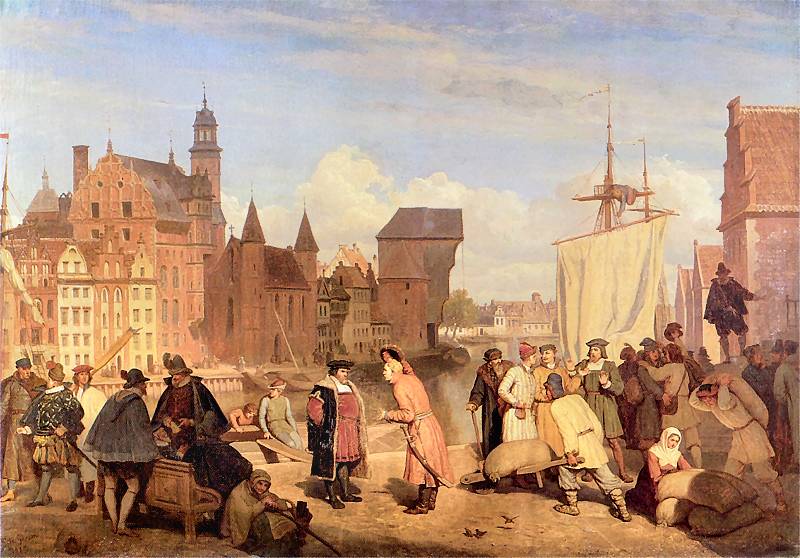
The Trade Domain governs exchange, valuation, bargaining, commercial intelligence and the movement of goods and information. Its published D&D 3.5 form comes from Player’s Guide to Faerûn.
At a Glance
| Divine Sphere | Trade, exchange, bargaining, valuation, commerce and commercial information |
|---|---|
| Published Rules | Pathfinder 1e subdomain; D&D 3.5e domain |
| Granted Powers | Use the powers in the selected rules panel. |
| Campaign Patrons | Nephthys, Hermes |
| Play Style | Information gathering, negotiation support, logistics and utility magic |
Edition Applicability
Choose one rules tradition. Pathfinder 1e uses the published Trade subdomain of Travel; the D&D 3.5e panel preserves the separately published Trade domain. The powers and spell progressions are distinct.
Trade Subdomain — Pathfinder 1e
Published Pathfinder 1e subdomain of Travel.
Choose this subdomain in place of its parent when your deity grants both. You cannot also select the parent as your other domain. All retained powers and all nine domain spells are included here.
Travel’s Speed Increase
Increase your base speed by 10 feet. This benefit is retained from Travel.
Silver-Tongued Haggler (Su)
This power replaces Agile Feet. When making a Bluff, Diplomacy or Sense Motive check, use a free action to add half your cleric level, minimum +1, to that roll. Daily uses equal 3 + your Wisdom modifier.
Dimensional Hop (Sp)
At 8th level, teleport as a move action using a daily distance pool of 10 feet per cleric level. Spend distance in 5-foot increments. You need line of sight to the destination, and this movement provokes no attacks of opportunity. You can bring willing creatures, spending the same distance again for each creature you bring.
Domain Spells
| Spell Level | Domain Spell | Restriction |
|---|---|---|
| 1 | Floating Disk | — |
| 2 | Locate Object | — |
| 3 | Fly | — |
| 4 | Dimension Door | — |
| 5 | Overland Flight | — |
| 6 | Find the Path | — |
| 7 | Greater Teleport | — |
| 8 | Phase Door | — |
| 9 | Gate | — |
Sources: Advanced Player’s Guide; Core Rulebook, page 47. Archives of Nethys: full domain and subdomain rules
Trade Domain — D&D 3.5e
Granted Power
Once per day, you can use detect thoughts as a spell-like ability. Activating the ability is a free action and it affects one target. The effect lasts for a number of minutes equal to your Charisma bonus, with a minimum duration of 1 round.
Trade Domain Spells
| 1st | Message |
|---|---|
| 2nd | Gembomb |
| 3rd | Eagle’s Splendor |
| 4th | Sending |
| 5th | Fabricate |
| 6th | True Seeing |
| 7th | Mage’s Magnificent Mansion |
| 8th | Mind Blank |
| 9th | Discern Location |
How the Trade Domain Plays
Pathfinder Trade improves bargaining checks and retains Travel’s speed and short-range teleportation. Its spells support cargo, navigation and planar passage. In D&D 3.5e, trade is a utility and information domain rather than a direct combat package. Its granted power helps a cleric read motives during important negotiations, while the spell list supports long-distance communication, valuation, production, secure hospitality, truth-seeking and locating people or goods. In a campaign built around cities, caravans, ports and political economies, those tools can be as decisive as direct damage.
Trade, Wealth and Greed
Trade is not the same sphere as greed. Exchange can enrich a merchant, but it also moves food, tools, news and credit between communities. Characters interested in acquisitiveness or hoarding should compare this domain with the Greed Domain; travellers and couriers may instead prefer the Travel Domain.
Priests, Markets and Sacred Duties
Trade priests can serve as witnesses to contracts, advisers to merchant houses, keepers of fair weights and measures, mediators in disputes and protectors of roads, harbours and market rights. Their influence is strongest where commerce depends on reputation and reliable information.
Related Domains and Character Options
Rules Sources and Licensing
D&D 3.5e: Player’s Guide to Faerûn, Trade Domain. The granted power and nine-level domain spell list on this page follow that published rules entry.
Pathfinder 1e: Advanced Player’s Guide; Core Rulebook, page 47. Published parent-domain and subdomain rules
Open Game License and Pathfinder copyright notices.
Advanced Player’s Guide. Copyright 2010, Paizo Publishing, LLC; Author: Jason Bulmahn.
Keep this reference growing
If this page helped with your reading or game, you can support its upkeep or explore the curated books.
Explore the Bookshop — epics, classics and stories behind imagined worlds.