
SpiralWorlds Player’s Manual · Character Creation
Description & Personality
Make a character another player can understand and you can actually portray
A finished character is more than a set of bonuses. Give the person a recognisable appearance, a few behavioural cues, relationships and something they want badly enough to act. You do not need a novel-length backstory before the first session.
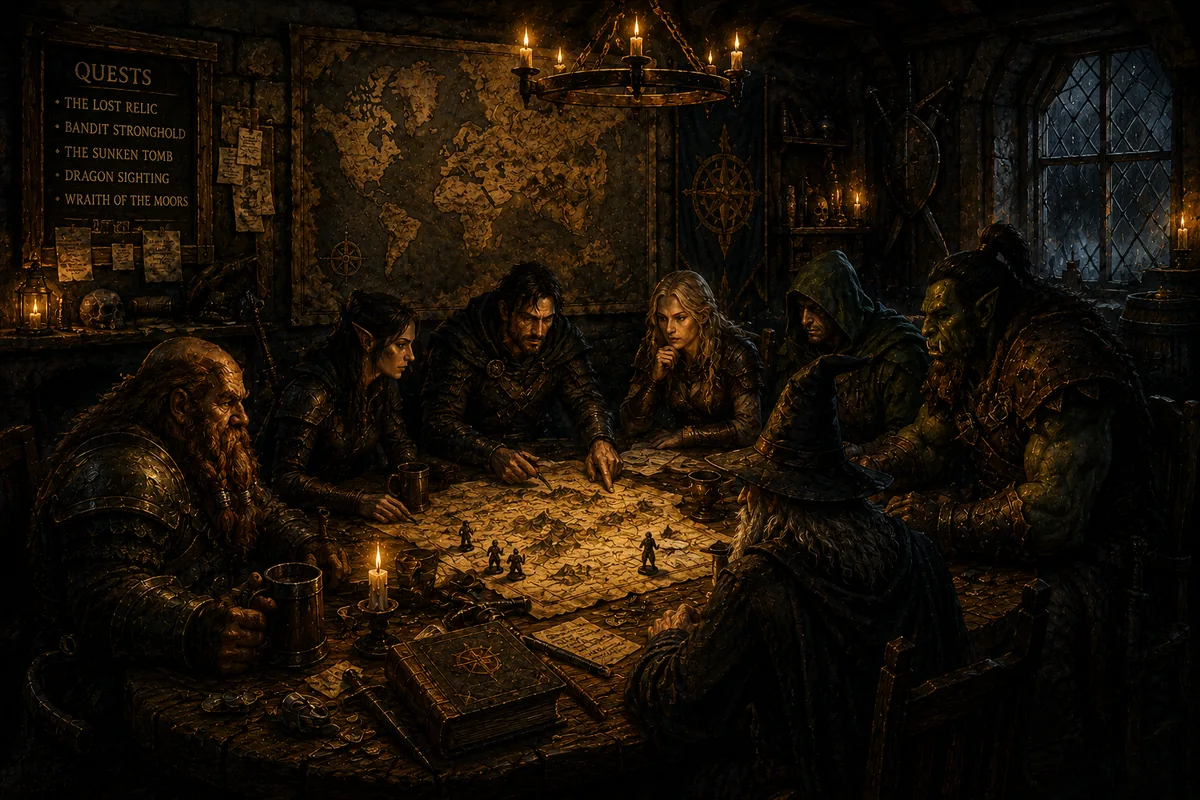
Start with what others notice
Give the character a visible identity
Playable personality
Answer six questions
Backstory
Write only what the campaign can use
For a new character, three short paragraphs are enough:
- Where you came from: homeland, household/community and former occupation.
- What changed: the event, opportunity, failure, crime, loss, discovery or obligation that ended the old life.
- Why you adventure now: the present goal that puts the character beside the other player characters.
Leave some unanswered questions. A backstory works best when it gives the Games Master people, places and unresolved problems that can enter play rather than settling every important event before session one.
At the table
Make choices, not performances
You do not need a theatrical voice. Roleplaying means making decisions from the character’s point of view. Use two or three reliable cues and let the personality change through play.
Optional viewing
Two useful character-building references
A focused backstory prompt retained because it directly addresses useful player-character history rather than general entertainment.
Useful for the simple weakness, need, desire and opposition framework. Apply the prompts to a player character without turning them into a fixed script.
The other five legacy embeds were not carried forward because they could not be independently verified as necessary, available and non-duplicative for this chapter.
Before moving on
Character identity checklist
- Name, age and a useful physical description are recorded.
- Homeland and community are specific enough to locate on the setting.
- The character has a former occupation or training history.
- Languages make sense for upbringing.
- One want, one fear and one weakness are written.
- At least one named ally and one named rival/opponent exist.
- One obligation, oath or boundary can affect decisions.
- The character has a present reason to adventure.
- Ability scores, people and alignment have not been turned into personality stereotypes.
- The concept gives other player characters reasons to interact rather than avoid the character.
Source note
Using this chapter
This page is setting and roleplaying guidance rather than a substitute for edition-specific character mechanics. Mechanical class, background, people/species, feat, skill, equipment and spell choices remain governed by their own Player’s Manual chapters and the chosen rules system.
Keep this reference growing
If this page helped with your reading or game, you can support its upkeep or explore the curated books.
Explore the Bookshop — epics, classics and stories behind imagined worlds.