
 Buy me a coffee
Disguise Self, “Masquerade Veil”
Disguise Self: A borrowed face, a stolen station, and a lie so plausible the world steps aside for it.

Illusion magic does not always hide, distract, or frighten. Sometimes it does something far more useful: it makes another version of reality briefly more believable than the truth. Disguise Self is one of the clearest expressions of that power. It does not alter flesh, voice, or substance. It changes what others accept at a glance, and in courts, streets, garrisons, temples, and marketplaces, that can be more decisive than steel.
This is the spell of infiltrators, fugitives, spies, impostors, and cautious mages who know that a false identity can open doors that force never could. It rewards timing, confidence, and nerve. Used well, it does not merely conceal who you are. It lets you become the person the scene most needs to see.
Disguise Self 5.5
Disguise Self 3.5
Disguise Self
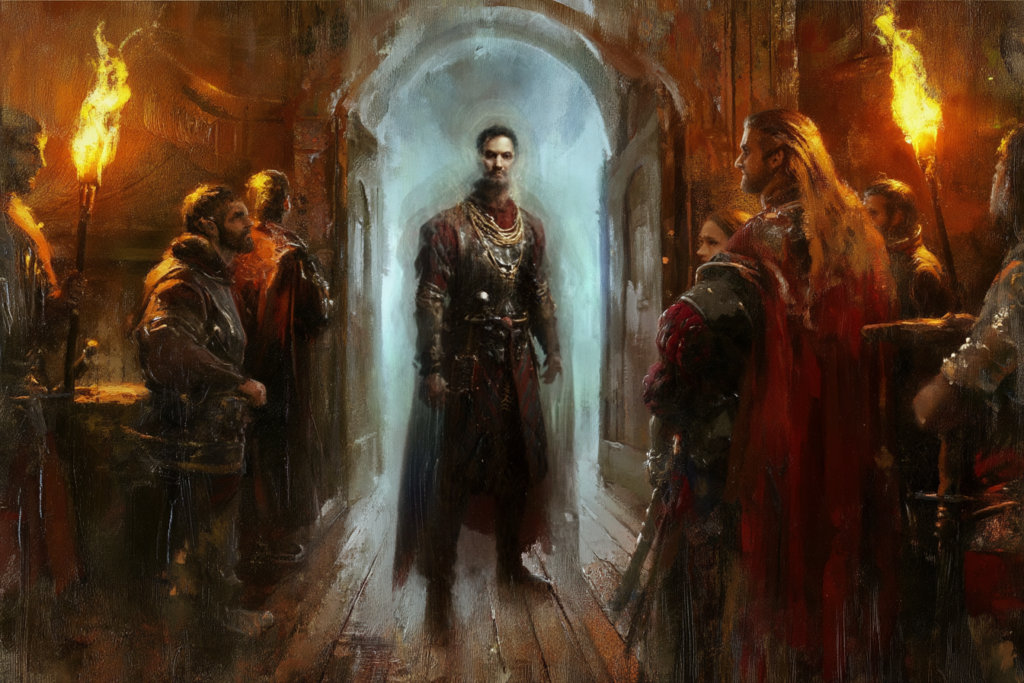
With a word and a gesture, you wrap yourself in a convincing false appearance, walking beneath another face while the world mistakes the lie for truth.
1st-Level Illusion
Casting Time: 1 Action
Range: Self
Components: V, S
Duration: 1 Hour
Available To: Bard, Sorcerer, Wizard
Alternative Name: Masquerade Veil
Alternative Sorcerer/Wizard Name: Veil of Altered Form
Effect
You make yourself, including your clothing, armor, weapons, and other belongings on your person, look different until the spell ends or you dismiss it as an action.
You can seem up to 1 foot shorter or taller and may appear thin, heavy, or anywhere between. You cannot change your basic body plan, so the disguise must match the same general arrangement of limbs. Within that limit, the spell can alter your apparent features, clothing, gear, and overall identity.
The illusion does not withstand physical inspection. A hand passing through an illusory hat finds nothing there, and false details collapse under touch or other direct testing. A creature that uses its action to examine your appearance can recognize the disguise with a successful Intelligence (Investigation) check against your spell save DC.
Overview
Disguise Self is a visual lie cast with precision. It does not create a separate image beside you or around you. It replaces your visible presentation with a chosen fiction and relies on the speed, laziness, and assumptions of ordinary perception.
That distinction matters. This spell is strongest when others do not expect deceit, when authority is taken at face value, when light is poor, when encounters are brief, or when social pressure discourages close scrutiny. It is weaker in intimate conversation, formal inspection, prolonged observation, or any moment where touch, contradiction, or familiarity begins to strip away appearance and test substance.
Its real power lies in the fact that most people do not investigate what they already think they understand.
Uses
Infiltration: Pass as a servant, courier, official, pilgrim, guard, courtier, or household retainer to move through controlled spaces without immediate alarm.
Escape: Break pursuit by turning a fugitive into a laborer, a noble into a beggar, or a known intruder into someone no witness thinks worth chasing.
Impersonation: Resemble a plausible person or station long enough to gain entrance, redirect attention, issue orders, or create confusion.
Concealment: Hide recognizable features, heraldry, injuries, foreign dress, suspicious equipment, or incriminating identity in public or hostile environments.
Social Manipulation: Present a version of yourself suited to the audience, whether respectable, harmless, authoritative, forgettable, or sacred.
Tactics
The spell works best when paired with behaviour that supports the illusion. A false face alone is rarely enough. Posture, confidence, vocabulary, and expectations carry the deception the rest of the way.
Use it where people look quickly and assume faster: checkpoints, corridors, crowded halls, market streets, temples, processions, and moments of confusion. Give others a reason not to linger over what they see.
Avoid unnecessary closeness. This spell fails under touch, and physical familiarity is its natural enemy. A guard who waves you through is far less dangerous than a servant who helps you with your cloak.
Choose disguises that explain themselves. The more questions a role invites, the weaker it becomes. A minor clerk may pass more safely than a famous knight. A hooded messenger often survives scrutiny better than a celebrated dignitary.
Finally, know when to leave. Disguise Self is a spell of entry, passage, and controlled interaction. The longer you remain in a role, the more chances the world has to test it.
Good Combinations
Charm Person: Helps smooth over hesitation, suspicion, or social friction when the disguise alone is not enough.
Silent Image: Creates supporting visual misinformation, distractions, false movement, or environmental detail that reinforces the deception.
Minor Illusion: Adds a small sound or object to complete the performance and cover weak points in the disguise.
Invisibility: Provides a clean escape once the false identity has served its purpose or begins to fail.
Alter Self: A stronger answer when disguise may be tested physically rather than visually.
DM Notes
Disguise Self is most satisfying when it generates tension rather than automatic success or arbitrary failure. Let the illusion open doors, create opportunities, and reward planning, but allow suspicion to rise naturally from context, familiarity, contradiction, and contact.
Do not undermine the spell Disguise Self by making every NPC instantly distrust appearances. Most people are not trained investigators, and most social systems run on assumption. At the same time, do not let the spell ignore obvious risk. Friends, lovers, bodyguards, physicians, armorers, and close companions are much more likely to notice something wrong than a tired gate guard or a distracted steward.
This spell shines in scenes involving layered identity, divided loyalties, political maneuvering, espionage, criminal entry, and tense improvisation. It is rarely most interesting when treated as a simple binary pass/fail disguise check. It becomes memorable when the illusion works just well enough to get the caster into trouble they must then survive.
Disguise Self
This material is Open Game Content, and is licensed for public use under the terms of the Open Game License v1.0a.
Illusion (Glamer)
Level Bard 1, Sorcerer/Wizard 1, Trickery 1
Components V, S
Casting Time 1 standard action
Range Personal
Target You
Duration 10 min./level (D)
By casting disguise self you make yourself-including clothing, armor, weapons, and equipment-look different. You can seem 1 foot shorter or taller, thin, fat, or in between. You cannot change your body type. Otherwise, the extent of the apparent change is up to you. You could add or obscure a minor feature or look like an entirely different person.
The spell does not provide the abilities or mannerisms of the chosen form, nor does it alter the perceived tactile (touch) or audible (sound) properties of you or your equipment.
If you use this spell to create a disguise, you get a +10 bonus on the Disguise check.
A creature that interacts with the glamer gets a Will save to recognize it as an illusion.