
Wilfred of Ivanhoe — Disinherited Saxon Knight
A disinherited Saxon knight returns with a wounded body, an unbroken oath, and a name powerful enough to mend a realm or reopen its oldest divisions.
At a Glance
- Full Name: Sir Wilfred of Ivanhoe
- Common Name: Ivanhoe
- Gender: Male
- Species: Human
- Heritage: Saxon nobleman
- Occupation: Knight, returned war veteran, tournament champion, royal loyalist
- Homeland: England; associated with the fief of Ivanhoe and the household of Cedric of Rotherwood
- Source Era: Late 12th-century England, during the reign of Richard I
- Campaign Role: Knightly ally, honour-bound patron, political bridge, tournament champion, wounded heir
- Alignment: Lawful Good
- Languages: English, Norman French, Latin, and practical battlefield commands learned in eastern wars
- Affiliations: King Richard’s loyalists; Saxon nobility by birth; knightly and tournament circles by profession
- Family: Son of Cedric of Rotherwood
- Significant Relationship: Lady Rowena
- Major Allies: King Richard, Rowena, Gurth, Wamba, Locksley and the forest outlaws when their causes align
- Major Enemies: Prince John’s faction, corrupt Norman knights, false Templars, predatory barons, and anyone exploiting Saxon grievance for private gain
- Base of Operations: Rotherwood, royal camps, tournament grounds, roadside chapels, forest routes, and contested castles
- Signature Possessions: Warhorse, heater shield, knightly harness, surcoat, lance, arming sword, tournament token, and a royal favour quietly carried rather than displayed
Overview
Wilfred of Ivanhoe is the central knightly hero of Sir Walter Scott’s Ivanhoe: a disinherited Saxon nobleman, loyal to King Richard, estranged from his father Cedric, and bound by love to Rowena. He returns from foreign war into a country divided by conquest, language, inheritance, faction, and pride.
For campaign use, Ivanhoe works best as a major heroic NPC rather than a simple quest-giver. He stands at a dangerous crossing point: Saxon by blood, royalist by loyalty, knight by vocation, exile by family judgement, and lover of the woman his father hoped to use for dynastic restoration.
He should feel noble without becoming bland. Ivanhoe is brave, restrained, dutiful, and deeply bound by honour, but his loyalty has already cost him home, inheritance, and perhaps his future. He believes a broken realm can still be mended by courage, lawful kingship, and mercy. That belief makes him admirable. It also makes him vulnerable to men who understand treachery better than he does.
In play, Ivanhoe brings pressure with him. If the characters aid him, they gain a loyal champion and a name that opens noble doors. They also inherit his enemies. If they oppose him, he should remain honourable enough to make that opposition uncomfortable. Ivanhoe is the kind of NPC who forces the party to ask whether victory without restraint is still justice.
Ivanhoe in a late medieval Campaign
In a campaign set later, Wilfred of Ivanhoe should not usually be used as a literal recent veteran of Richard I’s reign unless the campaign deliberately involves time displacement, enchanted sleep, fey intervention, divine preservation, or legendary recurrence.
The strongest adaptation is to make Ivanhoe a living inheritor of the old Ivanhoe legend: a later knight of the same bloodline, title, oath, and moral burden. His family still carries the shame of disinheritance, the memory of Saxon dispossession, and the obligation to stand between faction and massacre. His name has become both inheritance and accusation.
In this version, “Ivanhoe” may be a hereditary title, battle-name, or household sobriquet given to the knight who bears the old shield. Enemies mock it as a relic of failed Saxon pride. Common folk treat it as a promise that noble blood can still defend the weak. Rival lords fear it because the name can rally old retainers, forest communities, lesser nobles, dispossessed households, and men who would never follow an ordinary courtier.
Use this version when you want Ivanhoe to stand naturally inside the campaign’s present day. He remains recognisably Ivanhoe in function: honourable, estranged from inheritance, bound to a difficult love, loyal to lawful kingship, and caught between blood, crown, and conscience.
Appearance
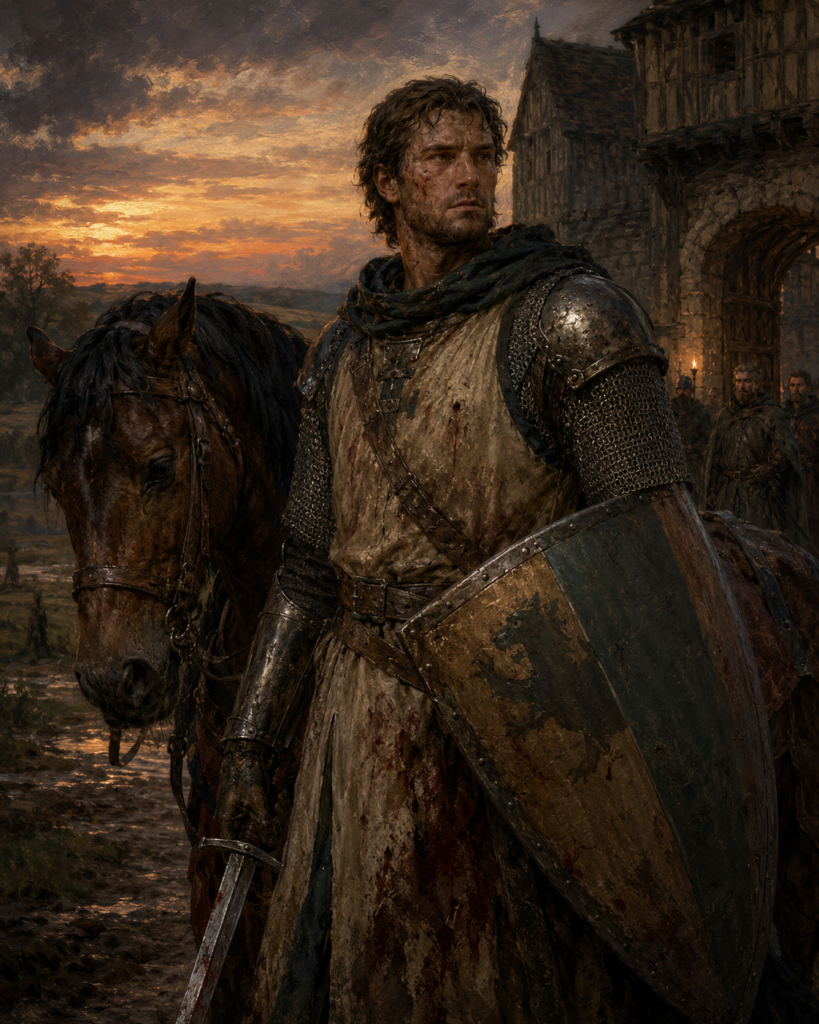
Ivanhoe is a knight in his fighting prime, though often marked by injury. He is broad-shouldered rather than massive, disciplined rather than flamboyant, and carries himself with the alert caution of a man who has survived battlefields, tournaments, ambushes, and courts.
His face shows fatigue, restraint, and moral resolve. He is handsome in the austere manner of a hard-ridden nobleman: weathered, controlled, and more compelling in silence than in display.
He wears mail or knightly harness suited to the campaign’s period presentation, usually with a plain or weathered surcoat rather than gaudy heraldic excess. His shield may bear his true arms, a disguised device, or a battered overpainted emblem used while travelling under an assumed name.
Character
Ivanhoe is courteous, brave, and severe with himself. He does not posture when quiet confidence will do. He is more likely to endure insult than answer it too quickly, especially if answering would worsen a political situation or dishonour someone he still loves.
His greatest strength is steadfast loyalty. His greatest weakness is the same thing. Once Ivanhoe gives his oath, he struggles to see when others use that oath as a chain. He has the instincts of a battlefield commander but the conscience of a reconciler. He wants victory, but not massacre; justice, but not vengeance; restoration, but not tribal hatred.
He fears becoming the cause of civil bloodshed. He fears that Cedric may be right to see him as a traitor to his own people. He fears that Rowena’s love may cost her safety and station. Above all, he fears surviving every battlefield only to fail in the smaller, crueller war of kinship, inheritance, and peace.
Motives and Goals
Ivanhoe wants to reclaim honour without becoming a weapon of faction. He wants Rowena, but not as stolen property or political prize. He wants his father’s recognition, but not at the price of abandoning the king he believes lawful.
His central motives are:
- Restore lawful order without enabling tyranny.
- Protect Rowena from dynastic exploitation.
- Reconcile with Cedric without surrendering his conscience.
- Expose false chivalry: corrupt knights, predatory lords, and oath-breakers.
- Prevent Saxon grievance from becoming a doomed rebellion.
- Prevent Norman rule from becoming naked conquest.
- Prove that honour can still matter in a realm trained to laugh at it.
Role in the Campaign
Ivanhoe is best used as a pressure-bearing ally. He should not arrive simply to solve the party’s problems. Instead, his presence should force decisions.
If the party backs Ivanhoe, they may gain royal legitimacy, knightly respect, and access to noble courts. They may also inherit Prince John’s agents, resentful Saxon hardliners, predatory Norman lords, and rivals who want Rowena, Cedric’s wealth, or Ivanhoe’s disgrace.
If the party opposes him, he should not become a fool or hypocrite. He remains honourable, but he may stand in the way of ruthless solutions. Ivanhoe is the kind of opponent who can make the players question whether winning quickly is the same as winning well.
Using Ivanhoe in Play
The Disguised Champion: The party meets an unknown knight at a tournament. He fights with restrained brilliance, refuses to boast, and collapses from an old wound after victory.
The Broken Household: Cedric refuses to speak Ivanhoe’s name. The party must negotiate between father, son, Rowena, and a household full of servants who know more than they dare say.
The Siege Rescue: Ivanhoe is wounded and cannot lead the assault. The party must rescue captives while the famous hero is reduced to giving counsel from a sickbed.
The Trial by Combat: Ivanhoe is too injured to fight properly, but honour demands a champion. The party must decide whether to intervene, delay the duel, expose fraud, or risk letting a weakened knight ride to his death.
The King’s Return: Ivanhoe knows enough to identify loyalists and traitors, but his testimony could ignite retaliation. The party must decide how publicly truth should be used.
The False Peace: A lord offers reconciliation, but only if Ivanhoe renounces one side of his identity. The party must decide whether compromise has become surrender.
Social and Political Web
Cedric of Rotherwood sees Ivanhoe as a son who abandoned Saxon restoration for royal service. Their conflict should feel personal, political, and unresolved.
Rowena represents love, inheritance, legitimacy, and the danger of treating noble women as dynastic instruments.
King Richard represents lawful kingship, charisma, and the dangerous romance of the warrior-king.
Prince John’s faction sees Ivanhoe as a returning loyalist whose name can weaken their grip.
Locksley respects courage and justice, but does not necessarily trust noble solutions.
Rebecca complicates Ivanhoe’s heroic position in the source material because her intelligence, moral strength, and vulnerability expose the limits of the chivalric world around him.
Secrets and Pressures
- His wound is worse than he admits. He can still ride, but a hard fight may reopen the injury.
- His royal loyalty has a hidden cost. He carries a message, seal, or command that could condemn men he once admired.
- Cedric’s disinheritance was politically useful to someone. A rival encouraged the breach and still profits from it.
- Rowena is being watched. Her marriage would settle more than a household quarrel.
- Ivanhoe spared an enemy in the east. That mercy now returns as either salvation or disaster.
- His name has become a banner. Men he never authorised commit violence “for Ivanhoe.”
- He suspects the king is less perfect than the legend. His loyalty remains, but certainty has begun to crack.
- The Ivanhoe title has outgrown the man. In a 1454 campaign, the name may carry expectations no living knight can fully satisfy.
Edition Tabs
Game Statistics
5.5e / 2024
Wilfred of Ivanhoe
Medium Humanoid (Human), Lawful Good
Armor Class 20
Hit Points 162
Speed 30 ft.
Proficiency Bonus +4
Challenge 11
STR 20 (+5), DEX 13 (+1), CON 18 (+4), INT 13 (+1), WIS 16 (+3), CHA 18 (+4)
Saving Throws Str +9, Con +8, Wis +7, Cha +8
Skills Animal Handling +7, Athletics +9, History +5, Insight +7, Intimidation +8, Persuasion +8
Traits
Honour-Bound. Ivanhoe has Advantage on saving throws against being Frightened, Charmed, or compelled to betray a sworn oath, abandon a helpless ally, or knowingly commit a dishonourable act.
Returned from War. Once per turn when Ivanhoe hits a creature that has damaged one of his allies since the end of his last turn, he deals an extra 10 (3d6) weapon damage.
Wounded but Unyielding. The first time Ivanhoe is reduced to 81 hit points or fewer, he gains 20 temporary hit points and may move up to half his Speed without provoking Opportunity Attacks.
Mounted Champion. While mounted, Ivanhoe has Advantage on checks and saves to avoid being dismounted. If his mount moves at least 20 feet straight toward a target before a lance attack, the attack deals an extra 14 (4d6) Piercing damage on a hit.
Actions
Multiattack. Ivanhoe makes three Arming Sword attacks. He may replace one attack with Shield Bash.
Arming Sword. +9 to hit, reach 5 ft.; 10 (1d10 + 5) Slashing damage, or 9 (1d8 + 5) one-handed.
Lance. +9 to hit, reach 10 ft.; 12 (1d12 + 6) Piercing damage while mounted or in formal joust conditions.
Shield Bash. +9 to hit, reach 5 ft.; 9 (1d8 + 5) Bludgeoning damage, and DC 17 Strength save or pushed 10 feet or knocked Prone.
Rally the Honourable (1/Short or Long Rest). Up to four allies within 30 feet gain 14 temporary hit points and may immediately end one Frightened condition affecting them.
Wilfred of Ivanhoe — 5e / 2014
Medium humanoid (human), lawful good
Armor Class 20 (plate and shield); Hit Points 162; Speed 30 ft.; Challenge 9 (5,000 XP; proficiency bonus +4).
STR 20 (+5), DEX 13 (+1), CON 18 (+4), INT 13 (+1), WIS 16 (+3), CHA 18 (+4).
Saving Throws Str +9, Con +8, Wis +7, Cha +8; Skills Animal Handling +7, Athletics +9, History +5, Insight +7, Intimidation +8, Persuasion +8.
Traits
Honour-Bound. Advantage on saving throws against being charmed or frightened.
Returned from War. Once per turn, a hit against a foe that harmed an ally since Ivanhoe’s previous turn deals 10 (3d6) extra weapon damage.
Wounded but Unyielding (1/Encounter). At 81 hit points or fewer, Ivanhoe gains 20 temporary hit points and may immediately move half his speed without provoking opportunity attacks.
Mounted Champion. Advantage on checks to remain mounted; a lance hit after a straight 20-foot mounted charge deals an extra 14 (4d6) damage.
Actions
Multiattack. Three arming sword attacks, one optionally replaced by a shield bash.
Arming Sword. Melee Weapon Attack: +9 to hit, reach 5 ft. Hit: 9 (1d8 + 5) slashing damage.
Lance. Melee Weapon Attack: +9 to hit, reach 10 ft. Hit: 11 (1d12 + 5) piercing damage; standard 2014 lance limitations apply.
Shield Bash. Melee Weapon Attack: +9 to hit, reach 5 ft. Hit: 9 (1d8 + 5) bludgeoning damage. DC 17 Strength save or pushed 10 ft. or knocked prone.
Rally the Honourable (1/Short or Long Rest). Up to four allies within 30 ft. gain 14 temporary hit points and may repeat a saving throw against being frightened.
Original 2014 conversion; challenge rating requires playtesting. All previous material is retained.
Pathfinder 1e
Wilfred of Ivanhoe CR 11; human fighter 10/cavalier 3; LG Medium humanoid. AC 26; hp 143; Fort +14, Ref +6, Will +9.
Melee +2 longsword +21/+16/+11 (1d8+11/19–20); Mounted Charge masterwork lance +20 (1d8+8/×3, tripled with Spirited Charge).
Str 22, Dex 13, Con 18, Int 12, Wis 15, Cha 18. Feats Greater Weapon Focus (longsword), Improved Initiative, Iron Will, Leadership, Mounted Combat, Power Attack, Ride-By Attack, Shield Focus, Spirited Charge, Toughness, Weapon Focus and Weapon Specialization (longsword).
Skills Diplomacy +18, Handle Animal +17, Knowledge (history) +10, Knowledge (nobility) +14, Perception +12, Ride +17, Sense Motive +16, Survival +10.
Special Abilities. Challenge 1/day; Honour of the Disinherited; Merciful Knight; Mounted Charge; Wounded Champion.
D&D 3.5e
Wilfred of Ivanhoe CR 8; human fighter 8; LG Medium humanoid. AC 22; hp 84; Base Attack +8; longsword +14/+9 (1d8+6/19–20).
Abilities Str 18, Dex 13, Con 16, Int 12, Wis 14, Cha 15. Feats Mounted Combat, Ride-By Attack, Spirited Charge, Power Attack and Weapon Focus (longsword). Use Ride, Diplomacy, Sense Motive and Knowledge (nobility and royalty) as key skills.
What Is Ivanhoe Doing Now?
Ivanhoe is not treated as an ordinary living knight of the present campaign. His importance lies in surviving arms, household traditions, disputed claims and stories attached to the Ivanhoe name. A party may encounter descendants, forged relics, hidden shields or a supernatural echo of the knight, but the page does not assume he simply walks into a 1454 court.
Encounters
- The Nameless Shield: A battered shield bearing old devices appears in a noble armoury where it should not exist.
- The Disinherited Heir: A claimant invokes Ivanhoe’s story to justify defying a current lord.
- The Tournament Ghost: A masked knight fights with impossible skill and vanishes before anyone can unhorse him.
Personality
In stories and supernatural appearances, Ivanhoe is dutiful, restrained and stubbornly honour-bound. He values sworn loyalty over easy popularity and can become inflexible when personal honour conflicts with political necessity.
Relationships
For the present campaign, Ivanhoe’s most important relationships are inherited: houses that claim connection to him, rivals who dispute those claims, and families that preserve objects or stories linked to his name.
Equipment and Treasure
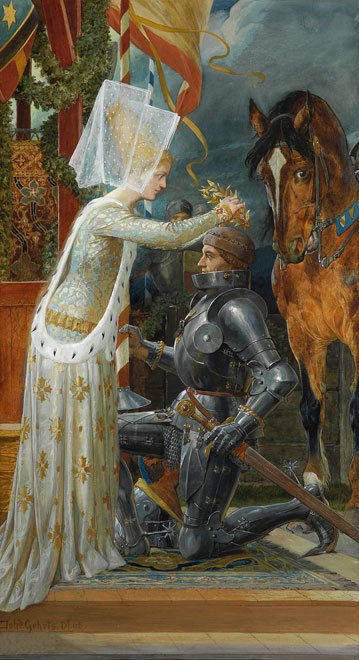
Ivanhoe should not be overloaded with glittering treasure. His value is social, political, and symbolic.
Typical Gear Value: Approximately 30,000–40,000 gp in Pathfinder terms, mostly tied up in arms, armour, horse, saddle, noble equipment, and one or two restrained enchanted items.
Notable Items:
- Knightly Harness: Well-maintained mail, plate-and-mail, or heavy knightly armour suited to the campaign’s period presentation.
- Arming Sword: A practical noble weapon, possibly +1 or +2 if the campaign uses heroic relics.
- Lance: Used for joust, charge, and symbolic knightly identity.
- Heater Shield: Bearing either his true arms, a disguised device, or the old Ivanhoe sign.
- Tournament Token: A favour or keepsake from Rowena, valuable because of what it proves.
- Royal Sign or Seal: Not necessarily magical, but politically dangerous.
- Warhorse: Trained for charge, crowd, noise, formation, and battlefield command.
Optional magical treatment should be restrained. Ivanhoe does not need a flaming sword or glowing armour. If he has a magic item, make it a quiet relic of oath, endurance, recognition, or rightful identity.
Evidence, Rumours, and Clues
- A wounded knight pays a servant too generously and refuses to give his name.
- A shield bears fresh paint over an older Saxon device.
- A warhorse recognises a household gate before its rider speaks.
- Cedric grows furious when a minstrel sings of a knight returned from foreign war.
- A tournament physician reports that the victor should not have been able to stand.
- Rowena keeps a token whose matching half is missing.
- A disguised royal messenger asks whether “the disinherited one” has arrived.
- A captured enemy says the name Ivanhoe with more fear than contempt.
- A later 1454 household still keeps the old Ivanhoe arms hidden behind a newer noble device.
Adventure Hooks
The Nameless Knight’s Shield
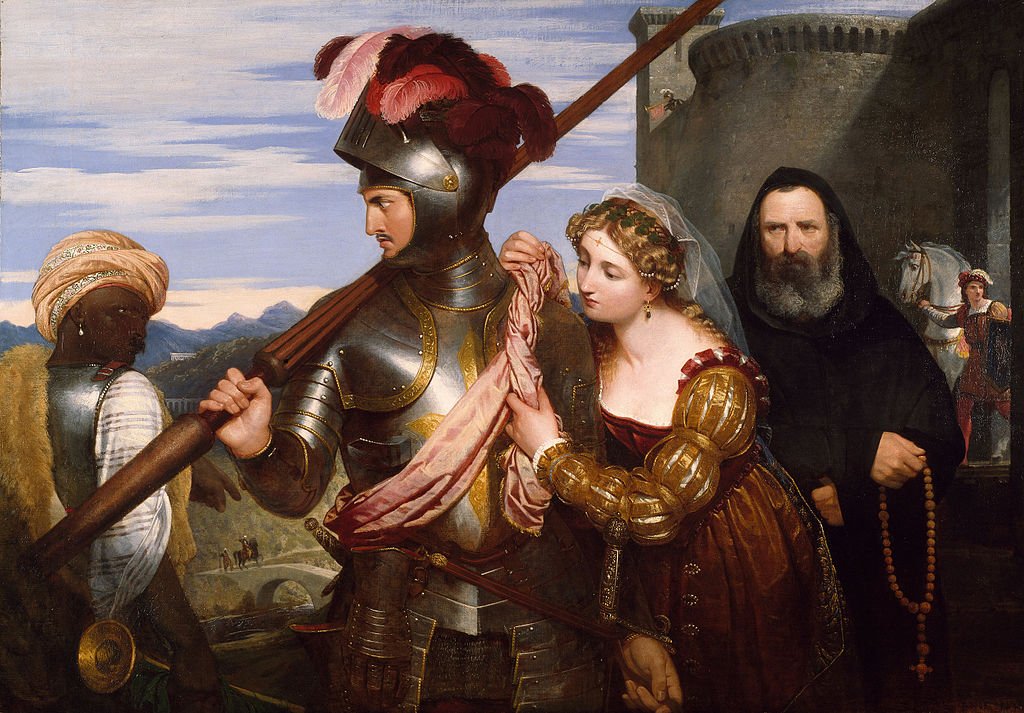
A battered shield is stolen from the tournament field before the victorious unknown knight can be formally identified. The shield’s old paint has cracked, revealing an older Saxon device beneath the disguise. The thief knows enough to realise that the fallen champion may be Wilfred of Ivanhoe, and intends to sell the secret to hostile nobles before Ivanhoe can recover from his wounds.
The characters may be hired by Rowena, a loyal servant, a tournament marshal, or Ivanhoe himself to recover the shield before its meaning becomes public. The search leads through armourers, grooms, heralds, gamblers, false witnesses, and noble retainers who all saw part of the theft but not the whole truth.
The shield is not merely evidence of identity. It can prove Ivanhoe’s right to a name, inheritance, tournament honour, and royal loyalty. If it reaches Prince John’s faction or a rival house, Ivanhoe can be denounced before he is strong enough to defend himself. If the party recovers it quietly, they gain the trust of a wounded champion. If they expose it publicly, they may save Ivanhoe’s honour while forcing every hidden enemy into the open.
Cedric’s Last Door
Cedric of Rotherwood will receive almost anyone under his roof except his own son. Ivanhoe asks the characters to carry a message into Rotherwood, not because he lacks courage, but because another public confrontation may break the household beyond repair. Inside the hall, servants whisper, retainers take sides, Rowena is watched too closely, and Cedric’s pride has become almost indistinguishable from grief.
The message may be a plea for reconciliation, a warning of political danger, proof of a forged marriage contract, or a royal command that Cedric will hate but cannot ignore. The party must decide how much truth to reveal, whom to trust, and whether Ivanhoe’s return should be softened, hidden, or forced into the open.
This hook works best as a tense social adventure rather than a simple delivery errand. Every room in Rotherwood should contain a pressure point: a servant loyal to Ivanhoe, a guest spying for a rival lord, a steward afraid of civil violence, a family relic removed from its proper place, or Rowena quietly preparing for a future no one allows her to choose. Success does not require making Cedric forgive his son immediately. It requires preventing pride, inheritance, and old politics from turning a wounded family into a battlefield.
The Outlaw Accord
Locksley offers Ivanhoe aid, but not obedience. The forest outlaws know roads, ambush sites, corrupt sheriffs, hidden stores, and the grievances of common folk better than any courtly knight. They can shelter messengers, expose a false Ivanhoe, recover stolen evidence, or strike at a predatory lord’s supply line. But Locksley will not become a nobleman’s hunting dog, and he will not help restore order if “order” means returning the poor to hunger and punishment.
Ivanhoe needs the outlaws, but accepting their help forces him to admit that lawful authority has failed many of the people it claims to protect. The characters may be sent as negotiators between the knight and the greenwood, or they may discover that Locksley has already acted without permission in Ivanhoe’s name. A sheriff, baron, or royal official may demand that Ivanhoe denounce the outlaws before any alliance can be recognised.
The party must decide what justice looks like when law and mercy no longer stand on the same side. If they side only with Ivanhoe, they may gain legitimacy but lose the forest. If they side only with Locksley, they may save common folk while making reconciliation with noble power harder. If they forge an accord, the result should come with conditions: prisoners spared, taxes returned, a corrupt official exposed, a false rebel unmasked, or a lord forced to answer publicly for crimes usually buried beneath rank.
This hook is the best place to use Robin Hood as more than a cameo. Locksley should be charming, dangerous, practical, and morally inconvenient. He respects Ivanhoe’s courage, but he tests whether the famous knight’s honour extends beyond tournaments, noble women, and royal causes.
Consequences of His Presence
Ivanhoe changes the political weather around him.
If he is recognised, Cedric’s household becomes a public test of old loyalty. If he wins a tournament, hostile royal factions must account for loyalist strength returning to the field. If he marries Rowena, a dynastic scheme collapses. If he dies, he may become a martyr for whichever faction claims him first.
In a 1454 campaign, his name may awaken loyalties that everyone pretended were dead. That is useful, but dangerous. Old grievances do not return politely.
Connected Places and People
Source and Literary Context
Wilfred of Ivanhoe is the fictional Saxon knight at the centre of Sir Walter Scott’s Ivanhoe, a historical romance published in 1819. Project Gutenberg provides the public-domain text of Ivanhoe: A Romance. For a concise literary overview, see Encyclopaedia Britannica’s article on Ivanhoe.
Scott’s novel is not a strict historical record. It uses the reign of Richard I, tournament romance, Saxon-Norman tension, outlaw legend, and invented personal drama to create a chivalric historical romance. For campaign adaptation, Ivanhoe is best treated as a literary-historical hero whose themes matter more than strict chronology: inheritance, loyalty, exile, honour, reconciliation, and the limits of knightly virtue.
Rules Notes
The multi-edition statistics and present-day campaign adaptations on this page are original game material built around the public-domain literary character.
Mythical and Historical Context
Wilfred of Ivanhoe is a fictional knight created by Walter Scott in Ivanhoe (1819). The novel is set near the end of King Richard I’s reign, not in 1454. In this campaign the knight is a living inheritor of the Ivanhoe name and its ancient oaths, as established elsewhere in this entry; he is not presented as the original twelfth-century man living through an otherwise ordinary human lifespan. The court, factions and adventures in 1454 are setting inventions rather than Scott’s documented history. See the original novel in Project Gutenberg for the character’s literary origins. Robin Hood offers a natural connection to the Sherwood legends.
Sources and Adaptation
Adapted from Walter Scott’s public-domain novel Ivanhoe and the existing campaign material, translating Wilfred into a living encounter-ready knight without reproducing text from modern copyrighted adaptations.
Keep this reference growing
If this page helped with your reading or game, you can support its upkeep or explore the curated books.
Explore the Bookshop — epics, classics and stories behind imagined worlds.