
Primal Scream Spell – Sonic Fear Magic for Dark Enchanters
Primal Scream Spell – Sonic Fear Magic for Dark Enchanters
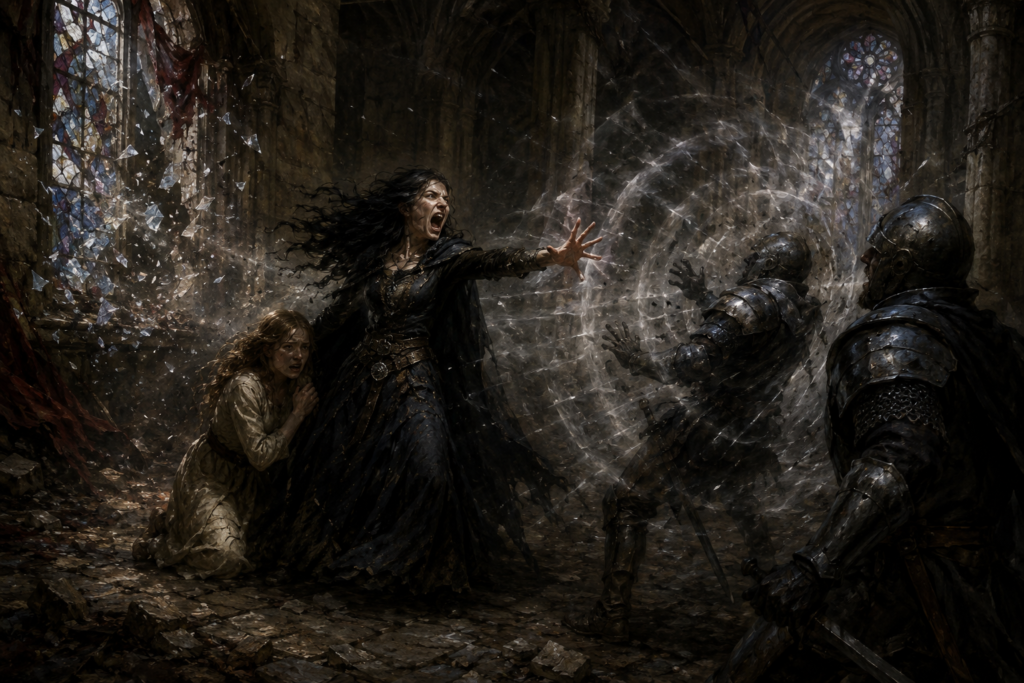
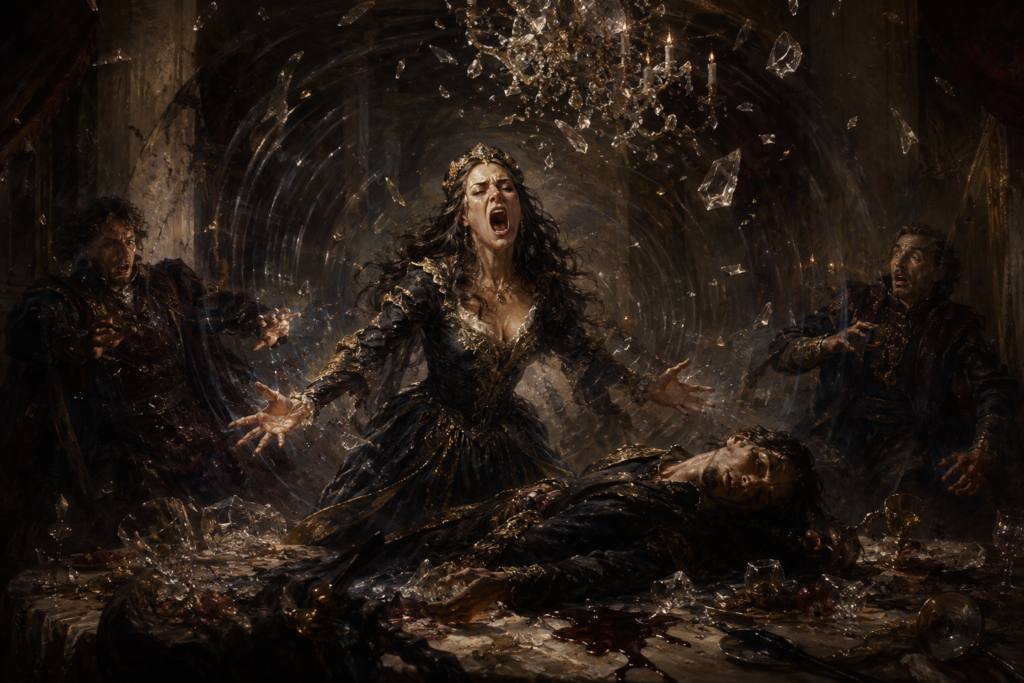
A cry of terror and grief erupts from the caster, breaking courage, glass, and bone with the same terrible note.

Primal Scream is not a battle shout. It is the moment when a living voice stops asking the world to listen and forces every creature nearby to hear the oldest fear inside it.
The spell turns terror, mourning, rage, and despair into a supernatural cry. Bodies stagger under the sonic force. Glass breaks. Crystal cracks. Courage fails. Those who can still feel fear may find that the scream has reached something older than reason.
It belongs beside Shriek and Witch Wail, but it is broader and crueler than either. Shriek is an alarm or weaponised cry. Witch Wail is deathly lament. Primal Scream is grief made loud enough to wound the world.
Quick Rules Reference
- Spell type: Enchantment / compulsion with sonic force.
- Primary effect: Sonic or thunder damage in a wide radius.
- Secondary effect: Fear-like panic, shock, or disorientation on creatures that fail the save.
- Special effect: Glass and crystal objects shatter.
- Unusual rule: The sonic damage can affect undead and creatures normally immune to mind-affecting magic, but the fear portion does not affect creatures immune to fear.
- Best use: A high-level panic spell for a witch, bard, or dark enchanter who wants to break a hall, court, mob, coven, battlefield pocket, or chamber full of fragile wealth.
Effect
The caster spends a full round drawing terror and sorrow into the voice, then releases a supernatural scream in a wide radius. Creatures in the area are struck by sonic force. Those who fail to withstand the scream may also suffer fear, shock, and disorientation.
Glass and crystal objects in the area shatter. Magical glass, enchanted crystal, and glass-like creatures may resist the worst of the effect. The spell’s sonic force can harm undead and creatures normally unaffected by mind-affecting effects, but such creatures ignore the fear portion if they cannot experience fear.
Mechanics Tabs
The rules below are mechanics compatible for different game editions.
Primal Scream 5.5e / 2024
Primal Scream, Pathfinder 1e / 3.5e
Primal Scream 3.0e
Primal Scream 5.5e / 2024-Compatible Version

6th-level enchantment
Casting Time: 1 round
Range: Self
Area: 90-foot-radius emanation
Components: V, S
Duration: Instantaneous; fear lasts up to 1 minute
Saving Throw: Constitution
Damage Type: Thunder
Available To: Bard, Sorcerer, Warlock, Wizard
Alternative Spell Name: Grief-Wail of the First Fear
You release a scream of supernatural terror and sorrow. Each creature in a 90-foot-radius emanation from you that can hear you must make a Constitution saving throw.
On a failed save, a creature takes 8d6 thunder damage and has the Frightened condition until the end of its next turn. At the end of that turn, the creature repeats the saving throw. On a failed save, the frightened condition continues for up to 1 minute. The creature repeats the saving throw at the end of each of its turns, ending the condition on itself on a success.
On a successful save, a creature takes half as much damage and is not frightened.
Undead and creatures immune to being Charmed are still subject to the thunder damage. A creature immune to the Frightened condition ignores only the fear portion.
Nonmagical glass and crystal objects in the area shatter if they are not being worn or carried. Magical glass, enchanted crystal, and glass-like creatures in the area take 6d6 thunder damage, or half as much damage on a successful Constitution saving throw.
At Higher Levels. When you cast this spell using a spell slot of 7th level or higher, the thunder damage to creatures increases by 1d6 for each slot level above 6th.
Notes
This version keeps Primal Scream dangerous to allies and bystanders. It is not a sculpted blast; it is a supernatural cry released into the surrounding world.
The original spell’s area scales by caster level, becoming enormous in older editions. The 90-foot-radius version keeps the spell large enough to break a hall, courtyard, chapel, theatre, street, or battlefield pocket without letting it overwhelm an entire settlement.
Do not let the spell bypass fear immunity by calling the panic sadness, grief, or shock. The damage is sonic thunder force; the fear portion is still fear.
Primal Scream, Pathfinder 1e / 3.5e-Compatible Version
Enchantment (Compulsion) [Sonic]
Level: Bard 5, Sorcerer/Wizard 6, Witch 5
Components: V, S
Casting Time: 1 round
Range: Personal
Area: 15-ft.-radius spread per caster level, centred on you
Duration: 1 minute
Saving Throw: Fortitude partial; see text
Spell Resistance: Yes
You release a scream of profound terror and sadness. Creatures in the area are struck by sonic force.
Creatures with 5 Hit Dice or fewer take 6d6 sonic damage, or half damage with a successful Fortitude save. Creatures with more than 5 Hit Dice take 4d6 sonic damage, or half damage with a successful Fortitude save.
A creature that fails its Fortitude save is also shaken by the scream’s emotional force, suffering a –2 penalty on attack rolls, Armor Class, and skill checks for the spell’s duration. This fear-like portion is treated as a mind-affecting fear effect for the purpose of immunity and resistance.
The sonic damage can affect undead and creatures normally unaffected by mind-affecting spells. Such creatures remain immune to the fear portion if they are normally immune to fear or mind-affecting effects.
All nonmagical glass and crystal objects in the area shatter. Magical glass, magical crystal, and glass-like creatures may make a Fortitude save. On a failed save, they take 1d6 points of sonic damage per caster level; on a successful save, they take half damage.
Notes
The original text uses older save language and refers to Shriek and Fear-style effects. This version preserves the old function while making the sequence clearer: one Fortitude save controls the sonic damage, and failure also triggers the penalty.
The area is extremely large in high-level 3.5e and Pathfinder 1e play. A 10th-level caster creates a 150-foot-radius spread. That is not a room spell; it is a courtyard, cavern, battlefield, street-square, or settlement-edge spell.
Primal Scream 3.0e
This spell is related to Shriek and Witch Wail. With this spell, the caster lets loose a scream of profound terror and sadness. Anyone within the area of effect must make a save vs. spells to avoid the effects.
Liber Mysterium
The Netbook of Witches and Warlocks
By Timothy S. Brannan and The Netbook of Witches and Warlocks Team
Enchantment Compulsion [sonic]
Level: Witch 5, Bard 5, Sorcerer/Wizard 6
Components: V S
Casting Time: 1 round
Range: Touch
Target, Effect, Area: 15- radius per level
Duration: 1 minute
Saving Throw: See text
Spell Resistance: Yes
Creatures 5 hit dice/levels or lesser must succeed a fortitude save or take 6d6 points of sonic damage, fort save for half. Creatures greater than 5 hit dice/level take 4d6 points of damage or save for half. Anyone who fails their save is treated as if they were subject to a Shriek or Fear spell, suffering the -2 to attack rolls, armour class, and skill checks.
In addition, this spell will shatter any glass or crystal object. Magical glass or glass-like creature are granted a Fort save to prevent taking 1d6 points of damage per caster level (save for half) regardless of their hit dice.
This spell can effect undead and any creatures that are unaffected by mind effecting spells. However they remain unaffected by the spell’s fear effects.
Why This Spell Is Dangerous in the World
Primal Scream is dangerous because it makes fear public.
A caster can break a courtroom, empty a feast hall, ruin a glasshouse, shatter reliquaries, panic horses, expose hidden crystal devices, and turn a gathered crowd into a fleeing mass. In places built around fragile wealth, sacred vessels, mirrors, stained glass, or crystal instruments, the spell can cause more lasting damage than its wounds suggest.
Even when no one dies, witnesses remember the sound. They may not agree on what they heard, but each person knows the scream found something private in them.
Rules Clarifications and Edge Cases
- Is Primal Scream mind-affecting? The damage is sonic or thunder force and can affect creatures that ignore mind-affecting magic. The fear portion is still a fear effect.
- Does silence stop it? Yes. If the caster is fully unable to produce the verbal component or the spell’s sonic release, Primal Scream should fail unless a specific rule says otherwise.
- Does it affect allies? Yes. The spell is a scream released into the surrounding world. Unless a version specifically says otherwise, allies, bystanders, mounts, prisoners, and servants in the area are at risk.
- Does it shatter windows? Yes. Unattended mundane glass and crystal should break automatically.
- Does it destroy magic crystal instantly? No. Magical glass, enchanted crystal, and glass-like creatures receive a save.
- Can it be cast quietly? No. The spell’s identity is the scream. Subtle casting may hide gestures, but it should not make the release silent.
Good Combinations
- Silence: Used defensively, Silence can prevent an enemy caster from releasing Primal Scream at all.
- Fear: Fear stacks thematically with Primal Scream, but avoid letting both effects duplicate the same panic state without clear rules handling.
- Shatter: Shatter pairs well with Primal Scream in scenes built around glass, crystal, mirrors, reliquaries, chandeliers, or magical observatories.
- Confusion: After Primal Scream breaks formation, Confusion can turn a frightened crowd or enemy line into a disaster.
- Calm Emotions: Calm Emotions is a strong answer after the scream, especially for protecting civilians, followers, shaken allies, or a panicking crowd.
Adventure Hooks
The Glass Chapel Breaks
A noble family’s crystal mortuary chapel shatters during a funeral. The dead remain still, but every mourner hears the voice of the person they failed most badly.
The Singer Who Cannot Stop Screaming
A bard casts Primal Scream once in battle and survives, but now every performance contains a buried note of the same spell. Audiences become anxious, violent, or grief-stricken without knowing why.
The Witch Beneath the Tribunal
A condemned witch spends her final round whispering instead of begging. When the scream comes, every window in the hall bursts outward and the judges flee like children.
Historical and Mythic Context
Primal Scream draws on an old magical idea: the human voice as a force that can wound, curse, terrify, mourn, command, and break the world around it. In mythic and ritual traditions, cries of grief are rarely just emotional noise. They can summon the dead, warn the living, mark a death, drive away evil, or announce that something sacred has been violated.
The spell sits close to the tradition of the supernatural lament: the death-wail, keening cry, battlefield scream, prophetic shriek, and witch’s curse spoken aloud. In play, it should feel less like a clean battlefield blast and more like a cry that has crossed the boundary between suffering and magic.
Its glass-shattering element also gives the spell a strong physical identity. The scream does not only frighten minds; it enters the material world. Windows burst, crystal cracks, reliquaries fail, mirror halls become hazards, and fragile wealth reveals how little protection beauty offers against terror.
Useful real-world and mythic reference points include the Irish and Scottish tradition of banshee death-cries, ritual lamentation and keening, and the wider folklore of destructive or prophetic supernatural voices. These are not direct sources for the spell, but they help place Primal Scream within a broader mythic pattern: the voice as omen, weapon, grief-rite, and curse.
Source and Game Context
Primal Scream comes from Liber Mysterium: The Netbook of Witches and Warlocks, associated with Timothy S. Brannan and the Netbook of Witches and Warlocks Team. It belongs to a third-edition-era tradition of witchcraft-focused fantasy gaming material, where sonic magic, fear magic, compulsion, and occult emotional force often overlap.
The spell’s older wording reflects 3.x design: Fortitude saves, spell resistance, sonic descriptors, scaling area, and separate handling for creatures immune to mind-affecting effects. This version keeps the spell’s core identity while translating its function into cleaner modern play.