
Horrid Wilting Spell

A killing word of drought that empties flesh, blackens leaves, and turns living strength into dust.
Horrid Wilting is the necromancy of thirst made sudden.
It does not strike like fire, lightning, acid, or frost. It does not need to shatter stone or set banners alight. It attacks the living assumption inside the body: that blood will remain wet, sap will rise, breath will carry moisture, and flesh will not become dust before the heart understands it is dying.
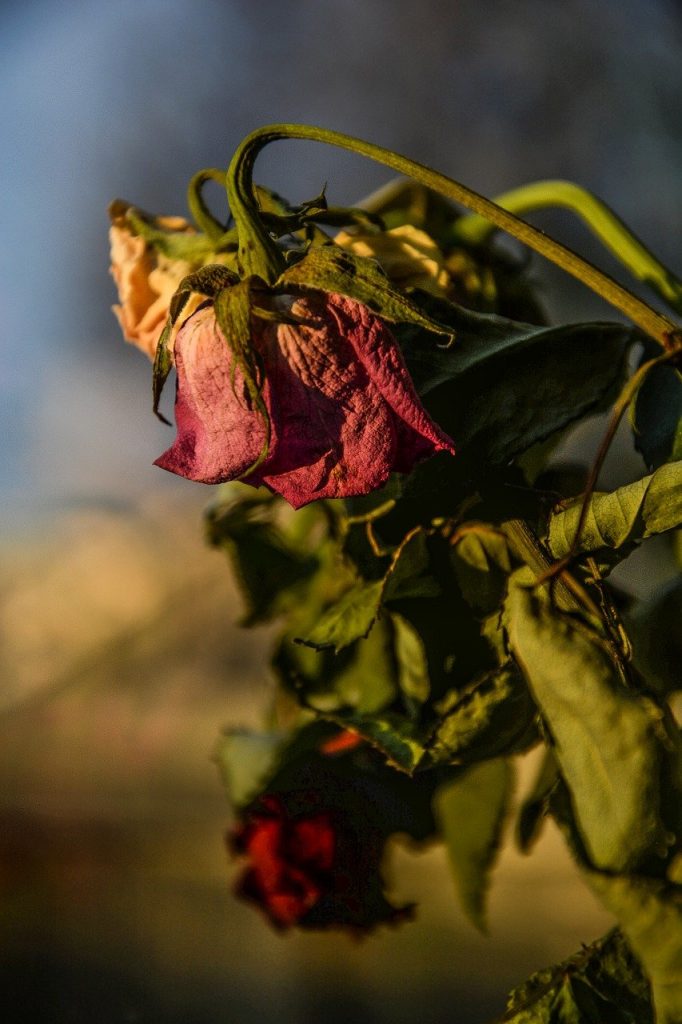
A battlefield struck by this spell does not explode. It collapses. Skin tightens. Lips split. Leaves curl inward. Roses blacken on the stem. Water elementals lose cohesion. Plant creatures wither from the veins outward. The smell left behind is not smoke but cellar-dry rot, dead petals, old straw, and cracked earth.
This is why Horrid Wilting should feel worse than ordinary battle magic. It is not only a way to kill enemies. It is a public demonstration that the caster can command drought inside living bodies.
Quick Rules Reference
- Current D&D / 2014-era spell: 8th-level Necromancy; 150-foot range; 30-foot cube; Constitution save; 12d8 necrotic damage on a failed save, half on a success.
- Constructs and undead: unaffected by the modern D&D spell.
- Plant creatures and water elementals: use the same 12d8 damage in modern D&D but make the save with disadvantage.
- Nonmagical plants: trees, shrubs and similar non-creature plants in the modern D&D cube wither and die instantly.
- Pathfinder 1e / D&D 3.5e: selectively targets living creatures; 1d6 damage per caster level, maximum 20d6.
- PF1e / 3.5e plant creatures and water elementals: 1d8 damage per caster level, maximum 20d8.
- Main edition split: modern D&D is an area spell; PF1e/3.5e is a selective multi-target spell with a 60-foot clustering limit.
- Material component: a bit of sponge.
Rules
Horrid Wilting by Edition
Abi-Dalzim’s Horrid Wilting — 5.5e / Current D&D
| Level | 8th-level Necromancy |
|---|---|
| Classes | Sorcerer, Wizard |
| Casting Time | 1 Action |
| Range | 150 feet |
| Area | 30-foot Cube |
| Components | V, S, M (a bit of sponge) |
| Duration | Instantaneous |
| Save | Constitution; half damage on a success |
You draw moisture from every creature in a 30-foot cube centred on a point within range. Each creature makes a Constitution saving throw, taking 12d8 Necrotic damage on a failed save or half as much on a success.
Constructs and undead are unaffected. Plant creatures and water elementals make the saving throw with disadvantage but take the same 12d8 damage as other affected creatures.
Nonmagical plants that are not creatures—such as trees and shrubs—wither and die instantly.
Current-rules note: D&D Beyond currently lists this spell for current Sorcerer and Wizard play without presenting a separate revised 2024 spell text, so this panel uses the current published listing rather than the old homebrew conversion previously on this page.
Abi-Dalzim’s Horrid Wilting — 5e / 2014-era Rules
| Level | 8th-level Necromancy |
|---|---|
| Classes | Sorcerer, Wizard |
| Casting Time | 1 action |
| Range | 150 feet |
| Area | 30-foot cube |
| Components | V, S, M (a bit of sponge) |
| Duration | Instantaneous |
| Save | Constitution; half damage on a success |
Every creature in the cube makes a Constitution save. A creature takes 12d8 necrotic damage on a failed save or half as much on a success.
Constructs and undead are unaffected. Plant creatures and water elementals make the save with disadvantage. Nonmagical plants in the area that are not creatures wither and die instantly.
No higher-slot scaling is listed. Casting it with a 9th-level slot does not add damage unless another rule or feature says otherwise.
Horrid Wilting — Pathfinder 1e
| School | Necromancy |
|---|---|
| Level | Sorcerer/Wizard 8, Water 8 |
| Casting Time | 1 standard action |
| Components | V, S, M/DF |
| Range | Long (400 ft. + 40 ft./level) |
| Targets | Living creatures; no two more than 60 ft. apart |
| Duration | Instantaneous |
| Saving Throw | Fortitude half |
| Spell Resistance | Yes |
Each targeted living creature takes 1d6 damage per caster level, maximum 20d6. A successful Fortitude save halves the damage, and Spell Resistance applies.
Plant creatures and water elementals instead take 1d8 damage per caster level, maximum 20d8.
Arcane material component: a bit of sponge.
Horrid Wilting — D&D 3.5e
| School | Necromancy |
|---|---|
| Level | Sorcerer/Wizard 8, Water 8 |
| Casting Time | 1 standard action |
| Components | V, S, M/DF |
| Range | Long (400 ft. + 40 ft./level) |
| Targets | Living creatures; no two more than 60 ft. apart |
| Duration | Instantaneous |
| Saving Throw | Fortitude half |
| Spell Resistance | Yes |
The spell evaporates moisture from each targeted living creature for 1d6 damage per caster level, maximum 20d6.
Plant creatures and water elementals instead take 1d8 damage per caster level, maximum 20d8. A successful Fortitude save halves damage and Spell Resistance applies.
Arcane material component: a bit of sponge.
What Changed?
- The modern spell is an area effect: every creature in a 30-foot cube is checked. PF1e/3.5e instead lets the caster choose living creatures within a clustered group.
- Modern damage is fixed at 12d8 Necrotic. PF1e/3.5e scale at 1d6 per caster level to 20d6.
- Plant creatures and water elementals changed: modern D&D gives them disadvantage on the save; PF1e/3.5e upgrades the damage die from d6 to d8.
- Modern D&D explicitly kills nonmagical plants in the cube. PF1e/3.5e targets living creatures and does not automatically destroy ordinary vegetation.
- Modern D&D explicitly excludes constructs and undead. PF1e/3.5e excludes them through the “living creatures” targeting restriction.
- The old page’s 400-foot selective-target “2024 conversion” has been removed. It was not the current published spell.
Legacy 3.0e Horrid Wilting
Necromancy
Level: Sorcerer/Wizard 8, Water 8
Components: V, S, M/DF
Casting Time: 1 standard action
Range: Long (400 ft. + 40 ft./level)
Targets: Living creatures, no two more than 60 ft. apart
Duration: Instantaneous
Saving Throw: Fortitude half
Spell Resistance: Yes
Each living target takes 1d6 damage per caster level, maximum 20d6. Water elementals and plant creatures instead take 1d8 per caster level, maximum 20d8. The arcane material component is a bit of sponge.
Why This Spell Is Dangerous in the World
Horrid Wilting is feared because it looks like the beginning of famine.
A soldier may understand fire. A sailor may understand lightning. A court may understand poison. But when a spell leaves dead bodies, dry roses, cracked lips, and a room that smells like old dust, witnesses do not describe it as ordinary violence. They describe it as a curse.
A caster known to possess this spell becomes politically dangerous. Harbour guilds fear them. Garden temples hate them. Water cults mark them. Nobles want them during sieges and fear them at banquets. Druids may treat repeated use as a sign of blight. Elemental powers may remember the caster’s name.
Used once, it wins a fight. Used publicly, it creates witnesses. Used repeatedly, it creates a reputation.
Best Uses
Breaking a Clustered Elite Guard
Horrid Wilting is strongest when enemies gather around someone important: bodyguards around a prince, priests around an altar, knights around a banner, or veteran soldiers defending a breach.
It punishes formation without needing to destroy the battlefield itself.
Killing Plant Horrors
Against treants, shambling mounds, assassin vines, awakened trees, corrupted orchard spirits, and similar creatures, the spell becomes especially brutal. This makes it a feared weapon in wars against blighted groves, hostile forests, and druidic strongholds.
Destroying Water Elemental Threats
Water elementals rely on fluid mass, engulfing pressure, and battlefield control. Horrid Wilting turns that nature into weakness. A caster who survives long enough to cast it may collapse the elemental before it can drown the field.
Siege and Command Assassination
Its reach depends on edition. Current D&D reaches 150 feet and fills a 30-foot cube; Pathfinder 1e and D&D 3.5e use long range and selective clustered targets. In either case, the spell can threaten defenders on walls, officers behind a line, siege crews, or ritualists at a key position.
It should not automatically win a war, but it can decide a key moment in a battle.
Tactics
For Player Characters
In current D&D, Horrid Wilting is a 30-foot-cube area spell, so allies inside the cube are affected and must be considered before casting. In Pathfinder 1e and D&D 3.5e, the caster selects living targets instead, making the legacy version much better at avoiding friendly fire.
It is also a strong answer to creatures that resist ordinary elemental damage but still have living bodies.
Do not waste it on undead, constructs, scattered enemies, or targets with no meaningful living moisture.
For Enemy Spellcasters
An enemy caster should use Horrid Wilting as a statement of power.
This is a spell for necromancer-kings, desert prophets, famine saints, plague sorcerers, blight witches, corrupted water-priests, and court magicians willing to murder a room without breaking the furniture.
A villain casting it should change the scene immediately. Servants drop. Roses blacken. A water elemental bodyguard collapses into vapour. The noble who hired the caster suddenly understands what kind of person has entered the hall.
Counterplay
Counterplay changes by edition. In current D&D, spacing out, denying a useful 30-foot cube, Counterspell, cover and strong Constitution saves matter most. In Pathfinder 1e and D&D 3.5e, Fortitude saves, Spell Resistance, the 60-foot clustering limit and disrupting the caster are the key defences.
Characters who know the spell exists should avoid clustering around a single leader, ritual focus, bridge, gate, banner, altar, or siege engine.
DM Notes
Keep the Horror Specific
Do not describe the spell as generic dark energy. Make it physical.
Good details include:
- Roses drying instantly in a vase.
- Tongues sticking to teeth.
- Wet footprints becoming powdery outlines.
- Green leaves curling inward.
- A water elemental losing shape and falling apart.
- Skin tightening across knuckles and cheekbones.
- Blood darkening at the lips.
- Armour straps slackening as bodies shrink beneath them.
Do Not Overstate the Spell
Horrid Wilting does not dry a whole kingdom. It does not erase a river. It does not turn a battlefield into desert. It is a lethal targeted spell, not a climate engine.
For larger effects, create a ritual, artifact, cursed battlefield, divine punishment, or mythic drought working.
Use Consequences
A public use of Horrid Wilting should leave social and supernatural consequences.
A royal court may ban the caster from future audiences. A temple of river, rain, fertility, healing, or agriculture may demand judgement. A druid circle may treat the caster as a blighter. A water elemental prince may send servants to investigate. A vineyard ruined by visible collateral signs may become a legal claim.
The spell is not dangerous only because it kills. It is dangerous because people understand what drought means.
Failure, Risk, and Misuse
The Wrong Targets
Horrid Wilting is wasted against undead, constructs, animated objects, and many artificial guardians. A lich, golem, death knight, or clockwork sentinel may stand untouched while living allies collapse around it.
Political Exposure
This spell is difficult to hide after the fact. Bodies, flowers, plants, and water-servants may all show the same dry signature. In a city or court, that evidence can matter.
Sacred Offence
River shrines, rain temples, fertility cults, agricultural communities, and water-bound spirits may treat this spell as more than battlefield violence. Even legal use may demand purification, compensation, or oath-binding.
Reputation Damage
A hero who relies on Horrid Wilting may not be treated as a clean battlefield mage. Common people may fear them as a bringer of famine, plague, and dead wells.
Spellcasting Culture and Worldbuilding Hooks
The Sponge Token
Some necromancers carry the material component as a ritual object: a dried sea sponge, a sponge taken from a drowned shrine, a sponge soaked in blood and dried under a new moon, or a sponge stolen from a royal bathhouse.
In polite courts, possession of such a token may be enough to cause alarm.
Dead Roses as a Sign
A withered rose can become the spell’s calling card. Assassins, blight-priests, and necromantic diplomats may leave dried roses at scenes where they want the cause of death understood.
This is especially effective in noble, romantic, or courtly plots where roses normally suggest love, beauty, marriage, or dynastic alliance.
Water Temples Hate It
Priests of rivers, rain, wells, fertility, healing springs, marshes, and sacred lakes may treat Horrid Wilting as profane. Even if the caster uses it lawfully, sacred authorities may demand judgement.
The Blight Duel
Two high-level casters may duel without fire, lightning, or obvious spectacle. One brings water, growth, mist, and healing. The other brings wilting, thirst, dust, and dead petals.
The battlefield becomes a moral argument as much as a magical contest.
Adventure and Worldbuilding Hooks
1. The Rose Garden Murder
A noblewoman, her guards, and a table of petitioners are found dead in a private rose garden. Nothing is burned. No weapon is found. Every rose in the garden is black and brittle, though rain fell the night before.
The court wants a murderer. The gardeners insist the roses died first.
2. The Water Elemental’s Complaint
A bound water elemental survives a failed assassination attempt but returns diminished, polluted, and furious. It claims a mortal caster used a drought-killing spell forbidden by an old river compact.
The party must decide whether the law of the river has standing in a mortal court.
3. The Siege Without Fire
During a siege, defenders on the walls begin dying in clusters. No stones fall. No ladders rise. No fire is launched. The enemy army has brought a hidden caster who can kill across the battlefield without damaging the fortress.
The party must find the caster before the city’s morale collapses.
FAQ
Does Horrid Wilting affect undead?
No. The spell targets living creatures. Undead are not living creatures.
Does Horrid Wilting affect constructs?
No. Constructs are not living creatures unless a specific creature has unusual rules saying otherwise.
Can Horrid Wilting dry up a river?
No, not as written. It targets living creatures. Drying a river should require a larger ritual, artifact, curse, divine punishment, or mythic version of the spell.
Does Horrid Wilting kill ordinary plants?
In current D&D, yes: nonmagical plants in the 30-foot cube that are not creatures, such as trees and shrubs, wither and die instantly. In Pathfinder 1e and D&D 3.5e, the spell targets living creatures, so ordinary vegetation is not automatically damaged by the spell’s mechanics.
Are plant creatures and water elementals affected more severely?
Yes, but differently by edition. In current D&D, plant creatures and water elementals make their Constitution save with disadvantage but still take the normal 12d8 necrotic damage. In Pathfinder 1e and D&D 3.5e, their damage die increases from d6 to d8, to a maximum of 20d8.
Historical Context
Drought and famine have always carried meanings beyond bad weather. They threaten food, trade, labour, disease resistance, political legitimacy, and social order. Encyclopaedia Britannica notes that famine may be caused by drought, flooding, cold, vermin, plant disease, and war, making failed water and failed harvests among the oldest fears of settled life.
Mythical Context
Rivers also mattered as sacred powers, not merely useful waterways. In Greek tradition, the Potamoi were river gods connected to streams, springs, and local agricultural life. Theoi’s overview of the Potamoi preserves this older idea of rivers as named, divine, and socially important powers rather than neutral terrain.
Roses add a useful visual symbol for this spell. They are beautiful, fragile, cultivated, courtly, and immediately readable at the table. A dried rose in a noble hall says more than a paragraph of explanation: love has failed, hospitality has failed, and living beauty has been reduced to brittle evidence.
For campaign use, Horrid Wilting should draw from these associations. It is not only a damage spell. It is the battlefield version of the dead garden, the failed harvest, the empty cistern, the cracked fountain, and the sacred river that no longer answers.
Useful external references: Encyclopaedia Britannica — Famine; Theoi — Potamoi, Greek River-Gods; Theoi — Cult of the Potamoi.
Keep this reference growing
If this page helped with your reading or game, you can support its upkeep or explore the curated books.
Explore the Bookshop — epics, classics and stories behind imagined worlds.