
Ghoul Light Spell: Corpse-Green Flame for Crypts and Undead Rites
Ghoul Light Spell: Corpse-Green Flame for Crypts and Undead Rites
A cold green flame rises from a touched object, casting torchlight without heat while strengthening nearby undead against turning.
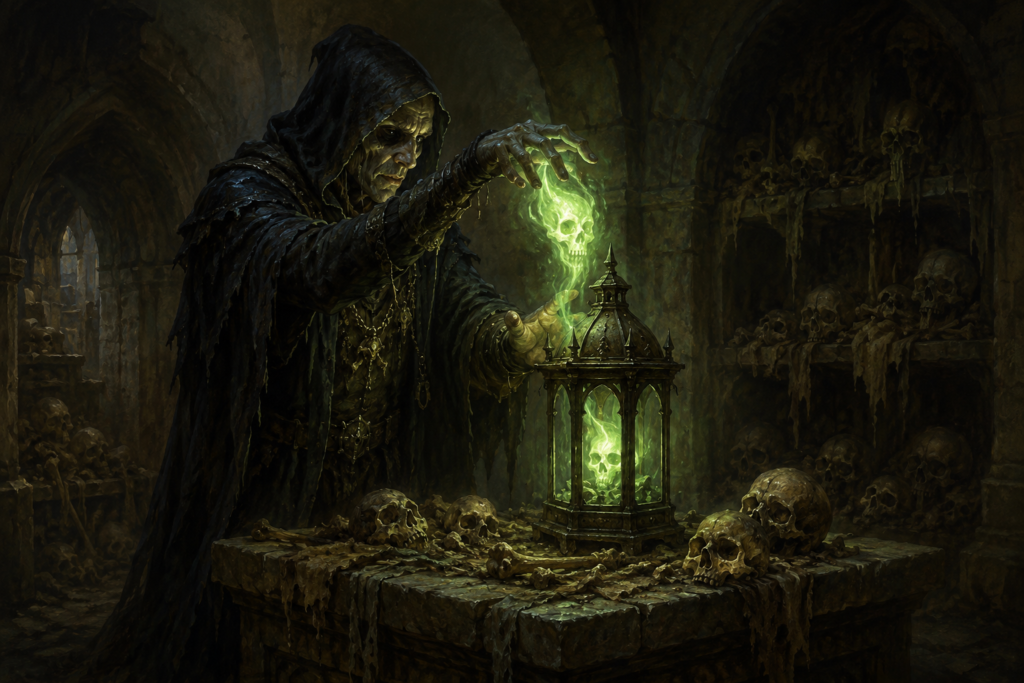
Ghoul light creates a sickly green flame that burns like a torch but gives off no heat, consumes no air, and cannot be quenched like ordinary fire. It is not a battle spell or a simple lighting trick. Its real purpose is necromantic preparation: a corpse-flame set in a crypt, shrine, sealed cellar, plague house, or undead watchpost.
A green flame guttering in a tomb means someone expected the dead to move there. A lantern burning with ghoul light may be a warning, a cult sign, or a portable shrine for undead servants.
Quick Rules Reference
- Creates a magical, heatless green flame on an object the caster touches.
- Gives light roughly comparable to a torch.
- Does not produce heat, consume oxygen, or burn fuel.
- Can be covered or hidden, but not smothered or quenched.
- Undead within 30 feet become harder to turn.
- Multiple ghoul light sources do not stack.
- Darkness spells of 2nd level or higher can counter it.
Effect
When the caster touches an object, a sickly green flame springs from it. The flame sheds light like a torch but produces no heat and does not require air. Covering the object blocks the light, but ordinary smothering, lack of oxygen, water, or absence of fuel does not extinguish the effect.
The spell also gives nearby undead a small defensive benefit against turning. In play, this makes ghoul light useful in prepared undead lairs, guarded crypts, hunger shrines, sealed burial tunnels, and places where necromancers expect clerics or exorcists to intrude.
Mechanics Tabs
The rules below are mechanics compatible for different game editions.
Ghoul Light 5.5e / 2024
Ghoul Light, Pathfinder 1e / 3.5e
Ghoul Light 3.0e
Ghoul Light 5.5e / 2024-Compatible Version
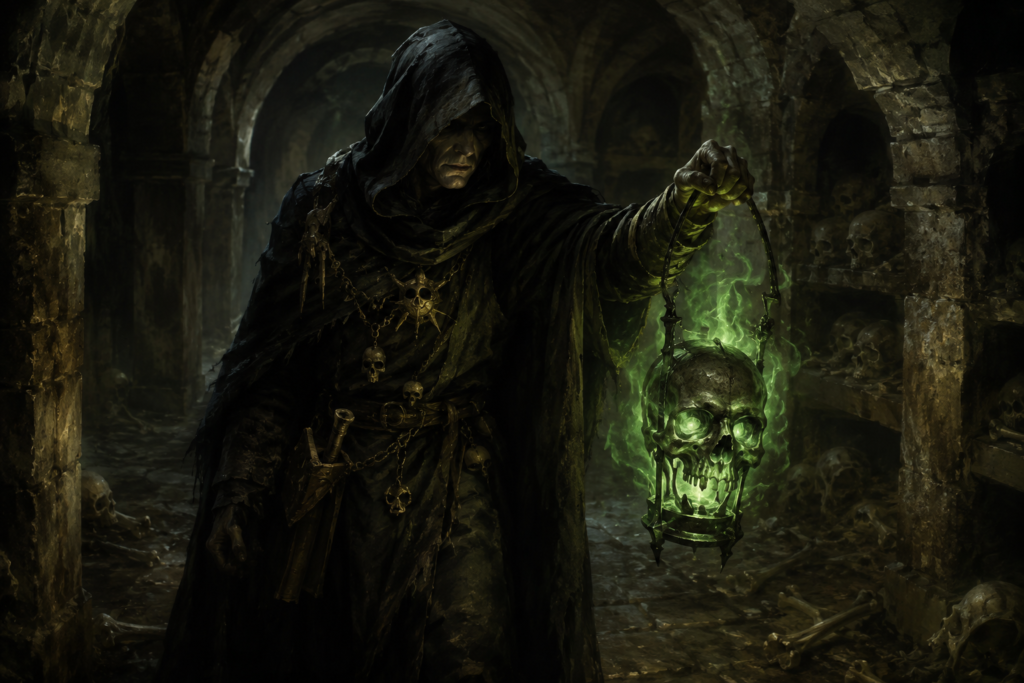
1st-level necromancy
Casting Time: 1 Action
Range: Touch
Components: V, S, M (a bit of rendered fat)
Duration: 10 minutes
School: Necromancy
Alternative Spell Name: Corpseflame
You touch one object that is not being worn or carried by an unwilling creature. A sickly green, heatless flame appears on the object for the duration.
The flame sheds bright light in a 20-foot radius and dim light for an additional 20 feet. It creates no heat, consumes no oxygen, and does not ignite objects. The flame can be covered, hidden under cloth, placed inside a closed lantern, or otherwise blocked from view, but it cannot be extinguished by water, wind, smothering, or lack of air. Dispel magic can end it.
Undead creatures within 30 feet of the flame gain a +1 bonus to saving throws against effects that turn undead. Multiple ghoul light spells do not stack.
A spell that creates magical darkness of 2nd level or higher suppresses the light while the areas overlap. If the darkness ends before ghoul light does, the green flame becomes visible again.
Notes: This spell helps undead resist turning only. It does not grant resistance to radiant damage, improve attacks, provide concealment, or protect undead from holy water, sacred ground, or unrelated magic.
Ghoul Light, Pathfinder 1e / 3.5e-Compatible Version
Necromancy
Level: Hunger 1
Components: V, S, M
Casting Time: 1 standard action
Range: Touch
Effect: Magical, heatless flame
Duration: 10 minutes/level
Saving Throw: None
Spell Resistance: No
A sickly green flame springs from an object you touch. The flame gives light as a torch, but produces no heat, consumes no oxygen, and does not burn fuel. It can be covered or hidden, but it cannot be smothered or quenched by ordinary means.
All undead creatures within 30 feet of a source of ghoul light gain +1 turn resistance. Multiple ghoul light sources do not stack.
Darkness spells of 2nd level or higher can counter ghoul light.
Material Component: A bit of rendered fat.
Notes: The spell modifies turn resistance only. It does not grant energy resistance, fast healing, damage reduction, concealment, or any broader undead empowerment. If an undead creature leaves the 30-foot area, it immediately loses the benefit.
Ghoul Light 3.0e
A sickly green flame springs forth from an object that you touch.
(Spell Compendium, p. 105)
Necromancy
Level: Hunger 1,
Components: V, S, M,
Casting Time: 1 standard action
Range: Touch
Effect: Magical, heatless flame
Duration: 10 minutes/level
Saving Throw: None
Spell Resistance: No
The effect looks like a regular flame, equivalent in brightness to a torch, except for its green hue, but it creates no heat and doesn’t use oxygen. Ghoul light can be covered and hidden, but not smothered or quenched.
All undead within 30 feet of a source of ghoul light gain +1 turn resistance. Multiple ghoul light sources do not stack.
Darkness spells of 2nd level or higher can counter ghoul light.
Material Component: A bit of rendered fat.
Why This Spell Is Dangerous in the World
Ghoul light is dangerous because it marks preparation. A single green flame may not kill anyone, but it means the dead have been given a place, a sign, and a little protection against holy command.
Temples, grave guilds, city watches, and plague courts treat the spell as evidence. A heatless green flame in a cellar suggests corpse handling, hunger cult activity, hidden undead, or a shrine built for creatures that should not be gathering strength beneath a living settlement.
Rules Clarifications and Edge Cases
- Does it burn things? No. The flame looks like fire but produces no heat and does not ignite material.
- Can it work underwater or in a sealed tomb? Yes. It does not require oxygen.
- Can a character hide it? Yes. Covering the object blocks the light, but does not end the spell.
- Can water put it out? No. Water, wind, and smothering do not quench it.
- Do several castings help undead more? No. Multiple sources do not stack.
- Does it help living necromancers? Not directly. Its defensive benefit applies to undead, not to living casters.
Good Combinations
- Animate Dead: Ghoul light suits a prepared crypt, shrine, or guard chamber where undead are expected to hold ground.
- Desecrate: Both spells support undead in a fixed location, making them natural companions in corpse-pits, tomb chapels, and necromantic temples.
- Darkness: Higher-level magical darkness can counter or suppress the corpse-green flame, while lower shadow effects can create useful contrast around it.
Adventure Hooks
The Lantern in the Plague House. A boarded-up house still glows green from its upper window every night. The locals believe it is a ghost light, but the flame marks the room where plague corpses were hidden.
The Crypt That Will Not Go Dark. Priests keep covering the corpse-flames in an old burial vault, but the lights return after each failed cleansing. The problem is not the flame itself, but the relic beneath it.
The Green Watchfires. Scouts report strange green torches burning along an old battlefield. Each light strengthens the undead buried near it, turning a forgotten war grave into a prepared necromantic defence line.
Historical and Mythic Context
Ghoul light draws first from the figure of the ghoul: a grave-haunting, corpse-eating being associated with burial grounds, ruins, and deserted places. The spell’s corpse-green flame works because it does not feel like ordinary fire. It feels like a sign that the dead have claimed the room.
The spell also belongs to the older fear of unnatural night lights: ghost-lamps, corpse-candles, marsh flames, and will-o’-the-wisp traditions, where a strange flame in the dark is warning, temptation, or misdirection rather than comfort. Ghoul light behaves like fire only from a distance. Once examined, it reveals itself as omen, signal, and ritual mark.
The material component gives the spell its bodily ugliness. Rendered fat recalls tallow, corpse-grease, plague carts, grave candles, and the practical horror of magic made from flesh. This is not just green light. It is a corpse-lamp: a small, persistent sign that death has been rendered into fuel and made useful to the hungry dead.
Keep this reference growing
If this page helped with your reading or game, you can support its upkeep or explore the curated books.
Explore the Bookshop — epics, classics and stories behind imagined worlds.