
Darkseed Spell – Druid Cantrip for Plant Blight, Crop Sabotage, and Wilderness Mysteries
A druidic cantrip that plants a hidden wasting curse in living green matter, killing small plants quietly and leaving larger growth scarred, sickened, and marked.
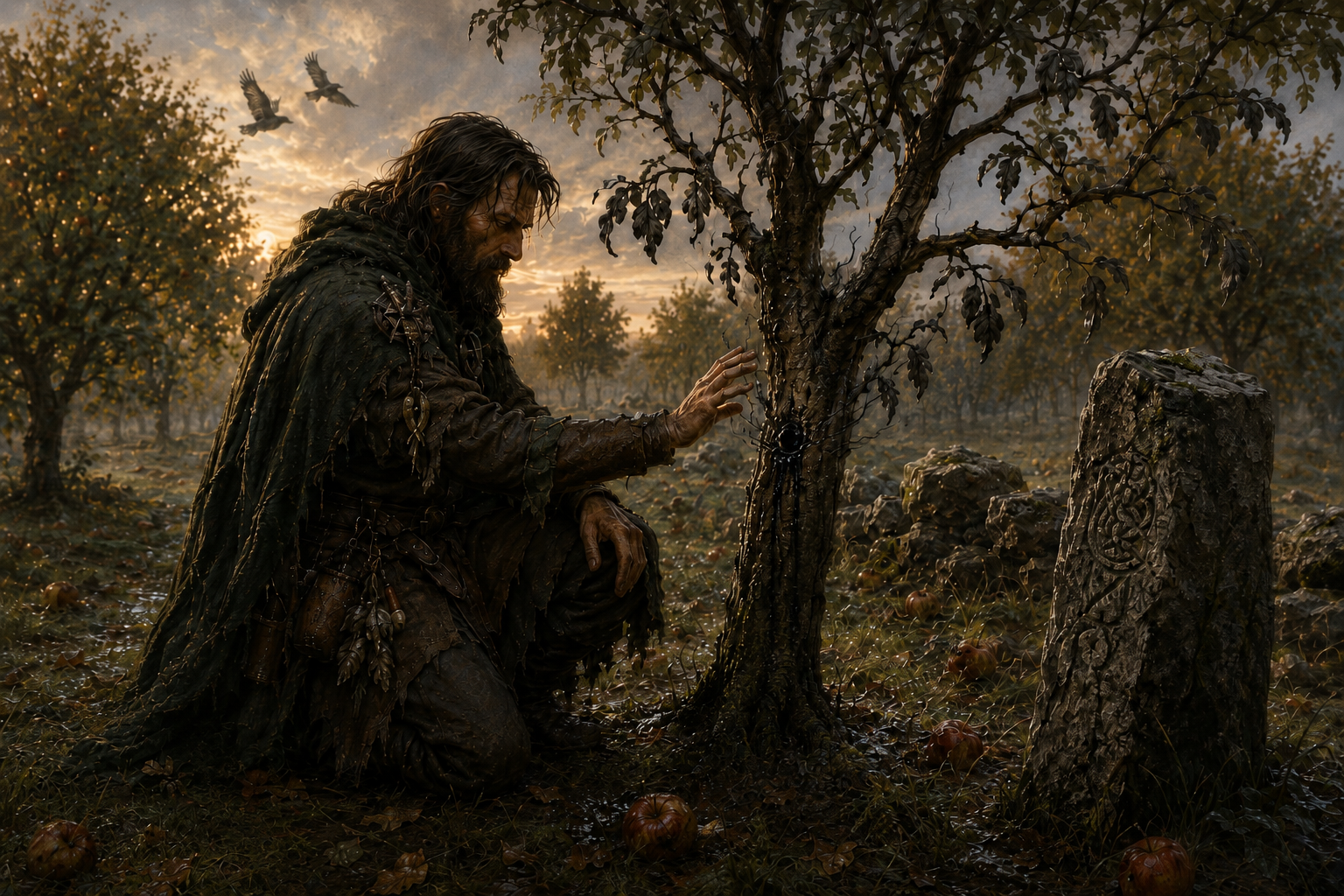
Not every druidic spell restores the green world. Some cut infection from root and stem. Some punish trespass. Some are whispered into orchards, hedges, vines, and sacred trees when the caster wants death to look like blight.
Darkseed is a small spell with an ugly purpose. It does not explode a tree or reduce a forest to ash. It places a wasting impulse inside living plant tissue and lets time do the harm. A flower blackens. A crop stalk droops. A hedge-section thins by morning. A sapling may be lost within a day. A great tree survives one casting, but it remembers the wound.
At the table, Darkseed is not a combat finisher. It is a sabotage cantrip, a druidic judgement, a crop-killer, a clue in a wilderness mystery, or the first sign that someone is turning plant-magic against the land.
Quick Rules Reference
- Spell role: Slow plant-damage cantrip.
- Core effect: Damages one living plant or suitable plant creature immediately, then again each hour.
- Best targets: Flowers, crops, vines, hedges, shrubs, saplings, living plant hazards, and mindless plant creatures.
- Poor targets: Mature trees, ancient trees, awakened plants, treants, dryad-bound trees, sacred groves, and intelligent plant creatures.
- Main limitation: The target must be living plant matter, not dead wood or worked plant material.
- Best play use: Sabotage, investigation, crop curses, druidic feuds, orchard murders, sacred grove violations, and slow ecological crimes.
Mechanics
Darkseed 5.5e / 2024
Darkseed, Pathfinder 1e / 3.5e
Darkseed 3.0e
Darkseed 5.5e / 2024
Transmutation Cantrip
Casting Time: Action
Range: 30 feet
Components: V, M (a druidic focus)
Duration: 24 hours
Alternative Spell Name: Withering Seed
Available To: Druid
Effect
Choose one living plant or one mindless Plant creature within range that you can see. The target must be living plant matter, such as a flower, crop stalk, vine, hedge, shrub, sapling, tree, living bramble, living root-mass, or plant creature with no meaningful self-awareness.
The target makes a Dexterity saving throw. An unattended ordinary plant automatically fails this save unless it is protected by magic, rooted in a warded place, carried by a creature, or otherwise actively defended.
On a failed save, the target takes 1 Necrotic damage when the spell is cast. For the next 24 hours, it takes 1 Necrotic damage at the end of each hour while the spell remains active.
This damage ignores ordinary bark, natural toughness, and mundane hardness. It does not ignore immunity to Necrotic damage on a creature unless the DM rules the target is ordinary non-creature plant life rather than a statted creature.
Valid Targets
Darkseed can affect:
- Flowers, crops, weeds, roots, mosses, vines, hedges, shrubs, saplings, and trees.
- Living brambles, root snares, thorn barriers, and similar plant hazards.
- Mindless Plant creatures, such as animated vines, hostile brambles, or magically mobile plant masses.
- Mundane fungal growth if your campaign treats it as plant-like environmental growth rather than a creature.
Darkseed cannot affect:
- Dead wood, planks, doors, shields, bows, arrows, rope, paper, books, wicker, furniture, or worked timber.
- Intelligent, awakened, named, spirit-bound, fey-touched, or self-willed Plant creatures.
- Plant creatures with Intelligence 3 or higher.
- Treants, dryad-bound trees, sacred grove trees, divine vegetation, world-tree roots, or other major mythic plants unless a specific adventure condition makes them vulnerable.
- A creature simply because it is wearing, carrying, or standing beside plants.
Running the Damage
Do not track Darkseed round by round unless the target is a creature currently in combat. For ordinary plants, apply the hourly damage narratively.
Use these benchmarks:
- Tiny plant, herb, flower, or seedling: Usually dies within a few hours.
- Small crop plant or garden plant: Often dead by the end of the spell.
- Thick vine, hedge section, shrub, or young sapling: Severely weakened or killed, depending on size.
- Mature tree: Scarred or locally damaged by one casting, but not killed.
- Ancient tree: Barely harmed by one casting unless the story gives the spell special leverage.
- Living plant barrier: May develop a weak point rather than collapse entirely.
A creature can end the effect early by cutting away, burning away, or magically cleansing the infected portion, provided it can physically reach the affected growth. A successful Intelligence (Nature), Wisdom (Survival), Wisdom (Medicine), or Intelligence (Arcana) check against the caster’s spell save DC identifies the magical wasting before the next hourly damage occurs.
Repeated Castings
Repeated castings can eventually kill larger plants, but Darkseed should not become a casual forest-erasing tool.
For large plants and trees, repeated use should create visible symptoms before death: black knots beneath bark, leaves greying from the edges inward, fruit collapsing, sap darkening, insects gathering around the wound, and birds avoiding the marked branch.
A mature tree should require sustained attention over days or weeks. An ancient, sacred, or magically significant tree should require more than repeated cantrip use unless the campaign deliberately makes Darkseed part of a larger curse, ritual, or violation.
Combat Use
Against a Plant creature, Darkseed is usually weak in direct combat. It deals only minor immediate damage and works slowly. Its combat value is situational:
- Marking a plant creature that may flee or hide.
- Preventing a living vine or root hazard from fully recovering.
- Creating a visible weak point on a plant-based obstacle.
- Establishing that a creature is plant-like, mindless, or vulnerable to plant-wasting magic.
- Adding pressure in a long chase, siege, or exploration scene.
Darkseed does not harm animals, humanoids, undead, constructs, oozes, ordinary objects, or creatures merely associated with plants.
Darkseed, Pathfinder 1e / 3.5e
School: Transmutation
Level: Druid 0
Components: V, DF
Casting Time: 1 standard action
Range: Close, 25 ft. + 5 ft./2 levels
Target: One normal plant or eligible plant creature
Duration: 1 day
Saving Throw: Reflex negates
Spell Resistance: Yes
Effect
You implant a hidden darkseed of wasting magic into a living plant. The spell affects one normal plant or one eligible plant creature within range.
If the target fails its Reflex save, it takes 1 point of damage when the spell is cast. It then takes 1 additional point of damage every hour for the spell’s duration.
Damage from Darkseed ignores hardness.
Eligible Targets
Darkseed can affect:
- Normal living plants, including flowers, crops, weeds, vines, hedges, shrubs, saplings, trees, roots, and mosses.
- Living plant hazards such as brambles, strangling vines, root masses, or thorn barriers.
- Plant creatures that lack meaningful selfhood.
Darkseed does not affect plant creatures with both Wisdom and Charisma scores. At the table, this means it fails against awakened plants, treants, dryad-bound trees, intelligent plant monsters, spirit-bearing trees, named sacred trees, and any plant creature with personality, memory, speech, loyalty, fear, worship, or negotiation.
Darkseed does not affect dead wood, worked wood, rope, paper, planks, shields, bows, doors, carts, furniture, books, wicker, or other plant-derived objects. The target must be living plant matter.
Adjudication
For small plants, Darkseed can be fatal within the spell’s duration. For shrubs, vines, hedges, and saplings, it may kill or seriously weaken the target depending on size. For a mature tree, one casting usually creates a visible wound but does not kill the whole tree. Killing a large tree requires repeated applications over a long period.
A character examining the target may identify the magical wasting with a successful Knowledge (nature), Heal, Spellcraft, or Survival check against the spell’s save DC. Removing the infected tissue, cleansing the plant with appropriate magic, or applying plant-restoring magic may end the effect at the GM’s discretion.
Combat Use
Darkseed is rarely a strong combat spell. It is useful against plant hazards, rooted creatures, animated vines, brambles, creepers, and mindless plant monsters when slow damage matters. In a short fight, its immediate damage is minor.
Its real use is in attrition, sabotage, wilderness investigation, and evidence.
Darkseed 3.0e
(Masters of the Wild: A Guidebook to Barbarians, Druids, and Rangers)
Originally posted on D&D tools
Transmutation
Level: Druid 0,
Components: V, DF,
Casting Time: 1 action
Range: Close (25 ft.+ 5 ft./2 levels)
Target: One normal plant or plant creature
Duration: 1 day
Saving Throw: Reflex negates
Spell Resistance: Yes
If the target fails its Reflex save, it takes 1 point of damage when the spell is cast and another every hour while it is in effect. Hardness is ignored for damage from darkseed.
It would take weeks to kill a large tree with successive applications of this spell, but a small plant would die in a matter of hours. Darkseed does not affect plant creatures with Wisdom and Charisma scores.
Why Darkseed Is Dangerous in the World
Darkseed is dangerous because it looks like almost nothing when cast.
There is no thunderclap. No green fire. No spectacular rot. The caster speaks a word, invokes the old power of root and decay, and a plant begins to fail. By the time the damage is obvious, the caster may be gone and the first explanation may be drought, frost, insects, bad soil, or natural blight.
That makes the spell frightening in orchards, vineyards, monastery gardens, sacred groves, hedge-bound fields, poisoners’ plots, border disputes, and druidic politics. A cantrip that kills one flower is petty. A cantrip used every night along a lord’s orchard wall is an economic attack.
The spell’s moral weight depends on intent. A druid may use it to destroy invasive growth, cut away disease, weaken a monstrous bramble, or stop a cursed vine from spreading. The same spell can ruin a village’s beans, kill grafted fruit trees, destroy medicinal herbs, or mark a sacred tree for slow death.
The magic is small. The consequences are not.
Best Uses in Play
Quiet Sabotage
Darkseed works when someone wants harm that looks natural at first. A vineyard fails before tax season. A rose garden withers before a wedding. A single tree beside an old boundary stone turns grey while the rest of the field remains healthy.
The spell is most interesting when the damage creates motive, suspicion, and evidence.
Druidic Judgement
A druid circle may use Darkseed against crops grown on stolen common land, trees planted after illegal clearances, hedges raised to enclose old paths, or invasive plants choking a sacred spring.
This does not make the act harmless. Even justified use can create hunger, feud, and retaliation.
Wilderness Clues
Darkseed can mark a trail more subtly than footprints. A blackened vine may show where an intruder passed. A dead root may reveal where a ritual circle touched the ground. A line of dying weeds may trace an invisible boundary.
Plant Hazard Control
The spell can weaken living brambles, creeping vines, root snares, thorn barriers, and minor plant hazards. It should not instantly clear a passage, but it can create a weak point, soften a barrier overnight, or make a dangerous crossing safer by morning.
Villain Signature
A corrupted druid, hedge-witch, blight-priest, poisoner-ranger, land-cursed noble, or spiteful gardener can use Darkseed as a quiet calling card. The wounds are subtle enough for common folk to miss, but a skilled druid recognises deliberate harm.
Failure, Risk, and Misuse
Darkseed should create consequences when used carelessly.
A party that uses it on crops may be committing sabotage, theft, famine-making, or sacrilege depending on local law. A party that uses it on a sacred tree may attract druids, spirits, fey, village elders, temple authorities, or ancestral powers. A party that uses it to test whether a plant is intelligent may offend exactly the being they hoped to understand.
The spell can also mislead. Natural disease, parasitic plants, curse-blight, insect damage, drought, and Darkseed may look similar at first glance. A rushed accusation can start a feud before the truth is known.
Good use of Darkseed should give the players a choice: exploit the plant’s vulnerability, preserve it, investigate it, or recognise that damaging the green world may cost more than the spell’s level suggests.
Investigation and Counterplay
Darkseed is strongest when someone can discover it before the damage becomes irreversible.
Useful clues include:
- One plant dying faster than surrounding plants.
- Blackened knots under bark rather than surface rot.
- Sap darkening at a single point.
- Fruit collapsing inward while neighbouring fruit remains healthy.
- Insects avoiding the wound or gathering unnaturally around it.
- Leaves greying from the edges inward.
- A faint magical aura lingering in living tissue.
- Repeated wounds forming a line, symbol, boundary, or deliberate pattern.
Good counterplay includes:
- Cutting away infected tissue.
- Burning diseased growth before it spreads.
- Using plant-restoring magic.
- Investigating who had access to the plant.
- Comparing affected and unaffected roots.
- Speaking with nearby plants, animals, spirits, or gardeners.
- Searching for a pattern in what was attacked and what was spared.
Darkseed should not be an invisible “gotcha.” If the spell matters, attentive characters should have a chance to notice, diagnose, and respond.
How Darkseed Changes a Scene
Darkseed is most useful when the affected plant matters to someone.
A dying rose may ruin a marriage alliance. A failing hedge may reopen a disputed path. A poisoned orchard may threaten rents, taxes, winter stores, and inheritance. A blackened sacred tree may signal broken vows. A dead vine across a wall may reveal where a thief entered. A ruined herb garden may deprive a village of medicine before plague season.
The spell is not about damage numbers. It is about what the dying plant means.
Rules Clarifications and Edge Cases
Can Darkseed kill a huge tree?
Not with one casting. A single casting may scar, sicken, or damage a local portion of the tree. Repeated castings over time can threaten a large tree, but mature and ancient trees should require sustained effort.
Can Darkseed affect a wooden door?
No. A wooden door is dead, worked wood. Darkseed affects living plant matter.
Can Darkseed affect a bow, staff, wand, shield, or rope?
No, unless the item is a living plant object in a specific magical scene. Ordinary worked plant material is not a valid target.
Can Darkseed affect a treant?
Usually no. Treants and similar beings have selfhood. The original spell excludes plant creatures with Wisdom and Charisma scores; modern handling should exclude intelligent, awakened, named, spirit-bearing, or socially aware plant creatures.
Can Darkseed affect a dryad’s tree?
Not casually. A dryad-bound tree is mythically and spiritually significant. If Darkseed can affect it at all, that should be part of a larger plot condition, broken protection, curse, or ritual.
Can characters use Darkseed to solve every plant obstacle?
No. It is slow and narrow. It can weaken a living bramble, damage a vine, or create a weak point. It should not replace higher-level magic, tools, fire, axes, negotiation with spirits, or proper exploration.
Does Darkseed spread?
No by default. It affects one target. If a campaign wants spreading blight, that should be a stronger curse, disease, ritual, monster trait, or environmental hazard rather than the normal cantrip effect.
Adventure and Worldbuilding Hooks
The Orchard That Testified
A lord claims his rival poisoned an orchard before harvest. The rival insists the trees are suffering natural blight. A druid examining the bark finds tiny black knots in a pattern that follows the boundary stones of an older, disputed field.
The party must determine whether the orchard was attacked, whether the land was stolen, and whether the trees are victims, witnesses, or both.
The Wedding Rose
On the morning of a noble wedding, every white rose in the bride’s garden turns grey and collapses. No servant saw an intruder, but the dying stems form a line pointing toward an old well sealed beneath the manor chapel.
The spell was not cast to kill roses. It was cast to reveal where something had been buried.
The Hedge War
Two villages dispute a living hedge that marks their boundary. One side accuses the other of cutting it back. The other swears the hedge is dying from within. Both are partly right: someone is using Darkseed one section at a time to erase the old border before the reeve, steward, or lord’s surveyor arrives to settle the rents.
The party must discover whether this is petty village sabotage, a noble land-grab, or an old boundary trying to reassert itself through the dying hedge.
The Druid’s Mercy
A forest circle uses Darkseed to kill diseased trees before a creeping root-blight reaches the old heartwood. Local woodcutters see only druids murdering healthy timber and blocking winter fuel. The circle insists the loss is necessary.
The party must decide whether the druids are sacrificing a few trees to save the wood, concealing a blight they unleashed, or enforcing a forest law no village council accepts.
The Black Root Under the Shrine
A sacred tree begins to die above an ancestral shrine. Darkseed is only the surface wound. Beneath the roots, something has been drinking the blood, milk, and grain left as offerings, and the tree was beginning to show the theft in its leaves.
Someone cast the spell to kill the witness before the village understood that its dead were no longer receiving what they were owed.
Related Spell Ideas
Darkseed pairs especially well with spells and effects that reveal, communicate with, protect, or manipulate plant life.
- Detect Magic: Reveals lingering transmutation before the damage looks natural.
- Druidcraft: Helps compare ordinary plant behaviour against unnatural decline.
- Speak with Plants: Lets nearby plants describe impressions of the casting, if the campaign allows plant testimony.
- Plant Growth: Can protect or restore surrounding vegetation while isolating damaged growth.
- Lesser Restoration or plant-healing magic: May cleanse the wasting if the DM allows the spell to affect plant life.
- Pass without Trace: Helps a saboteur leave no mundane trail, making the plant wound the key evidence.
Historical, Botanical, and Mythic Context
Darkseed works best when imagined through the real language of parasitic plants, plant disease, blight, canker, and slow living decay rather than as a simple “evil seed.” Parasitic plants do not merely rest on their hosts. Many form specialised structures called haustoria that penetrate host tissue and draw water or nutrients from the living plant. For useful botanical background, see Encyclopaedia Britannica on parasitic plants and haustoria.
The Natural History Museum gives another useful image for the spell: parasitic plants may attach to their hosts, draw nourishment, and sometimes remain partly hidden until the damage becomes visible. That is close to the mood Darkseed needs at the table. It should not look like a burst of green light, a theatrical curse, or an explosion of rot. It should look like something small taking hold beneath the surface: a black point under bark, a softening node on a vine, a grey line spreading through a leaf vein, or a place where sap darkens before anyone understands why. See the Natural History Museum’s overview of parasitic plants and how they attach to hosts.
Plant disease gives the spell equally strong visual language. Blights, wilts, cankers, dieback, fungal infection, and bacterial disease can mark living plants with withered blossoms, shrivelled shoots, darkened stems, leaf loss, sunken lesions, oozing wounds, and sudden collapse. For table description, the Royal Horticultural Society’s disease guides are useful references, especially fireblight and box blight.
In a late medieval fantasy world, this matters because plants are not background decoration. Orchards are inheritance. Hedges are law. Vines are trade. Herb gardens are medicine. Flax, dye plants, beans, grain, grafted fruit trees, and monastery gardens are part of food, clothing, rent, healing, and social order. Killing one plant may be vandalism; killing the right plant may be sabotage, sacrilege, famine-making, or a declaration of feud.
Sacred trees carry even more weight. A tree may mark a grave, boundary, oath, spring, ancestral shrine, spirit-haunt, or place where judgement was once given. In that context, Darkseed is not merely plant damage. It is an attack on memory, witness, land-right, and divine favour. A withered rose may expose a false marriage. A dying hedge may reveal an erased border. A blackened root beneath a shrine may show that something below the earth has been feeding on offerings meant for the dead.
For campaign use, the spell should leave evidence. Its damage may imitate natural disease at first, but close attention should reveal deliberate pattern: affected plants along a boundary line, only grafted branches failing, sacred herbs dying while weeds survive, or a single black mark repeated at the height of a caster’s hand. The question should not simply be “what killed the plant?” The stronger question is “why was this plant chosen?”
Keep this reference growing
If this page helped with your reading or game, you can support its upkeep or explore the curated books.
Explore the Bookshop — epics, classics and stories behind imagined worlds.