
 Buy me a coffee
Darkness, “Veil of the Lightless”
Darkness Spell Guide: Best Uses, Tactics, Combos, and DM Secrets
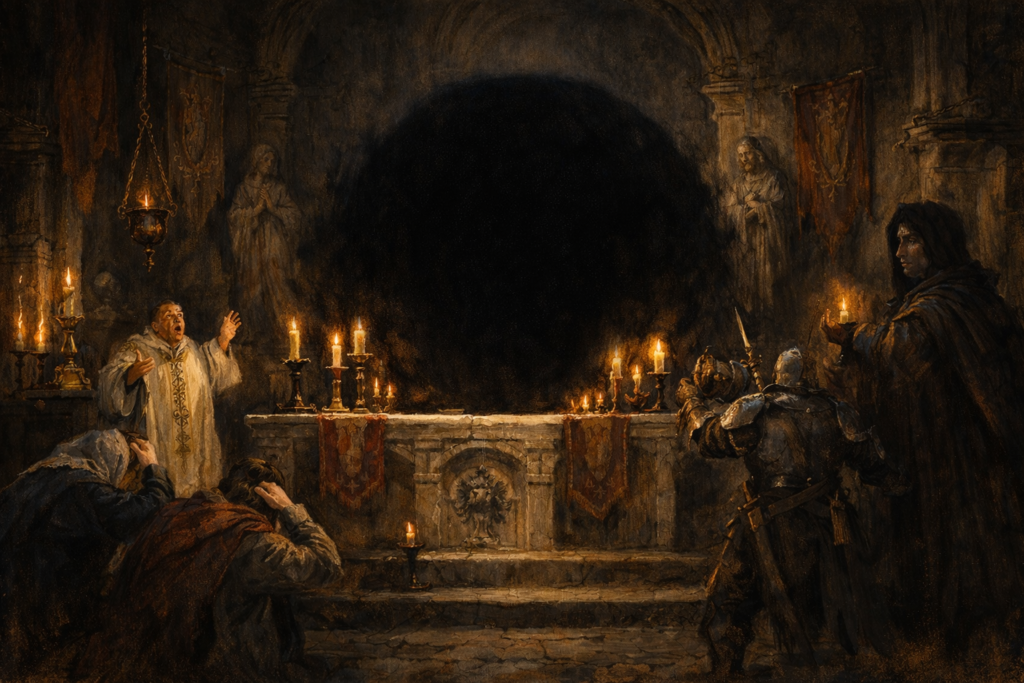
Some spells illuminate the world. This one takes light away, replacing sight with doubt and turning even familiar ground into a blind and hostile place.
Darkness devours torchlight, breaks certainty, and makes fear move faster than steel.
Darkness 5.5
Darkness 3.5
Darkness
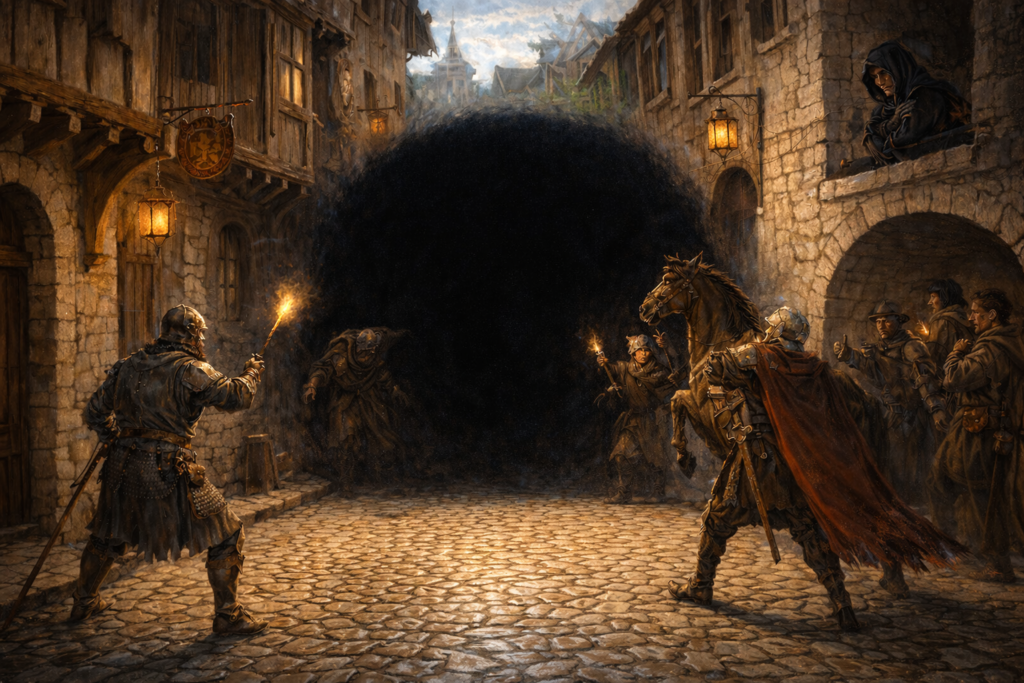
A point you choose within range blossoms into supernatural blackness that swallows ordinary sight and smothers confidence with it. Torches fail, lantern light collapses, and even disciplined warriors can lose cohesion when the world they trusted disappears all at once.
2nd-Level Evocation
Casting Time: 1 Action
Range: 60 feet
Components: V, M (bat fur and either a drop of pitch or a piece of coal)
Duration: Concentration, up to 10 minutes
Available To: Sorcerer, Warlock, Wizard
Magical darkness spreads from a point you choose within range to fill a 15-foot-radius sphere for the duration. The darkness spreads around corners. A creature with darkvision can’t see through this darkness, and nonmagical light can’t illuminate it.
If the point you choose is on an object you are holding or one that isn’t being worn or carried, the darkness emanates from the object and moves with it. Completely covering the source of the darkness with an opaque object, such as a bowl or helm, blocks the darkness.
If any of this spell’s area overlaps with an area of light created by a spell of 2nd level or lower, the spell that created the light is dispelled.
Overview
Darkness is one of the clearest battlefield-denial spells in the game. It does not kill directly. It removes the thing that lets people fight well: sight. Once vision fails, distance becomes uncertain, command begins to break down, formations loosen, and fear starts doing its work.
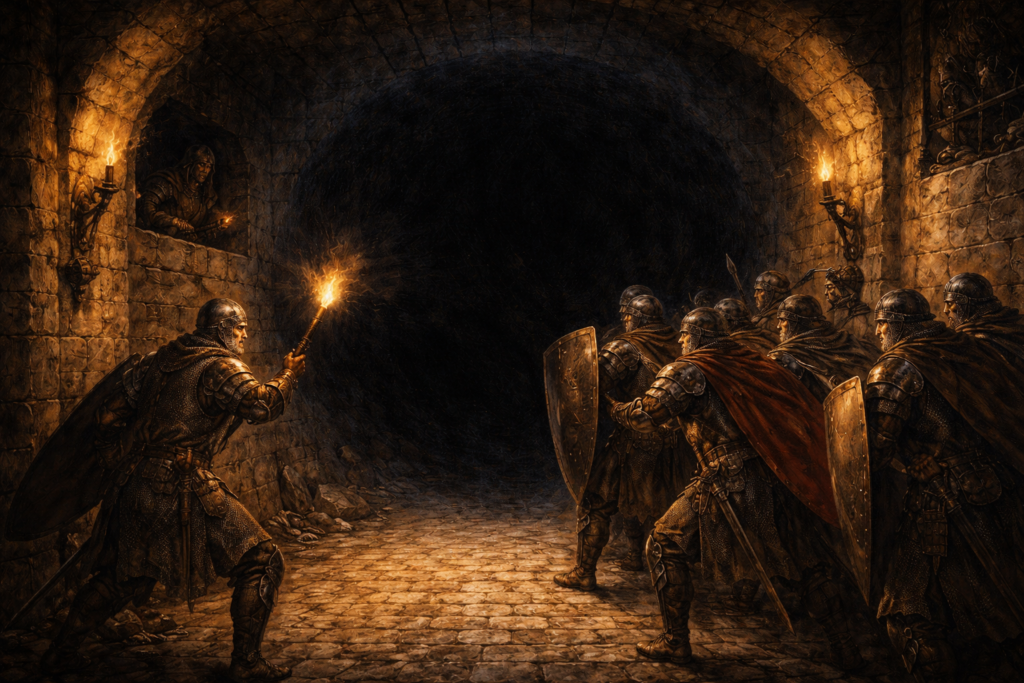
That is what makes the spell memorable. It changes the meaning of space. A corridor becomes a blind trap. A chapel becomes a place of panic. A street becomes an ambush site. A gatehouse becomes a confused and fractured defense. Darkness does not merely obscure enemies. It makes everyone inside it doubt where danger is and whether safety still exists at all.
In story terms, the spell carries weight because it opposes one of civilization’s oldest protections: light. Lamps, torches, braziers, watchfires, and sacred candles all promise that the world can still be seen, judged, and controlled. Darkness revokes that promise in an instant.
Best Uses
Break Enemy Sightlines
Archers, sentries, watchmen, and hostile spellcasters lose immediate control once they can no longer see the battlefield clearly. A single casting can collapse a firing line, blind a defended position, or force ranged enemies to move when they would rather hold ground.
Cover a Retreat
Drop Darkness over a choke point, passage mouth, bridge, stair, or alley and pursuit becomes slower, riskier, and far less certain. Enemies must either enter blind or waste precious time trying to work around it.
Divide the Battlefield
Cast between enemy groups, or between front-line fighters and their support. Reinforcements lose visual contact, leaders lose command presence, and coordination begins to fail at exactly the moment it matters most.
Conceal Movement
When cast on an object, the darkness can move with it, making the spell useful for infiltration, repositioning, extraction, or smuggling someone through a watched area under cover of supernatural blindness.
Corrupt Sacred or Public Space
Cast in a shrine, courtroom, feast hall, procession, or execution ground, Darkness becomes more than a tactical tool. It becomes an act of violation, fear, and symbolic disruption.
Deny Weak Magical Light
Because it dispels overlapping light from spells of 2nd level or lower, Darkness can seize control of magically lit spaces, especially in vaults, temples, tunnels, and ritual chambers where lesser magic would otherwise hold the line.
Tactics
Cast it where vision matters most. The spell is strongest when it removes a meaningful advantage: archery, command visibility, ritual observation, or controlled pursuit.
Use terrain. Doorways, bridges, stairs, corridors, crypt passages, and alleyways make magical darkness more dangerous because enemies cannot easily go around it and rarely want to go through it blind.
Move with purpose. The spell creates confusion, but confusion only becomes an advantage if someone acts on it. Flee, flank, reposition, hide, isolate, or advance while the enemy is still adapting.
Remember the portable source. Casting the spell on an unattended object gives it far more flexibility. You can move the darkness, conceal it until the right moment, or carry it into a defended space where it will do the most harm.
Respect the symmetry. Unless you have a way to function inside magical darkness, your allies suffer too. The spell rewards planning and punishes careless use.
Good Combinations
Invisibility: One conceals the individual. The other conceals the battlefield. Together they make pursuit, response, and identification far harder.
Silence: An especially cruel pairing. One removes sight; the other removes sound. Together they create a zone of isolation, fear, and near-total confusion.
Misty Step: Useful for repositioning out of the darkness once enemies commit themselves to entering it or circling around it.
Hold Portal / Arcane Lock: A strong defensive combination. Blind the approach while magically reinforcing the threshold itself.
Minor Illusion / Silent Image / Major Image: Darkness hides the truth. Illusion supplies the lie. Together they let you control what enemies fail to see and what they mistakenly believe.
Devil’s Sight or Similar Special Vision: Any ability that allows reliable action inside magical darkness turns this spell from mutual denial into overwhelming tactical superiority.
DM Notes
This spell is most effective when treated as a spell of spatial control and morale pressure, not just concealment. It alters confidence, command, pursuit, and the use of terrain all at once.
Let intelligent enemies react intelligently. Some hesitate. Some panic. Some call for more light. Some refuse to enter the area at all. That reaction is part of the spell’s power, and letting it shape the scene makes the magic feel real.
Reward placement. Darkness cast into the center of an empty room is useful. Darkness cast over a hanging bridge, reliquary steps, murder-hole gallery, courtroom dais, or shrine altar is memorable.
In worldbuilding, this is an excellent signature spell for cultists, warlocks, assassins, night-raiders, subterranean powers, and enforcers who rule by fear rather than force alone.
Why This Spell Is Dangerous to the World
Darkness is dangerous because it attacks a civilizational assumption older than most kingdoms: that light means witness, safety, and order.
A watchfire means the wall is guarded. A torch means the road is still navigable. A holy candle means the rite continues under divine sight. A lantern in a magistrate’s hall means judgment is being carried out in the open. When Darkness falls, all of that fails at once.
That makes the spell useful not only to adventurers, but to conspirators, cults, tyrants, raiders, assassins, and things older and less human than any empire. Arrests collapse into chaos. Processions turn to panic. Defended passages become blind hazards. Sacred spaces become vulnerable to violation. Rumor spreads quickly in any land where people begin to believe that even blessed light can be snuffed out by hostile will.
This is why Darkness feels larger than a simple combat spell. It does not merely hide the caster. It teaches everyone nearby that the light is not sovereign.
Darkness
This material is Open Game Content, and is licensed for public use under the terms of the Open Game License v1.0a.
Evocation [Darkness]
Level Bard 2, Cleric 2, Sorcerer/Wizard 2
Components V, M/DF
Casting Time 1 standard action
Range Touch
Target Object touched
Duration 10 min./level (D)
Saving Throw None
Spell Resistance No
This spell causes an object to radiate shadowy illumination out to a 20-foot radius. All creatures in the area gain concealment (20% miss chance). Even creatures that can normally see in such conditions (such as with Darkvision or Low-Light Vision) have the miss chance in an area shrouded in magical darkness.
Normal lights (torches, candles, lanterns, and so forth) are incapable of brightening the area, as are light spells of lower level. Higher level light spells are not affected by darkness.
If darkness is cast on a small object that is then placed inside or under a lightproof covering, the spell’s effect is blocked until the covering is removed.
Darkness counters or dispels any light spell of equal or lower spell level.
Arcane Material Component A bit of bat fur and either a drop of pitch or a piece of coal.