
Changestaff Spell
Changestaff Spell
Transform a ritually prepared staff into a towering treant-like guardian that fights at your command.
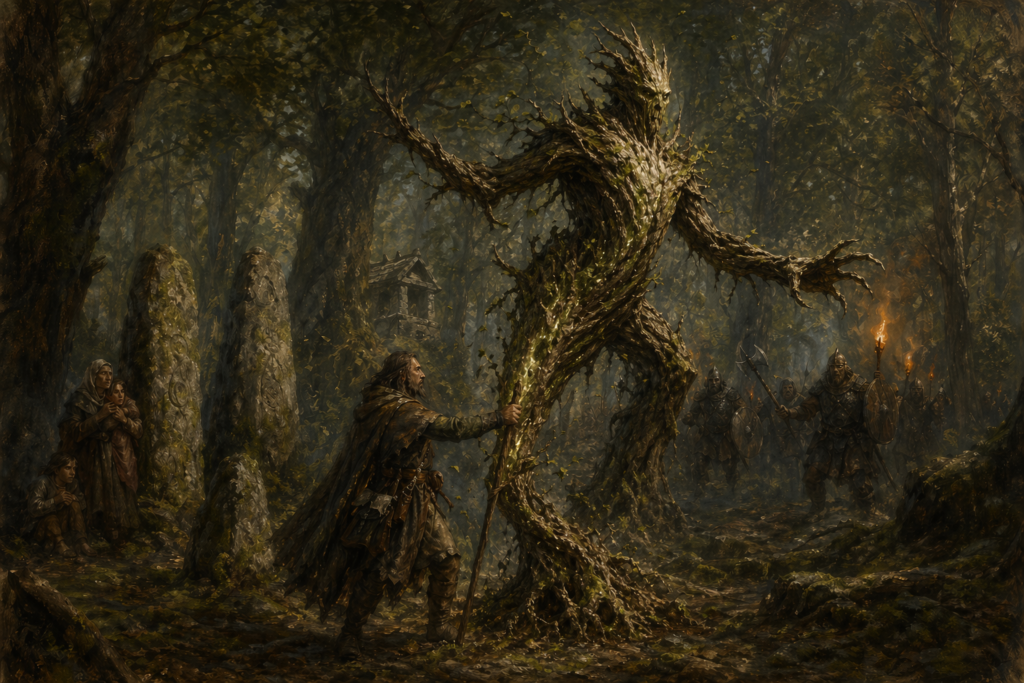
Some druidic magic does not summon a servant from elsewhere. It wakes what has already been patiently made ready. Changestaff Spell is a work of old groves, sacred tools, and long preparation, turning a carved branch into a towering guardian of bark, root, and wrath.
Overview
Changestaff Spell is one of the great druidic guardian spells: a magic of patience rather than impulse. It does not call a creature from another realm or enslave a true treant. Instead, it awakens the hidden strength of a staff that has already been cut, cured, carved, and polished for this purpose.
The Changestaff Spell is most often associated with elder druids, sacred grove wardens, hermits, and priests of ancient trees. To others, the staff may appear to be a simple quarterstaff of ash, oak, or yew. In truth, it is a sleeping guardian, waiting for the moment when the druid plants it in the earth and speaks the final command.
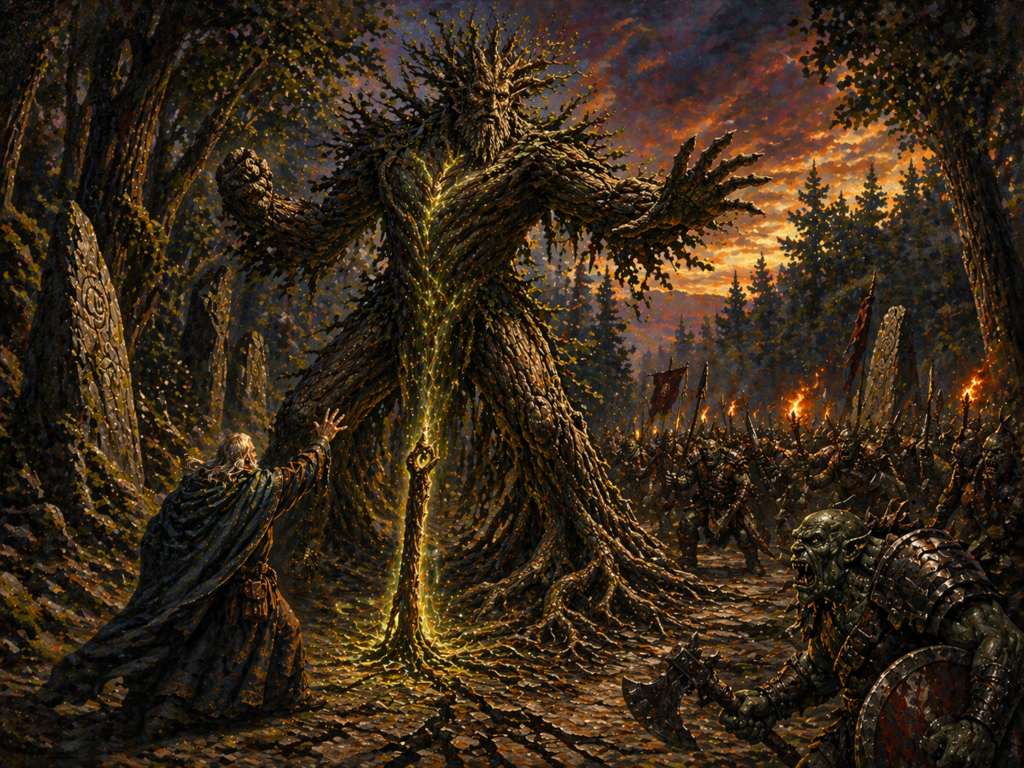
When awakened, the staff swells into a Huge treant-like creature, roughly 24 feet tall, with bark-heavy limbs, rootlike feet, and the slow, terrible strength of old woodland wrath. It obeys the caster’s spoken commands and defends them until destroyed, dismissed, or returned to its original form.
This is not casual battle magic. The staff must be prepared over twenty-eight days, and the caster cannot adventure or perform strenuous labour during that shaping. Because of this, a changestaff is often treated as a sacred companion, a grove relic, or a last defence prepared long before the danger arrives.
Effect
You touch a specially prepared quarterstaff and plant one end of it firmly into the ground while speaking the spell’s final command word. The staff transforms into a Huge treant-like guardian.
The guardian obeys your spoken commands and defends you to the best of its ability. It looks and fights much like a treant, but it is not a true treant. It cannot converse with treants, command trees, animate plants, or exercise the authority of an ancient forest spirit.
If the staff-treant is reduced to 0 hit points, it collapses into dead powder and the original staff is destroyed. Otherwise, when the spell ends or is dismissed, the creature returns to quarterstaff form. The same staff can be used again as the focus for a later casting. Each time the spell is successfully cast, the guardian appears at full strength, regardless of any damage it suffered during a previous casting.
Changestaff Spell, 5.5e / 2024
Changestaff Spell, Pathfinder 1e
Changestaff Spell 3.5
Changestaff Spell
7th-Level Transmutation
Casting Time: 1 round
Range: Touch
Components: V, S, F
Duration: 8 hours
Available To: Druid
Focus: A specially prepared quarterstaff made from ash, oak, or yew. The staff must be cut from a sound living limb, then cured, shaped, carved, and polished over twenty-eight days. During this process, you cannot adventure, travel under hardship, fight, or engage in other strenuous activity.
When you cast Changestaff Spell, you touch the prepared quarterstaff, plant it in solid ground, and speak the command that completes the spell. The staff transforms into a Huge plant guardian in an unoccupied space within 5 feet of you.
The guardian acts on your initiative, immediately after your turn. It obeys your spoken commands and requires no action from you to direct. If you give it no command, it takes the Dodge action and moves only to protect itself or defend you from obvious harm.
Use the treant stat block for the guardian, with the following changes:
- The guardian cannot speak.
- The guardian cannot animate trees.
- The guardian cannot command plants or converse with true treants.
- The guardian is a magical transformation of the staff, not an independent creature.
- When reduced to 0 hit points, it crumbles into powder and the staff is destroyed.
When the spell ends normally or is dismissed, the guardian returns to quarterstaff form.
Changestaff Spell
School: Transmutation
Level: Druid 7
Casting Time: 1 round
Components: V, S, F
Range: Touch
Target: One specially prepared quarterstaff touched
Duration: 1 hour/level (D)
Saving Throw: None
Spell Resistance: No
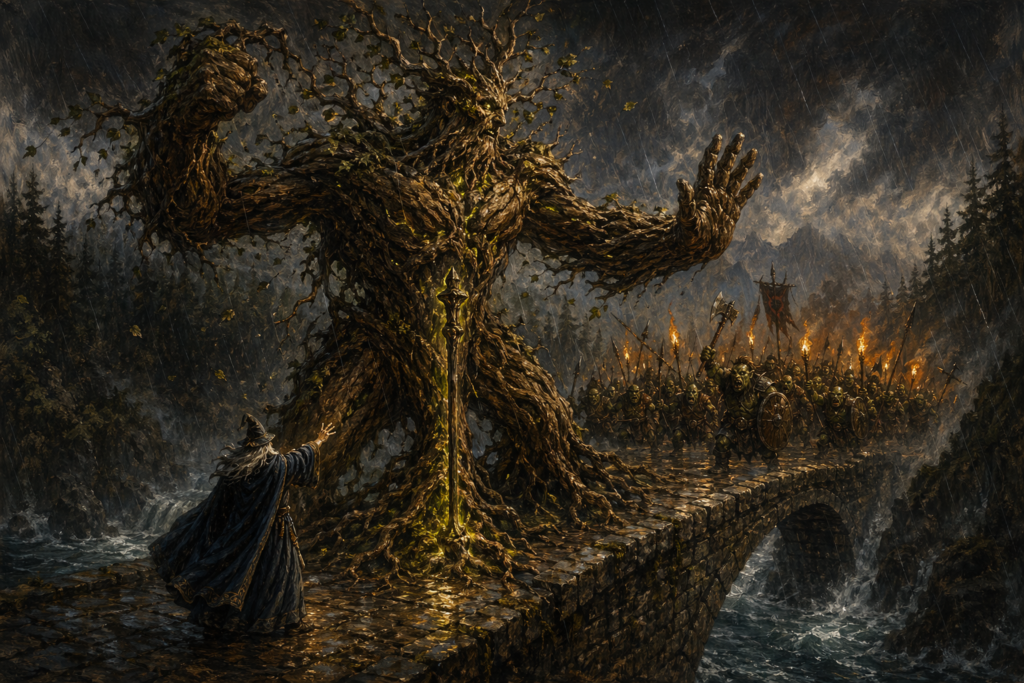
You transform a specially prepared quarterstaff into a Huge treant-like creature approximately 24 feet tall. To complete the spell, you must plant the end of the staff in the ground and speak the final command word. The staff then becomes a guardian that looks and fights much like a treant.
The staff-treant obeys your spoken commands and defends you. It is not a true treant, cannot converse with treants, cannot animate or control trees, and has no special authority over woodland creatures.
If reduced to 0 or fewer hit points, the staff-treant collapses into powder and the staff is destroyed. If the spell ends normally or is dismissed, the guardian returns to quarterstaff form and may be used again as the focus for a later casting.
The staff-treant is always created at full strength, even if it was damaged during a previous use of the spell.
Focus: The quarterstaff must be a sound limb cut from ash, oak, or yew, then cured, shaped, carved, and polished. This process requires twenty-eight days. The caster cannot adventure or engage in other strenuous activity during the shaping and carving of the staff.
Changestaff Spell
This material is Open Game Content, and is licensed for public use under the terms of the Open Game License v1.0a.
Transmutation
Level Druid 7
Components V, S, F
Casting Time 1 round
Range Touch
Target Your touched staff
Duration 1 hour/level (D)
Saving Throw None
Spell Resistance No
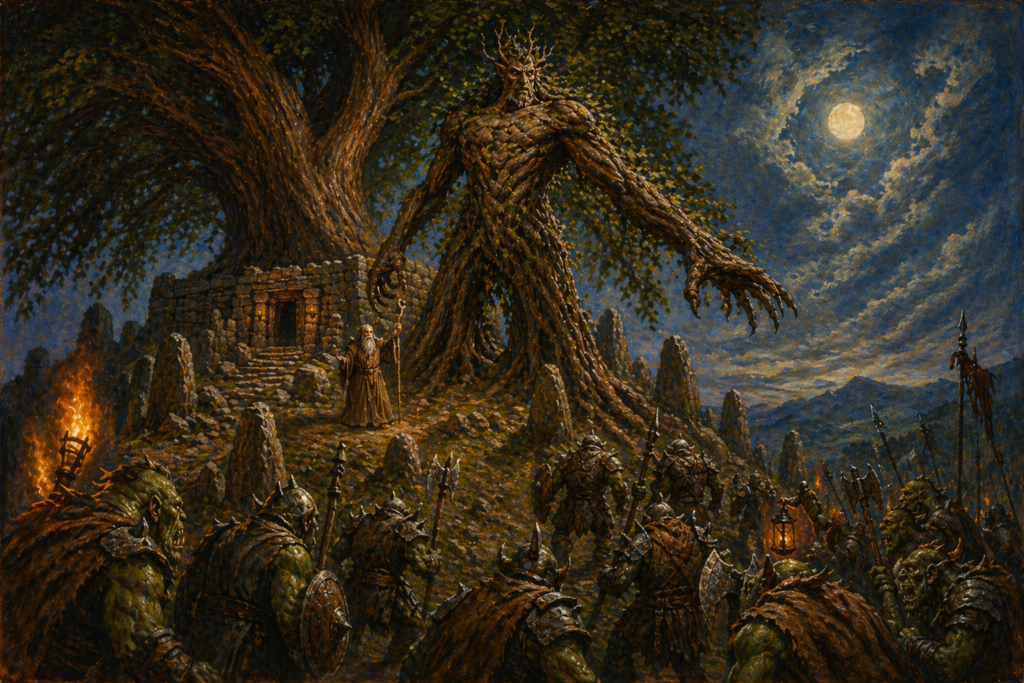
You change a specially prepared quarterstaff into a Huge treantlike creature, about 24 feet tall. When you plant the end of the staff in the ground and speak a special command to conclude the casting of the spell, your staff turns into a creature that looks and fights just like a treant.
The staff-treant defends you and obeys any spoken commands. However, it is by no means a true treant; it cannot converse with actual treants or control trees. If the staff-treant is reduced to 0 or fewer hit points, it crumbles to powder and the staff is destroyed. Otherwise, the staff returns to its normal form when the spell duration expires (or when the spell is dismissed), and it can be used as the focus for another casting of the spell. The staff-treant is always at full strength when created, despite any wounds it may have incurred the last time it appeared.
Focus The quarterstaff, which must be specially prepared. The staff must be a sound limb cut from an ash, oak, or yew, then cured, shaped, carved, and polished (a process requiring twenty-eight days).
You cannot adventure or engage in other strenuous activity during the shaping and carving of the staff.
Why Changestaff Spell Is Dangerous in the World
Changestaff Spell is dangerous because it turns patience into hidden siege strength. A harmless-looking quarterstaff can become a 24-foot guardian capable of smashing gates, breaking cavalry charges, holding a forest road, or standing between a sacred grove and an invading host.
Unlike many powerful spells, Changestaff Spell gives very little warning. A druid may enter a royal court, shipyard, hill fort, woodland shrine, or besieged village carrying what appears to be only a carved staff. In truth, that staff may already be a sleeping giant.
The spell also changes how rulers and soldiers view druids. A quiet grove-keeper with a staff is no longer merely a holy person or wilderness guide. They may be carrying the wrath of the old wood in their hands.
Best Uses
Changestaff is strongest when the caster expects a serious confrontation and has space for the guardian to move. It works well for defending sacred ground, holding a bridge, guarding a ritual circle, protecting a retreat, breaking a siege engine, or anchoring a battlefield line.
The spell is less useful in cramped dungeons, narrow houses, delicate halls, crowded streets, or any place where a Huge creature cannot stand, turn, and fight properly. A wise druid treats changestaff as a prepared answer to a major threat, not as a casual combat trick.
Tactics
Use the staff-treant to control space. Its value is not only in the damage it can deal, but in the territory it denies. A Huge guardian can block roads, doorways, bridges, ravines, and forest tracks while forcing enemies to deal with it before they can reach the caster.
The spell is especially strong in terrain that already favours druidic magic: forests, ruined roads, riverbanks, overgrown battlefields, sacred groves, orchards, burial woods, and old boundary stones. The caster should remain mobile and protected while issuing clear, simple commands.
DM Notes
Changestaff should feel powerful, but not limitless. The guardian should be treated as a temporary magical defender, not as a full treant ally with independent lore, speech, diplomacy, or woodland command.
The twenty-eight-day focus requirement matters. It gives the spell weight and story value. The staff may have a name, a grove of origin, a carved lineage, or a history of previous battles. If it is destroyed, that loss should feel meaningful.
For 5.5e/2024 play, using the treant stat block with removed speech and tree-command abilities is the cleanest option. This preserves the spell’s original strength while keeping the guardian distinct from a true treant.
Good Combinations
- Wall of Thorns: Divide the battlefield, then let the staff-treant hold the remaining gap.
- Plant Growth: Slow enemies around the guardian so they cannot easily bypass it.
- Transport via Plants: Arrive suddenly at a threatened grove, battlefield, or sanctuary, then awaken the staff as a defensive anchor.
- Freedom of Movement: Keep the druid mobile while the guardian holds the enemy’s attention.
- Commune with Nature: Learn where the coming danger will strike, then prepare the changestaff in the place where it will matter most.
Using Changestaff Spell in Your Game
Changestaff works best when treated as a druid’s prepared oath made visible. The spell says that the caster has waited, carved, polished, and planned for the moment when the forest must stand upright and fight.
A changestaff might be carried by the last guardian of a sacred yew, a druid sent to parley with a king, a hermit who never seems unarmed, or a circle elder who has prepared one staff for each coming war. It can also become the centre of an adventure: the characters may need to protect a druid during the twenty-eight-day crafting period, recover a stolen prepared staff, or prevent an enemy druid from awakening one inside a city.
Spellcasting Culture and Worldbuilding Hooks
Among old druidic circles, the making of a changestaff is often more important than the casting. Ash may be chosen for endurance and war, oak for kingship and defence, and yew for death, memory, and boundary magic.
Some groves keep records of famous changestaves: staffs that held river crossings, shattered raiders, stood beside dying kings, or were ground to powder in battles no human chronicle remembers. A druid who carries such a staff may be carrying the honour of an entire sacred wood.
A prepared staff may also be politically dangerous. A ruler may forbid such staffs inside a city. A rival circle may demand that an unworthy druid surrender one. A treant may recognise the spell as a crude imitation, a sacred honour, or an insult depending on the traditions of the grove.
Keep this reference growing
If this page helped with your reading or game, you can support its upkeep or explore the curated books.
Explore the Bookshop — epics, classics and stories behind imagined worlds.