
Wine – Taverns, Feasts, Trade, and Intrigue
Wine – Taverns, Feasts, Trade, and Intrigue
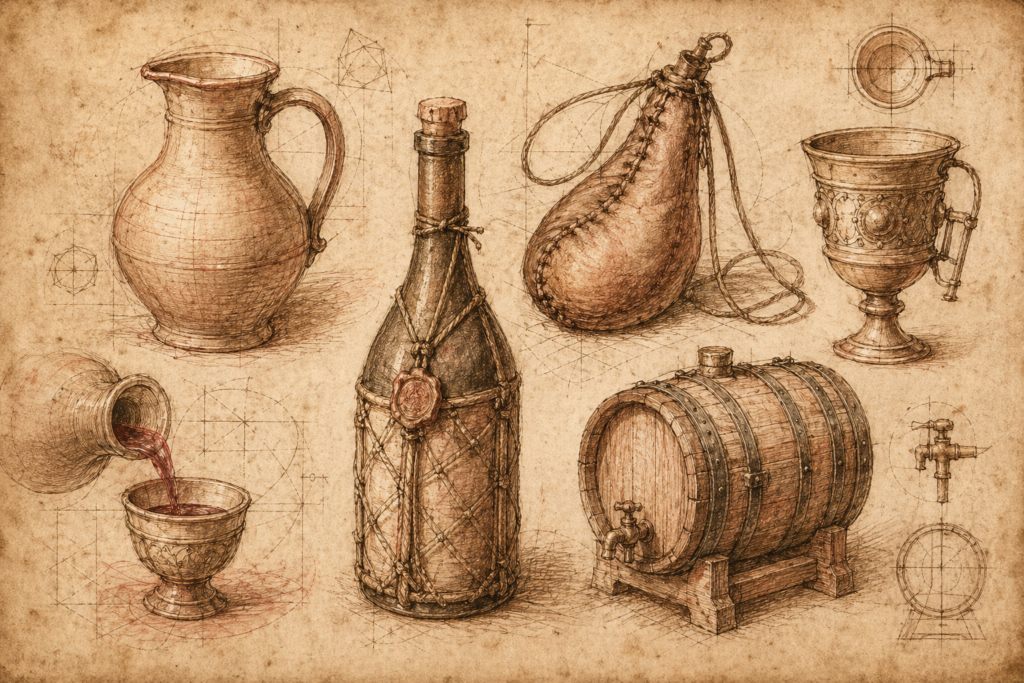
A pitcher for the common room, a bottle for the private table, and one of the simplest ways to show class, trust, trade, and danger in a medieval campaign.
Overview
Wine is a visible sign of hospitality, money, trade, manners, and access.
A pitcher of common Wine belongs on tavern tables, inn benches, guild suppers, market-day meals, merchant counters, and roadside houses with enough custom to serve something better than thin ale or small beer. It keeps conversation moving and gives strangers a reason to sit together before the real business begins.
A bottle of fine Wine is different. It is not everyday drinking. It is a gift, a courtesy, a bribe, a diplomatic signal, a noble expense, or an attempt to impress someone who knows exactly what such things cost. In the wrong room, a fine bottle draws attention. In the right room, failing to offer one may be the insult.
Use Wine as a social object first and a drink second. It can open a conversation, soften a negotiation, expose false status, mark a host’s wealth, conceal a poison, or show that someone has access to trade far beyond the town gate.
Physical Description
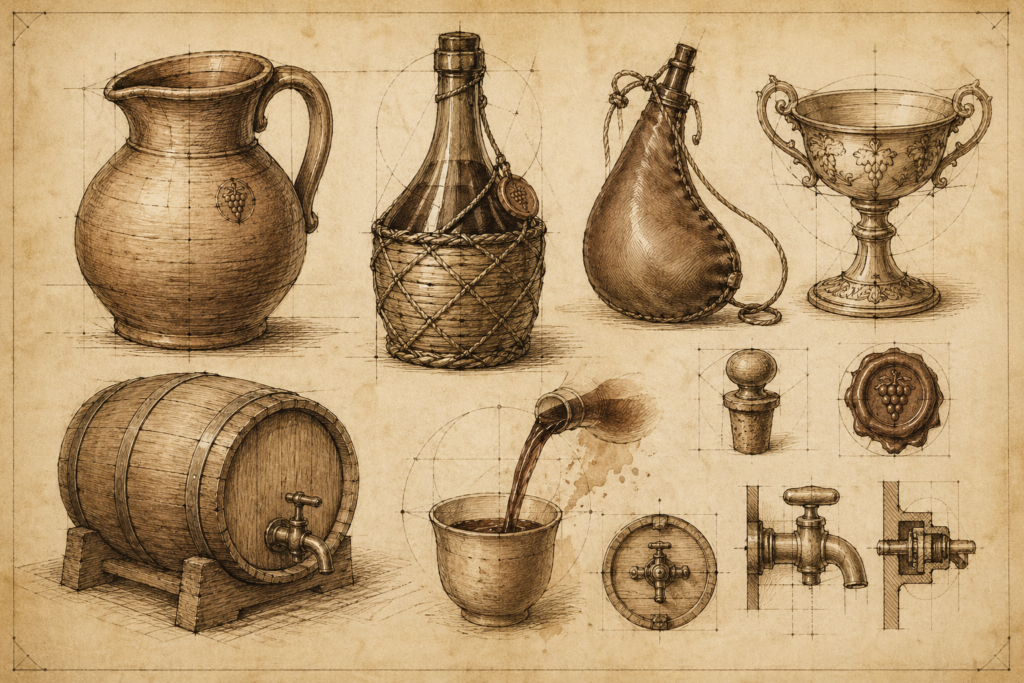
Common Wine is usually served from a pitcher, jug, skin, flask, or plain tavern vessel. It may be rough, sour, watered, spiced, sweetened, warmed, smoky, resinous, or simply local. It is table drink, not necessarily a luxury.
Fine Wine is handled more carefully. It may be kept in a sealed bottle, ceramic vessel, stoppered flask, small cask, or padded travelling case. A wealthy household may serve it in glass, silver, glazed pottery, polished horn, or painted cups. In a merchant city, the vessel and seal may matter almost as much as the taste.
Wine is often mixed, watered, warmed, or spiced. The cup, jug, seal, vessel, and serving custom all help show whether the scene belongs to a tavern bench, merchant supper, noble feast, or private negotiation.
Why Wine Matters
Wine matters because it makes status visible.
A pitcher says, “Stay and talk.”
A cup poured by the host says, “Trust me.”
A sealed bottle says, “This meeting is worth money.”
A foreign vintage says, “I have contacts beyond this city.”
A refused cup says, “Something is wrong.”
Wine sits at the crossing point of household life, urban trade, maritime commerce, noble display, tavern culture, guild regulation, taxation, smuggling, and feast custom. It can appear in a common room or a prince’s chamber, but it does not mean the same thing in both places.
Wine 5.5e / 2024
Wine Pathfinder 1e / 3.5e
Wine 5.5e / 2024
Wine, Common Pitcher
Cost: 2 sp
Weight: —
Category: Food and Drink
Use: A pitcher normally serves several people at a table.
Wine, Fine Bottle
Cost: 10 gp
Weight: —
Category: Food and Drink
Use: A fine bottle is suitable for noble meals, formal hospitality, private dining, high-status gifts, bribery, diplomacy, or expensive tavern service.
Wine has no automatic mechanical effect unless the GM is using intoxication, poison, carousing, social influence, or hospitality rules.
Wine Pathfinder 1e / 3.5e
Wine, Common Pitcher
Cost: 2 sp
Weight: —
Description: The listed price represents a pitcher served in a tavern, inn, restaurant, or average city establishment.
Wine, Fine Bottle
Cost: 10 gp
Weight: —
Description: The listed price represents a fine bottle served or purchased in an average city, suitable for wealthy meals, gifts, hospitality, formal occasions, or social leverage.
Wine does not normally require a check to drink or serve. If its value, origin, quality, dilution, or tampering matters, use Appraise, Craft, Knowledge, Perception, Profession, Sense Motive, Survival, or an equivalent skill.
How Wine Is Used
Adventurers use Wine when the obstacle is social rather than physical.
A merchant orders a pitcher before discussing dangerous cargo. A noble sends a fine bottle to the party’s table instead of approaching in public. A spy waters their cup and watches who becomes careless. A magistrate serves imported wine to show that the meeting is unofficial but serious. A tavern-keeper recognises a smuggled cask by the mark burned into the wood.
Wine can be used to:
- Pay for a table without making the meeting look secret.
- Offer hospitality before bargaining.
- Show respect to a host, patron, guildmaster, captain, elder, or noble.
- Create a reason to linger in a tavern, feast hall, or private room.
- Carry poison, drugs, charms, or alchemical additives.
- Reveal wealth, false status, regional origin, or suspicious trade links.
Failure, Risk, and Misuse
Wine creates risk because people trust shared cups too easily.
A cup may be drugged. A bottle may be counterfeited. A pitcher may be watered beyond honesty. A rare vintage may be stolen, smuggled, or used as a coded gift. A host may insult a guest by serving poor wine. A guest may insult a host by refusing the cup. A drunk guard may talk. A cautious assassin may never drink from the vessel everyone else uses.
If intoxication matters, keep it practical. One cup is usually colour. Several cups may affect judgement, memory, stealth, balance, restraint, or the ability to notice danger. Heavy drinking should create consequences through the scene: loose speech, missed details, public insult, foolish wagers, poor footing, sleep, vulnerability, or being remembered by the wrong witnesses.
Do not turn every cup into a saving throw. Wine is most useful when it changes behaviour, etiquette, trust, and opportunity.
Value in the World
Wine is not equally common everywhere.
In wine-growing lands, it may be local, ordinary, and cheap. In colder, wetter, grain-heavy, mountainous, or remote regions, it is more likely to be imported, taxed, adulterated, or reserved for wealthier tables. In ports and major cities, wine belongs to a larger commercial system: casks, merchants, customs, taverns, cellars, guilds, river transport, ships, seals, fraud, and municipal regulation.
This gives Wine real campaign weight. A bottle is not just “red” or “white.” It can tell the party where it came from, which port handled it, who paid the customs, which war changed its price, and why someone is lying about its origin.
Trade, Craft, and Common Variants
Wine variants do not need separate combat rules, but they should have different prices. Origin, vessel, storage, spice, reputation, scarcity, and honesty all matter.
Common Pitcher: Ordinary tavern wine, often local, watered, rough, sour, or spiced lightly enough to hide poor quality. It is for tables, not prestige.
Typical Cost: 2 sp per pitcher.
Fine Bottle: A costly bottle suitable for noble meals, diplomatic gifts, private rooms, guild dinners, high-stakes negotiation, or bribery. Its price reflects service, seal, reputation, and setting as much as the wine itself.
Typical Cost: 10 gp per bottle.
Spiced Wine: Wine warmed or mixed with spices, honey, herbs, or fruit. It belongs at winter inns, feast halls, markets, wealthy households, and festival stalls. Cheap versions may disguise harsh wine; expensive versions use costly spices.
Typical Cost: 5 sp per pitcher for ordinary spiced wine; 2–5 gp per pitcher at a wealthy feast or city inn using expensive spices.
Travel Wine: Wine carried in a skin, flask, ceramic bottle, or small cask. It is practical rather than elegant, usually bought for road use, shipboard storage, caravan travel, or military supply.
Typical Cost: 1–5 sp for a skin or flask; 1–3 gp for a small cask, depending on size and quality.
Ceremonial Wine: Wine reserved for libations, oath meals, funerary feasts, seasonal rites, temple hospitality, cult practice, or noble ritual. Its value depends on purity, origin, vessel, age, and local sacred custom.
Typical Cost: 1–10 gp per vessel; rare or temple-reserved wine may cost more or be unavailable for ordinary purchase.
Foreign Wine: Wine marked by distant origin, port seals, merchant stamps, unusual flavour, unfamiliar colour, or a recognisable vessel. It may be prestigious, suspicious, or both.
Typical Cost: 2–20 gp per bottle or sealed vessel; much more for famous, rare, or politically difficult imports.
False Vintage: Cheap wine rebottled, dyed, sweetened, spiced, or sealed under a fraudulent mark to imitate a finer origin. It is sold at a false price, not a fair one.
Typical Cost: 2 sp–1 gp to produce or buy honestly as cheap wine; 5–20 gp when sold as fraudulent fine or foreign wine.
Using Wine in Your Game
Use Wine when you want a scene to involve manners, money, appetite, and risk.
In a tavern, a pitcher gives characters a reason to sit and listen. At court, a bottle can be a test of status. In a merchant house, it can reveal trade contacts. At a feast, it can hide poison or expose who refuses the host’s cup. In a port city, it can lead to customs fraud, smuggling, piracy, false seals, or debts owed to vintners.
Wine is especially strong in intrigue scenes because it lets danger enter the room politely.
Adventure and Worldbuilding Hooks
- The Poisoned Toast: Everyone drinks from the same pitcher, but only one guest collapses. The poison was not in the wine. It was on the cup, hidden in the wax seal, or added to the victim’s watered portion.
- The False Vintage: A noble serves an expensive foreign wine whose seal, vessel, and flavour do not match its claimed origin. The fraud may be simple greed, or it may hide a forbidden trade route.
- The Closed Route: A merchant has obtained casks from a route that should no longer be open after the fall of English Gascony. The cargo may be smuggled, stolen, politically dangerous, or protected by people who still think the old order will return.
Historical Context
Wine should feel like a product of late medieval trade, status, tavern life, civic regulation, and household display. It is not merely a bottle on a shelf. It moves through ports, customs houses, merchant cellars, noble halls, guild networks, taverns, inns, and private dining rooms.
Wine also carries political weight in this period. For England and western France, the old Anglo-Gascon wine trade had been deeply tied to Plantagenet rule in Aquitaine and Gascony. After the end of English control in Gascony, imported wine can become a sign of disrupted routes, old loyalties, smuggling, price changes, and merchants adapting to new political realities.
Medieval wine was served differently from most modern bottled wine. It might be diluted, spiced, warmed, sweetened, stored in casks, poured from jugs, or served in special vessels. For a useful object reference, see the Metropolitan Museum of Art entry for a 14th-century French hanap, or wine-drinking vessel. The Met notes that wine was customarily diluted in the Middle Ages and describes how water could be added to wine at the table.
Keep this reference growing
If this page helped with your reading or game, you can support its upkeep or explore the curated books.
Explore the Bookshop — epics, classics and stories behind imagined worlds.