
Basilisk — King of Serpents and Stone-Gaze Predator
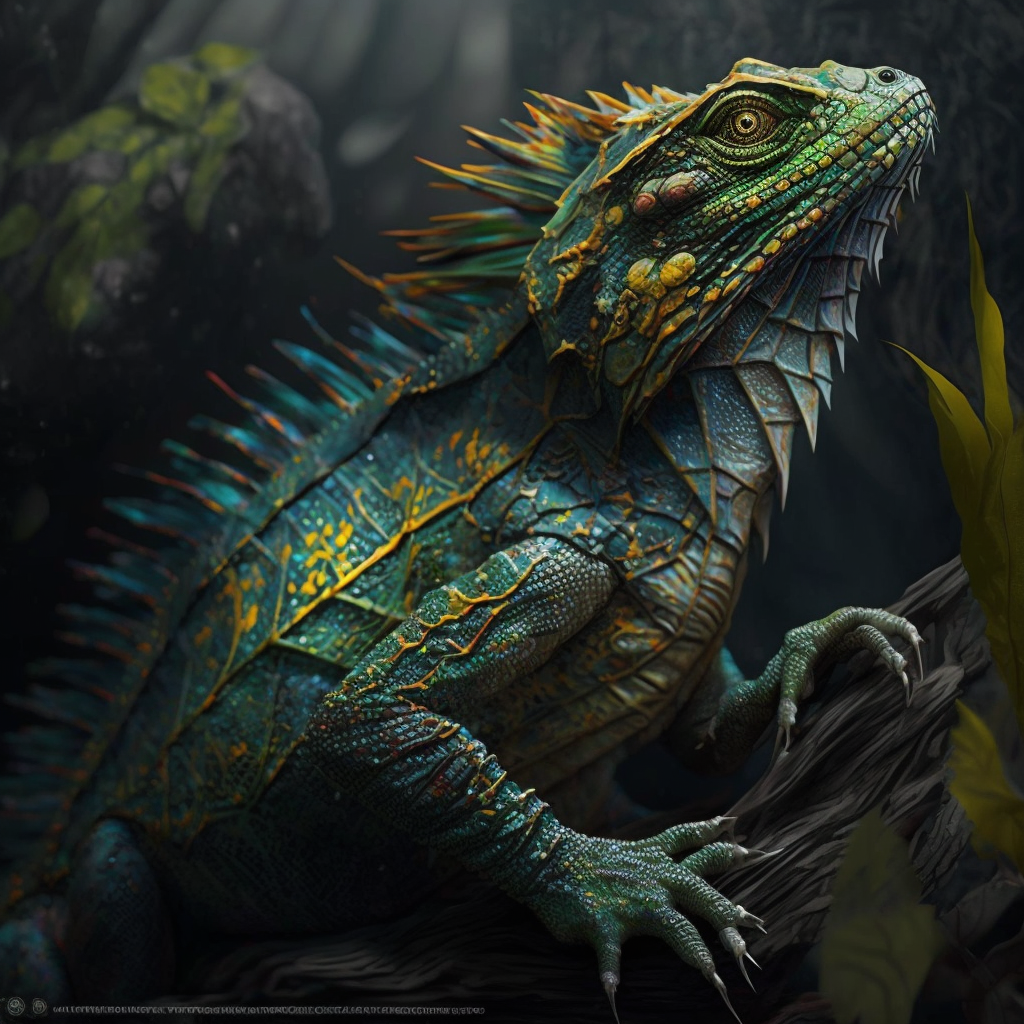
A slow, eight-legged reptilian predator whose stare turns living creatures to stone.
The basilisk encountered by adventurers is the heavy-bodied, eight-legged monster of fantasy bestiaries: sluggish, patient and deadly at close range because meeting its gaze can end a fight before weapons are drawn. Older natural histories describe something different—a small crowned serpent of Cyrene whose gaze, breath and venom poisoned the country around it. The game creature keeps the “king of serpents” reputation while giving it the size and durability needed to haunt caves, ruins and wilderness lairs.
At a Glance
Rules by Edition
Basilisk
Medium Monstrosity, Unaligned
AC 15; Initiative −1 (9)
HP 52 (8d8 + 16)
Speed 20 ft.
16 (+3)
8 (−1)
15 (+2)
2 (−4)
8 (−1)
7 (−2)
Senses Darkvision 60 ft.; Passive Perception 9
Languages —
CR 3 (700 XP); PB +2
Actions
Bite. Melee Attack Roll: +5, reach 5 ft. Hit: 10 (2d6 + 3) Piercing damage plus 7 (2d6) Poison damage.
Bonus Actions
Petrifying Gaze (Recharge 4–6). Each creature in a 30-foot Cone that can see the basilisk makes a DC 12 Constitution saving throw. On its first failed save, a target has the Restrained condition and repeats the save at the end of its next turn if still Restrained. A second failure gives it the Petrified condition instead. A success ends the effect. If the basilisk clearly sees its own reflection in the area, it must make the save against its own gaze.
Basilisk
Medium monstrosity, unaligned
Armor Class 15 (natural armor)
Hit Points 52 (8d8 + 16)
Speed 20 ft.
16 (+3)
8 (−1)
15 (+2)
2 (−4)
8 (−1)
7 (−2)
Senses darkvision 60 ft., passive Perception 9
Languages —
Challenge 3 (700 XP)
Traits
Petrifying Gaze. When a creature starts its turn within 30 feet of the basilisk and they can see one another, the basilisk can force a DC 12 Constitution saving throw. On a failed save the creature begins turning to stone and is restrained. It repeats the save at the end of its next turn: success ends the effect; failure petrifies it until restored by suitable magic.
A creature that is not surprised can avert its eyes at the start of its turn to avoid the save, but it cannot see the basilisk until the start of its next turn. Looking at the basilisk before then triggers the save immediately. In bright light, a basilisk that sees its own reflection within 30 feet mistakes it for a rival and can affect itself.
Actions
Bite. Melee Weapon Attack: +5 to hit, reach 5 ft., one target. Hit: 10 (2d6 + 3) piercing damage plus 7 (2d6) poison damage.
Basilisk CR 5
XP 1,600
N Medium magical beast
Init −1; Senses darkvision 60 ft., low-light vision; Perception +10
Defense
AC 17, touch 9, flat-footed 17 (−1 Dex, +8 natural)
hp 52 (7d10+14)
Fort +9, Ref +4, Will +5
Offense
Speed 20 ft.
Melee bite +10 (1d8+4)
Special Attacks gaze
Statistics
Str 16, Dex 8, Con 15, Int 2, Wis 13, Cha 11
Base Atk +7; CMB +10; CMD 19 (31 vs. trip)
Feats Blind-Fight, Great Fortitude, Iron Will, Skill Focus (Perception)
Skills Perception +10, Stealth +10; Racial Modifiers +4 Stealth
Gaze (Ex)
Turn to stone permanently, range 30 feet; Fortitude DC 15 negates. A creature petrified this way can be restored if it is thoroughly coated with fresh blood from a basilisk killed no more than 1 hour earlier. One basilisk holds enough blood to coat 1d3 Medium creatures. The save DC is Constitution-based.
Ecology
Environment any
Organization solitary, pair or colony (3–6)
Treasure incidental
Basilisk
Medium Magical Beast
Hit Dice 6d10+12 (45 hp)
Initiative −1
Speed 20 ft. (4 squares)
Armor Class 16 (−1 Dex, +7 natural), touch 9, flat-footed 16
Base Attack/Grapple +6/+8
Attack bite +8 melee (1d8+3)
Full Attack bite +8 melee (1d8+3)
Space/Reach 5 ft./5 ft.
Special Attacks petrifying gaze
Special Qualities darkvision 60 ft., low-light vision
Saves Fort +9, Ref +4, Will +3
Abilities Str 15, Dex 8, Con 15, Int 2, Wis 12, Cha 11
Skills Hide +0, Listen +7, Spot +7
Feats Alertness, Blind-Fight, Great Fortitude
Environment warm deserts
Organization solitary or colony (3–6)
Challenge Rating 5
Treasure none
Alignment always neutral
Petrifying Gaze (Su)
Turn to stone permanently, range 30 feet; Fortitude DC 13 negates. The save DC is Charisma-based.
Skills. A basilisk gains a +4 racial bonus on Hide checks in natural settings because of its dull coloration and ability to remain motionless.
Behaviour
A basilisk is dangerous because it does very little. It chooses a sheltered lair, lies almost motionless and waits for prey or intruders to look directly at it. Its slow movement means it seldom pursues anything far. Once a victim begins to petrify, the basilisk closes only if it expects the target to remain helpless.
Petrified animals and people are part of its feeding ecology in fantasy bestiaries. The creature can break and digest stone slowly, which explains why a basilisk den is often surrounded by intact statues: more prey has been petrified than the animal can immediately consume.
Signs Before Initiative
- Birds, goats or travellers stand as stone statues in natural rather than ceremonial poses.
- Claw marks and drag lines lead toward a cave whose entrance is otherwise undisturbed.
- Fragments of stone contain bone, hair or equipment embedded inside.
- Local hunters carry polished metal plates but avoid using bright lanterns carelessly.
- Tracks are broad and reptilian but surprisingly short-ranged around the lair.
If Violence Starts
The basilisk does not need clever tactics if opponents keep looking at it. It advances just enough to keep enemies inside gaze range, bites restrained or isolated targets, and retreats into terrain where averting one’s eyes becomes dangerous. A party that breaks line of sight, uses mirrors carefully or attacks without looking directly at the monster can turn a terrifying encounter into a slow pursuit.
Counterplay and Lore
In fifth edition, deliberately averting the eyes is an explicit defence against the 2014 gaze. In the 2024 presentation, the gaze is a rechargeable active threat instead. Mirrors remain useful because a basilisk can be caught by its own reflected power.
Older stories also name the weasel as the basilisk’s natural enemy. This is not because the weasel is simply immune to the gaze. Pliny says the animal’s odour kills the basilisk, while the weasel itself dies in the struggle. That makes a captured weasel a desperate tool, not a safe antidote.
Using a Basilisk in an Encounter
The statue road. A trail of petrified pack animals points toward a cave that travellers assumed was a shrine.
The blood cure. Someone important has just been petrified. The party must kill the basilisk without ruining the fresh blood needed for the PF1e cure.
The mirror trap. A previous hunting party left polished shields arranged around the lair. One has fallen face-down, and nobody knows why.
The buried colony. Quarry workers break into a nest chamber containing eggs and several adult basilisks that have not yet realised there is a new exit.
Historical and Rules Sources
Pliny’s basilisk
Pliny describes a tiny serpent of Cyrene with a crown-like mark, an upright gait and a poisonous influence deadly to plants, animals and people. The same passage gives the weasel tradition. Read Natural History, Book VIII.
SRD rules
The fifth-edition versions use the freely licensed SRD 5.2.1 and SRD 5.1 basilisk rules. The older 3.5e version remains available through the d20 SRD.
Rules Sources and Licensing
The 5.5e/2024 basilisk statistics derive from SRD 5.2.1, released under Creative Commons Attribution 4.0 International. The 5e/2014 statistics derive from SRD 5.1, also available under CC BY 4.0.
The Pathfinder 1e statistics derive from open game material in Pathfinder Roleplaying Game Bestiary. The D&D 3.5e statistics are Open Game Content from the d20 System Reference Document. The legendary-action material formerly on this page was removed because it was not part of the ordinary basilisk stat block.