
 Buy me a coffee
Glyph of Warding
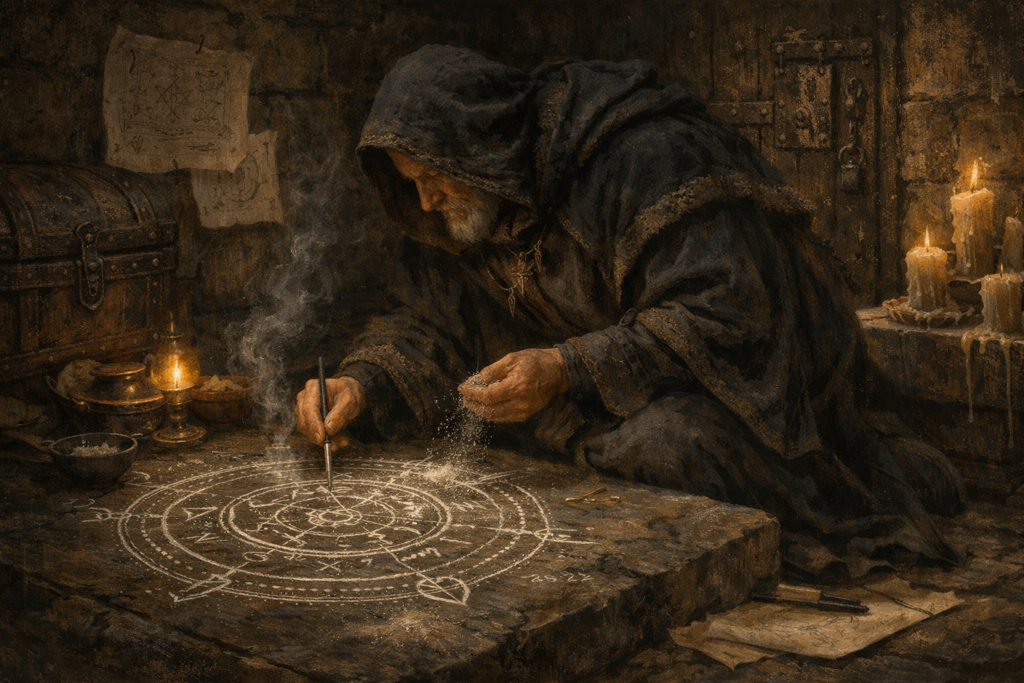
A silent rune of punishment, Glyph of Warding turns any door, chest, altar, or threshold into a patient magical ambush waiting for the fatal touch.
Glyph of Warding is a classic defensive spell of preparation, secrecy, and control, allowing a spellcaster to bind magical force into a surface, object, or threshold so that it waits unseen until a chosen trigger is met. Favored by wizards, priests, tomb-builders, and paranoid arcanists, it transforms ordinary places into dangerous sanctums, trapped vaults, and deadly false safeties. More than a simple magical trap, Glyph of Warding represents patience weaponized: a spell laid in silence, hidden beneath ritual precision, and unleashed only when the wrong hand reaches too far.
Glyph of Warding 5.5e
Glyph of Warding 3.5
Glyph of Warding

3rd-Level Abjuration
Casting Time: 1 hour
Range: Touch
Components: V, S, M (incense and powdered diamond worth 200 GP, consumed)
Duration: Until dispelled or triggered
You inscribe a magical glyph on a surface or conceal it within a closable object, such as a chest, coffer, book, or similar container. The glyph can ward an area up to 10 feet across. If the surface or object is moved more than 10 feet from the place where you cast the spell, the glyph breaks harmlessly and the spell ends.
When you cast the spell, you decide what will trigger it. A glyph can be set to activate when a creature touches or opens the warded object, enters the protected area, approaches within a chosen distance, or meets another clearly defined condition. You can also name creatures, types of creatures, or creatures speaking a password that do not trigger the effect.
When the glyph is triggered, choose one of the following effects:
Explosive Glyph
The glyph erupts with destructive magic in a 20-foot-radius Sphere centered on it. Each creature in the area makes a Dexterity saving throw against your spell save DC. A creature takes 5d8 damage on a failed save, or half as much damage on a successful one. When you create the glyph, choose the damage type from Acid, Cold, Fire, Lightning, or Thunder.
Spell Glyph
You can store a prepared spell of 3rd level or lower in the glyph by casting it as part of the ward’s creation. The stored spell must target a single creature or an area. The spell has no immediate effect when stored. When the glyph is triggered, the stored spell takes effect. If the spell targets a creature, it affects the triggering creature. If it affects an area, the area is centered on the glyph. If the stored spell requires Concentration, it lasts for its full duration without requiring Concentration from you.
Using a Higher-Level Spell Slot
When you cast this spell with a spell slot higher than 3rd level, an Explosive Glyph deals an extra 1d8 damage for each slot level above 3rd. If you create a Spell Glyph, the ward can hold a spell up to the same level as the slot used to cast Glyph of Warding.
Spell Notes
Glyph of Warding is best used for fixed defenses: vaults, treasure chambers, tombs, shrines, trapped corridors, concealed archives, and hidden doors. Because the spell ends if the warded surface or object is moved too far from where it was created, it is a defensive spell of preparation rather than a portable magical trap.
Glyph of Warding

This powerful inscription harms those who enter, pass, or open the warded area or object. A glyph of warding can guard a bridge or passage, ward a portal, trap a chest or box, and so on.
Abjuration
Level Cleric 3
Components V, S, M
Casting Time 10 minutes
Range Touch
Target or Area Object touched or up to 5 sq. ft./level
Duration Permanent until discharged (D)
Saving Throw See text
Spell Resistance No (object) and Yes; see text
You set the conditions of the ward. Typically, any creature entering the warded area or opening the warded object without speaking a password (which you set when casting the spell) is subject to the magic it stores. Alternatively or in addition to a password trigger, glyphs can be set according to physical characteristics (such as height or weight) or creature type, subtype, or kind.
Glyphs can also be set with respect to good, evil, law, or chaos, or to pass those of your religion. They cannot be set according to class, Hit Dice, or level. Glyphs respond to invisible creatures normally but are not triggered by those who travel past them ethereally. Multiple glyphs cannot be cast on the same area. However, if a cabinet has three drawers, each can be separately warded.
When casting the spell, you weave a tracery of faintly glowing lines around the warding sigil. A glyph can be placed to conform to any shape up to the limitations of your total square footage. When the spell is completed, the glyph and tracery become nearly invisible.
Glyphs cannot be affected or bypassed by such means as physical or magical probing, though they can be dispelled. mislead, polymorph, and nondetection (and similar magical effects) can fool a glyph, though nonmagical disguises and the like can’t. read magic allows you to identify a glyph of warding with a DC 13 Spellcraft check. Identifying the glyph does not discharge it and allows you to know the basic nature of the glyph (version, type of damage caused, what spell is stored).
Note Magic traps such as glyph of warding are hard to detect and disable. A rogue (only) can use the Search skill to find the glyph and Disable Device to thwart it. The DC in each case is 25 + spell level, or 28 for glyph of warding. Depending on the version selected, a glyph either blasts the intruder or activates a spell.
Blast Glyph A blast glyph deals 1d8 points of damage per two caster levels (maximum 5d8) to the intruder and to all within 5 feet of him or her. This damage is acid, cold, fire, electricity, or sonic (caster’s choice, made at time of casting). Each creature affected can attempt a Reflex save to take half damage. Spell Resistance applies against this effect.
Spell Glyph You can store any harmful spell of 3rd level or lower that you know. All level-dependent features of the spell are based on your caster level at the time of casting the glyph. If the spell has a target, it targets the intruder. If the spell has an area or an amorphous effect the area or effect is centered on the intruder. If the spell summons creatures, they appear as close as possible to the intruder and attack. Saving throws and Spell Resistance operate as normal, except that the DC is based on the level of the spell stored in the glyph.
Material Component You trace the glyph with incense, which must first be sprinkled with powdered diamond worth at least 200 gp.