
 Buy me a coffee
Search (Intelligence)
“Every hidden truth leaves a flaw—Search is the art of finding the one detail that was never meant to be seen.”
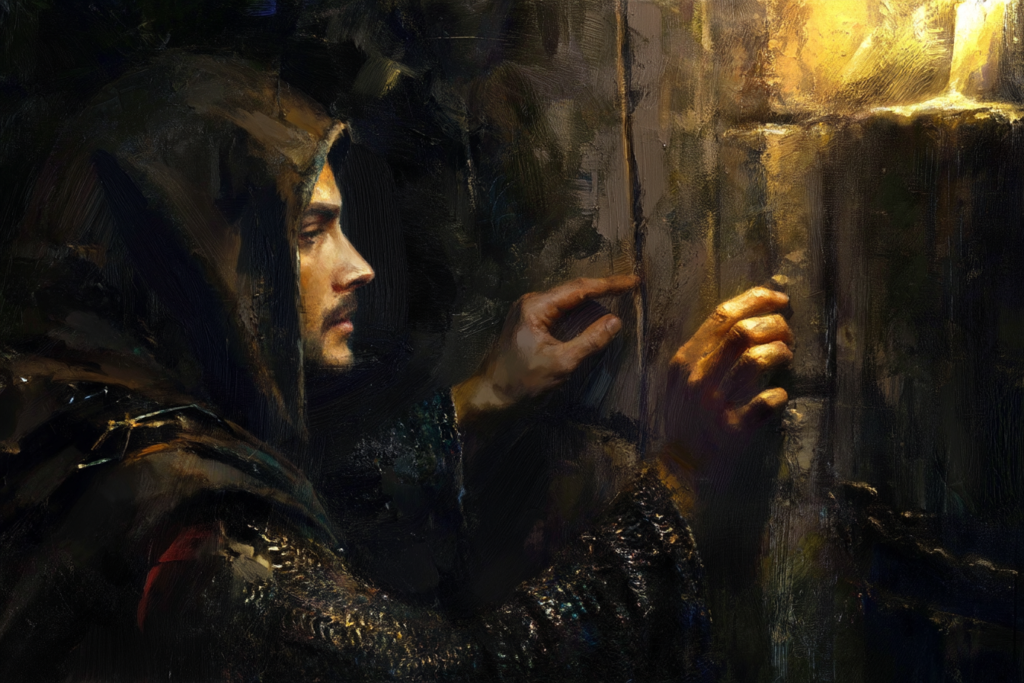
To search is to refuse the lie of appearances.
Where others glance and move on, you remain. You test the edge of a stone, note the drift of dust, feel the faint seam beneath your fingers. A room is never just a room—it is a record of what has happened within it, and what has been deliberately concealed.
Search is the discipline of attention made precise. It is patience sharpened into method, the quiet act of turning uncertainty into revelation. A forged document betrays itself in the hesitation of a line; a trap reveals itself in symmetry broken by a single flaw; a hidden door exists because something was built to hide—and nothing made by hand is ever without error.
Those skilled in Search do not rely on instinct alone. They compare, measure, and dismantle the illusion of the ordinary. In their hands, time becomes leverage, and doubt becomes a tool.
Every secret can be found.
The question is whether you are willing to look long enough.
Search 5.5 2024
Search 3.5
Search
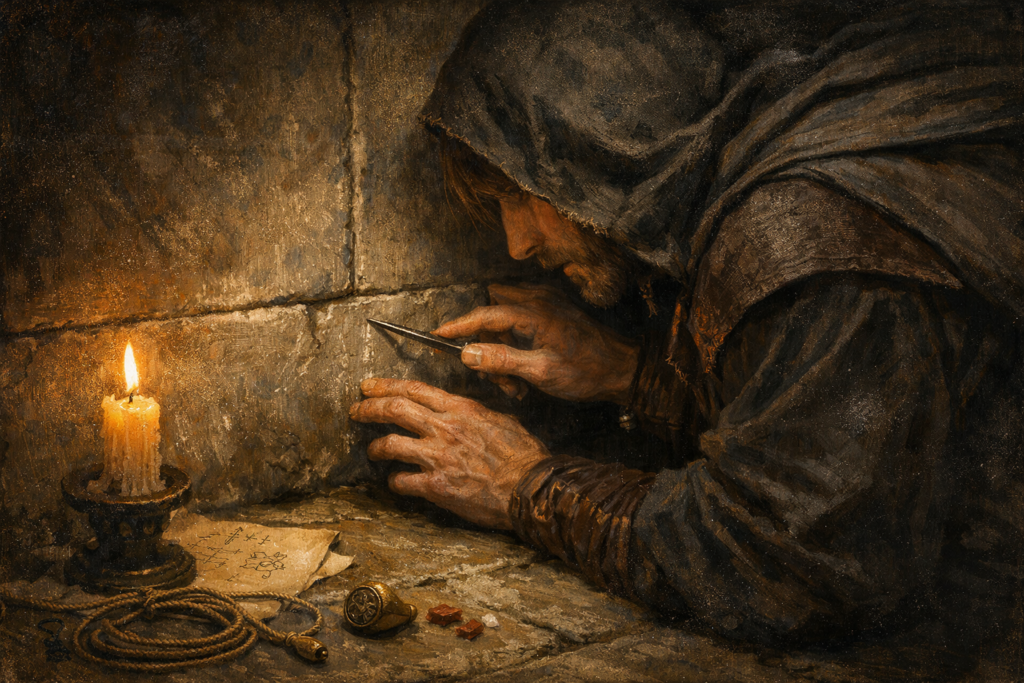
“The truth is never hidden—only overlooked.”
Overview
Search represents your ability to deliberately examine your surroundings, uncover hidden details, and locate concealed objects, traps, or irregularities through methodical inspection. Unlike passive awareness, Search is active, focused, and intentional—used when precision matters more than speed.
Use Search when a character takes time to inspect a specific area, object, or surface rather than relying on quick observation.
When to Use Search
You make a Search check when you:
- Examine a room, chest, or container for hidden items
- Inspect walls, floors, or ceilings for secret doors or compartments
- Identify concealed mechanisms, triggers, or irregular construction
- Search for tracks, disturbances, or signs of passage in a confined area
- Analyze documents or objects for inconsistencies or tampering
Search DC Examples
| Task | DC |
|---|---|
| Rummage through clutter to find a specific item | 10 |
| Notice a simple hidden feature (loose stone, basic trap trigger) | 15 |
| Detect a concealed compartment or secret door | 20 |
| Find a well-hidden or expertly constructed feature | 25 |
| Locate an extremely subtle or masterfully hidden detail | 30+ |
Tracks & Signs:
Finding clear traces (footprints, disturbed dust, displaced objects) typically uses DC 10–20 depending on conditions. This does not allow you to follow a trail over distance (see Survival).
Action Economy
- Search Action: You can use your action to carefully search a 5-foot area, object, or container.
- Larger or more complex areas may require additional time at the GM’s discretion.
How It Differs from Other Skills
- Perception (Wisdom): Noticing something without actively looking
- Search (Intelligence): Deliberately examining to uncover hidden details
- Investigation (Intelligence): Drawing conclusions or solving clues once found
Search is about finding the hidden. Investigation is about understanding it.
Special Rules & Advantages
- Careful Examination: Taking extra time (at least 1 minute) may grant advantage at the GM’s discretion
- Relevant Tools: Using appropriate tools (magnifying lens, probes, measuring tools) may grant advantage
- Familiarity: Prior knowledge of similar structures, documents, or mechanisms may grant advantage
Traps & Hidden Mechanisms
- You can attempt to locate both mundane and magical traps with Search
- Particularly complex or magical effects may require higher DCs (typically 15–25+)
- Successfully locating a trap does not disable it (requires appropriate tools or abilities)
Synergy & Overlap
- Strongly complements Survival (tracking) and Investigation (analysis)
- May benefit from relevant knowledge or background at the GM’s discretion
Design Notes (5.5e Intent)
- No class restrictions: anyone can attempt any Search check
- Difficulty replaces “rogue-only” mechanics
- Advantage/disadvantage replaces flat numeric bonuses
- Integrates cleanly with modern action economy
Search

This material is Open Game Content and is licensed for public use under the terms of the Open Game License v1.0a.
Check
You generally must be within 10 feet of the object or surface you are examining. The table below gives DCs for typical tasks involving this skill.
| Task | DC |
|---|---|
| Ransack a chest full of junk to find a certain item | 10 |
| Notice a typical secret door or a simple trap | 20 |
| Find a difficult nonmagical trap (rogue only)^1^ | 21 or higher |
| Find a magic trap (rogue only)^1^ | 25 + spell level used to create the trap |
| Notice a well-hidden secret door | 30 |
| Find a footprint | Varies^2^ |
^1^ Dwarves, even if they are not rogues, can use this skill to find traps built into or out of stone.
^2^ A successful check can find a footprint or similar sign of a creature’s passage, but it does not let you follow a trail. See the Track feat for the appropriate DC.
Action
It takes a full-round action to examine a 5-foot-by-5-foot area or a volume of goods 5 feet on a side.
Special
An elf has a +2 racial bonus on checks with this skill, and a half-elf has a +1 racial bonus. An elf, but not a half-elf, who simply passes within 5 feet of a secret or concealed door can make a check to notice it.
If you have the Investigator feat, you gain a +2 bonus on these checks.
The spells explosive runes, fire trap, glyph of warding, symbol, and teleportation circle create magic traps that a rogue can detect with a successful check and then attempt to disarm with Disable Device. Identifying the location of a snare spell has a DC of 23. Spike growth and spike stones also create magical hazards that can be detected this way, but Disable Device cannot be used against them. See the individual spell descriptions for details.
Active abjuration spells within 10 feet of each other for 24 hours or more create faintly visible energy fluctuations. These grant a +4 bonus on checks made to locate such abjurations.
Synergy
If you have 5 or more ranks in this skill, you gain a +2 bonus on Survival checks to find or follow tracks.
If you have 5 or more ranks in Knowledge (architecture and engineering), you gain a +2 bonus on checks made to find secret doors or hidden compartments.
Restriction
Anyone can use this skill to find a trap with a DC of 20 or lower, but only a rogue can locate traps with higher DCs. The exception is the find traps spell, which temporarily allows a cleric to use the skill as though they were a rogue.
A dwarf, even one who is not a rogue, can locate a difficult trap with a DC higher than 20 if it is built into or out of stone. The dwarf also gains a +2 racial bonus on the check from stonecunning.