
Francis Charteris — The Protected Rake
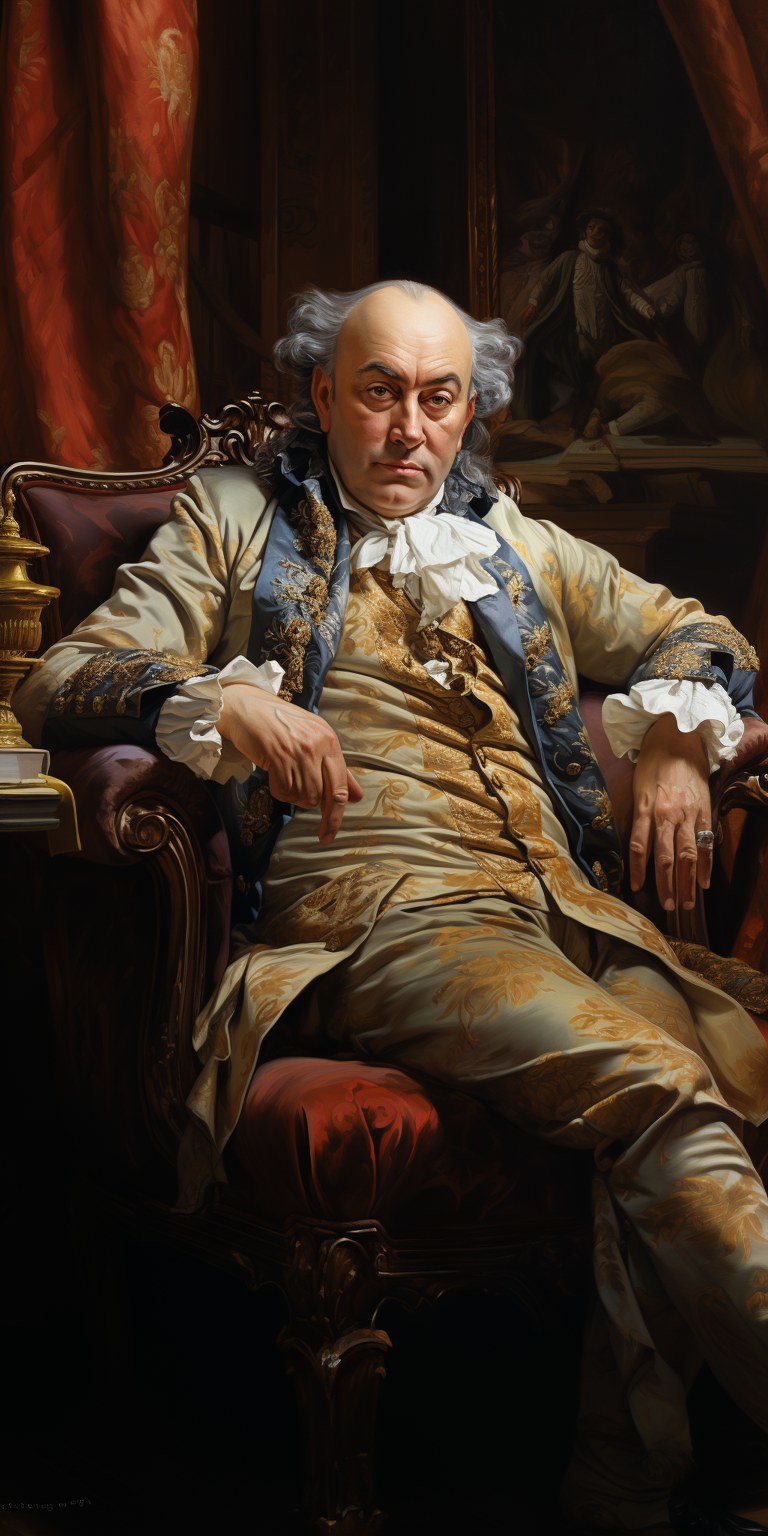
Francis Charteris has learned that wealth, rank and well-paid retainers can turn consequence into a problem for someone else.
Charteris is a wealthy fighting gentleman whose household has become a machine for making accusations disappear. He gambles, lends money, pressures dependants and treats lower-status people as though the law were another negotiable expense. The campaign version preserves the core danger without reproducing later offices: Charteris is a land-rich knightly patron with enough retainers and political friends to make testimony costly.
At a Glance
- Role: Wealthy rake, predatory patron and protected noble
- Primary region: London and northern estates
- Status: Alive and active
- Campaign use: Social villain, corrupt patron, investigation target
- Threat: Retainers, debt, intimidation and status
Game Statistics
5.5e / 2024
Francis Charteris — CR 6 Medium Humanoid; AC 16; HP 72; Str 14, Int 15, Cha 19. Skills Deception +9, Intimidation +9, Persuasion +8. Wealth as Shield. Once per scene Charteris can plausibly call upon a nearby servant, guard or paid intermediary. Pressure the Witness. A creature socially dependent on Charteris has disadvantage on its first check to publicly accuse him unless protected by another powerful patron. Fine Blade. +6 to hit, 1d8+3 piercing.
Francis Charteris — 5e / 2014
Medium humanoid (human), lawful evil
Armor Class 16 (reinforced coat); Hit Points 72; Speed 30 ft.; Challenge 1 (200 XP; proficiency bonus +2, personal combat only).
STR 14 (+2), DEX 16 (+3), CON 14 (+2), INT 15 (+2), WIS 12 (+1), CHA 19 (+4).
Saving Throws Con +4, Cha +6; Skills Deception +8 (expertise), Insight +3, Intimidation +8 (expertise), Persuasion +6; Senses passive Perception 11; Languages English, Scots and French.
Traits
Wealth as Shield. In a district where Charteris maintains paid retainers he may request a willing servant, guard or messenger. These are distinct creatures, not additional attacks or magical summons.
Pressure the Witness. Charteris has advantage on Charisma (Intimidation) checks against someone who openly acknowledges financial dependency on him; a person shielded by another patron or official receives no such penalty.
Actions
Rapier. Melee Weapon Attack: +5 to hit, reach 5 ft., one target. Hit: 7 (1d8 + 3) piercing damage.
Issue a Threat. Charteris attempts a Charisma (Intimidation) check against a willing witness or a person he can legally threaten; resolve its effect through ordinary social rules rather than compulsory control.
Reaction
Paid Delay (1/Encounter). If a willing retainer within 5 feet can see an attack against Charteris, that retainer may use its reaction to impose disadvantage on the attack roll by interposing a shield or obstruction.
Original 5e/2014 NPC adaptation. The 1454 man is fictional, and his social crimes should be the subject of investigation, not glamorised as an advantage. Existing editions are unchanged.
Pathfinder 1e
Francis Charteris — CR 7 human aristocrat 5/fighter 2/expert 2; hp 64; AC 20; Bluff +16, Intimidate +17, Knowledge (nobility) +15, Sense Motive +12; Leadership, Persuasive.
D&D 3.5e
Francis Charteris — CR 7 human aristocrat 5/fighter 2/expert 2; hp 55; AC 19; Bluff +15, Intimidate +16, Knowledge (nobility) +14; Leadership, Persuasive and Iron Will.
What Is Francis Charteris Doing Right Now?
A household witness has fled Charteris’s estate carrying a sealed statement. Charteris wants the document recovered before it reaches London.
He is offering the party excellent money to retrieve “stolen correspondence” while another patron quietly asks them to make certain the witness survives.
Encounters
- Charteris receives the party courteously while armed retainers remain just outside the room.
- A magistrate-equivalent civic judge insists there is not enough evidence because witnesses keep disappearing.
- A gambling debt is used to force a minor noble into providing an alibi.
- A servant asks for protection rather than revenge.
Personality, Appearance and Manner
Entitled, calculating and rarely openly furious. He assumes pressure will work because it usually has.
He dresses richly but practically, carries a good sword and speaks to subordinates as if every favour creates permanent ownership.
Relationships and Influence
- Retainers: some loyal, some simply paid, all useful buffers.
- Debtors: a network of compromised lesser gentry and merchants.
- Victims and witnesses: people whose vulnerability is central to his power.
- Political friends: prefer not to know details so long as scandals remain quiet.
Equipment and Possessions
- Fine sword and riding horse
- Seals, debt bonds and private letters
- Household guards and messengers
- Gambling purse
- Keys to estate rooms and London lodgings
Using This NPC at the Table
Charteris does not fight until social pressure fails. If combat begins, he relies on retainers and retreats toward legal or political protection.
Adventure Hooks
- The Sealed Testimony: two factions race to possess a witness statement.
- The Bought Alibi: an indebted noble lies for Charteris.
- The Missing Servant: finding one person exposes a whole pressure network.
- The Gambling Book: debt records reveal why several officials refuse to act.
- The Patron Problem: stopping Charteris means confronting people who benefit from him.
Related Places and People
Mythical and Historical Context
The historical Francis Charteris (about 1675–1732) was a notorious officer and abuser of his social power, convicted of rape in 1730 and later pardoned. He did not live in 1454. This page’s protected rake is a fictional medieval namesake; his rank, assets and household threats are invented for the setting, and the danger posed to witnesses is a serious matter rather than courtly mischief. The Grub Street Project preserves material on the documented figure.
Sources and Adaptation
Inspired by the historical Francis Charteris, adapted into a fifteenth-century protected noble antagonist. The focus is on abuse of wealth, status and patronage rather than later military titles or institutions.
Keep this reference growing
If this page helped with your reading or game, you can support its upkeep or explore the curated books.
Explore the Bookshop — epics, classics and stories behind imagined worlds.