
Transmute Metal to Wood, “The Green Unmaking”
Transmute Metal to Wood, “The Green Unmaking”
Turn swords, mail, locks, coins, and siege-iron into dead timber with a single act of primal judgment.
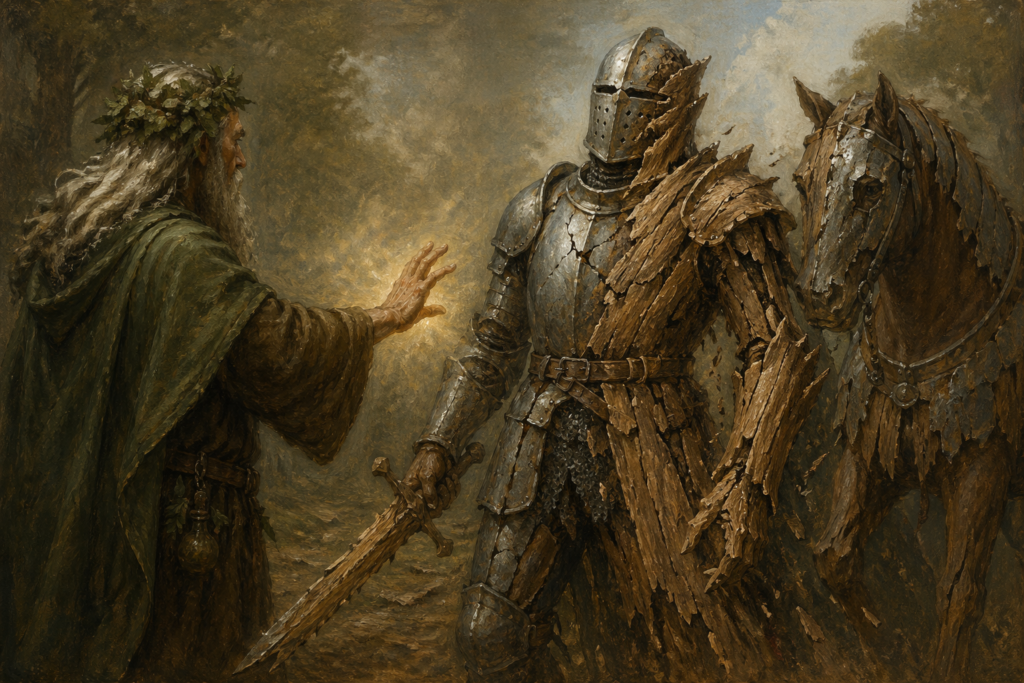
Transmute Metal to Wood belongs to the old, severe branch of druidic magic: the power to remind forged things that they were once ore beneath root and mountain, and that no kingdom’s armoury is beyond the judgment of the green world.
Overview
The Transmute Metal to Wood spell is one of the most feared expressions of high druidic magic. It does not burn metal, rust it, or weaken it by degrees. It changes metal into wood. Armour becomes stiff wooden plating, swords become brittle practice blades, locks become carved obstacles, and the proud ironwork of war loses the authority that made it feared.
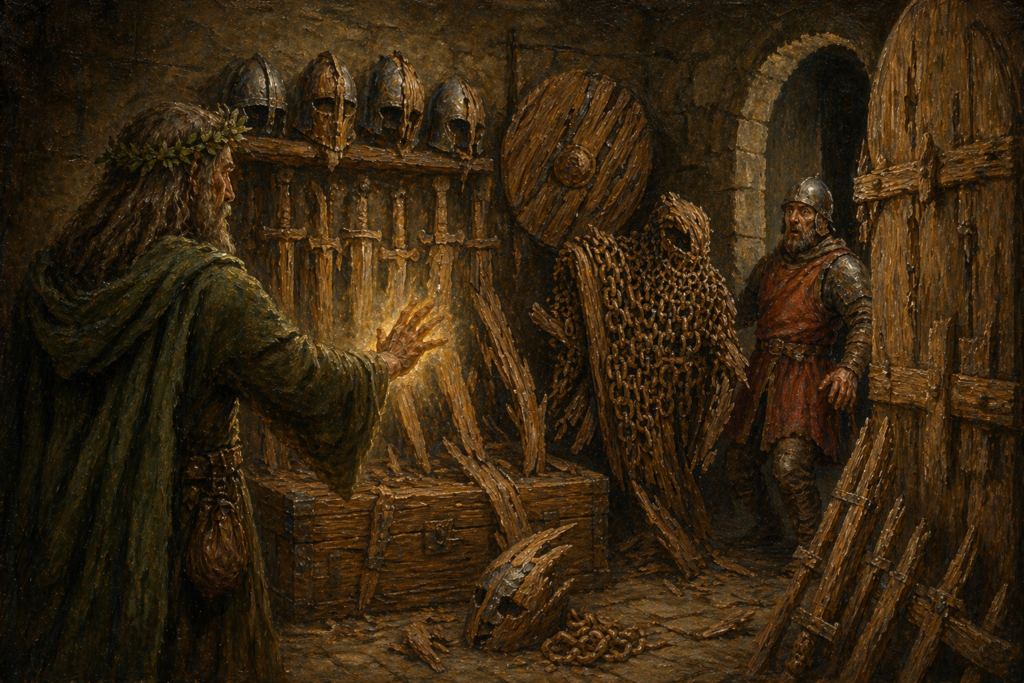
This is battlefield judgment, siege magic, and sacred sabotage. A druid who casts the Transmute Metal to Wood spell against a company of knights can change the shape of a battle in one breath. A fortress gate reinforced with iron may become timber. A noble guard may suddenly find mail weakened, blades clumsy, and weapons liable to splinter in their hands.
The spell is especially dangerous because its transformation is instantaneous. The magic does not linger as an enchantment waiting to be dispelled. Once the metal becomes wood, the world accepts the change. Only the highest restorative magic can return the object to its original metallic state.
Shared Effect Summary
You transform metal objects in a broad area into wood. Weapons, armour, shields, tools, fittings, chains, locks, coins, bars, siege hardware, and similar objects can all be affected, including metal objects worn or carried by creatures.
Weapons changed from metal to wood become clumsy and brittle. Armour and shields changed from metal to wood lose protective value and continue to degrade when struck. The transformation is permanent unless reversed by exceptionally powerful magic.
The exact saving throw, magic item rules, and system wording depend on the version used below.
Transmute Metal to Wood 5.5e / 2024
Transmute Metal to Wood, Pathfinder 1e
Transmute Metal to Wood 3.5
Transmute Metal to Wood
7th-Level Transmutation
Casting Time: Action
Range: 120 feet
Area: 40-foot-radius Sphere
Components: V, S, M or Druidic Focus
Duration: Instantaneous
Available To: Druid
Alternative Spell Name: The Green Unmaking
You choose a point you can see within range. Each nonmagical metal object in a 40-foot-radius Sphere centred on that point turns into wood. Metal doors, bars, locks, chains, weapon racks, siege fittings, tools, coins, hinges, and similar unattended objects are affected automatically.
Metal objects worn or carried by creatures can also be affected. Each creature in the area that is wearing or carrying one or more metal objects must make a Strength saving throw. On a successful save, the metal objects worn or carried by that creature are unaffected. On a failed save, those metal objects become wood.
A metal weapon transformed by this spell takes a –2 penalty to attack rolls and damage rolls. Whenever a creature rolls a 1 or 2 on the d20 for an attack roll with such a weapon, the weapon breaks after the attack is resolved.
A suit of metal armour or a metal shield transformed by this spell grants 2 less AC than normal. Whenever a creature wearing armour or carrying a shield transformed by this spell is hit by an attack roll of 19 or 20 on the d20, the armour or shield grants 1 less AC thereafter. If this reduces the item’s AC benefit to 0, the item breaks and no longer provides protection.
Magic metal objects are unaffected unless you cast this spell with a 9th-level spell slot. If you do, a creature wearing or carrying one or more magic metal objects makes its saving throw with Advantage. On a failed save, its magic metal objects are transformed as normal. Artifacts are never affected.
The transformation is instantaneous. A transformed object is not under an ongoing magical effect and cannot be restored by Dispel Magic. Only Wish, Divine Intervention, or similarly powerful magic can restore a transformed object to metal.
Design Notes
This version keeps the identity of the original spell while making it fairer for modern play. Worn and carried metal objects receive creature-facing resistance through a Strength saving throw, so the spell remains terrifying without automatically destroying a character’s equipment.
The 120-foot range keeps the spell powerful but easier to adjudicate in modern encounter design. The 40-foot-radius Sphere preserves its battlefield scale, allowing it to break formations, ruin siege gear, and punish heavily armoured forces.
Transmute Metal to Wood
School: transmutation
Level: druid 7
Casting Time: 1 standard action
Components: V, S, DF
Range: long (400 ft. + 40 ft./level)
Area: all metal objects within a 40-ft.-radius burst
Duration: instantaneous
Saving Throw: none
Spell Resistance: yes; object
This spell changes all metal objects within its area into wood. Weapons, armor, shields, tools, locks, chains, bars, coins, siege fittings, and other metal objects are affected, including metal objects carried or worn by creatures.
A magic object made of metal effectively has spell resistance equal to 20 + its caster level against this spell. Artifacts cannot be transmuted.
A weapon converted from metal to wood takes a –2 penalty on attack rolls and damage rolls. Such a weapon splinters and breaks on any natural attack roll of 1 or 2.
The armor bonus of any metal armor or metal shield converted to wood is reduced by 2. Armor or a shield changed by this spell loses an additional 1 point of armor bonus each time its wearer is struck by an attack roll with a natural result of 19 or 20.
Only limited wish, miracle, wish, or similarly powerful magic can restore a transmuted object to its metallic state.
Design Notes
This version preserves the harshness of the original spell: no normal saving throw, object spell resistance for magic items, artifact immunity, instantaneous transformation, and lasting consequences unless reversed by very high-level magic.
Transmute Metal to Wood
This material is Open Game Content, and is licensed for public use under the terms of the Open Game License v1.0a.
Transmutation
Level Druid 7
Components V, S, DF
Casting Time 1 standard action
Range Long (400 ft. + 40 ft./level)
Area All metal objects within a 40-ft.-radius burst
Duration Instantaneous
Saving Throw None
Spell Resistance Yes (object; see text)
This spell enables you to change all metal objects within its area to wood. Weapons, armor, and other metal objects carried by creatures are affected as well. A magic object made of metal effectively has Spell Resistance equal to 20 + its caster level against this spell.
Artifacts cannot be transmuted. Weapons converted from metal to wood take a -2 penalty on attack and damage rolls. The armor bonus of any armor converted from metal to wood is reduced by 2. Weapons changed by this spell splinter and break on any natural attack roll of 1 or 2, and armor changed by this spell loses an additional point of armor bonus every time it is struck with a natural attack roll of 19 or 20.
Only limited wish, miracle, wish, or similar magic can restore a transmuted object to its metallic state.
Why This Spell Is Dangerous in the World
The Transmute Metal to Wood spell is dangerous because metal is not just material. It is armour, coinage, prison bars, hinges, weapons, surgical tools, holy vessels, ship fittings, siege engines, and the visible authority of kings.
A single casting can bankrupt a merchant caravan, disarm a noble retinue, cripple a siege tower, ruin a knightly charge, or turn a city’s store of weapons into warped timber. The spell does not need to kill anyone to change history. It can make an army vulnerable, humiliate a ruler, or render a fortress helpless at the worst possible moment.
For this reason, rulers fear druids who know this magic. Smiths despise it. Armies prepare countermeasures. Temples, royal treasuries, and armouries may ward their most important metalwork against primal transmutation, while border lords treat known casters as threats equal to siege engineers, assassins, or enemy captains.
Best Uses
Breaking heavy infantry or cavalry.
The spell is at its strongest against armoured formations, knights, elite guards, and foes who depend on metal weapons and armour.
Ruining siege equipment.
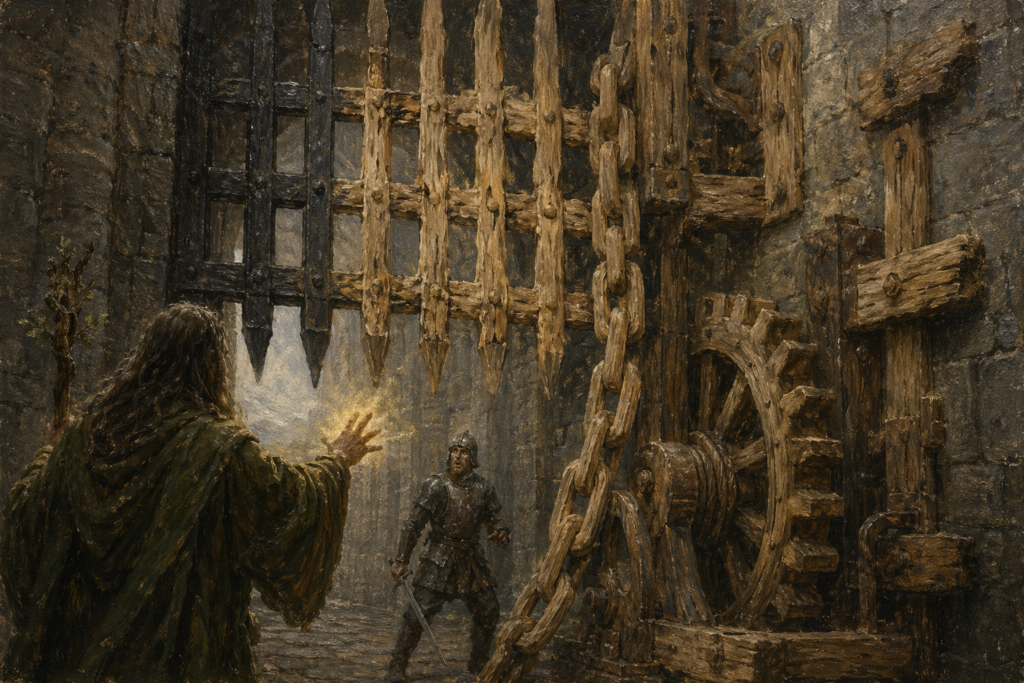
Iron-banded gates, reinforced rams, chains, metal fittings, portcullises, and siege hardware may all become vulnerable if caught in the burst.
Disabling locks and restraints.
Chains, manacles, cages, and metal locks can be transformed into weaker wooden equivalents, making escape, rescue, or infiltration far easier.
Humiliating wealth and status.
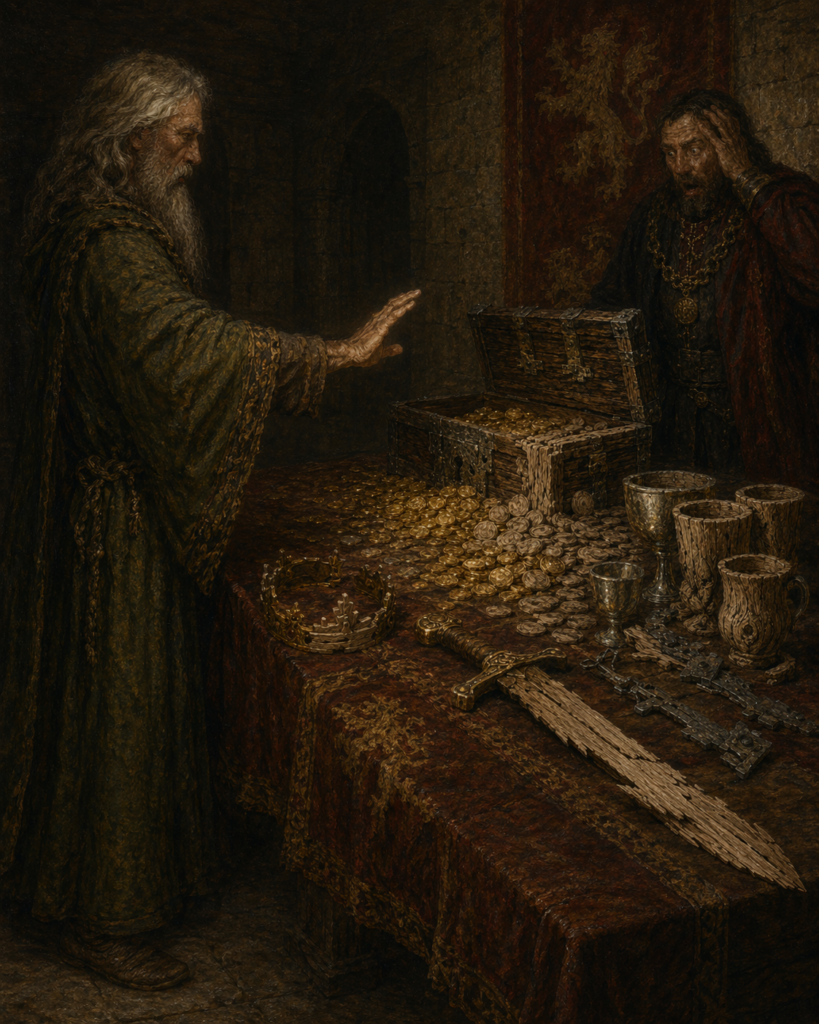
Coins, ceremonial blades, court armour, metal regalia, and noble arms can be reduced to wood, turning social authority into public disgrace.
Forcing a tactical retreat.
Even when the spell does not destroy an enemy outright, it can make continued combat too costly for heavily equipped foes.
Tactics
Cast Transmute Metal to Wood before the enemy fully closes. Its range allows a druid to strike formations, gatehouses, siege lines, or armoured commanders from a protected position.
The spell pairs especially well with terrain control. Once enemy armour and weapons are weakened, spells that slow movement, divide formations, or punish retreat become far more effective. It also works well against enemies who rely on discipline and equipment rather than brute supernatural durability.
The spell is less useful against beasts, elementals, monks, lightly equipped skirmishers, spellcasters with few metal items, or creatures using natural armour and natural weapons. It should not be treated as universal battlefield damage. It is a targeted collapse of metal-dependent power.
DM Notes
This spell deserves careful adjudication because it affects objects rather than creatures. The simplest approach is to identify the important metal objects in the area: armour, shields, primary weapons, locks, chains, gates, siege fittings, or major carried valuables. Do not slow play by tracking every nail, buckle, and coin unless those details matter.
For magic items, use the relevant system version. In Pathfinder 1e, magic metal objects resist with object spell resistance equal to 20 + caster level. In the 5.5e/2024 version, magic metal objects are normally unaffected unless the spell is cast with a 9th-level spell slot. Artifacts are immune in both versions.
Because the duration is instantaneous, the transformation is not a magical condition that can be ended with ordinary dispelling. The object has become wood. Restoring it requires the powerful magic listed in the rules version being used.
This spell can be campaign-altering when used creatively. That is part of its identity. Let it be frightening, but make its consequences specific. A druid who destroys a noble company’s armour may win the day, but may also earn the lasting hatred of knights, smith-guilds, kings, and war temples.
Good Combinations
- Entangle: Trap disarmed or weakened enemies after their metal weapons and armour have been reduced to wood.
- Wall of Thorns: Once heavy armour is compromised, forcing enemies through brutal natural terrain becomes far more punishing.
- Call Lightning: Strike troops who have lost the protection and confidence of their metal war gear.
- Plant Growth: Slow battlefield movement after the enemy’s disciplined advance has been disrupted.
- Heat Metal: Use before or after this spell depending on the situation; one punishes metal while it remains metal, while the other removes metal from the fight entirely.
- Stone Shape: Pair with this spell in siege or dungeon scenarios where metal doors, bars, hinges, or reinforcements are part of a larger defensive structure.
Using This Spell in Your Game
Use the Transmute Metal to Wood spell when you want primal magic to feel politically and militarily serious. This is not merely a combat option. It is a spell that makes rulers fear the wild.
A druid circle might use it to punish miners, destroy invaders’ arms, free prisoners from chains, or ruin the wealth of a city that has cut too deeply into sacred woodland. A hostile druid might use it to collapse economies, disarm border keeps, or humiliate entire noble houses.
Adventurers may use it as a battlefield equaliser, a prison-break tool, a siege answer, or a dramatic act of divine-natural judgment. The spell works best when its consequences remain visible after the encounter: wooden swords broken in mud, warped armour stacked in shame, a once-proud gate creaking like cheap timber, or a lord staring at a treasury of wooden coins.
Spellcasting Culture and Worldbuilding Hooks
Among old druidic orders, Transmute Metal to Wood is sometimes taught only after an oath: never cast it for greed, never cast it merely to mock craft, and never forget that wood too is sacred. Other circles are less restrained. To them, the spell is a weapon against mines, armies, coin-lords, and all who mistake metal for mastery.
Smiths tell grim stories about it. Some guilds mark their finest work with prayers against green transmutation. Dwarven halls may treat the spell as a grave insult, not because wood is base, but because the magic violates the honour of worked metal. Fey courts, forest gods, and ancient tree spirits may view the spell differently: not as destruction, but as the return of stolen strength to the green world.
A kingdom that has suffered this spell once will remember it. Its armouries may be warded. Its knights may carry bone, horn, stone, or enchanted wood sidearms. Its rulers may keep druids close as honoured advisers, or hunt them as enemies of the crown.
Further Reading: For the original open-game spell framework, see the D&D SRD/OGL Transmute Metal to Wood reference. For a Pathfinder-native rules presentation of the spell, see the Archives of Nethys Pathfinder Transmute Metal to Wood entry. These references are useful for checking the spell’s original wording, object interaction, magic-item resistance, and edition-specific handling at the table.
Keep this reference growing
If this page helped with your reading or game, you can support its upkeep or explore the curated books.
Explore the Bookshop — epics, classics and stories behind imagined worlds.