
 Buy me a coffee
Maze, “Labyrinth of Unmaking”
The world closes without a wall, and the mind is left alone in a place that cannot be trusted.
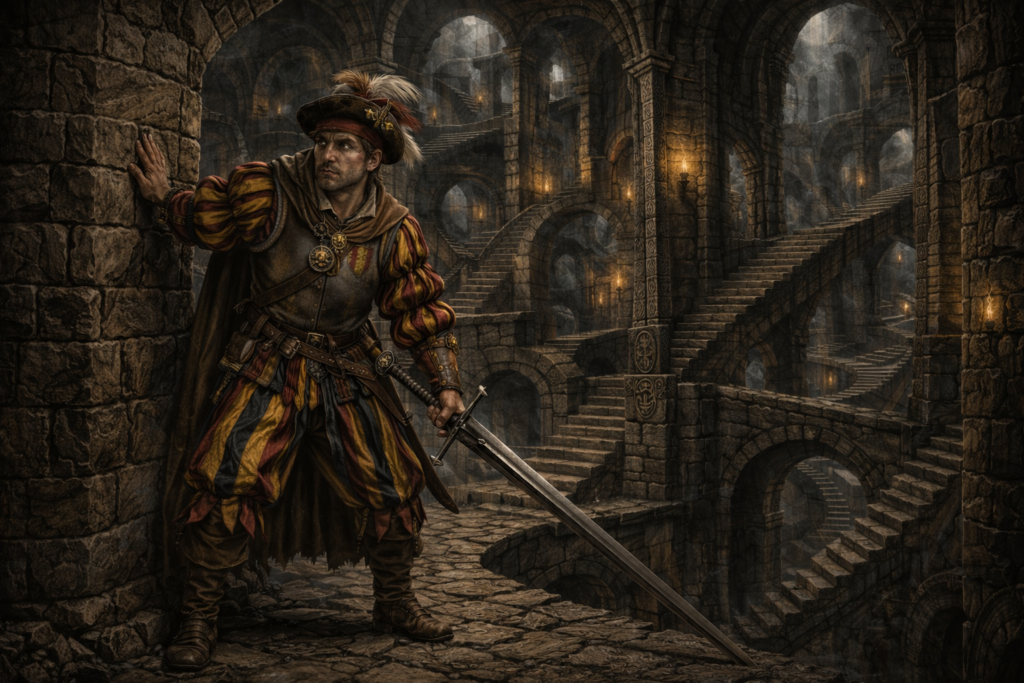
Maze is not a prison built of matter, force, or law. It is removal into disorientation.
A creature does not visibly travel when this spell takes hold. It is simply gone, cut out of the scene and placed somewhere that is neither battlefield nor world, but a constructed failure of direction and certainty. There are no allies to reach, no straight lines to trust, no reliable sense that movement means progress. The target is not bound. It is lost on purpose.
That is what makes the spell so unnerving. Other control magic restrains the body, blocks passage, or encloses space. Maze attacks participation itself. A dangerous creature can remain alive, aware, and entirely itself, yet still be absent from the moment that mattered.
Maze 5.5
Maze 3.5
Maze
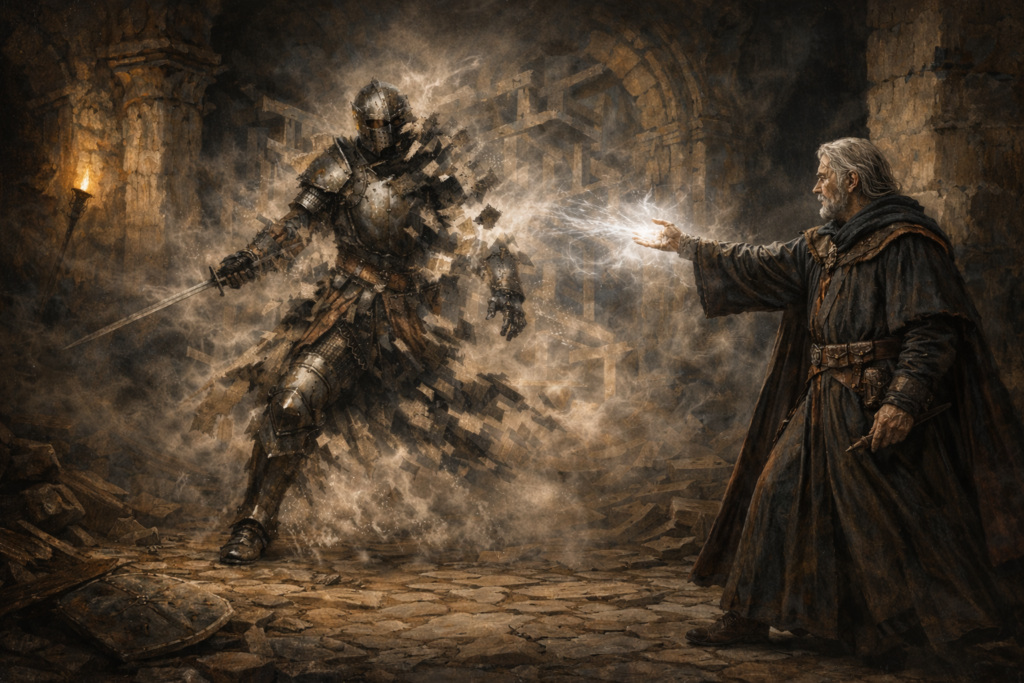
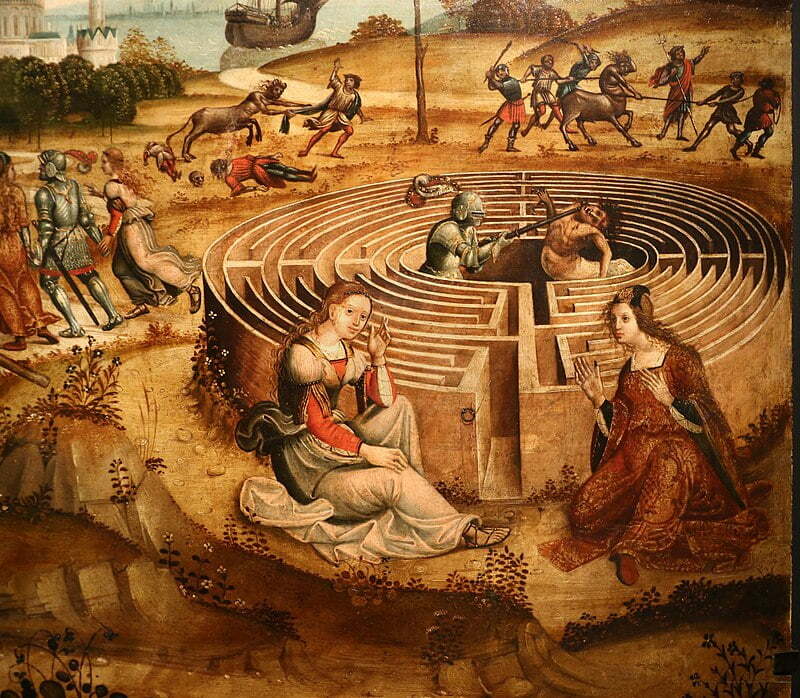
You banish the subject into an extradimensional labyrinth of force planes.
This material is Open Game Content, and is licensed for public use under the terms of the Open Game License v1.0a.
Conjuration (Teleportation)
Level Sorcerer/Wizard 8
Components V, S
Casting Time 1 standard action
Range Close (25 ft. + 5 ft./2 levels)
Target One creature
Duration See text
Saving Throw None
Spell Resistance Yes
Each round on its turn, it may attempt a DC 20 Intelligence check to escape the labyrinth as a full-round action. If the subject doesn’t escape, the maze disappears after 10 minutes, forcing the subject to leave.
On escaping or leaving the maze, the subject reappears where it had been when the maze spell was cast. If this location is filled with a solid object, the subject appears in the nearest open space. Spells and abilities that move a creature within a plane, such as teleport and dimension door, do not help a creature escape a maze spell, although a plane shift spell allows it to exit to whatever plane is designated in that spell. Minotaurs are not affected by this spell.
Maze
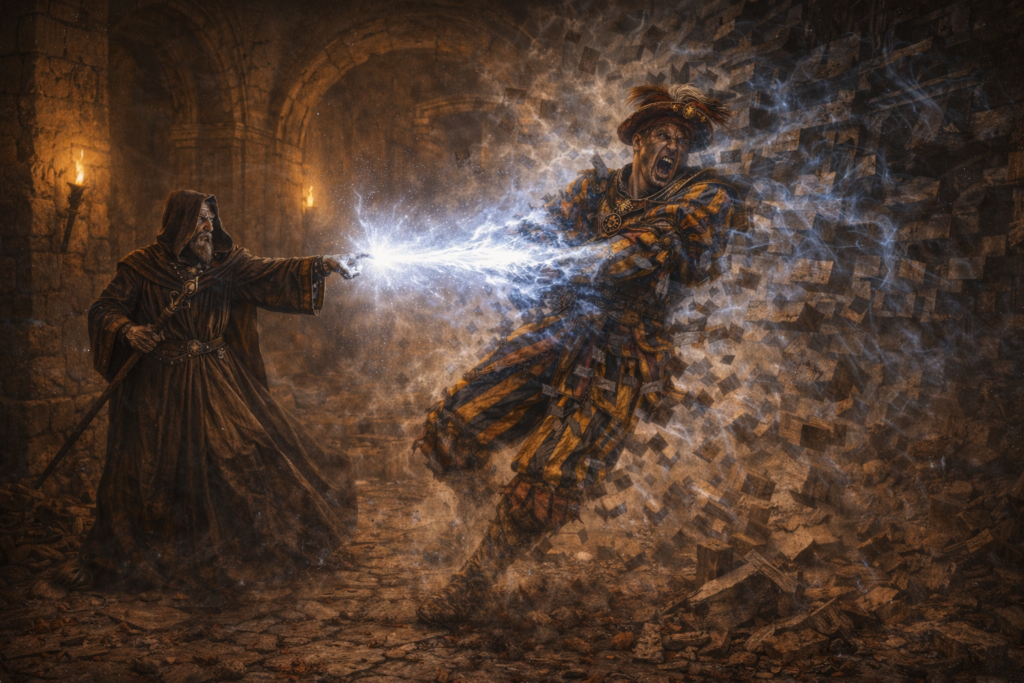
8th-Level Conjuration
Casting Time: 1 Action
Range: 60 feet
Components: V, S
Duration: Concentration, up to 10 minutes
Available To: Wizard
Effect
You banish one creature you can see within range into a labyrinthine demiplane. The target receives no saving throw when the spell takes effect. While there, the creature is Incapacitated. At the end of each of its turns, it can make an Intelligence check against your spell save DC. On a success, it escapes and reappears in the space it left or the nearest unoccupied space if that space is occupied. If the spell ends before the target escapes, it returns in the same way.
Why This Spell Is Dangerous in the World
Maze is dangerous because it turns absence into a form of power.
A general can vanish at the turning point of battle. A demon can be removed before it breaks the line. A high priest, witness, ruler, or archmage can be taken out of the moment without a wound being struck. The spell does not defeat its target in a visible way. It simply ensures that, for a time, the target is no longer able to matter here.
That makes it one of the coldest forms of magical control. It does not punish the body. It denies orientation, agency, and timely presence. A creature may return, but not when it was needed most.
Best Uses
Remove the defining threat:
The best target is usually the single creature whose presence gives the encounter its structure.
Buy decisive time:
Ten minutes is enough to flee, complete an objective, heal, regroup, or re-form the field.
Exploit poor Intelligence:
Creatures with weak Intelligence may remain absent for most or all of the spell’s duration.
Break command and coordination:
A leader, caster, or controller removed by Maze can leave the rest of the enemy force much easier to manage.
Prepare for the return:
Because the creature returns to where it left, the battlefield can be shaped in advance for that moment.
Tactics
Maze is a spell of timing and judgment.
Cast it when continued presence matters more than immediate damage. The spell is at its best when one creature’s next turn would be the turn that changes everything. Because there is no initial saving throw, the real variable is how quickly the target can think its way out. That makes Intelligence, not brute force or toughness, the critical trait.
Use the absence window intelligently. Reposition. Heal. Isolate the remaining threats. Ready actions for the target’s return. The creature that comes back should come back to a worse reality than the one it left.
DM Notes
Run Maze as heavy absence.
At the table, the spell is strongest when the removal feels immediate and severe: a creature simply no longer present, an initiative order altered, a plan suddenly viable. If you describe the demiplane, do not make it a normal dungeon or a puzzle room. It should feel like hostile abstraction: repeating corridors, false choices, a place where motion does not guarantee progress and certainty never lasts.
Track the end-of-turn Intelligence checks clearly. Every round should feel like borrowed time. The question is not whether the creature is defeated. The question is when reality has to deal with it again.
Good Combinations
- Wall of Force: Remove the primary threat, then reshape the battlefield before it returns.
- Forcecage: Take one creature out of play while fixing others in place.
- Teleport: Use the absence window to leave entirely or reposition the party decisively.
- Hold Monster: Prepare a second layer of denial for the moment the target reappears.
- Summoning spells: Exploit the temporary shift in action economy while the most dangerous enemy is gone.
Using Maze in Your Game
Wizards use Maze as an expression of control through intellect rather than force. It feels like a spell cast by someone who does not merely overpower reality, but edits participation in it.
In-world, those who return from it should speak less of walls than of direction failing—of a place that seemed navigable until it wasn’t, of space that refused coherence, of time spent in a structure designed not to hold the body, but to exhaust certainty itself.
Final Precision Note
The defining truth of Maze is:
It does not restrain a creature.
It removes that creature into disorientation until the mind can force its way back.