
Dance of Ruin Spell: Demonic Necromancy
A demonic rite of motion that turns the caster’s body into the centre of a breaking world.
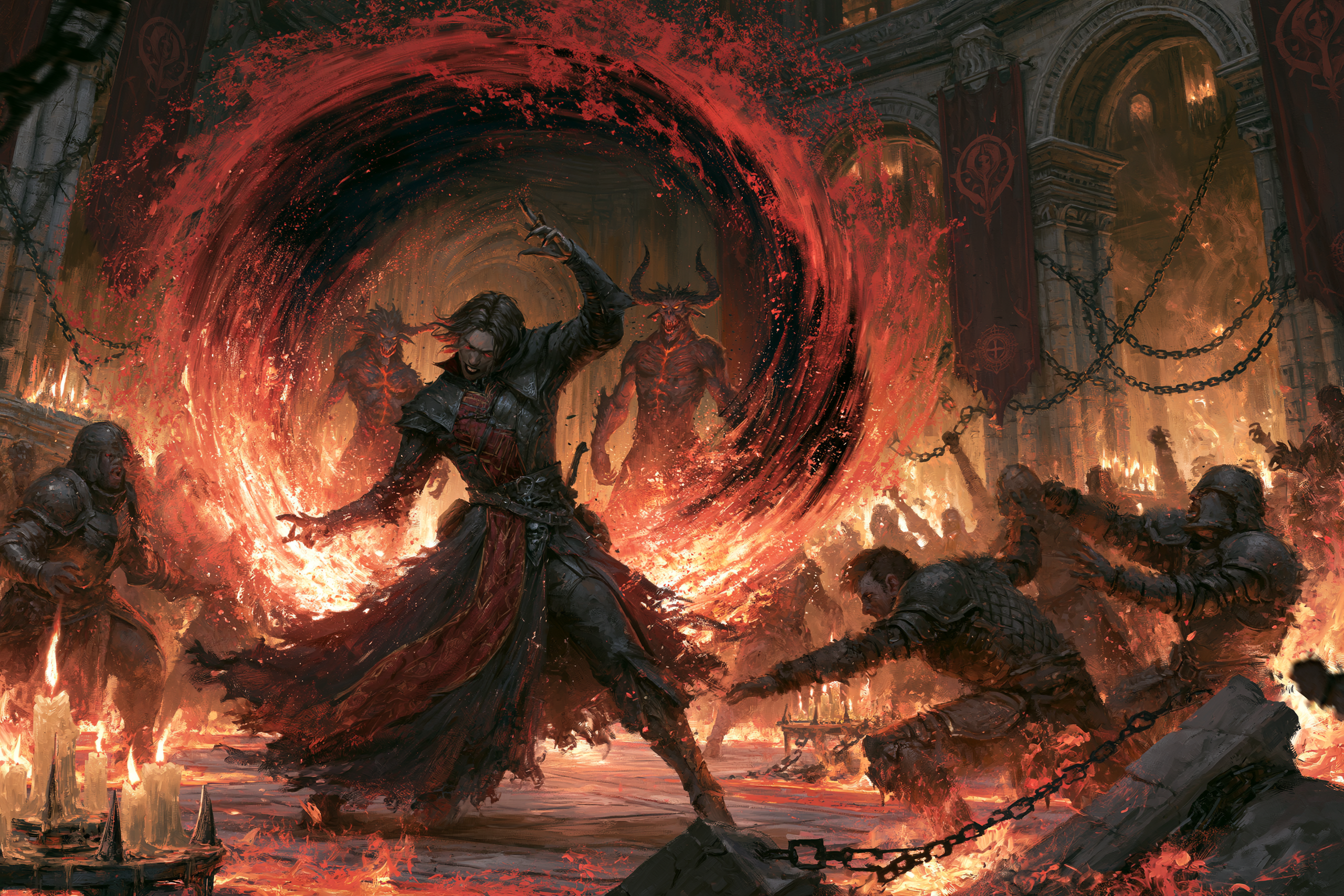
Dance of Ruin is not a battle chant, bardic flourish, or harmless ecstatic rite. It is a destructive necromantic dance that calls ruin outward from the caster in a sudden crackling wave. The body becomes the instrument. The voice fixes the rhythm. The circle around the caster becomes the killing ground.
The spell’s cruelty lies in what it spares. Demons remain untouched while mortals, beasts, undead, celestials, fey, devils, and other non-demonic creatures are struck by the same outward-breaking force. Used beside demons, the spell becomes a sign of alliance rather than ordinary battlefield magic: the caster dances, the demons hold the line, and everyone else pays for standing too close.
In a late medieval campaign, Dance of Ruin is not merely a spell someone casts in anger. It is evidence. It suggests demonic instruction, possession, cult training, forbidden grimoires, Abyssal patronage, or a performer whose art has been taught to answer something beneath the world.
Quick Rules Reference
- Spell Level: 2nd-level spell
- School: Necromancy
- Tag: Evil, demonic
- Casting Time: Slow battle casting; the caster must dance and chant
- Range / Area: A spreading burst centred on the caster
- Duration: Instantaneous
- Saving Throw: Dexterity / Reflex save for half damage
- Spell Resistance: Yes, where used
- Primary Use: Damaging nearby non-demon creatures while sparing demons
- Campaign Role: Demonic cult magic, corrupted performance, battlefield blasphemy, possession sign
Effect
Dance of Ruin releases a wave of crackling destructive energy after the caster completes a wild dance and chant. The force spreads outward from the caster and harms nearby creatures that are not demons.
The spell should feel like a ritual forced into combat. It is not a precise duel spell, not a clean party-safe burst, and not a graceful performance. It is a dangerous centre-point detonation used by cultists, demon-servants, corrupted performers, and spellcasters willing to let the battlefield briefly obey demonic rhythm.
Mechanics Tabs
The rules below are mechanics compatible for different game editions.
Dance of Ruin 5.5e / 2024
Dance of Ruin, Pathfinder 1e / 3.5e
Dance of Ruin 3.0e
Dance of Ruin 5.5e / 2024
2nd-Level Necromancy
Casting Time: 1 action, with release at the start of your next turn
Range: Self, 20-foot emanation
Components: Verbal, Somatic
Duration: Instantaneous
Saving Throw: Dexterity
Spell List: Bard, Cleric, Sorcerer, Warlock, Wizard
Alternative Spell Name: Ruin-Dance or The Demon’s Measure may be used for campaigns that want a more in-world title.
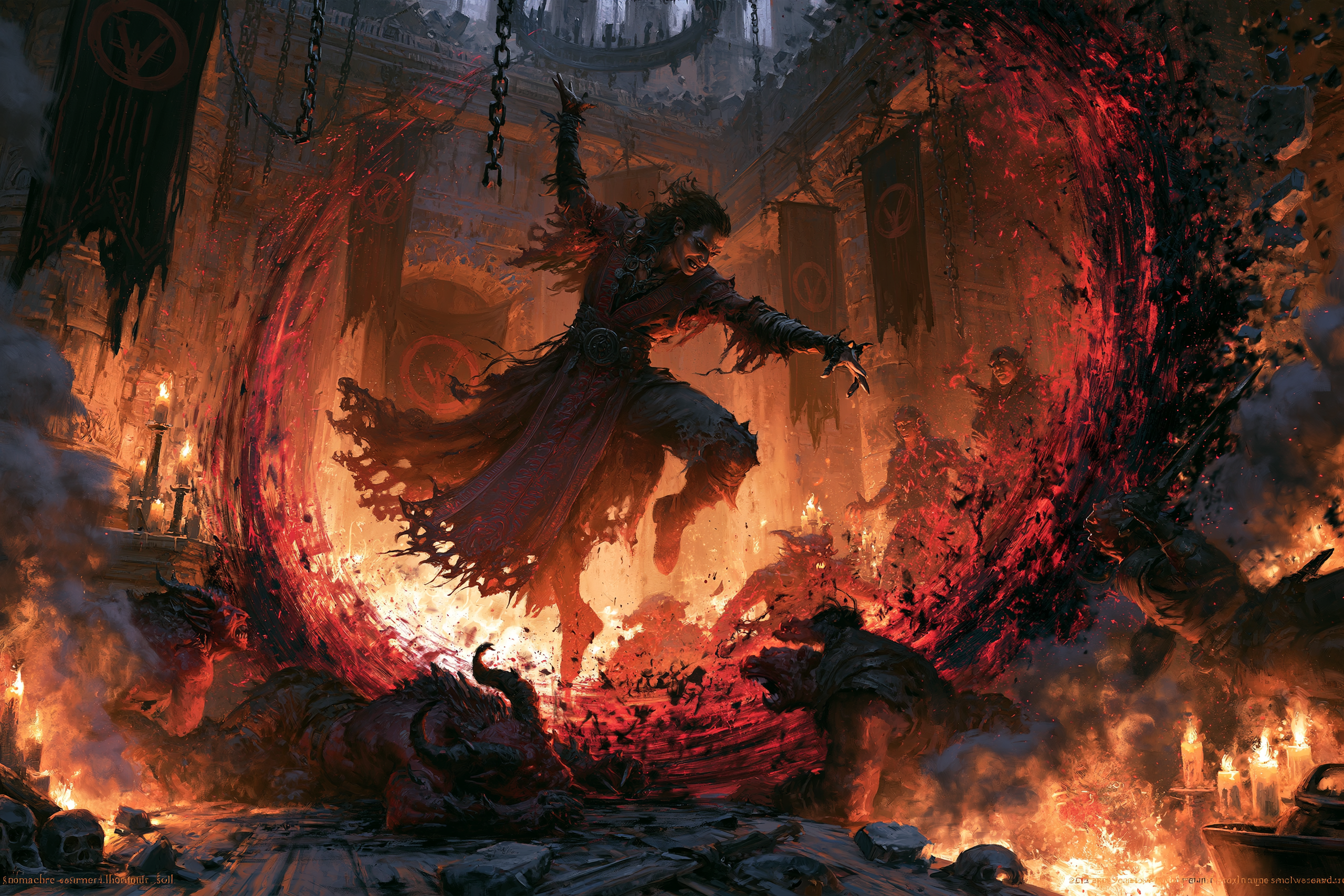
You begin a wild demonic dance and chant. The spell does not release immediately. Until the start of your next turn, you must continue the dance and chant, and you are concentrating as if concentrating on a spell.
At the start of your next turn, if your concentration has not been broken, a crackling wave of ruinous energy flashes outward from you. Each non-demon creature within a 20-foot emanation from you must make a Dexterity saving throw. A creature takes 3d8 necrotic damage on a failed save, or half as much damage on a successful one.
Demons are unaffected by this spell. You are treated as the centre of the release and are not damaged by your own Dance of Ruin unless a specific rule, failed corruption check, or interrupted ritual says otherwise.
At Higher Levels. When you cast this spell using a spell slot of 3rd level or higher, the damage increases by 1d8 for each slot level above 2nd.
Notes
- Dance of Ruin affects all non-demon creatures in the area. It does not allow the caster to choose safe targets.
- The delayed release is intentional. Enemies who recognise the spell have a chance to interrupt the caster, break concentration, silence the chant, restrain the dance, or force the caster out of position.
- The caster can move normally before beginning the spell, but once the dance begins, the spell’s release point is the caster’s space at the start of the caster’s next turn.
- “Demons are unaffected” means true demons and creatures the DM has explicitly defined as demonic for rules purposes.
- Devils, daemons, yugoloths, asuras, rakshasas, undead, fey, celestials, beasts, mortals, constructs, and elementals are not protected unless a specific feature says otherwise.
- This spell is usually learned through demonic rites, forbidden grimoires, cult instruction, vile performance traditions, possession, or Abyssal patronage rather than ordinary temple or college teaching.
Dance of Ruin, Pathfinder 1e / 3.5e
School: Necromancy [Evil]
Level: Bard 2, Cleric 2, Demonologist 2, Sorcerer/Wizard 2
Components: V, S
Casting Time: 1 full round
Range: Close
Area: Close-range spread centred on the caster
Duration: Instantaneous
Saving Throw: Reflex half
Spell Resistance: Yes
The caster dances wildly and chants, completing a demonic rhythm that releases a crackling wave of destructive energy. All non-demon creatures within the spell’s area take 2d20 points of damage. A successful Reflex save halves this damage.
Demons are unaffected by Dance of Ruin.
The caster is treated as the centre of the release and is not damaged by their own Dance of Ruin unless a specific rule, failed corruption check, or interrupted ritual says otherwise.
Notes
- This is an evil spell. Its use should matter in temples, courts, guild halls, noble households, military companies, and places watched by divine, ancestral, infernal, or celestial powers.
- The spell affects allies unless they are demons or otherwise specifically protected.
- The spell is especially dangerous in mixed battles where demons fight alongside mortal cultists.
- The damage type in the original presentation is untyped. If a table requires a type, treat it as evil necromantic energy rather than fire, lightning, force, or sonic damage.
- Spell resistance applies normally.
- The full-round casting time makes the dance visible and interruptible. Enemies may recognise the danger before the wave releases.
Dance of Ruin 3.0e
Book of Vile Darkness 3.5
By Monte Cook
Necromancy [Evil]
Level: Bard 2, Cleric 2, Demonologist 2, Sorcerer/Wizard 2
Components: V, S
Casting Time: 1 full round
Range: Close (25 ft. + 5 ft./2 levels)
Area: Spread centered on caster
Duration: Instantaneous
Saving Throw: Reflex half
Spell Resistance: Yes
To cast this spell, the caster dances wildly and chants. After she finishes her dance, a wave of crackling energy flashes outward up to the extent of the range. All nondemon creatures within the area take 2d20 points of damage.
Why This Spell Is Dangerous in the World
Dance of Ruin gives cultists a battlefield language that demons can safely stand inside. A mortal village sees only madness: a chanting figure turning in the mud, demons closing in, then a sudden ring of crackling death that leaves the demons untouched.
That selectivity changes the spell’s meaning. It is not merely destructive magic. It is allegiance made visible. The spell tells witnesses that the caster has learned a rhythm the demons recognise.
In courts, temples, guild halls, and noble households, even knowing the steps of Dance of Ruin may be treated as evidence of demonic instruction. A travelling performer accused of using it may find every drumbeat, every private patron, and every locked practice room turned into suspicion.
Rules Clarifications and Edge Cases
- Demons: unaffected.
- Devils and other fiends: affected unless specifically defined as demons.
- Allies: affected if they are not demons.
- Caster: normally not affected, because the caster is the centre of the outward release.
- Interruption: the dance and chant are obvious enough to counter, disrupt, silence, restrain, or punish.
- Damage type: necrotic in the 5.5e version; untyped evil necromantic damage in the Pathfinder / 3.5e-compatible version unless the table requires a type.
- Performance: the movement may resemble dance, but it is a demonic necromantic rite, not ordinary entertainment or bardic inspiration.
Battlefield Use
Inside a demon line. The spell is most frightening when demons hold enemies in place while the caster completes the rite. The demons can remain inside the blast radius without fear.
Against trapped or delayed enemies. Fear, restraint, locked doors, narrow corridors, difficult terrain, and battlefield confusion make the spell harder to escape. This should feel like a trap forming around the caster, not a clean damage button.
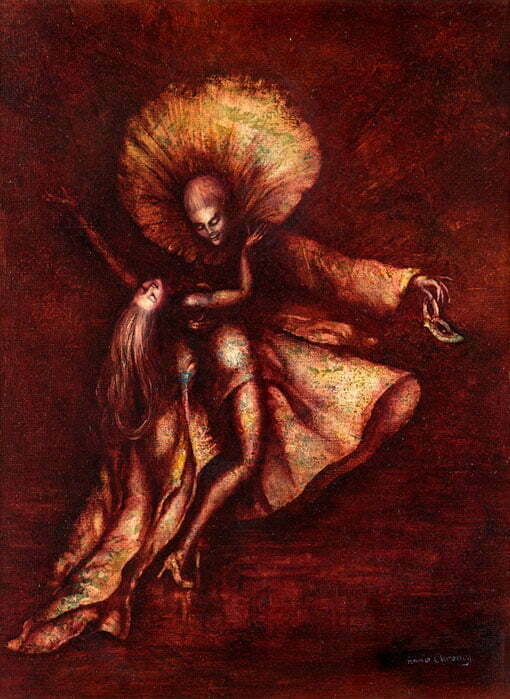
As a reveal of corruption. A masked performer, court musician, possessed priest, or battlefield chanter may not look like the main threat until the dance becomes unmistakably wrong.
Adventure and Worldbuilding Hooks
The Dancer in the Plague Hall
A plague hospice is found with the living dead, the dying, and the nurses all slain in a ring around one untouched demonic idol. Witnesses swear the murderer never raised a blade; she only danced.
The Masque of the Thirteenth Step
A noble household hires performers for a winter feast. One dance contains a forbidden thirteenth step, and the party has only moments to realise the choreography is a spell.
The Demons That Did Not Burn
After a battlefield massacre, every mortal body is marked by black crackling wounds, but the demons among the dead are untouched. The pattern proves the killing was not random magic but Dance of Ruin.
Historical and Mythic Context
Dance of Ruin draws on the old fear that movement can become invocation. A step repeated too often, a drumbeat held too long, or a body driven past ordinary restraint may cease to be performance and become a rite. In that form, dance is not decorative. It is a way for power to enter the body, seize the will, and move outward into the world.
Many ancient rites treated rhythm, procession, and bodily movement as sacred acts rather than entertainment. The ecstatic traditions associated with Dionysus offer one useful mythic parallel: music, wine, trance, procession, and frenzy could dissolve ordinary identity and social order. Dance of Ruin darkens that idea. The caster does not lose the self in divine ecstasy; the caster lends the self to a demonic rhythm and lets destruction answer through the body.
Late medieval Europe also knew the image of dance as a sign of death and social collapse. The Dance of Death placed kings, nobles, priests, merchants, peasants, and beggars in the same fatal procession, reminding viewers that no rank could step outside mortality. Dance of Ruin twists that image into battlefield magic. The caster does not join death’s procession as an equal participant, but forces everyone nearby into its circle.
A further historical echo appears in accounts of compulsive or epidemic dancing, including traditions later described as tarantism. Whether understood as illness, ritual, panic, music therapy, or spiritual disturbance, such accounts preserve an unsettling idea: movement can take hold of the body and spread fear through a community. In a dark fantasy campaign, that fear becomes literal. The wrong rhythm does not merely exhaust the dancer; it teaches the body a forbidden pattern and turns the surrounding ground into a killing circle.
The demonic selectivity of Dance of Ruin gives the spell its particular horror. Ordinary destructive magic harms according to distance, force, fire, or chance. This spell harms according to allegiance. Demons remain untouched while mortals, beasts, fey, celestials, undead, devils, and other creatures are struck by the wave. The spell is therefore not just an explosion. It is a ritual law briefly imposed on the battlefield: those who belong to the demonic rhythm are spared, and those outside it are broken.
That makes the spell socially dangerous long after the damage is done. A court might remember the caster’s footwork. A temple might ban the tune. A guild of musicians might be investigated because one melody resembles the rhythm used before a massacre. Travelling dancers, masked performers, drummers, and ritual specialists may all fall under suspicion after Dance of Ruin is witnessed. The spell’s terror is not only that it kills, but that it makes choreography itself look like evidence of possession, cult training, or Abyssal patronage.
Keep this reference growing
If this page helped with your reading or game, you can support its upkeep or explore the curated books.
Explore the Bookshop — epics, classics and stories behind imagined worlds.